




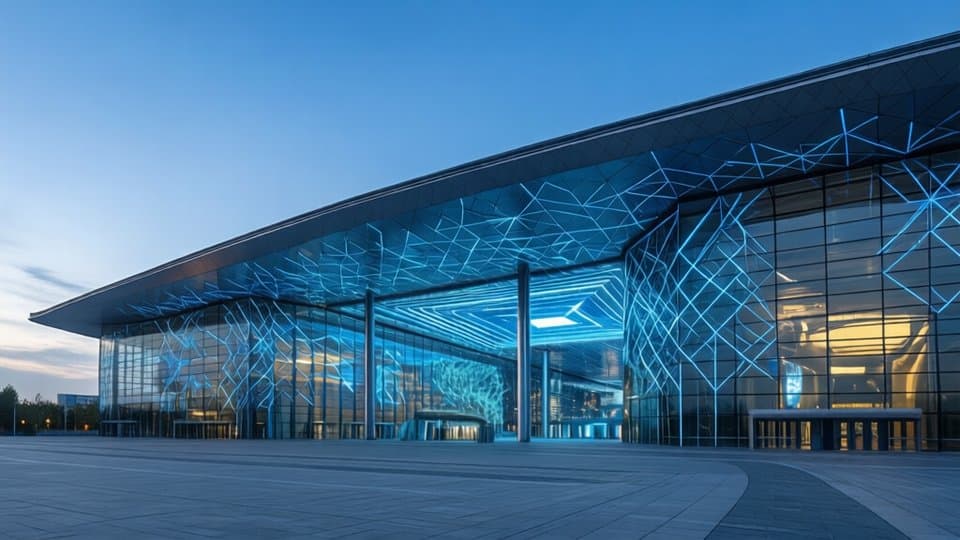
Prime Minister Narendra Modi will inaugurate the Emerging Science, Technology and Innovation Conclave (ESTIC 2026) at Bharat Mandapam in New Delhi on October 27. This three-day event serves as a national platform to align India's research priorities with the long-term vision of Viksit Bharat 2047, making recent modi news central to the country's technological roadmap. The gathering aims to bridge the gap between laboratory research and commercial market application. The conclave will run for three days from October 27 to October 29, according to India Tribune . More than 300 invited participants from global academia and industry will attend the networking event, per NewsOnAir . The exhibition will feature approximately 150 deep-tech startup stalls, according to India Blooms . What is the main purpose of ESTIC 2026? The conclave functions as a high-level meeting to deliberate on emerging technologies and India's specific science and innovation priorities. It brings together a diverse group including scientists, researchers, policymakers, industry leaders, and international experts to discuss how to strengthen the national innovation ecosystem. Participants will focus on turning scientific breakthroughs into practical, real-world solutions. By connecting academia with industry, the event seeks to ensure that research does not remain confined to laboratories but instead moves into the marketplace. This transition is a core component of the national strategy to enhance domestic technological capabilities. Which scientific fields will be discussed? The discussions at the event are organized into 12 distinct thematic areas. These fields represent the most critical sectors for future technological growth and national security in India. According to reports from Mangalorean , the themes include: Artificial intelligence Biotechnology Advanced materials Manufacturing Healthcare Energy Climate science Ocean research The event aims to set research priorities and build national capabilities across these sectors. This structured approach helps ensure that government and private sector resources are directed toward the most impactful scientific advancements. What can visitors see at the exhibition? An extensive technology and innovation exhibition will showcase indigenous scientific achievements. The display uses modern tools to make complex science more accessible to the public and industry stakeholders. The exhibition will utilize augmented and virtual reality experiences, thematic videos, and technology demonstrations to engage visitors. There will also be informational kiosks and documentaries available to explain the real-world applications of various emerging technologies. This interactive approach is designed to highlight how scientific progress affects daily life and industrial sectors. A major highlight of the exhibition is the participation of approximately 150 deep-tech startups. These companies will use dedicated stalls to demonstrate cutting-edge innovations and show how their specific technologies can be applied across different economic sectors. Will there be a focus on space technology? Yes, the Indian Space Research Organisation (ISRO) will have a significant presence at the conclave. The space agency plans to showcase its latest technological developments and future mission concepts to the attendees. At a curtain-raiser event, ISRO Chairman V Narayanan provided details regarding the scale of the space exhibition. He noted that the display will feature a model of a proposed next-generation heavy-lift launch vehicle. This specific vehicle is designed to be capable of placing payloads weighing more than 30,000 kg into low Earth orbit. "the space organisation’s exhibition will be the model of a proposed next-generation heavy-lift launch vehicle that can place payloads weighing over 30,000 kg to low Earth orbit." — V Narayanan , ISRO Chairman Additionally, the exhibition will showcase the Chandrayaan-4 and Chandrayaan-5 projects. These upcoming missions are central to India's goal of sending astronauts to the Moon, marking a major milestone in the country's space exploration history. How does the event foster international cooperation? The conclave introduces a specific initiative called the Global Connect Networking Event. This program is designed to break down the barriers between local research and international industry standards. The event will host more than 300 invited participants from research institutions, academia, and industry both within India and from overseas. This international dimension is intended to create new pathways for research partnerships and facilitate industry-academia collaboration. By bringing these global stakeholders together, the conclave hopes to create a more integrated scientific community that can share knowledge and resources effectively. Who is organizing the conclave? The event is a national platform organized by the Council of Scientific and Industrial Research (CSIR). The organization operates under the direct guidance of the Office of the Principal Scientific Adviser to the Government of India. The primary objective of the organizers is to support the vision of Viksit Bharat 2047 . This long-term national goal focuses on making India a developed nation through sustained scientific and technological progress. By hosting ESTIC 2026, the CSIR and the government aim to build the necessary infrastructure and intellectual capital to meet this 2047 deadline. What happens next? The conclave is scheduled to take place over three days, from October 27 to October 29. Following the opening address by the Prime Minister on Tuesday, the scheduled deliberations and networking events will proceed through the end of the week. There are no further official dates mentioned for subsequent follow-up summits in the current briefings. Frequently Asked Questions Where is ESTIC 2026 being held? The event is taking place at the Bharat Mandapam convention center located in New Delhi, India. What is the main goal of the Global Connect Networking Event? It aims to connect over 300 international and domestic participants to explore research partnerships and move innovations from the lab to the market. Which space missions will be featured? The exhibition will showcase the Chandrayaan-4 and Chandrayaan-5 missions, which are part of India's lunar exploration program. SEO Meta Description: PM Narendra Modi inaugurates ESTIC 2026 in New Delhi, a three-day conclave focusing on AI, biotechnology, and space tech to support India's 2047 goals. URL Slug: modi-inaugurates-estic-2026-science-technology-conclave

Indonesia began reducing its natural gas exports to Singapore on October 24, 2024, to prioritize domestic energy security and industrial needs. This move involves cutting supplies from both the Natuna and Sumatra regions to ensure reliable gas for Indonesia's own electricity generation and petrochemical sectors. The decision marks a shift in regional energy dynamics as Jakarta seeks to strengthen its domestic downstream capabilities. How much gas is being cut and from where? The total reduction in gas supplies amounts to 31 billion British thermal units per day (BBTUD) . This reduction is split between two major Indonesian production areas to serve local demand instead of foreign markets. According to Straits Times , the specific breakdown of the cuts is as follows: 15 BBTUD from the Natuna gas fields. 16 BBTUD from the Sumatra region, specifically the Jambi Merang gas field. The head of Indonesia's upstream oil and gas regulator, SKK Migas, Djoko Siswanto, confirmed these figures. He stated that the cuts would only impact Singapore because the existing pipeline infrastructure connects those specific fields directly to the city-state. The gas diverted from Natuna will now support state electricity company PLN operations in Batam, while Sumatra's supplies will be redirected to Batam, Bintan, and other parts of Sumatra, according to Straits Times . Will this cause an energy crisis in Singapore? No immediate energy crisis is expected in Singapore because the reduction represents a very small fraction of the nation's total daily requirements. Singapore maintains significant reserves and diverse import sources to manage such fluctuations. A spokesperson for Singapore’s Energy Market Authority (EMA) noted that the reduction is less than 2% of the Republic’s total daily gas demand, which exceeds 1,000 BBTUD . Minister for Energy, Trade and Industry Tan See Leng stated on October 25 that Singapore has sufficient replacement gas from other sources, including liquefied natural gas (LNG). To maintain stability, Singapore utilizes several layers of defense: Diversification of natural gas sources from around the world. Maintenance of standby LNG facilities. Readiness of Singapore GasCo to import more LNG as required. Use of alternative fuels like diesel for power generation. While the supply volume is low, Victor Nian, co-founder of the Centre for Strategic Energy and Resources, suggested that losing pipeline supply might trigger higher energy costs rather than a physical shortage, as noted by Mashable Indonesia . How does each side explain the decision? The two governments hold different perspectives on the necessity and the contractual implications of these supply changes. Indonesia views the move as a matter of national sovereignty, while Singapore emphasizes the importance of honoring commercial agreements. The Indonesian Government Position: Jakarta is prioritizing its own industrial growth and energy independence. Energy and Mineral Resources Minister Bahlil Lahadalia has signaled that the government may not renew export contracts with neighboring countries if domestic needs are not met. He also suggested that Indonesia might review agreements with nations that do not show mutual respect. "I am also perhaps thinking of not extending gas exports to neighbouring countries because we have to survive and meet domestic needs," According to Jakarta Globe , the ministry is reviewing allocations to support the expanding petrochemical sector, which uses gas as a key feedstock for plastics and fertilizers. The Singaporean Government Position: Singapore expects its commercial rights to be protected through existing legal frameworks. Prime Minister Lawrence Wong has stated that the government expects all parties to honor their commitments. "We expect all parties to honour their commitments, and Singapore's gas importer will take the necessary steps to protect its rights and interests under these contracts," The Singaporean leadership maintains that while they understand Indonesia's domestic bottlenecks, the legal integrity of gas supply contracts remains a priority, as reported by AsiaOne . What is the background of Indonesia's gas policy? Indonesia has transitioned from being a major regional exporter to a nation focused on domestic downstream processing. This shift is driven by rising local demand and the government's desire to add value to its natural resources. Key historical and policy points include: Late 1990s/Early 2000s: Pipeline arrangements were established to deliver gas from the Natuna Sea and Sumatra to Singapore. 2022: Jakarta agreed to extend gas supplies to Singapore until 2028, though at lower volumes than previous contracts. Current Allocation: According to Jakarta Globe , Indonesia currently allocates approximately 70% of its natural gas production for domestic use and 30% for export. The current administration under President Prabowo Subianto is pushing to use more gas for high-value manufacturing, such as chemical inputs for the pharmaceutical industry, rather than simply exporting raw fuel. Who is most affected by these gas cuts? The primary impact is felt by Singapore's energy importers and industrial users, though the direct effect on households is expected to be minimal. In Indonesia, the primary beneficiaries are domestic industrial sectors and regional power grids. In Singapore, the natural gas importers, such as Gas Supply Private Limited (GSPL), are the entities dealing with the immediate supply disruption. These importers are expected to pursue commercial remedies if contracts are breached. In Indonesia, the redirection of gas specifically benefits the Batam and Bintan regions, where electricity needs are being met by the diverted Natuna and Sumatra supplies. What happens next? The situation remains fluid as both nations monitor the impact of the supply reduction. Several factors will determine the long-term stability of the energy relationship. Contractual Reviews: Singaporean importers will engage with Indonesian suppliers to determine if any commercial breaches have occurred. Monitoring: SKK Migas has committed to monitoring the new gas distribution arrangements on a daily basis. Policy Evolution: The Indonesian government continues its review of gas export allocations to further boost the domestic petrochemical sector. Long-term Planning: Singapore continues to study alternative energy sources, including the potential use of nuclear energy, to secure its future energy needs. Frequently Asked Questions Will electricity prices rise in Singapore due to the gas cut? Minister Tan See Leng stated that prices are unlikely to be affected in the short term because the cut is less than 2% of total demand and global market prices are a larger factor. Why is Indonesia cutting gas exports now? Indonesia is redirecting gas to ensure energy security for its own domestic electricity generation and to support the growth of its local petrochemical industry. How is Singapore replacing the missing gas? Singapore is using replacement gas from other sources, primarily through the import of liquefied natural gas (LNG) and the use of its diversified global supply chain.
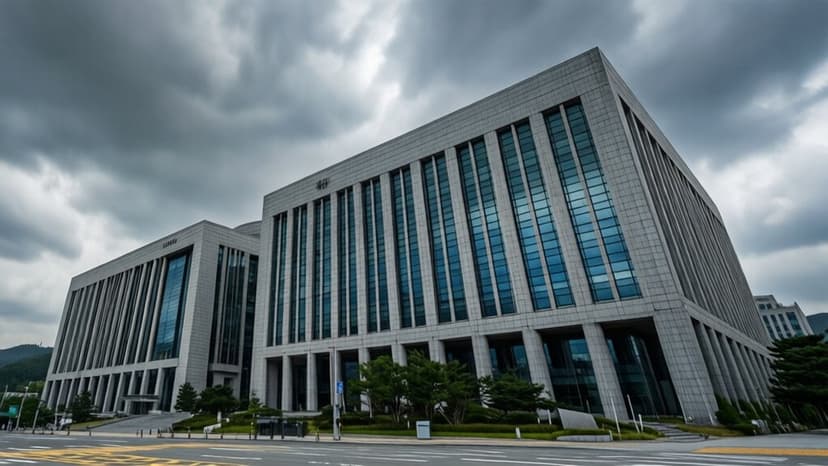
Public opinion in South Korea is deeply divided regarding the possible impeachment of South Korea president Lee Jae-myung's administration's push to remove Supreme Court Chief Justice Cho Hee-dae. Recent polling shows that while President Lee's approval rating has climbed back to the 40% range for the first time in seven weeks, the nation remains split on whether to remove the top judge. What is the current approval rating for President Lee? President Lee Jae-myung has seen a stabilization in his public standing, with his positive rating reaching 40% in recent days. This marks a recovery from a post-inauguration low of 37% and suggests a halt to a continuous downward trend. According to Gallup Korea , conducted from October 20 for three days: 40% of the 1,001 adults surveyed responded that President Lee was performing his state affairs well. However, 50% of respondents felt he was performing poorly. This data indicates that while the president has gained momentum, a significant majority still views his performance negatively. The reasons for these ratings vary by category. For those favoring the president, Gallup Korea reported that 21% cited diplomacy as a reason for their positive view, followed by 14% for the economy and livelihoods, and 7% for communication. Conversely, negative assessments were driven by real estate policy at 18% , the economy at 16% , and national security/North Korea policy at 10% . Is there support for the impeachment of Chief Justice Cho? The question of whether to remove Chief Justice Cho Hee-dae has split the electorate almost down the middle. While the ruling Democratic Party is pushing for the move, the general public is not yet in consensus. According to Gallup Korea : 34% of respondents support the impeachment of Chief Justice Cho Hee-dae. 39% of respondents oppose the impeachment. 28% of respondents reserved judgment or refused to answer. The difference between support and opposition falls within the margin of error. This suggests that the political push for removal lacks a clear mandate from the broader public. How do different political groups view the impeachment? Support for the impeachment is heavily dictated by party affiliation and political leaning. The push is most visible among the president's core supporters but faces resistance from the opposition and centrist voters. The breakdown of support for the impeachment of the Chief Justice is as follows: Democratic Party supporters: 61% favor impeachment. People Power Party supporters: 71% oppose impeachment. Progressives : 66% support impeachment. Conservatives : 61% oppose impeachment. Moderates : Split evenly at 34% for both support and opposition. The Korea Herald notes that although the Democratic Party leads the People Power Party by 9 percentage points in general party support, it has failed to win over the political center regarding the judge's removal. How each side tells it The debate over the judiciary is characterized by intense disagreement between the ruling bloc and the opposition parties regarding the necessity of the move. The Democratic Party and the Rebuilding Korea Party are actively driving the impeachment process. The Rebuilding Korea Party has taken a more aggressive stance by releasing a draft impeachment motion and proposing a joint task force to move the process forward. The Democratic Party, however, remains divided. According to the Korea Herald , internal disagreements persist within the Democratic Party concerning both the necessity of the impeachment and the specific timing of any legislative action. What is the historical context of impeachments in Korea? Impeachment is a known political mechanism in South Korea, though successful motions against high-ranking officials are relatively rare and carry significant weight. To understand the current climate, one must look at previous instances where the public was asked to weigh in on high-level removals. According to Gallup Korea , a February 2023 survey regarding former Minister of the Interior and Safety Lee Sang-min showed a much higher level of consensus. In that instance, which involved the handling of the Itaewon disaster, support for impeachment was significantly higher: 82% of Democratic Party supporters supported impeachment. 72% of progressives supported impeachment. 51% of moderates supported impeachment. The current consensus regarding Chief Justice Cho is notably narrower than the consensus seen during the Lee Sang-min case. What happens next for the administration? The administration faces a dual challenge of managing a divided legislature and a cautious public while attempting to stabilize the economy. The Democratic Party and the Rebuilding Korea Party continue their discussions regarding the impeachment motion. While no specific date for a vote has been set, the Rebuilding Korea Party is actively pressing the Democratic Party to act on their proposed draft. Meanwhile, the president's ability to govern will depend on his ability to manage the National Assembly and address economic pessimism, as only 27% of respondents expect the economy to improve over the next year. FAQ Why is there a push to impeach the Chief Justice? The Democratic Party and the Rebuilding Korea Party are discussing the impeachment, with the latter having already released a draft motion, though specific reasons for the move are not detailed in current polling reports. Is the public in favor of removing the Chief Justice? No, the public is split. Recent polling shows 34% support impeachment while 39% oppose it, a difference that sits within the margin of error. How is President Lee's approval rating performing? His approval rating has risen to 40%, which is the highest it has been in seven weeks, though his negative rating remains higher at 50%.

The Philippines is exploring closer cooperation with Taiwan to protect undersea communications cables and address maritime "gray-zone" activity, according to a Philippine diplomat speaking in Washington on October 21, 2026. This move aims to secure the Bashi Channel, a vital waterway between the two territories, and represents a shift in how china in the philippines relations might influence regional maritime security infrastructure. Why are the Philippines and Taiwan cooperating on cables? The two sides are looking for ways to secure the undersea data lines that carry almost all intercontinental internet traffic. Because these cables run through the Bashi Channel, both nations have a shared interest in preventing disruptions caused by maritime "gray-zone" activities. Felipe F. Carino III, the Philippine deputy chief of mission in Washington, stated that the two sides are considering "practical cooperation, including knowledge-sharing and capacity building." According to Marine Insight , Carino III linked this effort to the fact that 60% to 67% of cyber incidents occur in the region. The geography of the Bashi Channel makes it a critical corridor. The Philippine Domestic Submarine Cable Network, which serves as a main backbone for the country, spans roughly 2,500 kilometers from Quezon to Zamboanga, according to Astig.ph . What are the specific security threats? The primary concern involves "gray-zone" activities, which refer to actions that apply pressure without escalating to direct military conflict. These activities include the potential for vessels to interfere with or damage the physical cables resting on the ocean floor. Recent incidents have heightened these fears. According to Taipei Times , Taiwan has faced several incidents involving cables and vessels linked to China. Specifically, Andrea Yang, Taiwan’s deputy representative in the United States, noted that a Chinese ship captain was jailed in Taiwan due to damage caused to an undersea cable. The Philippine Coast Guard has also taken action. Earlier this month, the agency deployed its largest vessel and an aircraft to challenge a Chinese research ship, identified as the Jia Hai Ke 7 , operating off northern Batanes province near undersea cable corridors. According to Astig.ph , the coast guard suspected the ship may have been surveying subsea cables while spoofing its location signal. How each side tells it The dialogue surrounding this cooperation reveals a sharp divide between the diplomatic approach of Manila and Taipei and the warnings from Beijing. The Philippines and Taiwan position: Manila describes the cooperation as a "pragmatic and practical approach" to protect mutual interests. Carino III emphasized that these discussions are happening "notwithstanding our one China policy." Taiwan is looking to increase maritime surveillance through technology, with Andrea Yang stating that Taipei will put more resources into developing uncrewed systems to monitor the seas. The Chinese position: Beijing views these interactions as a violation of established diplomatic principles. According to Global Times , Chinese Foreign Ministry spokesperson Mao Ning stated on October 22 that "there is no gray zone on the Taiwan question" and urged the Philippines to adhere to the one-China principle through concrete actions. What is the history of these maritime tensions? The tension in the region stems from overlapping territorial claims in the South China Sea and the status of Taiwan. China claims Taiwan as its own territory and maintains overlapping maritime claims that affect both the Philippines and Taiwan. The One-China Policy: The Philippines officially recognizes Beijing rather than Taipei, a policy that Manila insists remains intact during these new security discussions. Maritime Incidents: Taiwan's Ministry of Digital Affairs reported that its coastal waters saw an average of seven to eight cable incidents per year over the last four years, according to Astig.ph . Recent Escalation: The deployment of Philippine Coast Guard assets to Batanes this month marks a direct response to Chinese research vessels operating near sensitive infrastructure. Who is affected by these cable disruptions? The disruption of these cables would impact international data flows and regional digital stability. Because undersea cables carry nearly all intercontinental data, any damage in the Bashi Channel could isolate parts of the Philippines and Taiwan from the global internet. The economic and security implications are high. Taiwan is actively seeking international support, with Andrea Yang suggesting that interference with undersea cables should be addressed by the United Nations to prevent "bad behavior." For the Philippines, the focus is on protecting the infrastructure that supports its domestic and international communications. What happens next? While no formal treaty has been signed, the cooperation between Manila and Taipei is expected to continue evolving. Carino III indicated that certain measures, such as joint patrols or increased accountability for vessels, "may be actually coming to fruition." The international community will likely watch for further moves from the United Nations regarding cable protection. Additionally, the Philippine government will continue to monitor maritime activity in the Batanes region, particularly concerning research vessels operating near the Bashi Channel. FAQ Why are undersea cables important to the Philippines? Undersea cables carry almost all of the country's intercontinental data flows and internet traffic, making them vital for national communication and the economy. Does this cooperation violate the Philippines' relationship with China? The Philippine government maintains that this is a practical, non-political approach to infrastructure security that exists "notwithstanding" its official one-China policy. What is "gray-zone" activity in the South China Sea? Gray-zone activity refers to actions, such as using research ships to survey sensitive areas, that exert pressure on a country without triggering a full-scale military conflict.

Survey finds sharp AI knowledge gap among rural Nebraskans by age, schooling and income A new Nebraska Rural Poll shows that most rural Nebraskans have limited knowledge of artificial intelligence and that familiarity with AI varies strongly by age, education and income . The findings place Nebraska’s rural communities squarely inside a broader national pattern in which younger, more educated and higher‑income residents are far more likely to use and understand AI tools than their older and less advantaged neighbors. Most rural Nebraskans say they know little about AI The 2024 Nebraska Rural Poll, conducted by the University of Nebraska–Lincoln, asked thousands of rural residents how much they know about artificial intelligence and whether they use AI tools. Just over half of respondents — 53% — said they are not at all or only slightly informed about AI. About 34% described themselves as moderately informed, while only 13% reported being very or extremely informed. Usage figures were similarly modest. Roughly 27% of rural Nebraskans said they have used AI tools such as chatbots or automated writing assistants, meaning nearly three‑quarters have never tried them. Researchers note that this relatively low level of engagement raises concerns about whether rural communities will be able to fully participate in AI‑driven economic and civic changes. Age is a major dividing line Age emerged as one of the strongest predictors of AI experience in the Rural Poll. Among Nebraskans under 30, a majority — 55% — reported using AI tools, in stark contrast with older residents. Only about 9% of those aged 65 and older said they had used AI. Younger adults were also much more likely to say they are very or extremely informed about AI. This age divide parallels national survey data. A 2025 Pew Research Center study found that about 62% of U.S. adults under 30 had heard or read “a lot” about AI, compared with just 32% of adults 65 and older. Other research has shown that AI use tends to peak in early to mid‑career years and declines steadily after age 60. Education and income strongly linked to AI use The Nebraska Rural Poll report shows that people with more education are far more likely to have experimented with AI tools. About 40% of respondents with at least a four‑year college degree reported using AI, compared with only 4% among those with a high school diploma or less. The survey also found higher usage among people in management, professional, education, food service and personal care jobs, which tend to require more formal training. Household income tells a similar story. Rural Nebraskans with higher incomes were more likely to say they had tried AI tools and to report feeling at least moderately informed about the technology. Nationally, a Phoenix Center analysis of more than 7,000 U.S. adults found that AI use and AI awareness both rise with income and education while declining with age. A separate Rutgers University survey likewise reported that higher‑income and college‑educated Americans use AI more often, trust it more and demonstrate greater knowledge about how it works. Limited confidence that AI serves the public interest Beyond awareness and usage, the Nebraska Rural Poll explored how residents feel about AI’s broader impact. Many respondents said they are not confident that AI is being used in the best interest of the public. That skepticism was particularly strong among those who felt least informed, suggesting that low literacy may be fueling mistrust. National research points to similar tensions. While more educated and higher‑income Americans tend to trust AI more, surveys consistently find worries across demographic groups about job loss, misinformation and privacy. For rural communities, where economies often rely on agriculture, small business and local services, the stakes of how AI reshapes work and communication may feel especially high. Nebraska’s broader digital readiness challenge The new findings on AI land in a state that already faces structural challenges in technology readiness. A recent analysis ranked Nebraska as the 20th least prepared state for the AI economy based on jobs, education and government funding. The report cited relatively weak federal support for tech‑oriented small business innovation and below‑average rates of AI‑related degrees among Nebraskans in their early twenties. Earlier studies of digital readiness in Nebraska also found large gaps tied to age, income and educational attainment, with smaller differences between urban and rural counties. Those same divides now appear to be shaping who knows about AI and who feels left behind. Call for education and outreach in rural communities Researchers behind the Rural Poll say the results underscore the need for targeted education and outreach if rural Nebraskans are to benefit from AI rather than be sidelined by it. They argue that improving AI literacy — from basic definitions to practical examples in agriculture, health care and local government — could help residents make more informed decisions and evaluate risks. The pattern found in Nebraska mirrors broader academic work showing that younger people with tertiary education and mid‑ to high‑income levels use a wider range of AI tools, report greater confidence and rely on AI for more complex tasks. Without deliberate efforts to close those gaps, experts warn that AI could deepen existing inequalities in economic opportunity, civic participation and access to information.

Beijing is allegedly increasing efforts to intimidate the relatives of Taiwanese politicians to influence upcoming elections, according to reports from the Institute for the Study of War (ISW) and the American Enterprise Institute (AEI) . These actions, targeting those identified as supporters of independence, aim to discourage political activity and create a chilling effect within the republic of china on taiwan political landscape. The pressure involves economic sanctions, travel bans, and physical surveillance of family members residing abroad. How is Beijing targeting the families of politicians? China uses economic sanctions, employment termination, and physical surveillance to pressure the relatives of prominent figures. By targeting family members, Beijing seeks to discourage activists and politicians from engaging in activities linked to Taiwanese independence. According to Line Today , the China Affairs Office announced on October 14, 2024, that it would sanction the company VWAY. This company is owned by Shen Tu-cheng, the father of Democratic Progressive Party (DPP) legislator and Taipei mayoral candidate Puma Shen. The sanctions bar the company from conducting business with any Chinese organizations, enterprises, or individuals. The China Affairs Office further alleged that Shen Tu-cheng used the company to bypass previous sanctions and claimed the family was attempting to profit from mainland China. Other reported cases of familial pressure include: The brother of United Microelectronics Corp founder Robert Tsao was denied entry into China in early October 2024, according to The Taipei Times . The nephew of Taiwan’s Interior Minister Liu Shyh-fang reportedly lost his job at a Taiwan-funded enterprise in China in April 2026 following an investigation by Chinese authorities, as reported by Line Today . The brother of Cao Xing-cheng was banned from entering China because Cao funded the "Black Bear Academy," a civil defense organization associated with Puma Shen, according to Line Today . What is the surveillance case in the United States? A California real estate agent was arrested by the FBI for allegedly spying on the son of Taiwan's president. Federal officials claim she acted as an unregistered agent for Beijing to gather intelligence on the family in the U.S. According to KSAT , the FBI arrested Wanying Zhang , a 34-year-old naturalized U.S. citizen and real estate agent from Irvine, at Los Angeles International Airport. Authorities allege that Zhang, who also goes by the name Heather, surveilled the home of President William Lai 's son, Ting-Yu Lai, in the Seattle area. The criminal complaint states that Zhang and another person flew to Seattle on September 1, 2025, to conduct this surveillance. The FBI alleges that Zhang sent photos, videos, and license plate information of the target's vehicles to a Chinese government official. An affidavit in the case suggests that such information could provide Beijing with leverage over the president during a potential conflict. Zhang is an alumna of the University of International Relations in Beijing, an institution the FBI notes is closely tied to China's intelligence apparatus, according to KSAT . How each side tells it The two governments and the involved political parties present conflicting views on these actions and the legitimacy of the individuals targeted. "Taiwan condemns in the strongest terms such barbaric acts — which disregard human rights and national sovereignty and aim to suppress, threaten, or even harm individuals advocating for freedom and democracy or their families — as such behavior should not be tolerated in the civilized world" Spokesperson Karen Kuo of the Taiwan Presidential Office characterized the surveillance of the president's family as "transnational repression." The DPP maintains that Taiwan and the People's Republic of China are separate countries. The China Affairs Office has labeled several individuals, including Puma Shen, as "diehard separatists." According to The Taipei Times , Beijing interprets its Anti-Secession Law as allowing for severe punishments, including the death penalty, for those designated as separatists. Chinese military-affiliated media accounts, such as Jun Zhengping , have also used public platforms to criticize individuals who support the targeted politicians. Why is this happening during the election? The timing of these pressures coincides with a highly competitive mayoral race in Taipei. Analysts believe the targeting of families is a strategic move to influence voter perception and political alliances. Puma Shen is currently a Democratic Progressive Party candidate for the Taipei mayoral election, competing against the incumbent Kuomintang (KMT) Mayor Chiang Wan-an . According to The Taipei Times , polling data shows a shifting landscape: Shen was trailing Chiang by 1.2 percentage points in late September, but subsequent surveys reportedly placed him 17 points ahead. The ISW and AEI report suggests that even if the intimidation fails to force a candidate to withdraw, it can successfully discourage other public figures from associating with them. This can restrict political debate and alter the electoral environment. For example, media accounts and the China Affairs Office recently criticized television host Kevin Tsai for attending a campaign event for Shen, according to Line Today . Who is affected by these security concerns? The impact extends from high-ranking government officials to private business owners and their relatives. This creates a broad sense of vulnerability for those involved in Taiwan's political and economic sectors. Directly affected individuals include: Puma Shen : A Taipei mayoral candidate whose family business, VWAY, faces Chinese sanctions. William Lai : The President of Taiwan, whose son was allegedly targeted by surveillance in the United States. Liu Shyh-fang : The Interior Minister, whose nephew lost his employment in China. Robert Tsao : The founder of United Microelectronics Corp, whose brother was barred from entering China. The pressure also affects the broader public and media figures. The ISW warns that the threat of being labeled a "traitor" or "separatist" can prevent journalists and celebrities from participating in democratic processes, thereby narrowing the scope of political discourse in Taiwan. What happens next? Legal proceedings and electoral milestones will determine the immediate impact of these tensions. Several key dates and judicial steps are already in motion. Regarding the legal case in the United States, a hearing to determine bail or detention for Wanying Zhang was scheduled for Wednesday afternoon following her initial court appearance in Los Angeles. She must secure private legal counsel as the judge ruled her ineligible for a public defender. In Taiwan, the Taipei mayoral election remains the primary focus, with the campaign period actively moving toward the vote. The political climate will likely remain tense as candidates react to the ongoing economic and social pressures exerted by Beijing. Frequently Asked Questions Why is China targeting the families of Taiwanese politicians? Beijing uses family members to exert pressure on politicians and create a "chilling effect" that discourages support for Taiwanese independence. This method allows China to target individuals indirectly through economic or social consequences for their relatives. What is the significance of the VWAY sanctions? The sanctions against VWAY, owned by the father of candidate Puma Shen, represent an attempt to use economic leverage to undermine a specific political campaign. By banning the company from Chinese business, Beijing aims to damage the candidate's financial and political standing. How did the FBI become involved in Taiwan's political issues? The FBI intervened because an alleged Chinese agent was conducting surveillance on the family of Taiwan's president within the United States. This case is part of a larger U.S. effort to identify and prosecute covert agents working for Beijing on American soil.

The extended electric sedan Mercedes‑Benz CLA L , specially developed for the Chinese market, has turned out to be a commercial disappointment: according to industry sources, only 627 units were sold in China in the first half of 2026, after which production of the model at the Beijing Benz plant was temporarily suspended. There is no official confirmation of the production stop from Mercedes‑Benz yet, however, several specialized publications, citing internal sources and sales statistics, agree that the CLA L project in its current form has not met the concern's expectations. A Model "For China Only": Extended Wheelbase and Adapted Software The CLA L is an exclusive version for the Chinese market of the new electric Mercedes‑Benz CLA with an extended wheelbase by 40 mm and an overall length increased to approximately 4.76 m. This configuration is traditionally in demand in the PRC, where many manufacturers offer "long" versions of sedans and crossovers for more space for rear-seat passengers. The model is equipped with a battery capacity of about 89 kWh and boasts a range of up to 866 km in the Chinese CLTC cycle, formally making it one of the "longest-range" cars in its segment. The CLA L also received a software suite adapted for the local market, including advanced artificial intelligence functions and fast charging, designed to compete with local tech brands. The production of the sedan was carried out at the facilities of the joint venture Beijing Benz Automotive —a joint venture between Mercedes‑Benz and China's BAIC Motor, responsible for the production of a number of premium models for the domestic market of the PRC. Sales Statistics: A Sharp Spike and a Crash to Zero The main reason for the conveyor belt stoppage was the extremely low sales volumes in the world's largest electric vehicle market. According to MBPassion, cited by Carscoops and a number of European media outlets, dealers managed to deliver only 627 CLA L cars in the first half of 2026. The monthly dynamics are as follows: January — 35 cars; February — 21 cars, a minimum for the period; March — a short-term spike to 358 units; April — a drop to 52; May — 161 cars; June — according to some sources, 0 new registrations . It was the data on zero June sales that led to loud headlines about the model's "failure" and a "symbol of the crisis" in Mercedes' electric car sales in China. At the same time, some Chinese statistical reports still record minor registrations, indicating possible discrepancies in accounting methodology and continuing uncertainty. Temporary Pause: What is Known About the Production Stop A number of European and Asian publications, including MBPassion and Highmotor, report a temporary suspension of CLA L assembly at the Beijing Benz plant in Beijing. It is noted that at such a level of demand, mass production loses its economic sense, and further production risks an oversupply of inventory. Mercedes‑Benz has not publicly confirmed either the fact of the production stoppage or the possible timing of its resumption, leaving the question of the model's future open. According to MBPassion, a complete withdrawal of the CLA L from the market is not ruled out if the demand assessment proves to be consistently erroneous and the situation cannot be reversed. Thus, the current status of the project can be described as "frozen": formally, the model remains in the lineup, but its production, according to specialized sources, has been paused due to sales not meeting initial forecasts. Why the "Chinese" CLA Didn't Become a Hit Analysts attribute the weak interest in the CLA L not to its technical characteristics, but to the general change in the competitive environment in the PRC electric vehicle market . German publications note that it is becoming increasingly difficult for Mercedes‑Benz to compete with local brands such as Xiaomi, Nio, BYD, XPeng, and others, which offer aggressive pricing, deep integration of digital services, and rapidly updated model lineups. Against the backdrop of local manufacturers focused on online sales and ecosystems of "smart homes" and mobile services, even the premium status of the Mercedes brand no longer guarantees success in the mid-price segment of electric sedans. At the same time, the CLA L is positioned as technologically advanced, but at the initial sales launch, prices comparable to some mass-market models were reported, which should have made it competitive in terms of "image/cost" ratio. A separate problem is the possible mismatch between the product and the expectations of the Chinese audience: the extended wheelbase and spacious rear row have become market standards, and the key factor in choice is increasingly the design of interfaces, the quality of built-in services, local super-apps, and "smart" functions, in which new Chinese brands are moving faster than traditional automotive concerns. Implications for Mercedes‑Benz's Strategy in China The unsuccessful launch of the CLA L is seen as an indicator of a broader problem: the transition of power in the PRC electric vehicle market to local players , even in segments historically dominated by European premium brands. For Mercedes‑Benz, this is a signal of the need to revise its product and pricing strategy, as well as to adapt the digital part of the car to local user habits. At the same time, the failure of one model does not mean the concern's withdrawal from the Chinese market. The company continues to develop production through joint ventures, expand its electric lineup, and test different formats of cooperation with local IT players. However, the CLA L case, created "for China" and proving to be in demand, has already become an illustrative example of the risks when attempting to finely adapt a global platform to a hyper-dynamic market.
Tomas Vogel·08:52 25.10.2026
Tomas Vogel·09:00 24.10.2026
Tomas Vogel·14:26 23.10.2026

Sara Lindqvist·14:00 25.10.2026

Sara Lindqvist·13:00 24.10.2026

Sara Lindqvist·13:31 23.10.2026

Marcus Hale·16:00 25.10.2026

Marcus Hale·15:00 24.10.2026
Marcus Hale·14:55 23.10.2026