




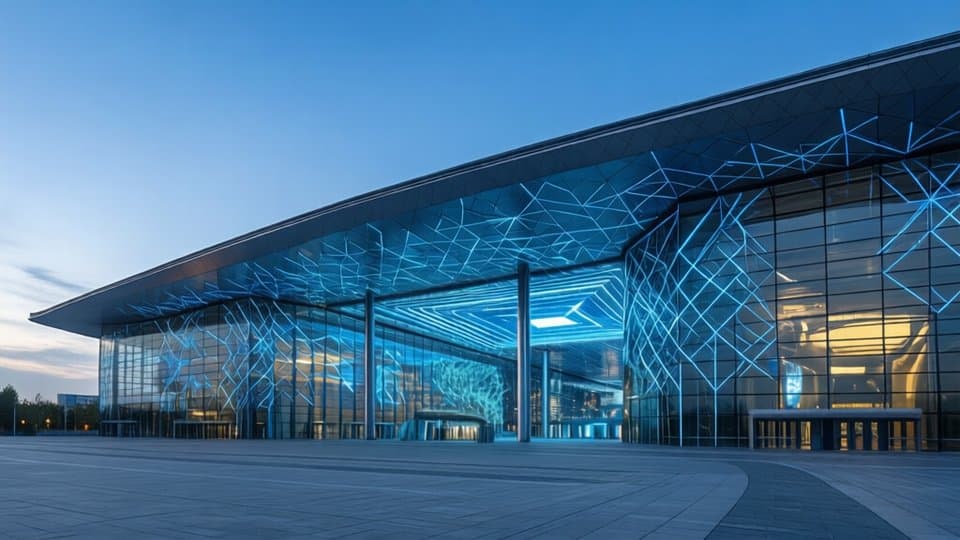
Prime Minister Narendra Modi will inaugurate the Emerging Science, Technology and Innovation Conclave (ESTIC 2026) at Bharat Mandapam in New Delhi on October 27. This three-day event serves as a national platform to align India's research priorities with the long-term vision of Viksit Bharat 2047, making recent modi news central to the country's technological roadmap. The gathering aims to bridge the gap between laboratory research and commercial market application. The conclave will run for three days from October 27 to October 29, according to India Tribune . More than 300 invited participants from global academia and industry will attend the networking event, per NewsOnAir . The exhibition will feature approximately 150 deep-tech startup stalls, according to India Blooms . What is the main purpose of ESTIC 2026? The conclave functions as a high-level meeting to deliberate on emerging technologies and India's specific science and innovation priorities. It brings together a diverse group including scientists, researchers, policymakers, industry leaders, and international experts to discuss how to strengthen the national innovation ecosystem. Participants will focus on turning scientific breakthroughs into practical, real-world solutions. By connecting academia with industry, the event seeks to ensure that research does not remain confined to laboratories but instead moves into the marketplace. This transition is a core component of the national strategy to enhance domestic technological capabilities. Which scientific fields will be discussed? The discussions at the event are organized into 12 distinct thematic areas. These fields represent the most critical sectors for future technological growth and national security in India. According to reports from Mangalorean , the themes include: Artificial intelligence Biotechnology Advanced materials Manufacturing Healthcare Energy Climate science Ocean research The event aims to set research priorities and build national capabilities across these sectors. This structured approach helps ensure that government and private sector resources are directed toward the most impactful scientific advancements. What can visitors see at the exhibition? An extensive technology and innovation exhibition will showcase indigenous scientific achievements. The display uses modern tools to make complex science more accessible to the public and industry stakeholders. The exhibition will utilize augmented and virtual reality experiences, thematic videos, and technology demonstrations to engage visitors. There will also be informational kiosks and documentaries available to explain the real-world applications of various emerging technologies. This interactive approach is designed to highlight how scientific progress affects daily life and industrial sectors. A major highlight of the exhibition is the participation of approximately 150 deep-tech startups. These companies will use dedicated stalls to demonstrate cutting-edge innovations and show how their specific technologies can be applied across different economic sectors. Will there be a focus on space technology? Yes, the Indian Space Research Organisation (ISRO) will have a significant presence at the conclave. The space agency plans to showcase its latest technological developments and future mission concepts to the attendees. At a curtain-raiser event, ISRO Chairman V Narayanan provided details regarding the scale of the space exhibition. He noted that the display will feature a model of a proposed next-generation heavy-lift launch vehicle. This specific vehicle is designed to be capable of placing payloads weighing more than 30,000 kg into low Earth orbit. "the space organisation’s exhibition will be the model of a proposed next-generation heavy-lift launch vehicle that can place payloads weighing over 30,000 kg to low Earth orbit." — V Narayanan , ISRO Chairman Additionally, the exhibition will showcase the Chandrayaan-4 and Chandrayaan-5 projects. These upcoming missions are central to India's goal of sending astronauts to the Moon, marking a major milestone in the country's space exploration history. How does the event foster international cooperation? The conclave introduces a specific initiative called the Global Connect Networking Event. This program is designed to break down the barriers between local research and international industry standards. The event will host more than 300 invited participants from research institutions, academia, and industry both within India and from overseas. This international dimension is intended to create new pathways for research partnerships and facilitate industry-academia collaboration. By bringing these global stakeholders together, the conclave hopes to create a more integrated scientific community that can share knowledge and resources effectively. Who is organizing the conclave? The event is a national platform organized by the Council of Scientific and Industrial Research (CSIR). The organization operates under the direct guidance of the Office of the Principal Scientific Adviser to the Government of India. The primary objective of the organizers is to support the vision of Viksit Bharat 2047 . This long-term national goal focuses on making India a developed nation through sustained scientific and technological progress. By hosting ESTIC 2026, the CSIR and the government aim to build the necessary infrastructure and intellectual capital to meet this 2047 deadline. What happens next? The conclave is scheduled to take place over three days, from October 27 to October 29. Following the opening address by the Prime Minister on Tuesday, the scheduled deliberations and networking events will proceed through the end of the week. There are no further official dates mentioned for subsequent follow-up summits in the current briefings. Frequently Asked Questions Where is ESTIC 2026 being held? The event is taking place at the Bharat Mandapam convention center located in New Delhi, India. What is the main goal of the Global Connect Networking Event? It aims to connect over 300 international and domestic participants to explore research partnerships and move innovations from the lab to the market. Which space missions will be featured? The exhibition will showcase the Chandrayaan-4 and Chandrayaan-5 missions, which are part of India's lunar exploration program. SEO Meta Description: PM Narendra Modi inaugurates ESTIC 2026 in New Delhi, a three-day conclave focusing on AI, biotechnology, and space tech to support India's 2047 goals. URL Slug: modi-inaugurates-estic-2026-science-technology-conclave
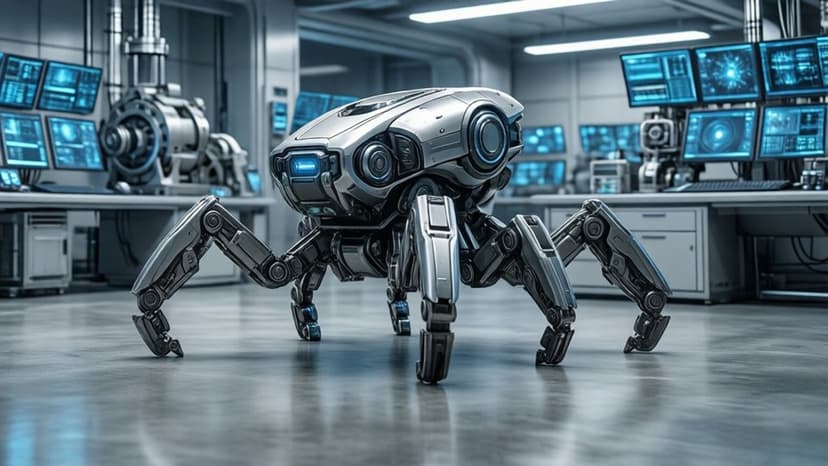
Shares of China's Unitree Robotics surged to a 20% daily limit on October 23, 2026, pushing the company's market capitalization back above 250 billion yuan. This rally, driven by optimism over physical AI breakthroughs, signals a volatile period for the humanoid robot sector as investors weigh rapid technological progress against regulatory scrutiny and commercialization hurdles. Why did Unitree Robotics shares jump so high? The sudden price increase followed a major industry conference and optimistic projections regarding the timeline for "embodied intelligence" to reach a mass-market breakthrough. Investors reacted to strategic plans for large-scale production and the potential for robots to achieve a "ChatGPT-like moment" within a few years. According to finance.biggo.com , on October 23, 2026, the company's stock closed at 624 yuan per share, reaching a total market value of 252.4 billion yuan (approximately $37.9 billion). This marked the first time the stock hit its daily limit since its August 19 debut on the Shanghai STAR Market. The company's weekly gain exceeded 46%. The primary catalyst was the 2026 World Physical AI Conference held in Hangzhou on October 22. At this event, Unitree founder Wang Xingxing outlined a vision for massive production capacity to meet future demands of tens or even hundreds of millions of units. He also introduced the "Yuchuang Plan," an initiative designed to incubate more than 200 ecosystem companies over the next five years. According to sohu.com , Wang Xingxing believes the industry is nearing a critical tipping point. He noted that the G1 humanoid robot has already reached a cumulative production of between 10,000 and 20,000 units, which he described as the world's best-selling humanoid robot. How is the broader robotics market performing? The rally for Unitree Robotics triggered a widespread surge across the humanoid robot and robotics sectors in China. Many related stocks saw significant gains, reflecting a high level of investor appetite for the "embodied intelligence" theme. According to finance.biggo.com , the Wind Humanoid Robot Index rose 6.16% on October 23, while the broader Wind Robot Index climbed 5.01%. Several specific companies hit their 20% price caps, including Leyard, Huayi Technology, Haitian Ruisheng, and Orbbec. In Hong Kong, robot makers like UBTECH gained 6.73% and Dobot added 6.5%. Global market data suggests the sector is expanding rapidly. A report by Frost & Sullivan indicated that global humanoid robot sales reached 36,000 units in the first half of 2026, which already surpassed the total of 35,000 units sold during the entire year of 2025. During that same period in 2026, market revenue reached $540 million. In the United States, Tesla is also making moves in the sector. According to reports, Elon Musk stated during a third-quarter 2026 earnings call on October 21 that Tesla's Fremont factory has started early pilot production of the Optimus robot. The company aims for a production capacity of one million units and hopes to deliver the robot to external companies by late 2027. What are the risks to these high valuations? Despite the recent price surge, analysts and regulators warn that the industry's valuations may be disconnected from actual commercial reality. High price-to-earnings ratios and the early stage of market adoption create significant investment risks. According to finance.biggo.com , Unitree Robotics issued an announcement on October 20, 2026, regarding abnormal stock trading. The company noted its trailing price-to-earnings ratio was 388.25 times, which is much higher than the industry average of 39.51 times for the general equipment manufacturing sector. The company warned that the industry faces uncertainty regarding technological maturity and the development of downstream market demand. If large-scale commercialization fails to meet expectations, future earnings could be negatively impacted. According to ibtimes.com , Chinese regulators are also tightening oversight. Authorities have used informal "window guidance" to slow the rush of humanoid-robot companies seeking to go public. Regulators are scrutinizing whether revenue reported by these companies comes from independent customers or from government-backed data-collection centers and joint ventures. One source close to investors told ibtimes.com that if revenue from government-linked data centers were removed, valuations for some robotics companies could drop by between 60% and 70%. How each side tells it The debate over the robotics sector pits the optimistic technological vision of company founders against the cautious approach of market regulators and conservative analysts. The company and its supporters emphasize the rapid evolution of AI. Wang Xingxing, the founder of Unitree Robotics, provided a direct perspective on the potential for a breakthrough: "The world's attention and faith in AI are still not enough, including my own." On the other side, regulators and cautious analysts focus on the lack of proven, recurring commercial demand. According to ibtimes.com , the regulatory approach is driven by a need to ensure that soaring valuations are backed by evidence of robots being deployed at scale in the real world. What is the historical context of this sector? Humanoid robotics has transitioned from a niche research interest to a strategic national priority in China, though the path has been marked by extreme volatility. August 19, 2026: Unitree Robotics listed on the Shanghai STAR Market, with shares closing more than 460% above their offer price on the first day. 2025: Global sales of humanoid robots for industrial and professional use totaled approximately 7,000 units. First half of 2026: Unitree reported revenue of 1.152 billion yuan, a 48.54% increase year-on-year. October 16, 2026: China officially approved the first six national standards for the humanoid robot field. The sector's growth has been heavily influenced by "campaign-style innovation," where capital flows rapidly into areas favored by government policy. This has led to some private robotics project valuations being cut by 30% to 50% as the initial hype meets reality. What happens next? The immediate future for Unitree Robotics and the broader industry will be defined by financial disclosures and the implementation of new technical standards. October 29, 2026: Unitree Robotics is scheduled to release its first post-listing quarterly report. April 1, 2027: China's new national technical standards for humanoid robots are set to take effect. Late 2027: Tesla expects to resolve AI and electromechanical issues to begin delivering its Optimus robot to external companies. Frequently Asked Questions What is the current market value of Unitree Robotics? As of October 23, 2026, the company's market capitalization is approximately 252.4 billion yuan, or roughly $37.9 billion. Why are regulators investigating humanoid robot companies in China? Regulators are examining whether the high valuations of these companies are supported by real commercial demand or if they are inflated by government-backed revenue projects. How many humanoid robots are being sold globally? In the first half of 2026, global sales reached 36,000 units, according to data from Frost & Sullivan.

The Philippines is exploring closer cooperation with Taiwan to protect undersea communications cables and address maritime "gray-zone" activity, according to a Philippine diplomat speaking in Washington on October 21, 2026. This move aims to secure the Bashi Channel, a vital waterway between the two territories, and represents a shift in how china in the philippines relations might influence regional maritime security infrastructure. Why are the Philippines and Taiwan cooperating on cables? The two sides are looking for ways to secure the undersea data lines that carry almost all intercontinental internet traffic. Because these cables run through the Bashi Channel, both nations have a shared interest in preventing disruptions caused by maritime "gray-zone" activities. Felipe F. Carino III, the Philippine deputy chief of mission in Washington, stated that the two sides are considering "practical cooperation, including knowledge-sharing and capacity building." According to Marine Insight , Carino III linked this effort to the fact that 60% to 67% of cyber incidents occur in the region. The geography of the Bashi Channel makes it a critical corridor. The Philippine Domestic Submarine Cable Network, which serves as a main backbone for the country, spans roughly 2,500 kilometers from Quezon to Zamboanga, according to Astig.ph . What are the specific security threats? The primary concern involves "gray-zone" activities, which refer to actions that apply pressure without escalating to direct military conflict. These activities include the potential for vessels to interfere with or damage the physical cables resting on the ocean floor. Recent incidents have heightened these fears. According to Taipei Times , Taiwan has faced several incidents involving cables and vessels linked to China. Specifically, Andrea Yang, Taiwan’s deputy representative in the United States, noted that a Chinese ship captain was jailed in Taiwan due to damage caused to an undersea cable. The Philippine Coast Guard has also taken action. Earlier this month, the agency deployed its largest vessel and an aircraft to challenge a Chinese research ship, identified as the Jia Hai Ke 7 , operating off northern Batanes province near undersea cable corridors. According to Astig.ph , the coast guard suspected the ship may have been surveying subsea cables while spoofing its location signal. How each side tells it The dialogue surrounding this cooperation reveals a sharp divide between the diplomatic approach of Manila and Taipei and the warnings from Beijing. The Philippines and Taiwan position: Manila describes the cooperation as a "pragmatic and practical approach" to protect mutual interests. Carino III emphasized that these discussions are happening "notwithstanding our one China policy." Taiwan is looking to increase maritime surveillance through technology, with Andrea Yang stating that Taipei will put more resources into developing uncrewed systems to monitor the seas. The Chinese position: Beijing views these interactions as a violation of established diplomatic principles. According to Global Times , Chinese Foreign Ministry spokesperson Mao Ning stated on October 22 that "there is no gray zone on the Taiwan question" and urged the Philippines to adhere to the one-China principle through concrete actions. What is the history of these maritime tensions? The tension in the region stems from overlapping territorial claims in the South China Sea and the status of Taiwan. China claims Taiwan as its own territory and maintains overlapping maritime claims that affect both the Philippines and Taiwan. The One-China Policy: The Philippines officially recognizes Beijing rather than Taipei, a policy that Manila insists remains intact during these new security discussions. Maritime Incidents: Taiwan's Ministry of Digital Affairs reported that its coastal waters saw an average of seven to eight cable incidents per year over the last four years, according to Astig.ph . Recent Escalation: The deployment of Philippine Coast Guard assets to Batanes this month marks a direct response to Chinese research vessels operating near sensitive infrastructure. Who is affected by these cable disruptions? The disruption of these cables would impact international data flows and regional digital stability. Because undersea cables carry nearly all intercontinental data, any damage in the Bashi Channel could isolate parts of the Philippines and Taiwan from the global internet. The economic and security implications are high. Taiwan is actively seeking international support, with Andrea Yang suggesting that interference with undersea cables should be addressed by the United Nations to prevent "bad behavior." For the Philippines, the focus is on protecting the infrastructure that supports its domestic and international communications. What happens next? While no formal treaty has been signed, the cooperation between Manila and Taipei is expected to continue evolving. Carino III indicated that certain measures, such as joint patrols or increased accountability for vessels, "may be actually coming to fruition." The international community will likely watch for further moves from the United Nations regarding cable protection. Additionally, the Philippine government will continue to monitor maritime activity in the Batanes region, particularly concerning research vessels operating near the Bashi Channel. FAQ Why are undersea cables important to the Philippines? Undersea cables carry almost all of the country's intercontinental data flows and internet traffic, making them vital for national communication and the economy. Does this cooperation violate the Philippines' relationship with China? The Philippine government maintains that this is a practical, non-political approach to infrastructure security that exists "notwithstanding" its official one-China policy. What is "gray-zone" activity in the South China Sea? Gray-zone activity refers to actions, such as using research ships to survey sensitive areas, that exert pressure on a country without triggering a full-scale military conflict.

ASML’s Surprise Guidance Hike Highlights Its Quiet Power in the AI Chip Boom While AI headlines are dominated by chip designers like Nvidia and cloud giants such as Microsoft and Amazon, one of the most critical companies behind the AI hardware revolution sits further up the supply chain: ASML Holding . Often described as an unsung hero of artificial intelligence, the Dutch equipment maker just delivered guidance that stunned investors and underscored how central its machines are to the future of advanced chips. ASML recently reported another strong quarter and, more importantly, sharply raised its full-year revenue outlook, signaling that demand for cutting-edge chipmaking tools is accelerating as AI workloads proliferate. What ASML Announced – And Why It Matters According to a recent analysis of the company’s performance, ASML posted roughly 25% year‑over‑year revenue growth in its latest quarter, a solid pace for a business already operating at enormous scale. While that growth rate is not the fastest among AI‑linked stocks, the real shock for the market came from management’s new guidance. ASML lifted its expected 2026 revenue range to between €43 billion and €45 billion , up from a prior range of €36 billion to €40 billion. For a company whose fiscal year is already well underway, that is a substantial mid‑course upgrade. It effectively signals that chipmakers are ordering more of ASML’s most advanced tools than previously anticipated, primarily to support surging demand for high‑performance logic and memory used in AI data centers. The market reaction was swift: investors interpreted the guidance hike as confirmation that AI‑driven capital spending cycles at foundries and integrated device manufacturers are stronger and more durable than feared. Why ASML Is So Critical to AI Chips ASML is the only company in the world capable of producing extreme ultraviolet (EUV) lithography systems , the tools used to etch the tiniest features on the most advanced semiconductor wafers. Without these machines, the latest generations of processors used in AI servers, smartphones and high‑end PCs would be impossible to manufacture at commercial scale. Chip designers such as Nvidia and AMD rely on foundries like Taiwan Semiconductor Manufacturing Company (TSMC) and Samsung to fabricate their chips. Those foundries, in turn, rely on ASML’s EUV and deep‑ultraviolet (DUV) tools to shrink transistor sizes and pack more computing power into each chip. In this sense, ASML sits at the heart of the AI value chain, but one step removed from the consumer and enterprise brands that tend to capture the most attention. This technological position has effectively given ASML a narrow monopoly in a critical segment of the chip equipment market. Analysts and investors routinely highlight that there is no direct substitute for its most advanced systems, and that replicating the company’s decades‑long R&D and supplier ecosystem would be extraordinarily difficult. How the AI Wave Is Powering ASML’s Outlook The AI boom requires enormous volumes of advanced logic chips (such as graphics processing units and custom accelerators) and high‑bandwidth memory. To meet these needs, leading fabs are running near full capacity and planning multi‑year expansion programs, which drive orders for ASML’s lithography tools. By raising its revenue guidance so aggressively, ASML is effectively confirming that these capital‑expenditure plans are translating into concrete orders in its backlog. Investors watching for signs that AI‑related demand could stall now have fresh evidence that, at least for the coming few years, chipmakers expect to keep building out manufacturing capacity at a rapid pace. That said, ASML’s business is not immune to cyclicality. Semiconductor equipment spending has historically moved in waves, with periods of over‑investment leading to temporary slowdowns. The question for long‑term shareholders is how much the AI cycle can smooth or extend those traditional boom‑and‑bust patterns. Is ASML Stock Still a Buy After the Rally? The upgraded guidance and confirmation of strong demand have helped push ASML’s valuation higher. The market has largely recognized its strategic importance, and the stock now trades at a clear premium compared with many other semiconductor and equipment names. According to the Motley Fool analysis that spotlighted the recent news, ASML is widely regarded as a high‑quality, strategically vital business —but not necessarily a bargain at current levels. The author notes that the company’s technological advantage and essential role in AI manufacturing are precisely why the market is willing to pay up for its shares. However, that same strength means much of the AI upside may already be reflected in the price. In that view, investors who prioritize faster growth or more attractive valuations may find better opportunities downstream, for example in foundry operators such as TSMC that are growing quickly and benefiting from the same AI tailwinds while trading at lower multiples. While ASML remains a solid long‑term holding, some analysts prefer to deploy new capital into those other names rather than initiate or add to positions in ASML at today’s valuation. Key Risks Investors Should Watch Even with its unique technology, ASML faces several notable risks: Cyclical demand: Semiconductor equipment spending can contract sharply if chipmakers pause or cut back on expansion plans, which would hit ASML’s orders and revenue. Geopolitical and export controls: Restrictions on advanced equipment sales to certain countries could limit ASML’s addressable market for EUV tools. Customer concentration: A significant share of revenue comes from a small number of leading fabs, making the company sensitive to their individual capex decisions. Execution at scale: Meeting rising demand for highly complex machines requires flawless execution in manufacturing and in a long, specialized supplier network. These factors do not negate ASML’s structural advantages, but they help explain why some investors remain cautious about paying very high multiples, even for a dominant player in a critical AI‑enabling technology. Bottom Line for Long‑Term AI Investors ASML’s latest results and upgraded revenue outlook reinforce its status as one of the essential, if often overlooked, enablers of the AI revolution. Its monopoly‑like position in EUV lithography and deep integration into the world’s leading chipmakers provide a strong long‑term foundation. Whether the stock is still an attractive buy today depends largely on an investor’s risk tolerance, time horizon and appetite for valuation risk. Those seeking direct exposure to the picks‑and‑shovels of AI may see ASML as a core holding, accepting its premium price. Others may choose to look further down the semiconductor value chain for companies that can ride the same AI wave while offering faster growth or cheaper entry points.
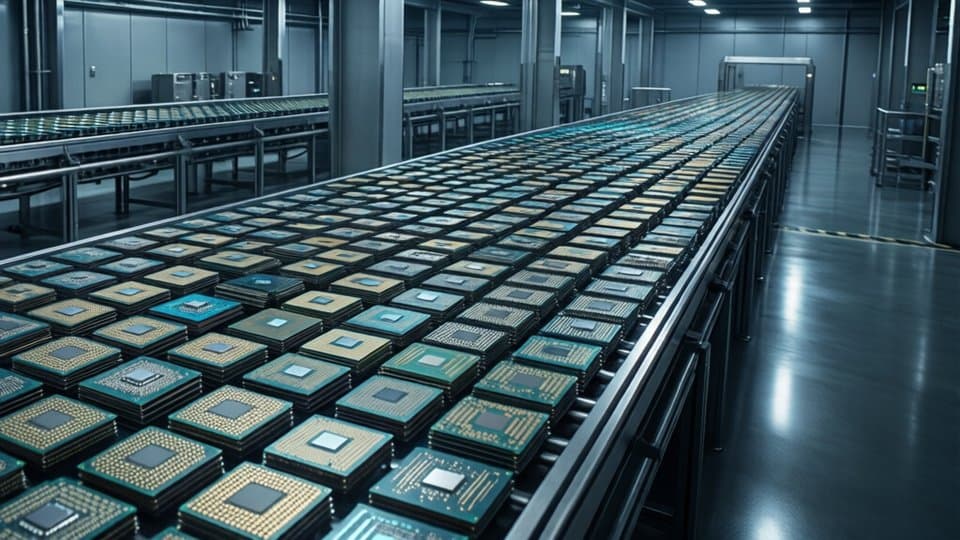
Reports indicate that major Chinese technology firms have placed massive orders for Nvidia hardware, potentially signaling a breakthrough in the nvidia china export approval process. However, these orders face immediate hurdles from production capacity constraints and ongoing geopolitical tensions between Washington and Beijing. What are the reported chip orders from China? Chinese technology giants have reportedly placed orders for millions of Nvidia workstation graphics cards to support artificial intelligence development. These orders represent a massive surge in demand for hardware that bypasses some of the strictest data center chip restrictions. According to The Motley Fool , on October 20, 2026: Chinese companies including ByteDance , Alibaba , and Tencent have ordered more than 3 million Nvidia Blackwell chips, with a collective value of $35 billion . Other reports suggest the scale may be even larger. According to AOL Canada , on October 20, 2026: Total orders from Chinese customers have exceeded 6 million units . These orders specifically target the RTX PRO 5500 workstation cards, which are valued at approximately $11,400 per unit. While the top-tier Blackwell B300 chip is barred from the Chinese market, these workstation cards are being sought primarily for AI inference tasks. Why might Nvidia fail to fulfill these orders? Nvidia faces a severe production bottleneck that makes fulfilling the full volume of Chinese requests nearly impossible. The company lacks the manufacturing capacity to meet the sudden influx of orders while simultaneously serving its global customer base. According to AOL Canada , on October 20, 2026: Nvidia may only be able to fill 5% to 10% of these orders. The company has indicated it can produce at most 3 million Blackwell chips globally in 2027, which is significantly lower than the demand coming from China alone. The shortage is driven by manufacturing limitations at Taiwan Semiconductor Manufacturing Company (TSMC) . As reported by AOL Canada , on October 20, 2026: TSMC is reserving most of its 2027 wafer capacity for the next-generation Rubin chips, which directly limits the availability of cards for companies like Alibaba . How do the US and China view these chip sales? The two nations hold conflicting views on the impact of semiconductor trade. The United States focuses on national security and preventing advanced AI capabilities from reaching China, while China seeks to maintain access to essential hardware for its tech industry. How each side tells it: The United States: The administration has cited national security concerns to justify export controls. According to The Motley Fool , on October 20, 2026: The Trump administration imposed new tariffs in 2025 and required Nvidia to obtain export licenses for data center chips. China: Chinese regulators are looking for ways to keep their AI sector moving. According to Ars Technica , on September 2026: China's Ministry of Industry and Information Technology has asked firms like Alibaba and ByteDance to share plans to buy RTX Pro 5500 chips to power domestic AI models. Nvidia itself has advocated for more flexible trade rules. An Nvidia spokesperson stated that Chinese workstation chipmakers have seen "unprecedented growth since 2022" because of "outdated US export controls" and Chinese import limits, as reported by AOL Canada . What is the history of these export restrictions? The tension over high-end semiconductors is not a new phenomenon. It has been a central friction point through multiple US presidential administrations, evolving from general trade concerns to specific technology bans. The following timeline outlines the regulatory environment: Pre-2025: Both the Biden and Trump administrations cited national security concerns regarding the sale of advanced chips to China. April 2025: The Trump administration informed Nvidia that it would require specific export licenses to continue selling data center chips to Chinese companies, according to The Motley Fool . Recent Negotiations: Nvidia CEO Jensen Huang met with Donald Trump on several occasions and lobbied regulators, eventually reaching a deal where Nvidia would cede 15% of its Chinese chip sales to the government. How are these curbs affecting China's industry? US restrictions are acting as a catalyst for China to accelerate its own internal semiconductor development. Rather than stopping progress, the bans are forcing a shift toward domestic self-reliance. According to The Economic Times , on October 23, 2026: Nvidia CEO Jensen Huang stated that US export restrictions have accelerated China's efforts to build its own semiconductor industry. He believes these restrictions have compressed China's development timeline from 10 years down to 5 years . China is expanding its manufacturing footprint beyond just chips. Huang noted that China is investing heavily in supporting infrastructure, including memory, power generation, cooling systems, solar technology, and batteries, according to The Economic Times . What happens next for Nvidia and its investors? The immediate future depends on whether Nvidia can clear the production hurdles and how much of the reported $35 billion in orders can actually be delivered. Investors are looking for clarity on the company's ability to turn these orders into real revenue. Key upcoming milestones include: December 2026: Early samples of the requested hardware are expected to be delivered. Q1 2027: Commercial deliveries of the workstation chips are scheduled to begin. November 18, 2026: Nvidia's next earnings call will be a critical moment for investors to confirm the magnitude of the Chinese orders and the company's capacity to fulfill them. Investors will also watch for updates on the Blackwell and Rubin chip cycles. While current guidance for the third quarter of fiscal year 2027 is approximately $108 billion , that figure explicitly excludes any revenue from China's data center compute sector, according to AOL Canada . Frequently Asked Questions Why can't Nvidia sell its best chips to China? The US government has imposed export controls on high-end AI chips like the Blackwell B300 to prevent China from using them for advanced military or AI applications. Which Chinese companies are buying Nvidia chips? Major tech firms including ByteDance, Alibaba, and Tencent have reportedly placed large orders for Nvidia's RTX PRO 5500 workstation cards. Can Nvidia fulfill all the orders from China? It is unlikely. Industry sources suggest Nvidia may only be able to fulfill between 5% and 10% of the total requested orders due to manufacturing limits at TSMC.

Beijing is allegedly increasing efforts to intimidate the relatives of Taiwanese politicians to influence upcoming elections, according to reports from the Institute for the Study of War (ISW) and the American Enterprise Institute (AEI) . These actions, targeting those identified as supporters of independence, aim to discourage political activity and create a chilling effect within the republic of china on taiwan political landscape. The pressure involves economic sanctions, travel bans, and physical surveillance of family members residing abroad. How is Beijing targeting the families of politicians? China uses economic sanctions, employment termination, and physical surveillance to pressure the relatives of prominent figures. By targeting family members, Beijing seeks to discourage activists and politicians from engaging in activities linked to Taiwanese independence. According to Line Today , the China Affairs Office announced on October 14, 2024, that it would sanction the company VWAY. This company is owned by Shen Tu-cheng, the father of Democratic Progressive Party (DPP) legislator and Taipei mayoral candidate Puma Shen. The sanctions bar the company from conducting business with any Chinese organizations, enterprises, or individuals. The China Affairs Office further alleged that Shen Tu-cheng used the company to bypass previous sanctions and claimed the family was attempting to profit from mainland China. Other reported cases of familial pressure include: The brother of United Microelectronics Corp founder Robert Tsao was denied entry into China in early October 2024, according to The Taipei Times . The nephew of Taiwan’s Interior Minister Liu Shyh-fang reportedly lost his job at a Taiwan-funded enterprise in China in April 2026 following an investigation by Chinese authorities, as reported by Line Today . The brother of Cao Xing-cheng was banned from entering China because Cao funded the "Black Bear Academy," a civil defense organization associated with Puma Shen, according to Line Today . What is the surveillance case in the United States? A California real estate agent was arrested by the FBI for allegedly spying on the son of Taiwan's president. Federal officials claim she acted as an unregistered agent for Beijing to gather intelligence on the family in the U.S. According to KSAT , the FBI arrested Wanying Zhang , a 34-year-old naturalized U.S. citizen and real estate agent from Irvine, at Los Angeles International Airport. Authorities allege that Zhang, who also goes by the name Heather, surveilled the home of President William Lai 's son, Ting-Yu Lai, in the Seattle area. The criminal complaint states that Zhang and another person flew to Seattle on September 1, 2025, to conduct this surveillance. The FBI alleges that Zhang sent photos, videos, and license plate information of the target's vehicles to a Chinese government official. An affidavit in the case suggests that such information could provide Beijing with leverage over the president during a potential conflict. Zhang is an alumna of the University of International Relations in Beijing, an institution the FBI notes is closely tied to China's intelligence apparatus, according to KSAT . How each side tells it The two governments and the involved political parties present conflicting views on these actions and the legitimacy of the individuals targeted. "Taiwan condemns in the strongest terms such barbaric acts — which disregard human rights and national sovereignty and aim to suppress, threaten, or even harm individuals advocating for freedom and democracy or their families — as such behavior should not be tolerated in the civilized world" Spokesperson Karen Kuo of the Taiwan Presidential Office characterized the surveillance of the president's family as "transnational repression." The DPP maintains that Taiwan and the People's Republic of China are separate countries. The China Affairs Office has labeled several individuals, including Puma Shen, as "diehard separatists." According to The Taipei Times , Beijing interprets its Anti-Secession Law as allowing for severe punishments, including the death penalty, for those designated as separatists. Chinese military-affiliated media accounts, such as Jun Zhengping , have also used public platforms to criticize individuals who support the targeted politicians. Why is this happening during the election? The timing of these pressures coincides with a highly competitive mayoral race in Taipei. Analysts believe the targeting of families is a strategic move to influence voter perception and political alliances. Puma Shen is currently a Democratic Progressive Party candidate for the Taipei mayoral election, competing against the incumbent Kuomintang (KMT) Mayor Chiang Wan-an . According to The Taipei Times , polling data shows a shifting landscape: Shen was trailing Chiang by 1.2 percentage points in late September, but subsequent surveys reportedly placed him 17 points ahead. The ISW and AEI report suggests that even if the intimidation fails to force a candidate to withdraw, it can successfully discourage other public figures from associating with them. This can restrict political debate and alter the electoral environment. For example, media accounts and the China Affairs Office recently criticized television host Kevin Tsai for attending a campaign event for Shen, according to Line Today . Who is affected by these security concerns? The impact extends from high-ranking government officials to private business owners and their relatives. This creates a broad sense of vulnerability for those involved in Taiwan's political and economic sectors. Directly affected individuals include: Puma Shen : A Taipei mayoral candidate whose family business, VWAY, faces Chinese sanctions. William Lai : The President of Taiwan, whose son was allegedly targeted by surveillance in the United States. Liu Shyh-fang : The Interior Minister, whose nephew lost his employment in China. Robert Tsao : The founder of United Microelectronics Corp, whose brother was barred from entering China. The pressure also affects the broader public and media figures. The ISW warns that the threat of being labeled a "traitor" or "separatist" can prevent journalists and celebrities from participating in democratic processes, thereby narrowing the scope of political discourse in Taiwan. What happens next? Legal proceedings and electoral milestones will determine the immediate impact of these tensions. Several key dates and judicial steps are already in motion. Regarding the legal case in the United States, a hearing to determine bail or detention for Wanying Zhang was scheduled for Wednesday afternoon following her initial court appearance in Los Angeles. She must secure private legal counsel as the judge ruled her ineligible for a public defender. In Taiwan, the Taipei mayoral election remains the primary focus, with the campaign period actively moving toward the vote. The political climate will likely remain tense as candidates react to the ongoing economic and social pressures exerted by Beijing. Frequently Asked Questions Why is China targeting the families of Taiwanese politicians? Beijing uses family members to exert pressure on politicians and create a "chilling effect" that discourages support for Taiwanese independence. This method allows China to target individuals indirectly through economic or social consequences for their relatives. What is the significance of the VWAY sanctions? The sanctions against VWAY, owned by the father of candidate Puma Shen, represent an attempt to use economic leverage to undermine a specific political campaign. By banning the company from Chinese business, Beijing aims to damage the candidate's financial and political standing. How did the FBI become involved in Taiwan's political issues? The FBI intervened because an alleged Chinese agent was conducting surveillance on the family of Taiwan's president within the United States. This case is part of a larger U.S. effort to identify and prosecute covert agents working for Beijing on American soil.

The Japanese government will hold a ministerial meeting at the Prime Minister's Office starting at 6 p.m. on October 26 to address a surge in cyberattacks targeting domestic businesses. During this session, sanae takaichi japan prime minister is expected to order the creation of emergency measures to establish a unified defense framework across different government agencies. This response follows a series of unauthorized access incidents that have compromised personal data and disrupted internet services nationwide. What triggered the emergency ministerial meeting? A wave of unauthorized access incidents at multiple companies and a critical vulnerability in the PHP programming language forced the government to act. These attacks have led to the leakage of personal information and secondary damages from the misuse of that data. According to finance.biggo.com , October 26, 2026: Chief Cabinet Secretary Minoru Kihara described the situation as a serious threat to the safe lives of citizens. The government intends to centralize intelligence through the National Cybersecurity Office (NCO) to share knowledge regarding attack methods and system vulnerabilities across all ministries. The urgency also stems from the role of artificial intelligence in modern crime. As reported by japan-forward.com , Minister of Economy, Trade and Industry Ryosei Akazawa warned that attackers may be using AI to identify vulnerabilities across various systems. This technological shift has made cybercrime faster and more difficult for traditional defenses to detect. How are private companies responding to the attacks? Affected businesses are currently providing technical support to victims and, in some cases, paying direct financial compensation to customers to mitigate the impact of the disruptions. According to scmp.com , October 26, 2026: GMO Internet Group has already moved to compensate users following a breach of its foreign exchange trading service. Masatoshi Kumagai , the CEO of the company, stated in a blog post that all customers would receive 5,000 yen (approximately US$32 ) as an initial gesture of good faith. The government is also focusing on technical assistance for the private sector. This includes addressing flaws in the PHP programming language, which underpins much of the internet's infrastructure. The Ministry of Economy, Trade and Industry (METI) has already issued alerts to roughly 1,000 industry groups to encourage prompt security updates. What is "active cyber defense"? Active cyber defense is a controversial strategy that would allow the police and the Self-Defense Forces to penetrate the servers of attackers to neutralize threats before they cause further damage. The push for this system gained momentum after an urgent request from GMO Internet Group for the government to apply these measures. However, the implementation remains a point of legal debate. According to finance.biggo.com , October 26, 2026: Minoru Kihara clarified that the police and the Ministry of Defense will decide whether to proceed based on legal requirements, regardless of whether an affected organization requests it. Critics and legal experts have raised concerns regarding how such penetrative actions square with the constitutional secrecy of communications. While the government maintains that all actions will follow the law, there are ongoing calls for more transparency regarding the specific targets and procedures of these operations. Will the government launch new technical units? Yes, a specialized team of experts will be established to proactively hunt for security weaknesses and defend against sophisticated hacking techniques using modern technology. According to japan-forward.com , October 23, 2026: Minister Ryosei Akazawa announced the launch of a white-hat hacker team scheduled for November. This unit will operate under the Information-technology Promotion Agency (IPA) and will consist of specialists skilled in both offensive and defensive hacking. The team's primary mission is to regularly assess the systems of various companies and organizations for vulnerabilities. By identifying these weaknesses early, the team can help develop countermeasures to prevent future breaches. Akazawa emphasized that defenders must use AI to stay ahead of attackers who are increasingly using the technology to find system flaws. Who is involved in the emergency response? The response involves a wide range of high-ranking officials from the cabinet, security agencies, and economic ministries to ensure a cross-ministerial approach. The ministerial meeting on October 26 will include several key figures: Shunji Furukawa , Cybersecurity Minister Yasuhiro Hanishi , Chairman of the National Public Safety Commission Satsuki Katayama , Finance Minister The goal of bringing these specific leaders together is to accelerate a response that crosses traditional ministerial boundaries. This coordinated effort is necessary to handle the complex nature of the PHP vulnerabilities and the broader economic risks posed by the recent waves of cybercrime. What is the background of these security concerns? Japan is currently navigating a period of heightened security awareness, both in the digital realm and regarding traditional military defense policies. In the digital space, the recent surge in attacks has highlighted the fragility of corporate cybersecurity. In the broader political landscape, Japan is also observing shifts in international defense strategies. According to japantimes.co.jp , October 23, 2026: Defense Minister Shinjiro Koizumi noted that Finland has been pursuing a fundamental strengthening of its security policy, including legislative amendments regarding nuclear weapons. This international context of shifting security doctrines mirrors the urgency Japan feels in modernizing its own cyber defense capabilities. What happens next? Several key developments are scheduled to occur in the coming weeks as the government moves from discussion to implementation. The immediate next steps include: Tonight (October 26): The cabinet ministers meet to finalize the framework for emergency measures. November: The official launch of the white-hat hacker team under the IPA. Next Monday: Defense Minister Shinjiro Koizumi will meet with Finnish Defense Minister Antti Hakkanen in Tokyo to discuss security policies. Frequently Asked Questions Why is Japan facing so many cyberattacks right now? Experts suggest that the use of artificial intelligence by attackers is making cybercrime faster and harder to detect, targeting vulnerabilities in widely used software like PHP. Will the government pay for damages caused by hackers? While the government is providing technical support, individual companies like GMO Internet Group are the ones providing direct compensation to their customers. What is the role of the new white-hat hacker team? Launching in November, this team will use offensive and defensive hacking skills to find security weaknesses in company systems before criminals can exploit them.

Tomas Vogel·08:52 25.10.2026
Tomas Vogel·09:00 24.10.2026
Tomas Vogel·14:26 23.10.2026

Sara Lindqvist·14:00 25.10.2026

Sara Lindqvist·13:00 24.10.2026

Sara Lindqvist·13:31 23.10.2026
Marcus Hale·16:00 25.10.2026
Marcus Hale·15:00 24.10.2026

Marcus Hale·14:55 23.10.2026