Newzix
Breaking News
China & Taiwan

Taiwan regulator bans short selling to stabilize stock market
Elena Marsh5 min read
Taiwan regulator bans short selling to stabilize stock market

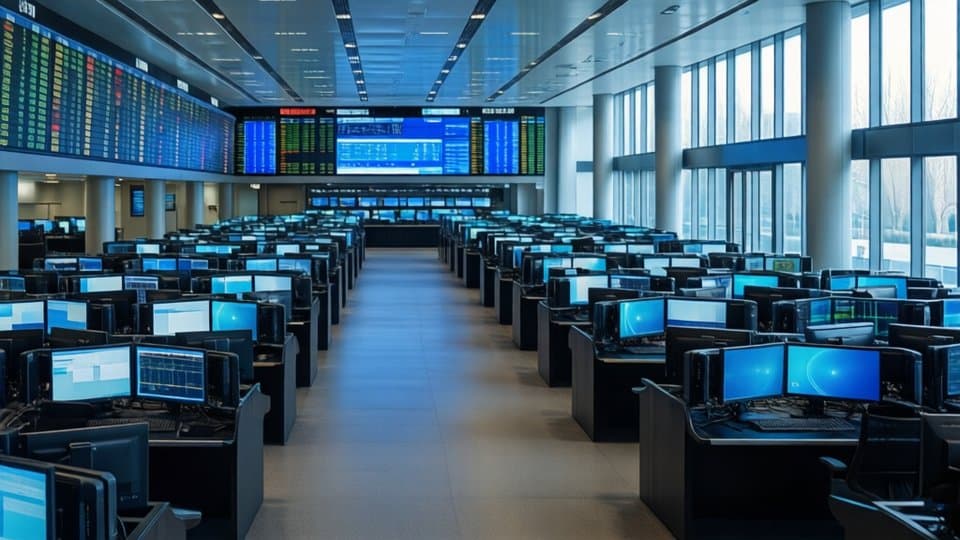
The Financial Supervisory Commission in Taiwan announced on 21 November 2026 a sweeping ban on short selling below the previous day's closing price to combat extreme market volatility. This regulatory intervention aims to stabilize the domestic stock market following the worst weekly performance of the Taiex index since 1991.

  • The Taiex dropped approximately 17.5% during the week ending 20 November 2026, according to Cryptobriefing.
  • Minimum margin requirements for short selling will rise from 130% to 150%, as reported by Securities Finance Times.
  • The National Financial Stabilization Fund has been active in the market since 6 November 2026, according to The Next Web.

What are the new short selling restrictions?

The Financial Supervisory Commission is implementing a near-total ban on short sales for stocks and Taiwan Depositary Receipts that trade below the previous business day's closing price. This measure becomes effective on 23 November 2026. The restriction does not apply to securities firms or futures commission merchants performing short sales for hedging purposes during their normal business operations.

Beyond the price floor, the regulator is increasing the cost of bearish bets. The minimum margin requirement for shorting listed and OTC securities will climb from 130% to 150%, according to Securities Finance Times. The commission is also suspending applications from brokers to issue and list new put warrants, which are financial instruments that pay out when stock prices fall.

Lenders are being urged to restrict the supply of available stocks. The Financial Supervisory Commission is encouraging financial institutions to suspend stock lending and to recall existing loans early where contracts allow. This effectively chokes off the pipeline of shares available for traders to borrow and sell.

Why did the stock market crash?

The Taiex index suffered its most severe weekly decline in over three decades due to fears regarding the artificial intelligence sector. Doubts about whether massive capital spending on AI will yield sufficient returns have hit technology shares across Asia, according to The Next Web. Because the index is heavily weighted toward tech companies, these concerns triggered a broad selloff.

Leverage also accelerated the downward spiral. As prices fell, margin calls forced investors to sell their holdings, which in turn pushed prices even lower, according to Cryptobriefing. This cycle of forced selling created intense pressure on the market.

The Financial Ministry identified several specific triggers for the volatility. These include potential tightening of US regulations on AI, uncertainty regarding the benefits of large capital expenditures, and general margin-financing risks, according to EBC.

How each side tells it

The Financial Supervisory Commission and the National Financial Stabilization Fund view the market as fundamentally healthy despite the recent price drops. The National Financial Stabilization Fund has been buying shares since 6 November 2026 to protect market stability. The fund maintains that the economy remains strong, noting that export orders in October rose 78% compared to the previous year, according to The Next Web.

Market participants, however, feel the weight of the new rules. The Securities Finance Association noted that while these adjustments are not a total regulatory ban, the current policy changes are difficult for those trying to protect their portfolios.

Securities Finance Association

What were the previous regulatory steps?

This latest move is part of a series of interventions throughout November 2026. On 9 November, the Financial Supervisory Commission reduced the cap on intraday short sales of borrowed shares from 30% of average daily volume to 3%, according to The Next Web.

A second round of restrictions occurred on 19 November. During that phase, the regulator banned shorting below the previous close for any stocks that had dropped by at least 3.5% on the preceding day, according to The Next Web. These previous steps failed to stop the decline, as the Taiex eventually lost nearly 18% over the week ending 20 November.

Who is affected by these changes?

Short sellers and institutional investors face the most immediate impact. The new margin requirements and the ban on selling below the previous close make it more expensive and difficult to bet against the market. Additionally, the suspension of put warrant applications limits the tools available to traders looking to hedge against falling prices.

Listed and OTC companies are being pulled into the stabilization effort through incentives. The Financial Supervisory Commission is encouraging companies to implement share buyback programs. To support this, buyback programs that finish between the fourth quarter of 2026 and the first quarter of 2027 may be included in the 2026 ESG evaluation scores, according to Securities Finance Times.

Financial institutions acting as lenders are also directly involved. They are being advised to recall existing stock loans or decline to renew them when they expire, which reduces the overall liquidity of shares available for shorting.

What happens next?

The primary focus will be on whether these measures can halt the selling pressure from foreign institutions. While the National Financial Stabilization Fund has been providing a buying backstop, foreign investors have continued to sell their holdings, according to Cryptobriefing. The success of the intervention depends on whether foreign selling slows and if the 5.28% short interest recorded on 19 November begins to fall as bearish positions are closed.

The Financial Supervisory Commission has stated it will continue to monitor international financial developments and the domestic capital market. The regulator has indicated it will adjust these stabilization measures as necessary based on market conditions.

FAQ

What is the main reason for the short selling ban?
The ban was introduced to stabilize the market following the Taiex index's worst weekly performance since 1991, driven by fears over AI sector returns.

Does the ban affect all types of short selling?
It excludes short sales made by securities and futures firms for hedging purposes during their normal business operations.

When do the new rules start?
The comprehensive measures, including the price floor and increased margin requirements, take effect on 23 November 2026.
Sources

  1. 1.securitiesfinancetimes.comTaiwan’s FSC issues short selling measures
  2. 2.thenextweb.comTaiwan widens its short-selling ban after the Taiex’s worst week since 1991
  3. 3.cryptobriefing.comTaiwan bans most short selling after Taiex’s worst week since 1991
  4. 4.news.ebc.net.tw台股下週恐再殺?金管會祭出「禁空令」 國安基金罕見假日喊話

Read more →

Related Articles

Xi Jinping Conducts Massive PLA Leadership Purge to Secure Loyalty
China & Taiwan

Xi Jinping Conducts Massive PLA Leadership Purge to Secure Loyalty

President Xi Jinping has finalized a sweeping military purge within the People’s Liberation Army (PLA), removing dozens of high-ranking officials including top admirals and theater commanders. The crackdown, which culminated during the Communist Party’s Fifth Plenary Session in late October 2026, aims to eliminate corruption and ensure absolute political loyalty ahead of the 2027 Party Congress. The EurAsian Times reported that at least 16 senior generals were among the officials expelled during the recent plenum. Maritime Executive reported that the PLA Navy has been particularly hard-hit by the continuous removals. The Epoch Times reported that the dismissal of General Zhang Youxia on September 21, 2026, signaled increasing insecurity for Xi. Who are the high-ranking officials being removed? The purge has decimated the senior leadership of the PLA, leaving many command posts vacant. The removals target the most influential branches of the military, including the Rocket Force and the various theater commands responsible for regional operations. According to Maritime Executive , the list of dismissed officers includes: General Zhang Youxia , former Vice Chairman of the Central Military Commission (CMC). General Liu Zhenli , former Chief of Staff for Joint Operations. General He Weidong , strategic planner for operations against Taiwan. Admiral Miao Hua , Head of the CMC Political Works Directorate. Admiral Yuan Huazhi , Head of the PLA Navy Political Works Department. Admiral Wang Houbin , Commander of the PLA Rocket Force. Vice Admiral Li Hanjun , former Commander of the PLA Navy. Lieutenant General Lin Xiangyang , Commander of the Eastern Theatre. Vice Admiral Wang Zhongcai , Commander of the East Seas Fleet. The EurAsian Times also noted that the purge reached the CMC General Office, which serves as a key channel for Xi to manage daily operations. Expelled from this office were two successive directors, Lieutenant Generals Zhong Shaojun and Fang Yongxiang . Why is the military being purged so aggressively? The central objective of these removals is to ensure that the "gun" remains under the absolute control of the Communist Party. President Xi Jinping is targeting what he describes as "serious hidden dangers" and a lack of discipline within the ranks. The EurAsian Times states that the official communique from the Fifth Plenary Session emphasized the need for "systematic steps to address both symptoms and root causes of corruption." The party is seeking to combine severe punishment with effective prevention to clean up the military-industrial complex. President Xi has specifically criticized malpractices such as "cultivating connections" and the use of proxies for back-room deals. He has also highlighted concerns regarding the illicit use of blockchain technology and foreign currency exchanges. By shrinking the seven-member Central Military Commission to only himself and Zhang Shengmin , the military's anti-graft tsar, Xi has centralized power to an unprecedented degree. How does each side tell it? The Chinese government and international analysts offer different interpretations of the sudden loss of military leadership. While the state focuses on institutional integrity, observers focus on political survival. The official position of the Communist Party, as reported by the EurAsian Times , is that the leadership is acting with "enormous political courage and a strong sense of responsibility" to remove corruption and ensure the military is fit for duty. Conversely, political analysts suggest the purge is a tool for consolidating personal power. The Epoch Times quotes commentator Wang He , who suggests that the scale of the removals indicates that "Xi Jinping’s sense of insecurity has become more pronounced and more serious than before." "This means that Xi Jinping’s sense of insecurity has become more pronounced and more serious than before," — Wang He, China current affairs commentator What is the impact on China's ability to fight a war? The removal of so many operational commanders raises serious questions about the PLA's readiness. This is particularly sensitive given that President Xi has expressed a goal for the military to be ready to "recover" Taiwan by 2027. According to Maritime Executive , the purge is so thorough that it is uncertain if anyone remains in the high command with the necessary experience to execute an invasion. The dismissal of the principal operational commanders in the Eastern Theatre, who are directly responsible for Taiwan operations, has left a leadership vacuum in a critical combat zone. While Admiral Hu Zhongming has remained in his post as PLA Navy Commander since December 2023, he has not been elevated to the Central Military Commission. This suggests that even those who stay in their roles may lack the political standing to lead major strategic shifts. How does this affect future leadership succession? The purge is creating a crisis of continuity within the Chinese Communist Party. By removing established generals and senior officials, Xi is clearing the way for his fourth term but also depleting the pool of experienced leaders. Writer Du Zheng , writing in the Taiwanese outlet Up Media , argues that Xi's reliance on familiar associates has been undermined by these years of purges. This may force Xi to promote officials with whom he has fewer personal ties, which could change the political outlook of the next generation of leaders. Furthermore, The Epoch Times notes that analyst Li Linyi believes maintaining military control will be harder than controlling the police. Even if Xi appoints new leaders, he may struggle to guarantee their absolute loyalty in the long term. What happens next? The political landscape in China remains volatile as the party prepares for major upcoming milestones. The following events and deadlines will determine the stability of the current leadership structure: The 21st Chinese Communist Party Congress is scheduled for the second half of 2027, where Xi is expected to seek an unprecedented fourth term. The year 2027 also marks the 100th anniversary of the People's Liberation Army. The process of filling the many vacant command posts left by the recent expulsions will continue through the next leadership appointments. FAQ Why is Xi Jinping purging the military? The official reason is to combat corruption and "political cliques," but analysts believe it is a move to ensure total personal loyalty to Xi ahead of his next term. Which branch of the military is most affected? The PLA Navy and the Rocket Force have been hit particularly hard, along with the various theater commands responsible for regional security. Does this make China more or less capable of military action? While the purge aims to increase discipline, the loss of experienced high-level commanders may temporarily weaken the PLA's ability to execute complex operations. SEO Meta Description: Xi Jinping completes a massive military purge in China, removing top PLA Navy admirals and generals to ensure loyalty before the 2027 Party Congress. URL Slug: xi-jinping-military-purge-pla-navy-admirals

Elena Marsh·
France and ASEAN Nations Strengthen Ties in Energy and Industry
Southeast Asia

France and ASEAN Nations Strengthen Ties in Energy and Industry

France and various Southeast Asian nations are expanding their development partnership through new agreements in electricity regulation, industrial technology, and sustainable agriculture. These moves, announced during late October 2026, aim to strengthen regional energy security and modernize food production systems across the region. The Energy Market Authority of Singapore signed a memorandum of understanding with the French Energy Regulator on October 26, 2026, to share insights on cross-border electricity connectivity, according to govinsider.asia . Vietnam's Phu Tho province reported a nearly 16 billion USD economy in 2025 as it seeks French investment in high-tech industry, according to vietnam.vnanet.vn . ASEAN ministers met in Singapore from October 29 to 31, 2026, to discuss regional food security and forestry cooperation, according to en.vneconomy.vn . How is France helping Singapore manage its power grid? Singapore and France are working together to improve how electricity moves across borders and how energy markets are regulated. This cooperation focuses on the technical and legal frameworks needed to handle a transition toward cleaner power sources. The Energy Market Authority of Singapore and the French Energy Regulator, known as the CRE, signed a memorandum of understanding during Singapore’s International Energy Week in late October. This partnership allows both sides to exchange knowledge on gas markets and the pursuit of low-carbon technologies. The agreement follows a Comprehensive Strategic Partnership established between Singapore and France in 2025. Puah Kok Keong, the Chief Executive of the Energy Market Authority, noted that these international exchanges help develop a secure and resilient energy system. The collaboration will include technical training, study visits, and high-level dialogues between the two nations, as reported by govinsider.asia . "At a time when the global energy transition demands innovation and agility, such partnerships are a cornerstone of progress," What industrial sectors are attracting French interest in Vietnam? French companies are looking at Vietnam as a gateway to the wider ASEAN market, specifically targeting high-tech and green industries. Vietnamese officials are actively pitching specific provinces to host French investment and technology transfers. In Phu Tho province, local leaders are seeking French cooperation in six priority areas. These include semiconductors, electronics, automation, and new materials. The province also wants to develop eco-industrial parks through better wastewater reuse and energy efficiency projects, according to vietnam.vnanet.vn . Trinh Duc Hai, the Vietnamese Ambassador, stated that the upgrade of Vietnam-France ties to a Comprehensive Strategic Partnership in October 2024 provides new space for trade. He suggested that the province's industrial base makes it a viable location for French firms. To attract these companies, Phu Tho officials proposed a "green channel" that would cut half of the administrative procedures required by law. French business groups have already identified specific opportunities. These include using artificial intelligence for management, renewable energy, and microalgae for water treatment. Benoît Clocheret, Chairman of MEDEF International, suggested that stronger cooperation should focus on logistics and supply chains, as reported by vietnam.vnanet.vn . How is ASEAN addressing food and forest security? ASEAN leaders are prioritizing the resilience of food systems and the protection of forests to combat climate change. They are working to create unified standards for agriculture and forestry across the member states. During the 48th Meeting of ASEAN Ministers on Agriculture and Forestry held in Singapore, officials discussed the 2026-2030 action plans. A major goal is the "One Billion Trees" initiative to improve forest landscape restoration and biodiversity. Vietnam has also pushed for better coordination in the ASEAN Plus Three Emergency Rice Reserve to manage food supply risks, according to en.vneconomy.vn . The region is also focusing on digital transformation in farming. Vietnam's Deputy Minister of Agriculture and Environment, Dang Ngoc Diep, emphasized the need for low-emission rice production and better soil health. The ministry also supports using agricultural by-products in a circular way to help farmers, as noted by en.vneconomy.vn . What is the history of these partnerships? The current surge in cooperation is built on several years of diplomatic and economic foundation-laying between Europe and Southeast Asia. Key milestones include: October 2024: Vietnam and France upgraded their bilateral relationship to a Comprehensive Strategic Partnership, according to vietnam.vnanet.vn . 2025: Singapore and France signed their own Comprehensive Strategic Partnership, as stated by govinsider.asia . July 1, 2025: Phu Tho province in Vietnam expanded its economic footprint following a merger with Vinh Phuc and Hoa Binh. July 24, 2026: The EU-Philippines Enhanced Partnership was launched to boost student and staff exchanges, according to manilatimes.net . Who is affected by these new agreements? The primary beneficiaries are industrial workers, farmers, and students who will gain access to new technologies and educational pathways. In Singapore, the energy sector will see new grid-strengthening projects funded by S$14.9 million in grants from the Energy Market Authority. These projects aim to improve grid resilience and manage distributed energy sources, as reported by govinsider.asia . In the Philippines, students stand to benefit from increased mobility. Between 2021 and 2025, 364 Filipinos used Erasmus Mundus scholarships for European master's programs. In 2026, 85 more students were accepted into the Erasmus+ program, according to manilatimes.net . In Vietnam, smallholder farmers and local communities are expected to benefit from new climate-resilient agricultural models and better access to technology, as outlined by en.vneconomy.vn . What happens next? The next phase of these partnerships involves implementing the specific action plans and frameworks discussed in late 2026. For ASEAN, the focus shifts to the 2026-2030 period, with the implementation of the ASEAN Forestry Cooperation Action Plan and the Fisheries Cooperation Action Plan. In the Philippines, the European Higher Education Fair (EHEF) 2026 will take place from November 20 to 21, followed by online sessions from November 23 to 25, to present study opportunities from 13 EU member states, according to manilatimes.net . In Vietnam, the provincial government of Phu Tho will continue to work with French groups to turn political trust into concrete industrial projects, particularly in the semiconductor and renewable energy sectors. FAQ What is the main goal of the Singapore-France energy agreement? The agreement aims to share knowledge on electricity market regulation, cross-border connectivity, and low-carbon energy technologies. How does Vietnam plan to attract more French investment? Vietnam is proposing "green channels" to reduce administrative procedures and creating industrial zones specifically for French firms with specialized services. What are ASEAN's forestry priorities for 2026-2030? ASEAN is focusing on the "One Billion Trees" initiative, sustainable forest management, and wildfire prevention to protect regional biodiversity. SEO Meta Description: France and ASEAN partners are expanding cooperation in energy, high-tech industry, and sustainable agriculture to boost regional security and growth. URL Slug: asean-france-development-partnership-energy-industry-agriculture

Sara Lindqvist·
Public Opinion Split Amidst Impeachment of South Korea President Lee's Judicial Push
East Asia

Public Opinion Split Amidst Impeachment of South Korea President Lee's Judicial Push

Public opinion in South Korea is deeply divided regarding the possible impeachment of South Korea president Lee Jae-myung's administration's push to remove Supreme Court Chief Justice Cho Hee-dae. Recent polling shows that while President Lee's approval rating has climbed back to the 40% range for the first time in seven weeks, the nation remains split on whether to remove the top judge. What is the current approval rating for President Lee? President Lee Jae-myung has seen a stabilization in his public standing, with his positive rating reaching 40% in recent days. This marks a recovery from a post-inauguration low of 37% and suggests a halt to a continuous downward trend. According to Gallup Korea , conducted from October 20 for three days: 40% of the 1,001 adults surveyed responded that President Lee was performing his state affairs well. However, 50% of respondents felt he was performing poorly. This data indicates that while the president has gained momentum, a significant majority still views his performance negatively. The reasons for these ratings vary by category. For those favoring the president, Gallup Korea reported that 21% cited diplomacy as a reason for their positive view, followed by 14% for the economy and livelihoods, and 7% for communication. Conversely, negative assessments were driven by real estate policy at 18% , the economy at 16% , and national security/North Korea policy at 10% . Is there support for the impeachment of Chief Justice Cho? The question of whether to remove Chief Justice Cho Hee-dae has split the electorate almost down the middle. While the ruling Democratic Party is pushing for the move, the general public is not yet in consensus. According to Gallup Korea : 34% of respondents support the impeachment of Chief Justice Cho Hee-dae. 39% of respondents oppose the impeachment. 28% of respondents reserved judgment or refused to answer. The difference between support and opposition falls within the margin of error. This suggests that the political push for removal lacks a clear mandate from the broader public. How do different political groups view the impeachment? Support for the impeachment is heavily dictated by party affiliation and political leaning. The push is most visible among the president's core supporters but faces resistance from the opposition and centrist voters. The breakdown of support for the impeachment of the Chief Justice is as follows: Democratic Party supporters: 61% favor impeachment. People Power Party supporters: 71% oppose impeachment. Progressives : 66% support impeachment. Conservatives : 61% oppose impeachment. Moderates : Split evenly at 34% for both support and opposition. The Korea Herald notes that although the Democratic Party leads the People Power Party by 9 percentage points in general party support, it has failed to win over the political center regarding the judge's removal. How each side tells it The debate over the judiciary is characterized by intense disagreement between the ruling bloc and the opposition parties regarding the necessity of the move. The Democratic Party and the Rebuilding Korea Party are actively driving the impeachment process. The Rebuilding Korea Party has taken a more aggressive stance by releasing a draft impeachment motion and proposing a joint task force to move the process forward. The Democratic Party, however, remains divided. According to the Korea Herald , internal disagreements persist within the Democratic Party concerning both the necessity of the impeachment and the specific timing of any legislative action. What is the historical context of impeachments in Korea? Impeachment is a known political mechanism in South Korea, though successful motions against high-ranking officials are relatively rare and carry significant weight. To understand the current climate, one must look at previous instances where the public was asked to weigh in on high-level removals. According to Gallup Korea , a February 2023 survey regarding former Minister of the Interior and Safety Lee Sang-min showed a much higher level of consensus. In that instance, which involved the handling of the Itaewon disaster, support for impeachment was significantly higher: 82% of Democratic Party supporters supported impeachment. 72% of progressives supported impeachment. 51% of moderates supported impeachment. The current consensus regarding Chief Justice Cho is notably narrower than the consensus seen during the Lee Sang-min case. What happens next for the administration? The administration faces a dual challenge of managing a divided legislature and a cautious public while attempting to stabilize the economy. The Democratic Party and the Rebuilding Korea Party continue their discussions regarding the impeachment motion. While no specific date for a vote has been set, the Rebuilding Korea Party is actively pressing the Democratic Party to act on their proposed draft. Meanwhile, the president's ability to govern will depend on his ability to manage the National Assembly and address economic pessimism, as only 27% of respondents expect the economy to improve over the next year. FAQ Why is there a push to impeach the Chief Justice? The Democratic Party and the Rebuilding Korea Party are discussing the impeachment, with the latter having already released a draft motion, though specific reasons for the move are not detailed in current polling reports. Is the public in favor of removing the Chief Justice? No, the public is split. Recent polling shows 34% support impeachment while 39% oppose it, a difference that sits within the margin of error. How is President Lee's approval rating performing? His approval rating has risen to 40%, which is the highest it has been in seven weeks, though his negative rating remains higher at 50%.

Tomas Vogel·