
How the China Hypersonic Missile and New Submarines Threaten US Navy Dominance
As the United States Navy relies on its carrier-centric strategy to maintain maritime dominance, Beijing is rapidly deploying advanced submersible vessels, ocean-going drones, and new submarine classes to challenge this edge. These developments, including a missile-launching trimaran spotted in late 2026, aim to project power far from Chinese shores and threaten American units in the Pacific. The rise of these technologies threatens to turn the traditional advantages of the US Navy into a china hypersonic missile and undersea vulnerability.
- A missile-launching trimaran reached the port of Dalian in early 2026, according to meta-defense.fr.
- China currently operates three aircraft carriers and may build six more by 2035, per a 2025 Pentagon study cited by militarytimes.com.
- The US Center for Strategic and International Studies suggests a new naval force composition of 300 manned and 300 unmanned vessels, according to militarytimes.com.
What new Chinese naval platforms are being observed?
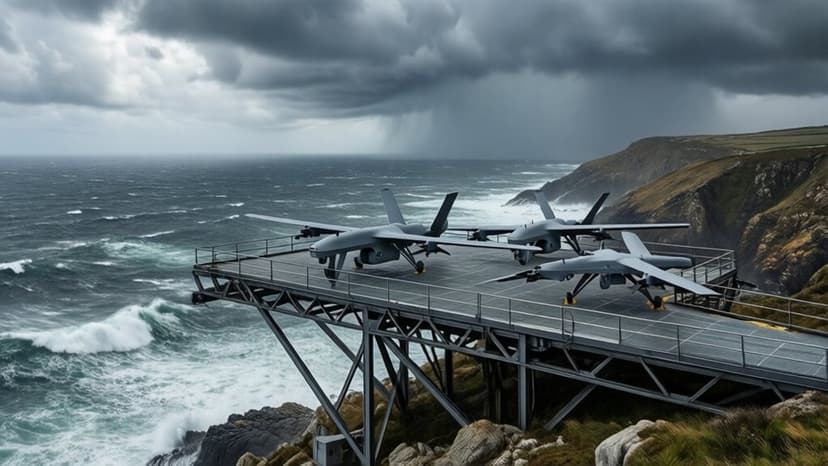
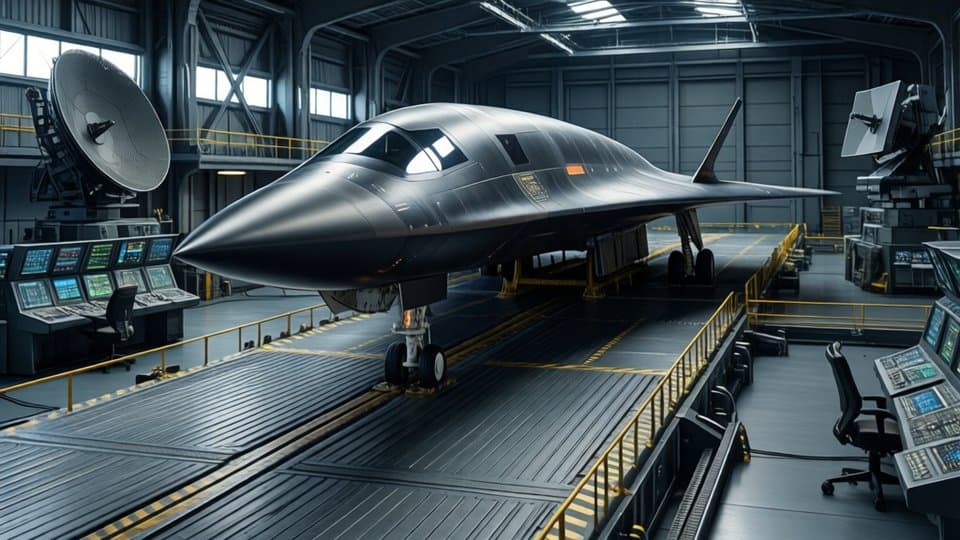
China is developing a diverse array of stealthy, long-range platforms designed to operate beneath the ocean surface. These include new submarine classes, unmanned drones, and specialized vessels like the recently observed trimaran. These assets allow Beijing to disperse its forces and threaten American strike groups across a wider area of the Pacific.
The trimaran, built in Guangzhou, was moved to the port of Dalian on the Bohai Sea earlier in 2026, as reported by meta-defense.fr. This vessel is approximately 65 meters long and features a unique architecture with a narrow central hull and two lateral floats. This design provides stability for surface navigation while allowing the craft to submerge partially or fully.
The central hull of this trimaran likely contains between 8 and 18 missile launch tubes. Unlike conventional submarines that fire while submerged, this vessel reportedly stores tubes horizontally and raises them after surfacing. This allows the craft to carry a heavy salvo within a relatively small hull to launch from distant axes, according to meta-defense.fr.
How are Chinese submarines evolving?
Newer Chinese nuclear submarines are undergoing a generational leap in technology, moving from incremental improvements to entirely new designs. These vessels focus on extreme silence and improved maneuverability to evade detection. This evolution aims to close the technological gap that has historically favored the United States Navy.
Recent satellite imagery analyzed by news.qq.com shows that new Chinese submarines may utilize pump-jet propulsion. This technology encloses the propeller in a duct to reduce the "cavitation" noise caused by bubbles, making the vessel much quieter. Additionally, the use of X-shaped stern rudders provides better maneuverability in shallow waters and reduces acoustic signatures.
Observers also noted a rectangular opening behind the command tower, which may house a vertical launch system. This system could hold 12 to 24 cells capable of firing various missiles, including the YJ-21. Such a capability transforms the submarine from a simple hunter into a mobile, deep-sea missile platform, according to news.qq.com.
Is the US Navy vulnerable to these developments?
The rapid advancement of Chinese undersea and missile technology creates a strategic challenge for American carrier strike groups. While the US Navy has long held an advantage in high-end platforms, Beijing is targeting those very assets with specialized "carrier-killer" capabilities. This shift forces US planners to reconsider how they protect their most expensive ships.
A report by the Center for Strategic and International Studies (CSIS) suggests that China is devoting massive effort to destroying American carriers. This strategy includes using submarines, ballistic missiles, and drones to create a threat environment. The CSIS report, titled "Flip the Script," argues that the US must stop being the "hunted" and start becoming the "hunter" to remain competitive, according to militarytimes.com.
The potential for loss is high for both sides. While losing a Ford-class carrier would be a massive blow to Washington, sinking a Fujian-class carrier would be devastating for Beijing. The CSIS report notes that Chinese carriers are "high-value, hard-to-replace assets vulnerable to long-range strike," according to militarytimes.com.
How can the US respond to the threat?
To counter Chinese expansion, US think tanks advocate for a radical change in naval composition and strategy. Instead of relying solely on large, manned ships, the US may need to deploy massive numbers of unmanned systems. This approach aims to create a "continuous threat envelope" that makes it too risky for Chinese ships to operate.
The CSIS plan proposes a force split of 300 manned and 300 unmanned vessels. This would include buying more unmanned underwater vehicles and investing in allied bases to host naval drones. The goal is to use these assets to ambush Chinese carrier groups and interdict them at chokepoints, according to militarytimes.com.
The strategy also involves using land-based missiles from allies like Japan and the Philippines. By targeting Chinese ships as they pass through critical maritime passages, the US can raise the perceived risk of Chinese naval operations. This multi-layered approach seeks to make routine Chinese deployments near Taiwan or the South China Sea prohibitively dangerous.
How each side tells it
The US and China view the buildup of naval power through very different strategic lenses. For the United States, the focus is on defending established dominance against a rising challenger. For China, the focus is on breaking through existing maritime constraints to achieve status as a first-rate power.
The CSIS report argues that the US and its allies can exploit China's expanding carrier force. It states:
"China’s expanding carrier force presents a strategic vulnerability that the United States and its allies can exploit, rather than merely a challenge to U.S. dominance,"according to militarytimes.com.
Conversely, some analysts suggest China's naval growth is driven by domestic politics and prestige. An anonymous expert told Defense News that the Chinese Communist Party used "naval nationalism to mobilize enormous resources for the buildup." This suggests the fleet serves as a symbol of national strength as much as a military tool, according to militarytimes.com.
What is the background of this naval rivalry?
The competition for control of the Western Pacific has intensified as both nations modernize their fleets. Historically, the US has maintained a significant advantage in carrier technology and submarine stealth. However, China's rapid industrialization and technological catch-up have fundamentally changed the balance of power in the region.
China's naval ambitions are often compared to the historical dreadnought race. Just as Britain and Germany competed for naval supremacy before World War I, China is racing to build a carrier fleet to signal its arrival as a global power. This buildup is accompanied by the development of specialized weapons designed specifically to counter American maritime strength.
The US Navy is currently facing questions about its capacity to sustain such a fight. The CSIS study raised concerns about whether American shipyards can produce enough nuclear attack submarines to maintain a presence against Chinese groups. This highlights the industrial challenges that accompany the technological race, according to militarytimes.com.
What happens next?
The naval landscape will continue to shift as new technologies enter service. The US Navy and its allies are expected to increase investments in unmanned underwater vehicles and allied basing to counter Chinese submarine capabilities. Future developments will depend on the successful integration of new missile systems and the capacity of shipyards to meet rising demand.
Monitoring of Chinese naval trials, such as those at Huludao, will provide more clarity on the role of new vessels like the trimaran. Additionally, the US defense strategy will likely move closer to the CSIS recommendation of a balanced manned-unmanned force as the competition in the Pacific intensifies.
Frequently Asked Questions
What is the purpose of the Chinese trimaran?
It is a specialized vessel designed to carry a large number of missiles and operate both on the surface and partially submerged to launch strikes from various locations.
Why are Chinese submarines becoming harder to detect?
They are adopting new technologies like pump-jet propulsion and X-shaped rudders, which significantly reduce the noise they make underwater.
How does the US plan to counter China's naval growth?
The US is considering a shift toward a larger fleet of unmanned drones and using allied land-based missiles to target Chinese ships in contested waters.
SEO Meta Description: Discover how new Chinese submarines, drones, and missile-launching trimarans are challenging US Navy dominance and reshaping Pacific security.
URL Slug: china-navy-submarines-drones-us-vulnerability