
US Shifts to Mobile Factories to Support Future Drone Warfare
The US Department of War is investing heavily in mobile and domestic manufacturing to support the future of drone warfare. Through new contracts and grants, the government is shifting from centralized factories to "Edge Factories" and converted civilian battery lines to ensure a steady supply of unmanned systems.
- Amprius Technologies received a $75 million grant to convert an EV battery line for military drone use.
- Machina Labs will deploy two pilot "Edge Factories" to produce metal drone airframes locally.
- The battery production line conversion is expected to reach a capacity of 12 million cells annually by early 2028.
What are the new mobile factory pilots?
The US Department of War has selected Machina Labs to develop metal airframes for the Low-Cost Uncrewed Combat Attack System (LUCAS). This project involves deploying two pilot sites known as Edge Factories to produce drone components closer to where they are needed.
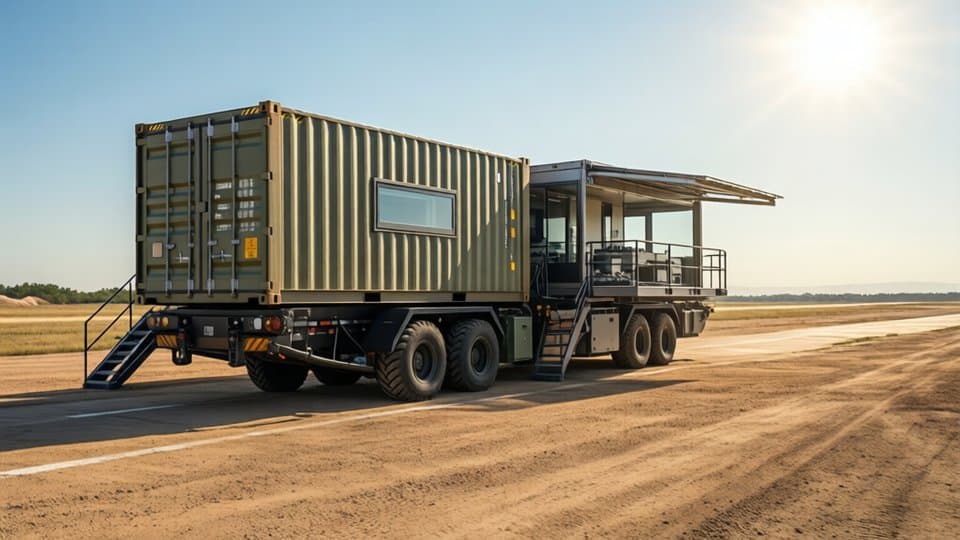
According to aimmediahouse.com, these pilot sites will begin as containerized robotic manufacturing cells. Once a shipping container arrives at a site, a crew sets up the equipment to start work on a drone airframe. The speed at which the first airframe passes inspection will determine how effectively these mobile units can deliver hardware after a move.
Machina Labs, which was founded in Los Angeles in 2019, uses AI-powered robots to form sheet metal. Unlike traditional methods, these robots do not require a dedicated die for every different shape. This flexibility allows the company to turn digital designs into physical structures within weeks.
How will battery production change?
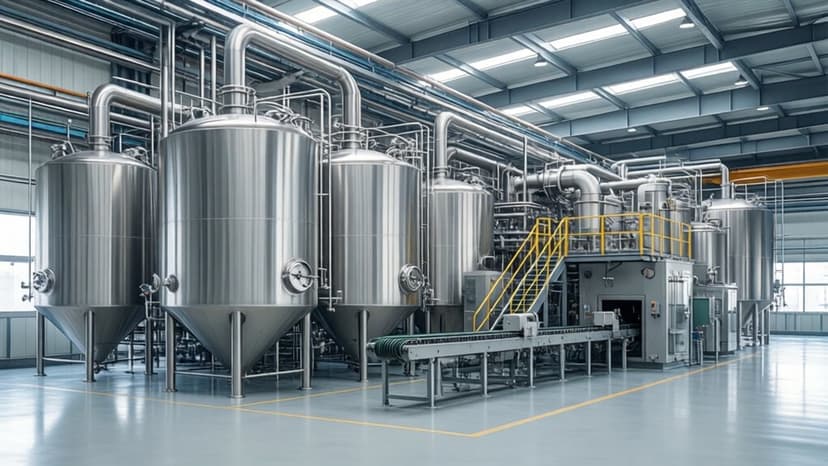
The government is also targeting the power supply for these machines by drafting civilian manufacturing into military service. A $75 million grant has been awarded to Amprius Technologies to convert an existing electric vehicle battery production line into a facility for high-energy-density drone batteries.
As reported by electrek.co, the project is funded through the Industrial Base Analysis and Sustainment Program (IBAS). The goal is to establish high-volume, commercially viable US manufacturing for advanced battery systems that power Group 1, 2, and 3 drones.
The conversion involves a production line currently operated by a "major South Korean manufacturer." By combining Amprius technology with this partner's manufacturing expertise, the project aims to create a domestic, NDAA-compliant supply of pouch cells. The facility is scheduled to be completed in early 2028.
Why is the military changing its manufacturing model?
The shift aims to solve two different problems: repairing equipment at sea and scaling up production for new technology. Previous successes show that on-site manufacturing can prevent long delays caused by logistics and shipping.
In 2023, the crew of the USS Bataan used a metal 3D printer to create a replacement part for an air compressor in just five days, according to aimmediahouse.com. Meanwhile, the US Army's Jointless Hull project at Rock Island Arsenal in Illinois uses machines that can print and machine large metal components for ground vehicles.
The new Machina Labs pilots add a different layer to this strategy. While the Navy focused on repairs, these new "Edge Factories" focus on whether it is cost-effective to move entire manufacturing cells to different locations to meet changing mission requirements.
How do different companies approach drone structures?
There are multiple competing methods for building the frames of unmanned aircraft. While Machina Labs focuses on forming existing sheets of metal using robots, other companies use different digital manufacturing paths.
For example, Divergent Technologies partnered with General Atomics Aeronautical Systems in 2023 to apply digital manufacturing to uncrewed aircraft. In 2025, Divergent produced the metal core of a small uncrewed aircraft by combining metal 3D printing with conventional manufacturing techniques, as noted by aimmediahouse.com.
The choice between these methods involves a trade-off between speed, cost, and location. Machina Labs is also investing in fixed-site production, having announced a $124 million Series C funding round in February. This money will support a 200,000-square-foot US factory capable of housing up to 50 RoboCraftsman cells.
How each side tells it
The move toward domestic, specialized production is viewed through different lenses depending on the stakeholder's role in the supply chain.
Machina Labs focuses on the agility required for modern conflict. Ed Mehr, the Founder and CEO of Machina Labs, stated:
"Producing low-cost systems at scale requires a manufacturing model that can move as quickly as mission requirements change,"
On the other hand, the battery conversion project is framed as a necessity for national security. Tom Stepien, the CEO of Amprius, explained the purpose of the recent grant:
"This DoW grant is intended to establish a primary source of domestic, NDAA-compliant battery production,"
What happens next?
Several milestones will determine the success of these industrial shifts. The Machina Labs team must first qualify the metal airframe in Los Angeles before they can begin the rollout of the two Edge Factory pilot sites. This process involves testing the robotic cells in containerized environments to ensure they can function outside of a permanent factory setting.
For the battery sector, the timeline is set for early 2028. This is when the converted production line is expected to be fully operational and capable of producing its target of 12 million cells per year. The success of both projects will depend on whether these localized and converted methods can match the cost and quality of traditional, large-scale central manufacturing plants.
Frequently Asked Questions
What is the purpose of the Edge Factories?
They are mobile, containerized robotic cells designed to manufacture drone airframes locally and quickly near mission sites.
Why is a civilian battery factory being used for drones?
The government is using grants to convert existing EV battery lines to ensure a high-volume, domestic supply of specialized batteries for unmanned aircraft.
Who is funding these new manufacturing projects?
Funding comes from US Department of War grants, such as the $75 million IBAS award, and private investment like Machina Labs' $124 million funding round.