
Newzix
Breaking News
East Asia

Binance Replaces 90% of Assets Stolen in Massive $6.3 Billion Hack

Tomas Vogel5 min read
Binance Replaces 90% of Assets Stolen in Massive $6.3 Billion Hack

The cryptocurrency exchange Binance announced on Saturday that it has replaced 90% of the assets stolen during a record $6.3 billion platform hack that occurred on October 29, 2026. This massive heist, which the FBI officially attributed to North Korean-backed hackers, has sent shockwaves through global financial markets and highlighted the increasing sophistication of state-sponsored cybercrime.

  • Binance set aside more than $6.34 billion in company funds to cover the theft, according to the Guardian.
  • The FBI confirmed on Saturday that a North Korean group known as TraderTraitor was responsible for the attack, per NBC News.
  • Bitcoin prices fell nearly 5% following the news of the breach, as reported by the BBC.

Who is responsible for the massive theft?

The Federal Bureau of Investigation (FBI) has officially identified a North Korean-affiliated group called TraderTraitor as the perpetrator behind the heist. This group is believed to be part of the Lazarus Group, a notorious hacking unit that has been active for years.

The Lazarus Group gained international attention in 2014 after being accused of hacking Sony Pictures. According to the Guardian, the attack on Sony was reportedly retaliation for the film The Interview, which mocked North Korean leader Kim Jong-un. The FBI stated that it observed TraderTraitor actors converting stolen assets into Ethereum to facilitate further laundering through decentralized finance services.

How did the hackers breach the exchange?

The breach was a highly sophisticated operation that targeted both human and technical vulnerabilities. Binance Co-CEO Richard Teng described the incident as a "complex attack" that utilized specialized tools to evade detection and hinder the subsequent investigation.

Initial reports suggested the breach may have started with a compromised DevOps engineer's laptop. However, the BBC reports that subsequent investigations revealed additional points of breach. Teng noted that the hackers used a "self-destruct mechanism that destroyed tooling and traces as they went," making the digital trail extremely difficult to follow.

How much money was lost and is it being replaced?

The total value of the stolen digital assets reached approximately $6.3 billion, making it the largest single cryptocurrency theft on record. Binance has taken aggressive steps to ensure that its customers do not suffer the financial consequences of the breach.

Binance stated it has already replenished 90% of the stolen assets. The company used a combination of its $1 billion Secure Asset Fund for Users (SAFU), its Futures Insurance Fund, and its own corporate treasury to buy back the necessary tokens. NBC News reports that the remaining 10% consists of less liquid tokens, which may take longer to acquire.

The exchange confirmed that holdings for several major assets, including Bitcoin, Ethereum, Tether, and BNB, are now fully covered. Binance also performed a new snapshot of assets as of 0000 GMT on Saturday to provide proof of reserves for its users.

How are the authorities responding?

Law enforcement agencies across the United States are coordinating a massive response to track the stolen funds. The FBI is working alongside the US Secret Service and the Internal Revenue Service Criminal Investigation division to identify and freeze the assets.

The FBI has issued an urgent request to the private sector to block any transactions involving addresses used by TraderTraitor. According to Yonhap News Agency, investigators have spotted the hackers converting stolen funds into Ethereum and expect further laundering through instant swap services.

While Binance stated its US-facing exchange was not affected, the BBC notes that US authorities still maintain jurisdiction to assist in the global effort to recover the funds.

How each side tells it

The situation involves differing perspectives regarding the technical nature of the breach and the legal protections available to users.

Binance has focused its messaging on stability and the safety of customer funds. The company emphasized its ability to absorb the shock of the loss through its internal reserves.

However, legal experts and market observers have expressed caution. Some experts warned that Binance's promises might not be legally binding under all circumstances. Daniel Tunkel, a lawyer from the London-based Edwin Coe firm, told the BBC that recovery might eventually "come down to what [customers] have been promised in their contracts."

What happens next?

The immediate focus for Binance is the resumption of normal operations. After temporarily suspending all withdrawals following the hack, the exchange stated it was on track to reopen them on Sunday.

On a broader scale, the investigation by the FBI and US Secret Service continues. Authorities are looking to intercept the remaining stolen assets before they are fully laundered through decentralized finance protocols. The scale of this theft also places renewed pressure on the crypto industry to address the growing threat of state-sponsored cyber warfare and the potential impact of artificial intelligence on cryptographic security.

Frequently Asked Questions

Will Binance users lose their money because of the hack?
Binance has stated that it will cover 100% of the losses and that users will not bear the financial impact. The company has already replaced 90% of the stolen assets using its own reserves.

Who is believed to be behind the $6.3 billion theft?
The FBI has officially identified a North Korean-linked group called TraderTraitor, which is part of the larger Lazarus Group, as the party responsible for the attack.

When can users withdraw their funds again?
While withdrawals were suspended immediately after the breach, Binance indicated in its latest update that it expected to resume user withdrawals on Sunday.

SEO Meta Description: Binance says it has replaced 90% of the $6.3bn stolen in a massive hack. The FBI blames North Korea's TraderTraitor group for the record-breaking theft.

URL Slug: binance-6-billion-hack-north-korea-fbi-response

Sources

  1. 1.theguardian.comBinance says 90% of losses from $6.3bn hack covered as FBI says North Korea behind attack
  2. 2.nbcnews.comFBI says North Korea was behind the $6.3 billion Binance crypto hack
  3. 3.bbc.comCrypto giant Binance attempting to recover $6.3bn stolen in hack linked to North Korea
  4. 4.themunicheye.comBinance says it has replaced 90% of funds lost in record $6.3bn hack
  5. 5.yna.co.kr美FBI "εŒ—, 가상화폐 63μ–΅λ‹¬λŸ¬ νƒˆμ·¨ 배후…이더리움 μ „ν™˜ 포착"

Read more β†’

Related Articles

Typhoon Champi Disrupts Travel and Safety Near Taiwan Drones and Coast
Drones & Defense Tech

Typhoon Champi Disrupts Travel and Safety Near Taiwan Drones and Coast

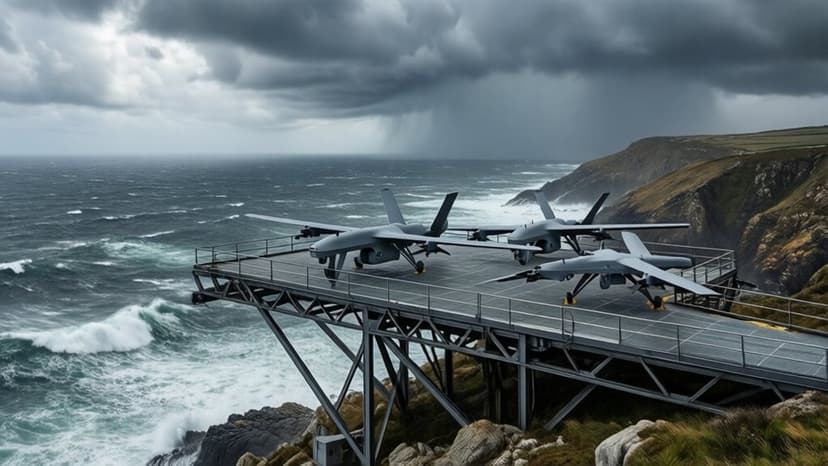
Typhoon Champi forced almost all of Taiwan to shut down on Friday, October 24, 2026, as the storm skirted the island's northeast coast. The extreme weather has caused at least one death and hundreds of injuries, disrupting regional aviation and threatening maritime security in the Taiwan Strait. While the storm is currently weakening, its massive wind radius and heavy rainfall continue to pose risks to the island and neighboring Okinawa. How much damage has the storm caused? The typhoon has already resulted in casualties and significant disruptions to infrastructure and travel across the region. While the storm's intensity is decreasing, the scale of its impact is wide, affecting both land and sea operations. According to NBC News , one person was killed and 94 people were injured in Taiwan. The Taipei Times reported that as of 6:30am on the day of the storm's approach, the death toll stood at one person and injuries reached 94. The Taipei Times also noted that a man died after being swept away by waves at a beach below the Beauty Cave in Pingtung. The storm's footprint has caused significant logistical issues: According to NBC News , the transport ministry canceled 262 domestic flights and 717 international flights on Friday. According to BBC News , hundreds of flights were canceled across East Asia as the typhoon moved toward the coast. According to the Taipei Times , the Central Emergency Operations Center reported that 1,286 people have been evacuated across Taiwan. According to BBC News , thousands of households in Japan's Okinawa islands suffered power outages. Where is the typhoon heading next? The storm is expected to move along the coast of East Asia, potentially impacting multiple nations before weakening. Forecasters are tracking its path closely to predict landfall and the duration of heavy rain. According to NBC News , the storm's forecast track shows it will pass just off northeastern Taiwan, turn north toward the Chinese coast, and eventually move into southern Japan. The BBC News reports that after passing over northeast Taiwan, the typhoon is forecast to hover close to Okinawa, then China's eastern coast, before maneuvering northeast toward mainland Japan. The Taipei Times reports that the storm's outer band is expected to blanket the entire nation and is not expected to depart until late Saturday. The Central Weather Administration (CWA) Weather Forecast Center Deputy Director Wu Wan-hua stated that the storm is projected to weaken into a tropical storm by the time it leaves. What are the weather warnings for Taiwan? Meteorologists have issued warnings for heavy rain and high winds, particularly in the mountainous and northern regions of the island. The large size of the storm means many areas will experience prolonged bad weather. According to the Taipei Times , the CWA issued land warnings for Yilan, Hualien, Taitung, and Pingtung counties. The Taipei Times also noted that up to 900mm of rain is forecast for mountainous areas of New Taipei City, Taoyuan, and Yilan County. CWA forecaster Liu Pei-teng told Reuters that landfall could not be ruled out if the storm "stalls, loops or wobbles from side to side" on approach to Taiwan. Liu added: "The storm’s wind radius is quite large, among the bigger ones in recent years. If the storm slows down, the strong winds will affect Taiwan for longer." How is the government responding to the storm? Local authorities have implemented emergency measures to protect residents and prepare for flooding. This includes evacuations, the distribution of supplies, and placing rescue equipment on standby. In the northeastern county of Yilan, authorities distributed sandbags and put amphibious vehicles and inflatable rescue boats on standby. Lee Ming-chen, head of the port town of Suao, said: "When necessary, the military will come in to help people, including using amphibious vehicles for evacuations or disaster relief." The Taipei Times reports that almost all municipalities except for Kinmen County announced school and work cancellations. In Taipei, public transport including the subway remained operational but with reduced service. How each side tells it While the typhoon is a natural disaster, its presence in the Taiwan Strait has led to friction between regional authorities regarding maritime presence and jurisdiction. The Coast Guard Administration (CGA) expressed concerns regarding maritime activity during the storm. According to the Taipei Times , the CGA urged China not to exploit typhoons to assert jurisdiction over the Taiwan Strait. This follows reports that China was shadowing eight Japan Coast Guard ships that had taken shelter in Taiwan's western waters due to the typhoon. What is the history of typhoons in Taiwan? Taiwan is frequently affected by tropical cyclones due to its geographic location in the Pacific. While these storms often occur in the summer, they can strike with intensity during the autumn months as well. The island is generally well-prepared for these events, which helps keep casualties low compared to other regions. However, the scale of Champi, which at one point was a super typhoon, has tested these readiness measures. According to NBC News , the storm was still packing gusts of around 119 mph near its center when it was approximately 137 miles east of Taiwan. What happens next? The primary focus for the coming days is the management of heavy rainfall and the potential for further flooding as the storm moves toward Japan. Authorities will monitor the storm's transition into a tropical storm. The Taipei Times reports that the storm is not expected to depart Taiwan until late Saturday. Weather experts expect the impact to last nearly two days. Following its passage near Taiwan, the storm is forecast to move toward the Chinese coast and eventually into southern Japan. Frequently Asked Questions Is Taiwan currently closed due to the typhoon? Most of Taiwan, including schools, offices, and financial markets, shut down on Friday. Only the Kinmen islands remained open for normal operations. How many flights have been cancelled? According to NBC News , nearly 1,000 flights were cancelled, including 262 domestic and 717 international flights. Will the typhoon hit mainland China? The forecast track shows the storm will pass off the coast of northeastern Taiwan and then turn north toward the Chinese coast before moving toward Japan.

Marcus HaleΒ·
AiMOGA Unveils Mobo as New Humanoid Robot China Market Leader
Robot Race

AiMOGA Unveils Mobo as New Humanoid Robot China Market Leader

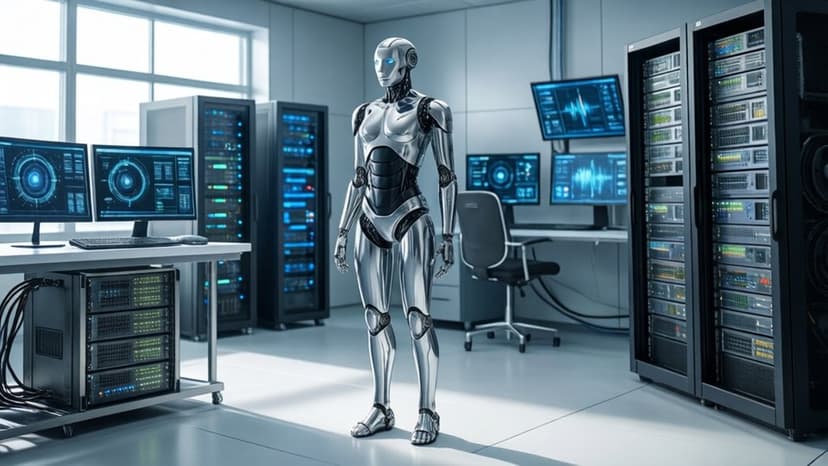
Mobo Makes Global Debut as China's AiMOGA Opens Pre-Orders for Home Robot AiMOGA Robotics unveiled its first consumer-grade family companion, Mobo, in Wuhu, China, on October 22, 2026, signaling a shift toward bringing embodied AI into private residences. This launch marks a strategic move by the Chery-linked robotics brand to enter the home market directly, rather than focusing solely on industrial settings. The rollout matters because it tests whether high-tech machines can navigate the unpredictable nature of domestic life while competing with major automotive players entering the robotics space. What is the Mobo robot designed to do? Mobo is a 0.9-meter tall humanoid designed to act as a family companion for children and the elderly. It uses advanced sensors to recognize family members, remember individual preferences, and perform various interactive tasks within a household environment. According to manilatimes.net , the machine features 22 degrees of freedom and can communicate in over 20 languages. For children, the robot provides storytelling, object recognition, and interactive English learning. For older family members, it offers conversation and specific reminders set by users. The device utilizes a "dual-brain" architecture through the MoAgent intelligent agent, which allows it to handle long-term planning alongside rapid, real-time responses. The robot's technical capabilities include: Up to 16 parallel tasks performed simultaneously. Interruption response times of less than 0.2 seconds. Spatial memory to assist with object retrieval. Social navigation to recognize pedestrian paths and interaction spaces. Face ID to link specific memories to different users. How does AiMOGA plan to sell these robots? The company is applying a car-sales business model to the robotics industry to drive mass adoption. By using existing automotive supply chains and distribution networks, AiMOGA aims to lower costs and reach a global audience quickly through experience centers and leasing. According to automotiveworld.com , AiMOGA plans to establish 300 experience centers around the world. The company also intends to launch "Jia Tian Xia," a global robot-leasing brand that will start operations in Wuhu. This approach mirrors how Chery exports vehicles, using established methods for financing, insurance, and after-sales support. The company's strategy relies on several key advantages: Reusing 70% of Chery's existing R&D technology. Utilizing the parent company's automotive supply chain to optimize costs. Leveraging Chery's manufacturing and sales resources. Applying automotive-grade reliability to unpredictable home environments. How does this compare to other robotics companies? AiMOGA is taking a different market path than many of its high-profile competitors. While other major tech and car companies are prioritizing factory use, this brand is targeting the consumer home as its primary entry point. As noted by automotiveworld.com , companies like Tesla, Hyundai, and Xpeng are currently proving humanoid robots in their own manufacturing plants before attempting wider sales. In contrast, AiMOGA is moving straight to consumers and commercial services. This path offers a faster route to revenue but exposes the technology to the higher safety expectations and less predictable layouts of private homes. What is the current scale of AiMOGA's operations? The company has already established a significant global footprint in the robotics sector before the official Mobo pre-order launch. They have moved beyond prototypes into active commercial deployment across various industries. According to manilatimes.net , the company's current statistics include: Over 3,000 robots sold globally to date. Deployment across more than 100 application scenarios. Products and services reaching over 60 countries and regions. Over 10,000 prospective users registered for Mobo since August 2026. These existing units have been used for tasks such as medical guidance, traffic management, reception, and material transportation. What are the potential risks for the brand? The move into domestic spaces brings significant challenges regarding data security and international regulations. Because the robot records personal interactions and recognizes faces, it will face intense scrutiny from privacy advocates. The ability of the robot to recognize family members and store long-term memories creates a high level of data sensitivity. automotiveworld.com suggests that these features could lead to close examination under European data protection rules. This is particularly true given that the technology is provided by a Chinese supplier, which may trigger extra oversight regarding how personal information is handled and whether it undergoes proper de-identification before being sent to the cloud. How does the company handle data security? AiMOGA has implemented specific protocols to manage the information collected by its robots. The system uses a combination of local processing and cloud validation to balance intelligence with privacy. According to manilatimes.net , the company uses MogaCloud to support remote task assignments and over-the-air updates. To address security concerns, the company states that eligible data undergoes on-device de-identification and security checks before any cloud learning or validation occurs. What happens next? The immediate focus for AiMOGA is the management of the newly opened global pre-orders and the integration of user feedback. While a specific price for Mobo has not been disclosed, the company is moving into a phase of active user testing. The following steps are part of the company's roadmap: 35 Global User Experience Officers will provide feedback to inform product improvements. The expansion of the "Jia Tian Xia" robot-leasing brand starting in Wuhu. The rollout of the planned 300 global experience centers. FAQ How much does the Mobo robot cost? AiMOGA has not yet disclosed the official price for the Mobo robot following its global pre-order opening. Can the robot help with elderly care? Yes, the robot is designed to provide conversation and user-defined reminders for older family members. Where can I buy a Mobo robot? Pre-orders are now open worldwide, and the company plans to sell them through 300 global experience centers. SEO Meta Description: AiMOGA Robotics launches Mobo, a new humanoid robot for home use. Learn about its features, Chery's global distribution plan, and the future of AI companionship. URL Slug: humanoid-robot-china-aimoga-mobo-launch

Kenji AraiΒ·
Why the humanoid robot industry struggles to prove real profitability
Robot Race

Why the humanoid robot industry struggles to prove real profitability

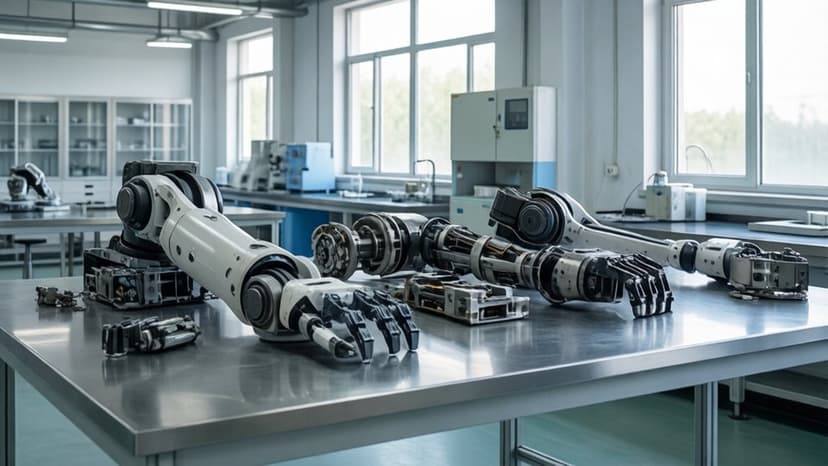
Manufacturers are shifting their focus from how many units they ship to how much actual work their machines perform. As the industry moves from laboratory demonstrations to warehouse floors, companies are struggling to bridge the gap between massive production numbers and genuine commercial profitability. This shift is essential because current metrics often fail to show if a humanoid robot actually pays for itself through labor savings. Interact Analysis reported in June that only about 10% of the 20,000 robots produced globally in 2025 reached real-world applications. China's AGIBOT introduced a new metric called Worken on October 29 to measure "effective intelligent work hours." The Chinese government issued a directive in June 2026 requiring state-owned enterprises to deploy robots by December 31. Why is the industry struggling to prove robot productivity? The robotics sector currently lacks a common yardstick to compare different machines. While some companies report how many hours a machine operates, others focus on how many items it moves or how many units they have sold. This makes it difficult for buyers to know if a robot is a good investment. According to pymnts.com , existing data points are often incomparable. For instance, Agility Robotics reported that its Digit humanoid moved over 100,000 totes at a Georgia warehouse with 98% accuracy. Meanwhile, Figure AI reported that its Figure 02 robots handled more than 90,000 sheet metal cycles at a plant in South Carolina. One company measures totes while the other measures metal cycles, making a direct comparison impossible. AGIBOT is attempting to solve this by using a score called Worken. This metric calculates "effective intelligent work hours" by multiplying active robots by their autonomous hours and an efficiency ratio. This ratio compares the robot's output against a human benchmark. This approach ensures that two fleets of the same size are not treated as equal if one requires constant human help to finish tasks. Is there a gap between production and real use? There is a massive disconnect between the number of machines being built and the number of machines actually working in factories. While production is exploding, most of these machines are used for research or entertainment rather than making money for businesses. Research from techtimes.com notes that global production jumped tenfold from under 2,000 units in 2024 to over 20,000 in 2025. However, the vast majority of these units are not in commercial service. China's manufacturers produced more than 90% of that total volume. Unitree's own filing ahead of its August listing on the Shanghai STAR Market showed that more than 70% of its revenue came from educational and research customers. Only less than 10% of its sales came from industrial applications. This suggests that the industry is currently building tools for scientists rather than tools for workers. How much does it cost to deploy these machines? The high cost of hardware remains a major barrier to widespread adoption. For a robot to be useful in a factory, the price must drop significantly to allow the machine to pay for itself within a reasonable timeframe. Current Chinese models sell for between 300,000 and 500,000 RMB, which is roughly $44,600 to $74,400 per unit. To achieve a two-year payback period, the price needs to fall toward 160,000 RMB, or about $23,800. This is a manufacturing challenge rather than just a technology problem. Even if a robot performs well, it may not be profitable. The Worken metric proposed by AGIBOT does not include costs like electricity, maintenance, or integration. A robot might have a high productivity score but still cost more to operate than the human worker it replaced. How each side tells it The industry is split between those focusing on rapid technological growth and those focusing on the economic reality of deployment. AGIBOT views the current era as a transition toward selling results rather than hardware. "2026 marks the beginning of large-scale deployment for embodied intelligence," said AGIBOT's senior vice president. On the other hand, market analysts highlight the "impossible triangle" that companies must solve. To succeed, a machine must provide autonomous operation, a clear return on investment, and the ability to handle many different tasks at once. Currently, most machines struggle to do all three. How is China forcing robot adoption? China is moving away from a market-driven approach and toward a government-mandated approach to ensure robots move into the real world. The goal is to generate the massive amounts of data needed to train more advanced artificial intelligence. In June 2026, the Chinese Ministry of Industry and Information Technology and the State-owned Assets Supervision and Administration Commission issued a directive. They ordered local governments and state-owned enterprises to deploy these systems into real operations by the end of the year. The target is more than 10,000 units across 100 different scenarios, including healthcare and logistics. This mandate is a procurement instruction. By forcing state-owned companies to buy robots, the government ensures that machines collect physical interaction logs. These logs are vital because, unlike text-based AI, physical robots need to record how they move and interact with objects to improve their intelligence. What happens next? The industry faces several immediate deadlines and milestones. In China, local governments must submit their implementation plans for robot deployment soon, and progress reports are due in November 2026. The official deadline for the government-mandated deployment is December 31, 2026. In the United States, Agility Robotics is moving toward public markets. Shareholders of Churchill Capital Corp XI approved a merger with Agility, and the combined company is expected to start trading on the Nasdaq on Thursday, November 5. These market movements will provide more data on whether investors believe the robots can actually generate profit. Frequently Asked Questions Why are robot companies not focusing on profit yet? Most companies are currently in a phase of gathering data and proving technical capabilities. They are prioritizing the ability to perform tasks reliably before they can prove the machines will save more money than they cost. What is the difference between a robot being "active" and "productive"? An active robot is one that is turned on and moving, while a productive robot is one that completes tasks successfully without needing a human to step in and fix errors. Will humanoid robots replace human workers soon? While they are being deployed in warehouses and factories, high costs and the need for constant data collection mean they are currently more common in research labs than in general labor roles.

Kenji AraiΒ·