China gives Japanese Prime Minister cold reception at APEC summit
Japanese Prime Minister Sanae Takaichi received an overtly cold reception from Chinese officials during her arrival at the APEC summit in Shenzhen on November 18, 2026. While other world leaders were greeted with military bands and large crowds, Takaichi's arrival was marked by a modest guard of honour and a junior official. This diplomatic snub follows a period of heightened tension between Tokyo and Beijing over regional security.
- Xi Jinping personally greeted U.S. President Donald Trump at the airport with an embrace, according to Biz Chosun.
- Takaichi was met by Zhang Qiyue, a former ambassador, rather than a high-ranking senior official, as reported by The Guardian.
- A senior Japanese Foreign Ministry official described the airport reception as "rude" according to Biz Chosun.
Why was the welcome for the Japanese leader different?
The contrast in hospitality at Shenzhen Bao'an International Airport was visible to all attendees. While South Korean President Lee Jae Myung and his wife Kim Hea Kyung received VIP treatment with music and flowers, Takaichi arrived to a quiet scene. There were no welcoming crowds, no bouquets, and no music for the Japanese leader, according to Biz Chosun.
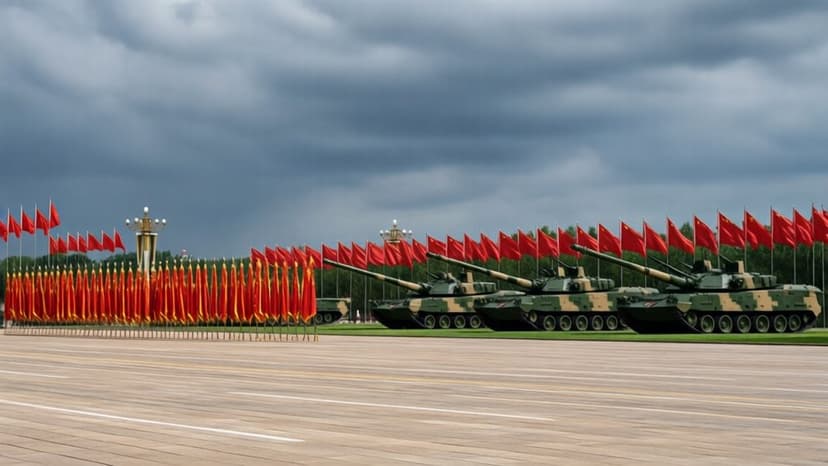
The scale of the reception for other leaders was much larger. For example, The Guardian reported that Australian Prime Minister Anthony Albanese walked past rows of soldiers from the People's Liberation Army. In contrast, Takaichi was greeted by only about 10 members of a Chinese honour guard. This distinction served as a public display of the chilled diplomatic relations between the two nations.
What caused the tension between China and Japan?
The frostiness stems from comments Takaichi made regarding the security of Taiwan. Shortly after her diplomatic debut at the 2025 APEC summit, she suggested that a Chinese attack on Taiwan could trigger the deployment of Japan's self-defence forces. This was because the Japanese island of Yonaguni sits just 100km from Taiwan, as noted by The Guardian.
Takaichi argued that Japan must plan for a crisis in the Taiwan strait to exercise its right to collective self-defence. Beijing responded by calling her remarks "wrongful and dangerous." This disagreement has moved beyond politics into economic and cultural spheres. China has warned its citizens against studying or holidaying in Japan and has postponed the release of Japanese films. Even "panda diplomacy" was affected in January when pandas Xiao Xiao and Lei Lei left Tokyo, leaving Japan without a panda for the first time since 1972, according to The Guardian.
How did the leaders interact at the summit dinner?
Despite the cold start, Takaichi attended the APEC welcome dinner on the evening of the 18th. She met with President Xi Jinping for a handshake, marking their first face-to-face meeting since the Taiwan dispute began. While Takaichi smiled and spoke to him, reports from Biz Chosun state that Xi maintained a stern expression throughout the interaction.
The social hierarchy was also visible during the group photograph. Donald Trump and Vladimir Putin stood on either side of Xi and his wife. Takaichi was positioned in the back row of the photo. Some observers also noted the music played during the dinner. The hosts played the 1961 song "Ue o Muite Aruko," which tells of walking alone while enduring sadness. Some interpreted this choice as a comment on Japan's diplomatic isolation.
How do the different governments view the situation?
The Japanese government holds mixed views on the reception. A senior official expressed anger, calling the treatment "rude," according to Biz Chosun. Other officials provided a more pragmatic view, stating the reception reflected the current reality of the relationship. One official told FNN that after the handshake occurred, "For now, that's a relief."
Takaichi's aides indicated she was prepared for the moment. A close aide told Biz Chosun that the Prime Minister had prepared "what expression to wear and how to speak to him" for the ceremonial handshake. This suggests the Japanese side expected and planned for a difficult encounter with the Chinese leader.
What is the significance of the US-China-Russia talks?
The APEC summit was dominated by a historic three-way meeting between the leaders of the United States, China, and Russia. This meeting focused on peace declarations, United Nations reform, and nuclear non-proliferation. While these three powers held the spotlight, Japan's role appeared more peripheral. According to J-Cast, Takaichi focused her efforts on the importance of the Quad, which includes the US, Australia, and India.
Diplomatic experts believe China used this summit to showcase its status as a major power. By centering the conversation on the US, China, and Russia, Beijing effectively distanced itself from Japan. This mirrors a previous instance in 2014 when Xi greeted former Prime Minister Abe Shinzo with an expressionless face due to tensions over the Yasukuni Shrine and the Senkaku Islands.
What happens next for Japan-China relations?
The political relationship between Tokyo and Beijing shows no signs of immediate improvement. A report from J-Cast notes that there was no political progress during this summit. The next major opportunity for Takaichi and Xi to meet will be at the G20 summit in the United States in December. Whether that meeting can lead to a breakthrough remains the primary focus for diplomats.
In the meantime, Japan is expected to continue seeking openings to improve ties. Despite the frosty atmosphere in Shenzhen, Takaichi made her willingness to engage clear by being the one to smile and speak first. The Japanese government will likely monitor the outcome of the US-China-Russia summit on the 19th to determine its next diplomatic steps.
Frequently Asked Questions
Why was the Japanese Prime Minister treated differently at APEC?
China's reception of Takaichi was a deliberate diplomatic signal regarding her previous comments about Japan potentially intervening in a Taiwan conflict.
What is the main cause of the tension between Japan and China?
The tension is driven by Japan's stance on Taiwan security and China's opposition to what it views as Japanese militarism.
When will the leaders meet again?
Prime Minister Takaichi and President Xi are scheduled to meet again during the G20 summit in December.
SEO Meta Description: Japan's PM Sanae Takaichi receives a cold diplomatic reception from China at the APEC summit in Shenzhen following tensions over Taiwan security.
URL Slug: japan-china-apec-takaichi-reception-taiwan-tension