Latest Tesla Optimus News: Production Ramps Up at Fremont Plant
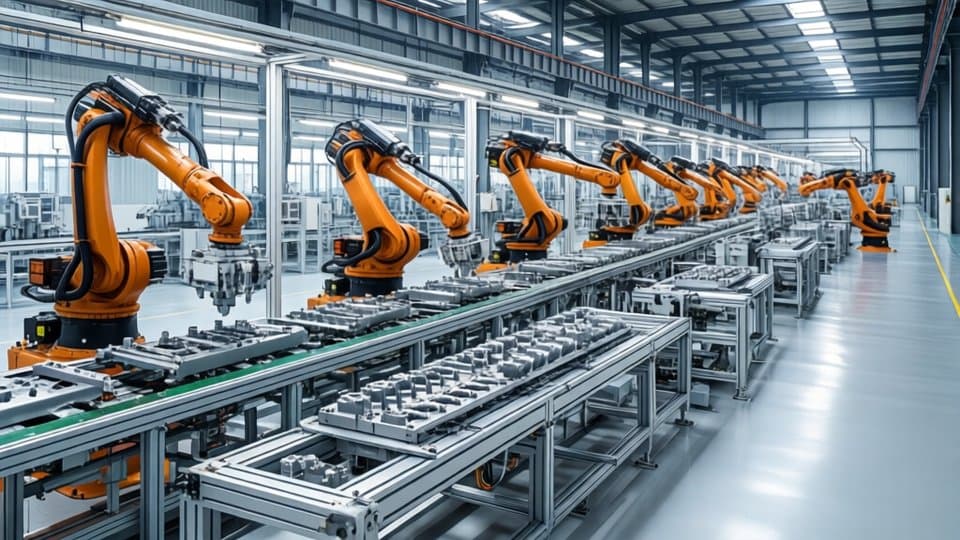
Tesla has officially started production of its Optimus humanoid robot at the Fremont, California, manufacturing facility, marking a major shift in the company's strategy to move beyond electric vehicles. This tesla optimus news follows the company's decision to repurpose assembly lines previously used for luxury cars to accommodate the new robotic hardware. The move is intended to establish Tesla as a leader in artificial intelligence and humanoid robotics, though the company is simultaneously managing a reduced capital-spending forecast.
What is the current production status of the robot?
Tesla is currently producing several hundred units of the Optimus robot per week at its Fremont plant. This represents a significant increase in volume, as the company produced only a few dozen units per week during the second quarter of 2026. According to Electrek, the current output is roughly ten times higher than the previous quarter's levels.
While the ramp-up is fast, the company faces a long road to reach its ultimate goals. According to Kucoin, CEO Elon Musk stated that it will take at least one year, or perhaps longer, to reach a target capacity of 20,000 robots per week. The manufacturing process is currently in an "early production phase" on a high-volume line.
The production timeline and targets include:
- Q2 2026: A few dozen units produced per week.
- August 2026: Several hundred units produced per week.
- End of 2026: A target of more than 1,000 units per week.
- Future Target: An annualized capacity of 20,000 units per week.
How did Tesla change the Fremont factory for this?
Tesla transformed the Fremont facility by removing the production lines that previously manufactured the Model S and Model X. This transition happened quickly, with the company removing the old lines in just 46 days to make room for the new humanoid assembly process. This allowed Tesla to shift engineers and workers from the luxury vehicle programs to the robotics division.
The factory now produces the Optimus V3 version of the robot. This iteration is designed to be lighter and features a higher number of cameras than the earlier versions. However, the assembly process remains difficult because the robotic components are much smaller and require higher precision than automotive parts. According to The Next Web, equipment at several stations fails to line up parts precisely, which often requires robots to undergo repairs immediately after leaving the line.
What technical challenges is the robot facing?
The robot currently faces significant hurdles regarding its physical dexterity and its "brain" or artificial intelligence. While Elon Musk has promised human-level movement, the assembly of the hands and forearms is a manual, labor-intensive process. Each hand and forearm contains more than 100 small screws and components that workers must assemble by hand.
Hardware and software issues include:
- Hand Reliability: Some touch sensors have been unreliable, leading Tesla to develop a replaceable "sensing glove" for the next model.
- Part Precision: Assembly lines for joints and hands struggle to meet the tight tolerances required for such small parts.
- AI Generalization: The software cannot yet handle a wide range of tasks without specific programming.
- Learning Speed: It reportedly takes several days for the robot to learn even a basic task.
The AI capabilities are also a point of concern for the company's long-term utility. According to Electrek, the robots are currently unable to handle generalized tasks, which limits their usefulness outside of highly controlled environments. Most units are currently used internally for testing and data collection in supervised areas.
How each side tells it
The narrative surrounding the project differs depending on whether one looks at the company's official ambitions or the reported manufacturing realities.
"I still firmly believe that Optimus will become the largest product in the world,"
— Elon Musk, CEO of Tesla
In contrast, reports regarding the production line suggest a more difficult reality for the engineers. The Next Web notes that while the company is scaling up, it is "still struggling to build the humanoid robots reliably at scale" due to issues with suppliers and equipment.
What is the background of the Optimus project?
The Optimus project is part of Tesla's broader move to diversify its revenue away from the electric vehicle market. The company is investing heavily in robotics and autonomous technology to create new commercial opportunities in logistics, warehousing, and manufacturing.
Key milestones in the project's history include:
- January 2025: Elon Musk predicted the company would build 10,000 robots in 2025.
- Early 2026: Tesla ended production of the Model S and Model X at Fremont to prioritize robotics.
- May 2026: Tesla officially transitioned the Fremont lines to the Optimus program.
- July 2026: Elon Musk stated during an investor call that Optimus could be the "biggest product ever."
What happens next?
Tesla has several upcoming milestones that will determine the success of the humanoid program. The company is working toward integrating the Tesla AI5 chip into the robot, with work expected to finish by April of next year. This chip is intended to provide much higher computing power than the current AI4 version.
The following events and deadlines are scheduled:
- Next 1-2 months: Tesla expects to release a video showing the robot completing tasks that are not pre-programmed.
- Next year: Tesla plans to add a replaceable "sensing glove" to the robot's hand to improve sensor reliability.
- End of 2027: Elon Musk expects to resolve most design and reliability issues, making the robot available to the public.
Frequently Asked Questions
Will Tesla sell the Optimus robot to the public?
Tesla reportedly plans to lease the robots to a small list of commercial customers rather than selling them directly. This allows the company to collect data from real-world use to improve the AI.
Where are the robots being used right now?
Most current units are used internally by Tesla for testing and data collection. They operate in tightly supervised and controlled areas within Tesla's own facilities.
Is the robot ready for industrial work?
Not yet. While production has begun, the robots still require significant training for specific tasks and face reliability issues with their hands and sensors.
Sources
- 1.tekedia.comTesla Begins Optimus Robot Production at Fremont Factory While Cutting Capital-Spending Forecast
- 2.thenextweb.comTesla’s Optimus production hits snags with hands, The Information reports
- 3.kucoin.comTesla begins mass production of the Optimus humanoid robot at its Fremont factory, Musk says achieving a weekly target of 20,000 units will take over a year.
- 4.electrek.coTesla ramps Optimus to hundreds a week, but the robots can’t generalize