Rheinmetall develops military humanoid robot for combat support
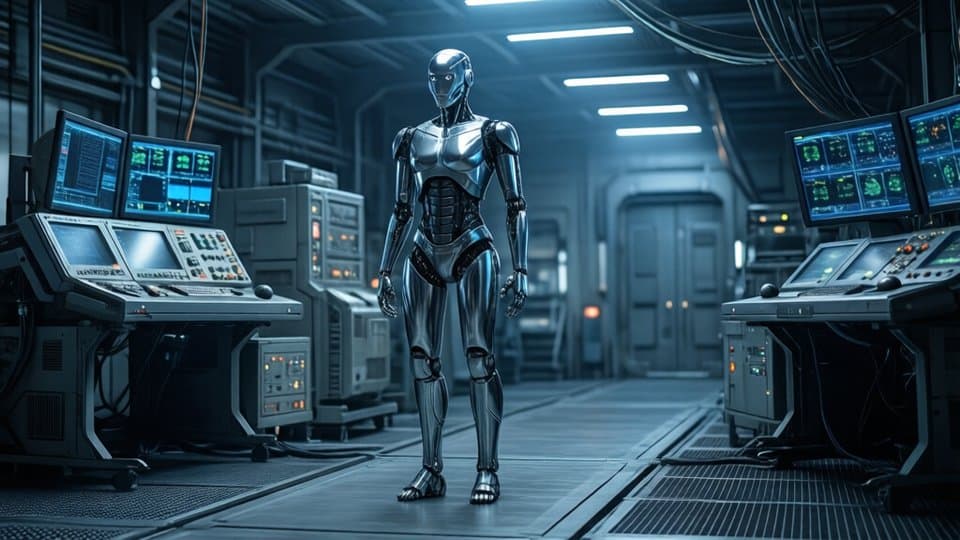
German defense conglomerate Rheinmetall is currently investing in the development of a humanoid robot designed for combat and military support roles. The company aims to produce the first prototypes within 15 to 18 months, potentially arriving in the first half of 2028, according to statements from the company's chief executive. This development marks a shift from traditional wheeled unmanned vehicles toward machines capable of navigating complex environments and interacting with soldiers.
- Rheinmetall CEO Armin Papperger expects the first military-grade prototypes to appear within 15 to 18 months, according to ua.news.
- The company is currently focusing engineering efforts on the upper torso of the machine, as reported by defence24.com.
- The U.S. Army recently named five winners in its xTechHumanoid competition held in September 2026, according to dvidshub.net.
What is Rheinmetall building?
Rheinmetall is creating bipedal machines intended to assist in military operations. While the company has not released specific details regarding the exact tasks these robots will perform, engineers are currently building the upper body of the unit. The goal is to move beyond simple transport to machines that can handle precise manipulation and complex battlefield settings.
The company already maintains a presence in robotics through its Mission Master family of unmanned ground vehicles. These existing platforms perform roles such as reconnaissance, medical evacuation, and fire support. However, the transition to a humanoid form presents a much harder technological hurdle than the wheeled or tracked systems the company currently produces.
Why is artificial intelligence a challenge?
The primary obstacle for Rheinmetall is the level of intelligence required for a machine to function alongside humans. Unlike civilian robots that perform repetitive tasks in controlled spaces, a military machine must interpret chaotic battlefield situations. It needs to communicate with soldiers and make decisions based on its surroundings.
Armin Papperger, the CEO of Rheinmetall, has emphasized that the cognitive requirements are much higher for defense applications. The machines must do more than just move; they must assess environments and work as part of a team. Without advanced software, a robot cannot move from simply following commands to actually executing complex combat tasks autonomously.
How does this compare to US Army efforts?
While Rheinmetall focuses on building the machines, the United States military is actively testing the commercial market to see what is possible. The U.S. Army recently concluded the xTechHumanoid competition to identify how emerging commercial technologies can serve military needs. This program seeks to find tools that reduce the physical burden on soldiers.
The competition evaluated 103 different submissions based on technical maturity and military utility. Five companies were ultimately selected as winners: ACES Group, IHMC Robotics, Hydroplane Limited, Ras Labs, and Velocity Explorations. These companies are testing different parts of the robotic puzzle, such as better batteries, tactile sensors for delicate handling, and software that understands radio traffic.
"Humanoid robots are part of a broader autonomy push to increase the depth and breadth of robotic platforms and components industry can provide for a range of missions,"Alex Miller, U.S. Army Chief Technology Officer
What are the current technological limits?
Despite the interest from major powers, current technology cannot yet meet the most extreme military requirements. Some researchers argue that the goals set by military officials are currently impossible. For instance, there is no existing robot that can run at high speeds while carrying heavy loads and operating for a full day without stopping.
Robert Griffin, a senior researcher at IHMC Robotics, noted that the requirements often exceed the state of the art. During recent testing, the robot named Alex was able to follow voice commands and move through woods, but it also collapsed and required transport on a gurney. This highlights the gap between basic movement and the high-performance endurance needed for active combat zones.
How each side tells it
The development of these machines is viewed differently by those building them and those evaluating their readiness for the field.
Rheinmetall's leadership views the project as a high-investment priority that is nearing the prototype stage. According to ua.news, the company is investing heavily to ensure these machines can interact with humans effectively.
In contrast, some researchers suggest a more cautious approach regarding the ethics and reality of the technology. Robert Griffin told defensenews.com that the industry is far from creating science fiction machines. He also raised concerns about the morality of autonomous systems, stating: "I don’t think that any person who has a modicum of ethics is going to say that we need to be having these robots making life or death decisions."
What happens next?
The timeline for these technologies is divided between short-term testing and long-term deployment. Rheinmetall expects its first prototypes to be visible within 15 to 18 months, which places their debut in the first half of 2028. However, because these machines require significant software refinement, they likely will not see actual combat use until the 2030s.
In the United States, the Army is continuing its work through the Humanoid Community of Collaboration. This group was established in December 2023 to help integrate these new capabilities into the military. Future efforts will focus on solving the massive power and energy constraints that currently limit how long these robots can operate in the field.
Frequently Asked Questions
When will Rheinmetall's military robots be ready?
The company expects to unveil its first prototypes within 15 to 18 months, likely in early 2028.
What will these robots actually do?
Rheinmetall has not specified exact tasks, but they are intended to assist soldiers and handle complex tasks in difficult environments.
Can robots make life or death decisions on the battlefield?
Current researchers warn that existing AI is too easily confused for such tasks and suggest that ethical concerns remain a major barrier.
SEO Meta Description: German defense giant Rheinmetall is developing humanoid military robots. Learn about their 2028 prototype timeline and the challenges of battlefield AI.
URL Slug: rheinmetall-humanoid-military-robot-development