Chinese stocks surge as humanoid robot sector gains momentum
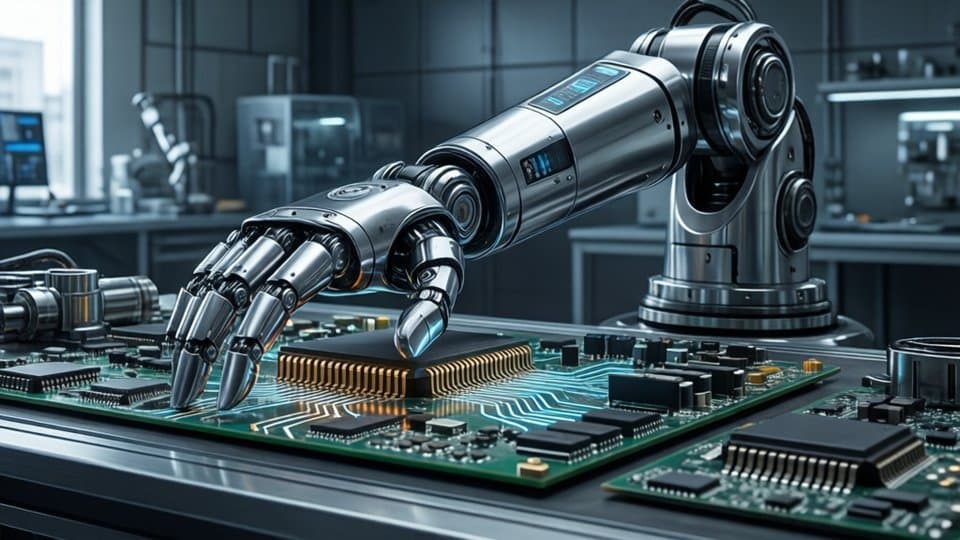
Chinese stock markets showed mixed performance on November 23, with the Shenzhen Component and ChiNext indices rebounding from early lows while the Shanghai Composite remained within a narrow range. This divergence occurred alongside a massive surge in the humanoid robot sector, driven by new national standards and optimistic commercial outlooks. The movement highlights a shifting focus toward advanced manufacturing and artificial intelligence within the mainland markets.
- The ChiNext Index rose 1.22% to 2,239.11 at the midday close on November 23, according to finance.biggo.com.
- Combined turnover for the Shanghai and Shenzhen markets reached 916.4 billion yuan during the morning session, as reported by finance.biggo.com.
- The Shanghai Composite Index stood at 3,499.91, representing a 0.96% decline at midday, according to finance.biggo.com.
Why did robot stocks surge so quickly?
Automated machine stocks gained momentum due to a combination of regulatory developments and international industry news. China's National Data Administration began developing national standards for embodied intelligence data, with more than 20 specialized standards expected during the 15th Five-Year Plan period, according to finance.biggo.com. These standards aim to support applications for various machines, including industrial collaborative arms and specialized robots.
Investor sentiment also reacted to comments from Tesla CEO Elon Musk. In a video-linked interview on November 19, Musk stated that he expects Optimus robots to perform household tasks like washing dishes and taking out trash within the next 12 to 18 months, as reported by finance.biggo.com. This news helped several companies reach the 20% daily price limit.
Several companies saw extreme price movements during the session:
- Ampron, Zhaomin Technology, Weihong, and Henggong Precision all hit the 20% limit-up, according to finance.biggo.com.
- Fantuo Digital achieved its second consecutive 20% limit-up, as noted by finance.biggo.com.
- Unitree Robotics climbed nearly 10%, according to finance.biggo.com.
How did the major indices perform?
The morning trading session revealed a split between different regional exchanges. While the Shanghai Composite Index fell 0.96% to 3,499.91, the Shenzhen Component Index rose 0.24% to 10,280.58, according to finance.biggo.com. The tech-focused ChiNext Index showed the strongest recovery among the main indices, climbing 1.22% to 2,239.11. However, the STAR Market Composite struggled, dropping 0.7% to 1,339.73, as reported by finance.biggo.com.
Market activity was widespread. Total turnover across both markets hit 916.4 billion yuan, which was an increase of 60.6 billion yuan compared to the previous day, according to finance.biggo.com. Despite the higher volume, more than 3,700 stocks declined, while roughly 1,700 stocks advanced, creating a pattern of diverging indices with more decliners than advancers.
Which sectors saw the most money moving?
Capital flows were highly concentrated in specific industries. Main funds moved into banking, railways, highways, and transportation during the morning session. Conversely, electronics, semiconductors, and computers experienced net outflows. Specifically, the electronics sector saw net outflows exceeding 5.4 billion yuan, according to finance.biggo.com.
Individual stock activity also showed distinct trends. Joyoung led net buying with over 800 million yuan, followed by Eoptolink Technology and Zhongji Innolight, according to finance.biggo.com. On the other side, Changxin Technology faced net selling of more than 600 million yuan.
Other notable sector movements included:
- Precious metals rose, with spot gold jumping above $3,600 an ounce, according to finance.biggo.com.
- AI micro-drama stocks like Zhewen Pictures and Hengdian Film & TV hit limit-up, as reported by finance.biggo.com.
- Real estate and the power sector both declined, according to finance.biggo.com.
What is the background of these market trends?
The recent volatility follows a period of significant growth for Chinese equities. In 2025, the Shanghai Composite Index rose 18.3 percent, while the Shenzhen Component Index increased by 30.62 percent, according to global.chinadaily.com.cn. The ChiNext board saw an even larger jump of 51.42 percent during that same year.
Looking at the start of 2026, the market showed signs of a strong beginning. On the first trading day of January 2026, the Shanghai Composite Index closed 1.38 percent higher at 4,023.42, according to global.chinadaily.com.cn. Experts noted that this upward momentum was supported by economic recovery and technological self-reliance.
Institutional views on the market remain mixed. China Merchants Securities suggests that while bottoming characteristics are emerging, short-term disturbances like overseas tightening and AI industry risks remain. Meanwhile, JPMorgan forecasts that the CSI 300 Index could reach 5,200 points by the end of the year, according to global.chinadaily.com.cn.
Are there new government policies for technology?
The Chinese government is actively implementing plans to integrate smart technology into social services. The National Development and Reform Commission, along with three other departments, issued an implementation plan for a service system for the elderly and young children. This plan encourages the use of AI agents, service robots, and smart wearables in elderly care facilities, according to finance.biggo.com.
Standardization is also a major focus for the industrial sector. The Ministry of Industry and Information Technology has assigned a development plan for a new national standard regarding the safety technical specifications for solid-state lithium-ion batteries. The China Electronics Standardization Institute will draft these specifications, as reported by finance.biggo.com.
What happens next for the market?
Investors are watching for several key developments in the coming months. The rollout of the 20 specialized national standards for embodied intelligence data is expected to continue during the 15th Five-Year Plan period. Additionally, market participants are monitoring the progress of solid-state battery standardization projects currently being organized by the Ministry of Industry and Information Technology.
In the broader economic context, analysts are looking for improvements in government expenditure and investment data. According to Zhang Xia, a chief strategy analyst at China Merchants Securities, the issuance of local government special bonds and central budgetary investments is likely to accelerate, potentially speeding up economic recovery, as reported by global.chinadaily.com.cn.
Frequently Asked Questions
Why are robot stocks rising in China?
Stocks are rising due to new national data standards for intelligent machines and positive news regarding the production capabilities of companies like Tesla.
What is the difference between the Shanghai and Shenzhen indices?
The Shanghai Composite typically tracks larger, more traditional companies, while the Shenzhen Component and ChiNext indices often include more technology and growth-oriented firms.
How does the 15th Five-Year Plan affect technology?
The plan includes the rollout of over 20 specialized national standards to support the development and application of advanced robotics and intelligent data.