Bangladesh Garment Workers Strike for Higher Wages as Factory Closures Mount
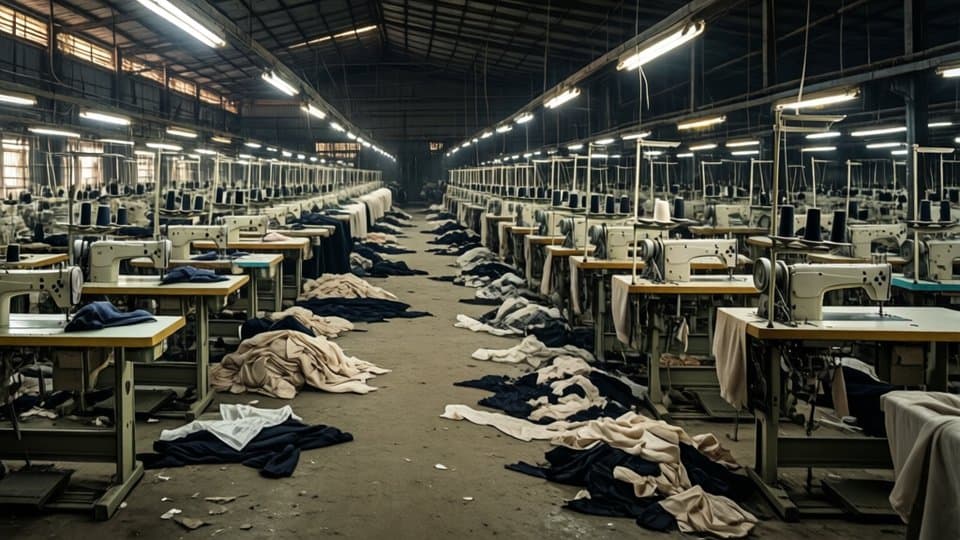
Garment workers in Bangladesh launched violent protests on Sunday, July 30, 2026, demanding a significant increase in their minimum monthly pay. The unrest has forced hundreds of factories to suspend operations, threatening the stability of an industry that generates nearly $40bn annually and accounts for roughly 10% of the national GDP, according to BBC.
- Workers are demanding a minimum wage of 30,000 taka ($242), which is more than double the current standard, see.news reports.
- Approximately 670 factories suspended operations on Monday, according to reports from Reuters and AFP.
- At least 29 protesters were arrested by Monday, according to Dhaka police Deputy Commissioner Mohidul Islam, BBC reports.
Why are garment workers protesting?
The primary driver of the unrest is the extreme gap between current earnings and the rising cost of living. Workers are struggling to afford basic necessities like food, housing, and electricity. They are seeking to raise the minimum monthly wage from the current level of approximately 12,500 to 13,000 taka to a new target of 30,000 taka.
The economic pressure on families is immense. According to WSWS, a four-member family required between 45,000 and 50,000 taka for essential expenses in 2025. This creates a massive deficit for workers who earn significantly less. Individual workers have expressed that the surge in prices for cooking gas and electricity has made their current salaries unsustainable.
Beyond direct wages, workers are also facing broader economic instability. see.news notes that manufacturers are dealing with rising production costs and recurring shortages of gas and electricity. These issues are compounded by energy market uncertainties linked to tensions in the Middle East.
How violent did the demonstrations become?
Protests escalated into physical confrontations on Sunday in the capital city of Dhaka and several industrial hubs. Demonstrators blocked major roads and highways, causing significant disruptions to transportation and factory access. In some areas, protesters reportedly threw bricks at police officers, according to security officials cited by see.news.
The clashes led to the use of force by law enforcement. Police deployed tear gas and water cannons to disperse crowds in Dhaka. BBC reported that protesters also vandalized factories and set vehicles on fire during the unrest. In Gazipur, workers blocked a major highway, which disrupted traffic in a critical industrial zone.
The scale of the shutdown varies by location. While Reuters and AFP reported around 670 factories suspended operations on Monday, Mohammad Amjad Hossain, the industrial police chief in Gazipur, told see.news that demonstrations forced between 25 and 30 facilities in his specific area to shut down.
How each side tells it
The workers and the government hold sharply different views on the cause and nature of the current instability. Workers focus on survival and economic necessity, while the government focuses on maintaining order and investigating potential political sabotage.
The Workers' Position
Workers argue that their current pay is insufficient to survive due to inflation. They view the protests as a direct response to the inability to afford essential goods. One worker told BBC Bangla:
"We want the government to accept our demands and increase our wages. [And] they need to instruct landlords and homeowners not to raise rent and ensure that the prices of essential commodities remain affordable."A 28-year-old worker named Mamun told AFP that the government must either lower prices or raise wages to address the rising costs of food and electricity.
The Government's Position
The government maintains that while wage reviews are necessary, the violence is being exploited by political enemies. Authorities have accused the banned Awami League party of instigating violence to destabilize the country. Home minister Salahuddin Ahmed threatened punitive action against those attempting to "destabilise the country" "under the guise of labour protests," according to BBC.
What is the history of the garment industry in Bangladesh?
The garment sector is the backbone of the Bangladeshi economy, employing approximately four million people. It is the world's second-largest garment exporter, trailing only China. The industry supplies many major global brands, including H&M, Primark, and Uniqlo. Because it generates over 80% of the country's export earnings, any disruption has massive national implications.
The political landscape has shifted significantly in recent years. The Awami League government, led by Sheikh Hasina, was ousted in August 2024 following mass demonstrations. Following an interim government, the Bangladeshi Nationalist Party (BNP) took power in February 2026. The WSWS reports that the current BNP government has faced challenges in managing social anger and has implemented IMF-backed austerity measures.
The industry has also faced a period of intense contraction. Between August 2024 and June 2026, 457 garment and textile factories closed, resulting in more than 240,000 workers losing their jobs, according to a report by JusticeMakers Bangladesh cited by WSWS. This instability has already weakened the sector's global standing.
How much is the industry losing?
The economic impact of the protests is felt through both immediate factory closures and long-term production declines. The suspension of hundreds of factories creates immediate losses in output and threatens the ability of manufacturers to meet deadlines for international buyers. see.news notes that these disruptions could lead to delayed export shipments and payments.
Production capacity has already been under pressure. The Fashion Business Journal reported on June 30 that production capacity at many plants had fallen by 25 to 30 percent in recent months. This decline is attributed to a combination of layoffs, wage arrears, and factory closures.
The government is attempting to mitigate these losses through financial support. The central bank previously announced a 600 billion taka ($5 billion) stimulus package to support businesses and revive shuttered factories, according to the Financial Times.
What happens next?
The immediate focus is on the newly formed wage board. On Sunday, the government announced it had established a six-member board to review salaries in the ready-made garment industry. Labor and Employment Minister Ariful Haque Chowdhury stated that this board was formed following discussions with both industry leaders and worker representatives.
Workers are being urged to return to their stations while negotiations continue. Babul Akhter, a workers' representative on the wage board, told protesters on Monday: "I tell my fellow workers, return to work. Don't give in to anyone's incitement." However, with hundreds of factories expected to remain shut through Tuesday, the pressure on the government to reach a formal agreement remains high.
Frequently Asked Questions
What is the minimum wage workers are asking for?
Workers are demanding a minimum monthly wage of 30,000 taka, which is more than double the current standard of approximately 12,500 to 13,000 taka.
Which global brands are affected by these protests?
The industry manufactures garments for major international brands including H&M, Primark, and Uniqlo, which may face shipment delays due to factory closures.
How many people work in the Bangladesh garment sector?
The textile industry employs around four million workers, and an estimated 40 million people in the country depend directly or indirectly on the industry.
Sources
- 1.bbc.co.ukWage protests force hundreds of Bangladesh garment factories to close
- 2.bbc.comHundreds of Bangladesh garment factories shut after violent protests
- 3.see.newsBangladesh Wage Protests Force Dozens of Factories to Close
- 4.wsws.orgWidespread protests in Bangladesh against poverty wages, mass layoffs