
Thousands Missing After Devastating Glacial Collapse Near Nepal-China Border
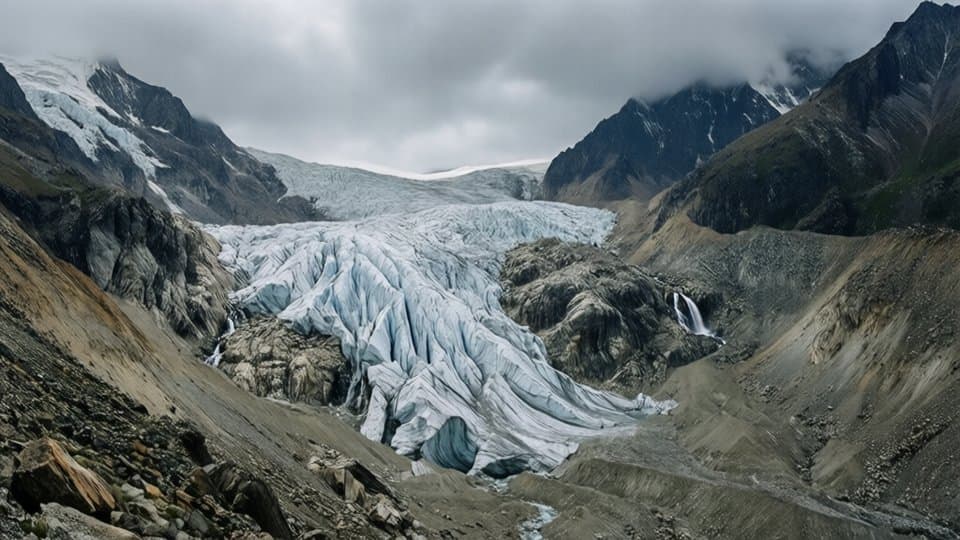
A massive glacial collapse near the Nepal-China border on August 26, 2026, triggered catastrophic flooding that destroyed entire communities and left a heavy toll of death and displacement. The disaster, which sent a wall of water through northern Nepal and Tibet, has prompted international aid efforts and desperate prayers from families of the missing.
- Crosswalk reports that more than 1,400 bodies have been recovered.
- The EWN reported that nearly 4,500 people remain missing.
- The Portsmouth Anglican source states more than 1,500 people lost their lives.
What caused the massive flooding in the region?
A sudden geological event near the Tibetan border released a torrent of water, mud, and debris that moved with extreme speed. This surge devastated the landscape in a matter of minutes, erasing villages and infrastructure across the Himalayan border region.
Survivors described a terrifying wall of water reaching heights of more than 100 metres. According to the Portsmouth Anglican report, this wave traveled at speeds of 180 kilometres per hour. It destroyed 60 kilometres of valley in seconds.
The Crosswalk report notes that the debris traveled 14 miles in just 7 minutes. This surge impacted communities in northern Nepal and Tibet before hitting the Chinese port town of Gyirong. The disaster was caused by a massive section of rock and glacier ice giving way.
How many people have been affected by the disaster?
The scale of human loss is immense, with fatalities rising and thousands of individuals still unaccounted for. The destruction has left families grieving and entire social structures broken by the sudden loss of homes and loved ones.
Death toll figures vary slightly between reports. EWN reported on September 3, 2026, that rescue teams recovered more than 1,100 bodies. However, the Portsmouth Anglican source lists the death toll as more than 1,500 people. Thousands remain missing.
The physical damage is equally severe. Entire communities, including bridges, schools, and dams, were swept away. According to the Portsmouth Anglican report, the floods hit the Bhote Koshi River in the Rasuwa district and the Trishuli River. This has left children without parents and displaced many families.
What is the international response to the crisis?
Governments and humanitarian organizations have deployed significant resources to search for survivors and provide relief. The response involves both military personnel and specialized rescue equipment to navigate the difficult terrain.
Nepal's government deployed 19,000 security personnel and 16 helicopters for search operations. China contributed 2,100 rescue workers and approximately $32.7 million in aid, according to Crosswalk. The United Nations and the Red Cross are also participating in the efforts.
Local religious groups are providing immediate practical aid to those who survived. The Portsmouth Anglican report highlights the Nazarene Church in Kathmandu, which has distributed food to 191 families and provided blankets to 182 families. They also gave roofing sheets to 46 families to help build temporary shelters.
How are families of the missing coping?
For many families, the uncertainty of whether their loved ones are alive or dead is a source of extreme agony. The lack of information from local authorities makes the waiting period particularly difficult for those far from the disaster zone.
One such case involves the Govender family from South Africa. Their daughter, Terricia Govender, a 33-year-old data analyst, went missing while on a pilgrimage to Mount Kailash. EWN reported that her mother, Linda Govender, was traveling to Nepal to be closer to the search efforts.
"My prayers today is for me to bring Terricia back home safely. We are a party of three travelling, and we are hopeful that we will be a party of four coming back. All I can do right now is pray. I am hoping for a miracle that my daughter will come back to me."
— Linda Govender, mother of Terricia Govender, as reported by EWN.
Who are the key people involved in relief?
Local leaders and religious figures are playing a major role in coordinating community support and managing the long-term recovery of affected areas. These individuals often work with limited resources to meet urgent needs.
The Portsmouth Anglican report mentions Rev Rinzi Lama, the first Anglican priest to serve in Nepal. He founded the New Creation Home in Kathmandu in 2003, an orphanage for homeless children. He has experience coordinating relief for previous disasters like earthquakes and monsoons.
The Portsmouth Anglican report also features Rev Sam Cullen, who visited Nepal to gather prayer requests. She met with local Christians, Buddhists, and Hindus to understand the impact of the floods on various religious communities during the pilgrimage season.
What happens next for the recovery efforts?
The focus is shifting from immediate rescue to long-term recovery and the search for the thousands of people still missing. This process will require sustained international attention and significant financial support.
Search and recovery operations continue as teams attempt to locate bodies downstream. The Crosswalk report notes that morgues in the region have already run out of refrigeration space for the bodies being recovered.
Charitable organizations are calling for continued donations to support displaced families. The Portsmouth Anglican report emphasizes the need for resources to provide shelter, clothing, and food as the community attempts to rebuild what was lost.
Frequently Asked Questions
What caused the floods in Nepal?
A massive section of rock and glacier ice collapsed near the Nepal-China border, creating a high-speed wall of water and debris.
How many people are missing?
While figures vary, EWN reports that nearly 4,500 people remain missing following the disaster.
Is there international aid available?
Yes, China, the United Nations, the Red Cross, and various governments including the U.S. and U.K. have provided aid and personnel.