Thousands Missing After Devastating Glacial Collapse in Nepal and Tibet
Emergency responders and aid agencies are struggling to locate thousands of people after a massive glacial collapse triggered deadly floods and landslides along the Nepal-Tibet border in late August 2026. The disaster has caused widespread destruction across river valleys, leaving a massive death toll and a high number of missing persons, including many foreign tourists and workers.
- At least 1,362 people have died across Nepal and China, according to a CNN tally of official reports.
- The United States has pledged $500,000 in emergency aid to assist the affected region, as reported by Moneycontrol.
- More than 5,000 people remain missing in the region, according to authorities cited by CNN.
How many people have died and where are they missing?
The death toll varies depending on the reporting agency and the specific region being monitored. While early reports from The Straits Times indicated at least 362 deaths, later tallies provided to CNN suggest the number has climbed significantly higher. The disaster has impacted both Nepal and the Tibet Autonomous Region in China.
In Nepal, the National Disaster Risk Reduction and Management Authority (NDRRMA) reported that at least 1,331 people have died. The scale of the tragedy is massive. Thousands are still unaccounted for. The Straits Times noted that entire villages were swept away by a "tsunami-like wall of freezing water and mud."
In China, the situation is similarly grim. According to CNN, the Chinese state news agency Xinhua reported that at least 31 people died in Tibet. Furthermore, Chinese authorities stated that 558 people, including 260 foreigners, were missing in the Tibet region. The missing include many Hindu pilgrims traveling to Mount Kailash and various foreign nationals.
What caused such a massive disaster?
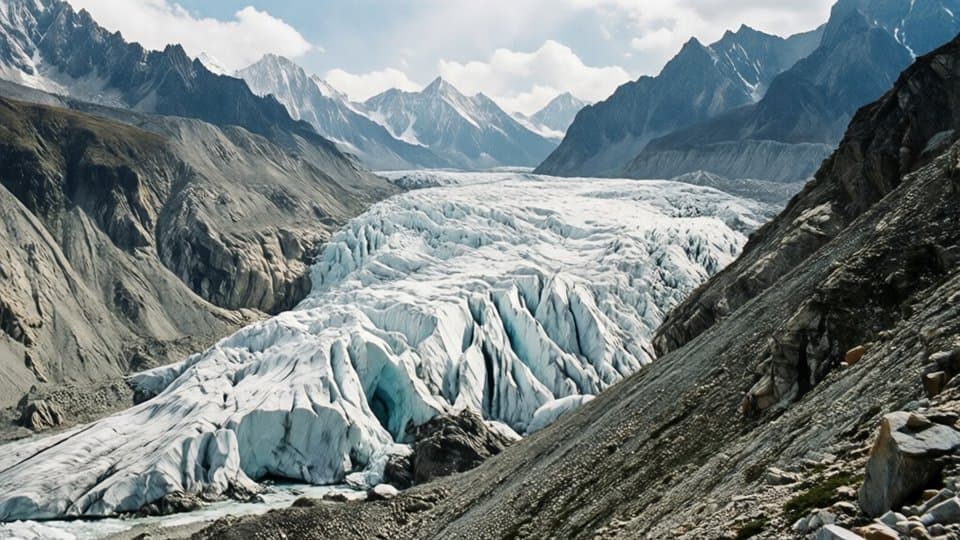
The disaster was not caused by typical rainfall but by a sudden geological event. The United States Geological Survey (USGS) confirmed that a glacial collapse triggered the catastrophic debris flow. This event was initially mistaken for a magnitude 4.4 earthquake, but seismic analysis proved it was a glacial collapse. This caused a massive flow of icy debris to move south.
This debris flow acted like an "inland tsunami," according to environmental historian Ruth Gamble, as reported by The Straits Times. The sludge traveled nearly 170km into Nepal. The speed and volume of the water and mud destroyed bridges, dams, and homes instantly. It turned towns into what survivors described as "giant graveyards."
How are rescue teams finding survivors?
Rescue operations are extremely difficult due to the thick layers of mud and debris. In Nepal, soldiers have used sniffer dogs to search for bodies buried under the dirt. Some rescuers have even had to use satellite imagery to locate submerged hydropower tunnels to find trapped workers. These efforts have yielded some dramatic successes in recent days.
Recent rescues include a 49-year-old Chinese national, Lu Haitao, who was pulled alive from a tunnel at the Upper Trishuli-1 Hydropower Project. A team of South Korean rescue workers assisted the Nepali armed forces in this operation. Another 63-year-old woman, Chandika Shrestha, was also rescued from a four-story building in the Nuwakot district. These small victories provide hope amidst the widespread devastation.
However, the search remains a race against time. The Nepal Electricity Authority has requested DNA samples from relatives of missing hydropower workers to help identify remains. The authority released details for 147 missing employees who have not been in contact. Hundreds of other workers remain missing in the tunnels.
How is international aid being provided?
Multiple countries and organizations are mobilizing to help Nepal and Tibet. The United States has pledged $500,000 in emergency aid and is sending a disaster response adviser to the region, according to Moneycontrol. The United Nations has also activated emergency procedures to provide $20 million in loss-and-damage funding to Nepal.
Charity groups are also on the ground. The International Nepal Fellowship (INF) UK has been sending food, healthcare, and hygiene kits to remote communities via motorcycle. Matthew Hanning, the chief executive of INF UK, noted that while the UN funding is a first for the global loss-and-damage fund, the amount is only about 1% of the actual recovery cost. He described the sum as "a drop in the ocean."
The International Federation of Red Cross and Red Crescent Societies is also dispatching essential supplies. These include blankets, first aid kits, stretchers, and body bags. Aid workers are trying to reach communities that have lost everything to the mud and water.
What are the different perspectives on the recovery?
There is a divide between the immediate relief being provided and the long-term needs of the survivors. While governments are focusing on the immediate search for the missing, local leaders and aid workers are worried about the profound trauma and the massive scale of rebuilding required. The scale of the economic impact is vast.
Matthew Hanning of INF UK emphasized that the work is not just about the immediate disaster but also about the ongoing needs of people affected by previous events, such as the 2023 earthquakes. He noted that many communities are still struggling to recover from past hardships. The current floods have added a new layer of suffering to already vulnerable populations.
On the ground, the feeling is one of profound loss. A community leader told Hanning:
"Those who have gone have gone, and it is we that are left who suffer. We are grieving, and we don’t know what is next."This sentiment reflects the uncertainty felt by those who have lost family members and homes to the floods.
What happens next for the affected regions?
The danger has not passed for those living near the river valleys. Authorities are warning of a second potential flood because debris has blocked rivers, creating large lakes of trapped water. In the Budhi Gandaki Valley, further flooding in October has already heightened fears about the safety of rebuilding in these areas.
The Kathmandu-based International Centre for Integrated Mountain Development warned that a blockage on the Nepal-China border river could cause another surge. The Kathmandu Flood Forecasting Division has issued special notices for residents of the Bhote Koshi River area to exercise extreme caution. The risk of a breach in these debris-dammed lakes remains high.
Recovery will be a long-term process. While rice shoots are beginning to emerge in some areas, the destruction of schools, churches, and homes means that the social and physical infrastructure of Nepal requires massive investment. The focus will remain on identifying the missing through DNA testing and managing the risks of the remaining blocked waterways.
Frequently Asked Questions
What caused the floods in Nepal and Tibet?
The floods were caused by a glacial collapse that sent a massive flow of ice and debris downstream, acting like an inland tsunami.
How many people are missing?
Authorities report that more than 5,000 people remain missing across the affected regions in Nepal and China.
Is there still a risk of more flooding?
Yes, there is a high risk of further flooding because large amounts of water are trapped behind debris blockages in the river valleys.
Sources
- 1.churchtimes.co.ukAid workers assist after Nepal floods
- 2.straitstimes.comDeath toll rises, rescuers search for 1,400 missing after Nepal-Tibet floods
- 3.cnn.comSeptember 5, 2026 — Updates on rescue efforts in Nepal 10 days after catastrophic floods
- 4.moneycontrol.comUS pledges $500,000 emergency aid for Nepal after deadly floods