
Economic Ties Remain Stable Amid Philippines and China South China Sea Tensions
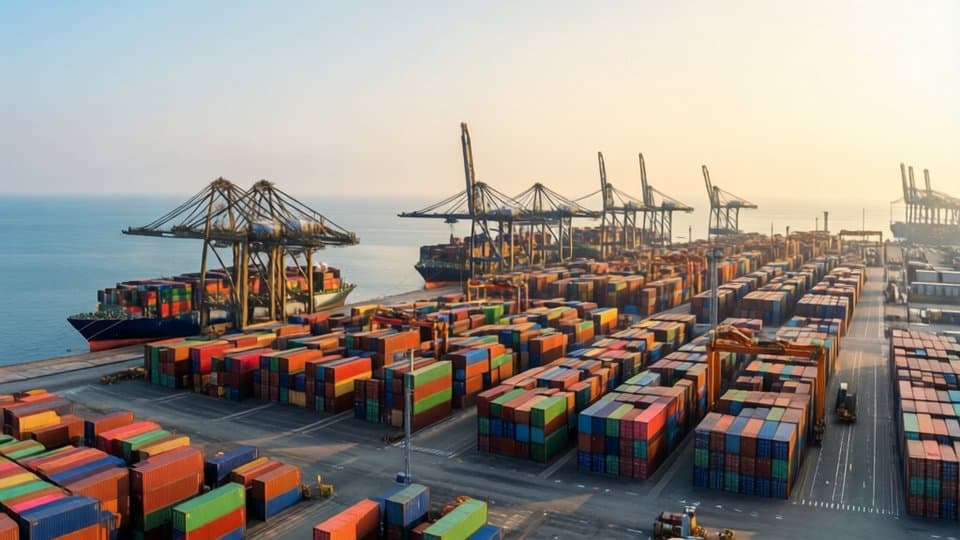
The Philippine government has decided to keep economic ties with Beijing intact as maritime tensions in the philippines and china south china sea continue to test bilateral relations. This policy, confirmed in late October 2024, aims to protect the national economy by separating commercial interests from territorial security disputes.
- China accounts for $38.44 billion of Philippine imports in 2025, according to tradersunion.com.
- Philippine nickel ore exports to China rose to $994.1 million in 2025, per tradersunion.com.
- The Philippine Department of Foreign Affairs summoned the Chinese Ambassador on October 19, as reported by tradersunion.com.
Will Manila use trade as a weapon against Beijing?
No, the Philippine administration will not use export restrictions or trade retaliation to respond to maritime friction. The government intends to pursue diplomatic solutions for territorial issues while maintaining steady commerce with its largest trading partner.
Palace Press Officer Clarissa A. Castro stated that President Ferdinand R. Marcos Jr. would not consider trade retaliation against China despite friction over waters within the Philippine exclusive economic zone. Castro noted that economic relations should remain separate from efforts to defend Philippine sovereignty and maritime rights. She explained that different government agencies manage distinct mandates, with the Department of Foreign Affairs handling diplomacy while maritime agencies protect territorial interests.
The administration is currently engaging in discussions with other nations through diplomatic channels. Castro reiterated that economic matters are distinct from issues tied to the protection of territory and national interests in the West Philippine Sea.
Why does the trade relationship matter so much?
The economic stakes are high because China is the primary source of goods for the Philippines. Any disruption to this supply chain would harm local manufacturers and exporters who rely on Chinese components and raw materials.
According to tradersunion.com, China supplies $38.44 billion worth of goods to the Philippines in 2025, representing 28.6% of total imports. The Philippine Exporters Confederation, Inc. has previously warned that deteriorating relations could disrupt the manufacturing sector.
Mineral exports also show heavy reliance on the Chinese market. United Nations Comtrade data, compiled by the World Bank and reported by tradersunion.com, shows that the Philippines exported $994.1 million in nickel ores and concentrates to China in 2025. This is an increase from the $808.6 million recorded in 2024.
How do the two sides view the maritime conflict?
The two nations hold fundamentally different views on the history and current state of the South China Sea. While Manila focuses on sovereign rights, Beijing views the situation as a product of external interference.
How each side tells it:
"China could 'easily win' in a conflict but prefers peace." Ambassador Jing Quan, as reported by tradersunion.com
"The South China Sea issue is becoming the number one problem in China-US relations... the US 'Asia-Pacific rebalancing' strategy is making China the main target." iFeng, as reported by news.ifeng.com
Beijing maintains that it seeks to resolve disputes through negotiation. However, the Chinese perspective, as detailed by news.ifeng.com, suggests that the tension is driven by the United States' strategic moves and the actions of countries like the Philippines that "provoke" China through island occupation and oil exploration.
Is there a risk of foreign influence in Philippine politics?
Recent legal proceedings in Manila have raised concerns about whether Chinese funds are being used to influence high-level Philippine officials. This has added a domestic political layer to the existing maritime security crisis.
During an impeachment trial, prosecutors presented evidence alleging that Cale88 Foods Corp., controlled by Vice President Sara Duterte and her husband Manases Carpio, received 319 million pesos (approximately US$5 million) from state-run Chinese firms. According to rfa.org, the Anti-Money Laundering Council found these payments were suspiciously high for reported banana chip sales.
Prosecutor Leila de Lima told RFA that such receipts without legitimate business justification constitute a betrayal of oath. Retired Rear Adm. Roy Vincent Trinidad told RFA that "economic elite co-optation" is a known strategy used to achieve objectives without firing a shot.
What is the history of these maritime disputes?
The conflict is not a new phenomenon. It has evolved over decades from localized territorial claims into a broader geopolitical struggle involving major world powers.
The tension escalated significantly following the 2012 Scarborough Shoal incident. As reported by news.ifeng.com, a standoff occurred in April 2012 when Chinese fishing vessels and Philippine naval ships clashed. This event led China to begin construction on various features in the South China Sea in late 2013 to improve maritime defense.
Before this, the 2002 Declaration on the Conduct of Parties in the South China Sea (DOC) provided a framework for peace. However, various nations have continued to build on occupied reefs and expand oil and gas exploration, which China views as illegal occupations.
What happens next?
The Philippine government is currently conducting several investigations to address both security and political concerns. The following actions are underway:
- The National Security Council and state intelligence units are probing the allegations regarding foreign financial infusions into Philippine political figures.
- The Philippine military is continuing its "insider threat program," launched in 2023, to identify potential spies within the government.
- Diplomatic channels remain open as the Department of Foreign Affairs manages ongoing tensions with the Chinese Embassy.
Frequently Asked Questions
Will the Philippines stop importing goods from China?
No, the government is keeping trade ties intact to protect the economy and local manufacturers.
What is the main cause of the South China Sea tension?
The tension stems from overlapping claims to islands and maritime rights, exacerbated by geopolitical competition between the US and China.
How does China affect the Philippine economy?
China is the Philippines' largest import source, providing over 28% of all imported goods in 2025.