Newzix
Breaking News
Southeast Asia

ASEAN Envoy to Visit Myanmar to Advance Peace Plan

Sara Lindqvist4 min read
ASEAN Envoy to Visit Myanmar to Advance Peace Plan

ASEAN special envoy Maria Theresa Lazaro will visit Naypyidaw, Myanmar, on October 28 and 29, 2024, to address the ongoing civil war and humanitarian crisis. This mission aims to advance the bloc's Five-Point Consensus, which seeks to end hostilities and facilitate dialogue within the country following the 2021 military coup.

  • Thai Foreign Minister Sihasak Phuangketkeow stated on Tuesday that the itinerary for the visit is still being worked out, according to Channel News Asia.
  • The Philippines, acting as the ASEAN chair, has previously requested access to detained leader Aung San Suu Kyi, according to Channel News Asia.
  • Aung San Suu Kyi's son, Kim Aris, reported on Thursday that the former leader sounded "fairly healthy" during a telephone call, according to Channel News Asia.

Why is the ASEAN envoy visiting Myanmar?

The visit serves as a diplomatic effort to implement the ASEAN Five-Point Consensus established in April 2021. This framework was created to stabilize Myanmar after the military coup led by Min Aung Hlaing. The envoy's presence is intended to facilitate mediation and expand access for humanitarian aid through the AHA Centre.

The mission follows years of political deadlock. Since the coup, ASEAN has excluded Myanmar from high-level meetings because the nation has not made meaningful progress toward the consensus. Lazaro previously stated in July that her goal was to expand humanitarian access in a country currently plunged into civil war, according to Channel News Asia.

What are the specific goals of the Five-Point Consensus?

The consensus outlines five distinct requirements to resolve the Myanmar crisis. These include an immediate cessation of violence and the requirement that all parties exercise utmost restraint. It also mandates constructive dialogue among all concerned parties to find a peaceful solution for the citizens.

The third point requires a special envoy to facilitate the mediation process with assistance from the ASEAN secretary-general. Additionally, the bloc must provide humanitarian assistance. Finally, the special envoy and their delegation are tasked with visiting Myanmar to meet with all relevant parties, according to Channel News Asia.

How does the political situation in Myanmar look now?

The political landscape remains fractured and dangerous. While the envoy seeks to meet with various parties, there is no confirmed information regarding a meeting with the detained former democratic leader Aung San Suu Kyi. She has been held since the 2021 military takeover.

Recent developments offer small glimpses into her condition. In August, she met with a representative from the International Committee of the Red Cross. On Thursday, her son Kim Aris spoke to her via telephone from the Myanmar London embassy. Although he noted she sounded "fairly healthy," he expressed that he remains "very concerned about her well-being," according to Channel News Asia.

How does this relate to broader regional security?

ASEAN security is being discussed through multiple channels, including the ADMM-Plus. At the 13th ADMM-Plus meeting in Cebu, Philippines, leaders addressed regional stability. Deputy Prime Minister Phan Van Giang of Vietnam called for partners to support a "united and resilient ASEAN" based on equality and mutual respect, according to VGP.

Security discussions also involve major powers. During the meeting in Cebu, the U.S. participated, with Defense Secretary Pete Hegseth attending to signal regional security commitments, according to NewsCord. Meanwhile, China sent a low-profile representative to the same summit, according to NewsCord.

What is the history of South Korea's role in the region?

South Korea maintains deep ties with Southeast Asian nations like Timor-Leste. In 1999, South Korea dispatched the Sangnoksu Unit to support peace and reconstruction in Timor-Leste. This historical connection has evolved into a relationship built on "peace and friendship," according to MK.

South Korean diplomacy also focuses on the Korean Peninsula through trilateral cooperation. Foreign Minister Cho Hyun is scheduled to meet with U.S. Secretary of State Marco Rubio and Japanese Foreign Minister Toshimitsu Motegi on October 30 in Atlanta. They will discuss North Korea's ballistic missile launches and regional economic security, according to SBS.

What happens next for ASEAN diplomacy?

The immediate focus is on the results of the envoy's mission. Thai Foreign Minister Sihasak Phuangketkeow noted that the report from this visit is intended for a meeting of ASEAN ministers. This meeting will take place in Manila before the upcoming ASEAN Summit, according to Channel News Asia.

Other upcoming regional milestones include the trilateral meeting in the U.S. on October 30. This gathering will also include a signing ceremony for the trilateral Arctic and Pacific partnership cooperation memorandum at 5:10 PM on that day, according to SBS.

FAQ

Who is the ASEAN special envoy to Myanmar?
The special envoy is Maria Theresa Lazaro, who serves as the Philippines Foreign Secretary.

What is the Five-Point Consensus?
It is an agreement reached by ASEAN leaders in April 2021 to end violence and facilitate dialogue in Myanmar.

Why is Myanmar excluded from ASEAN meetings?
Myanmar is excluded from high-level meetings because it has not shown progress in following the bloc's Five-Point Consensus.

SEO Meta Description: ASEAN envoy Maria Theresa Lazaro visits Myanmar on Oct 28 to push the Five-Point Consensus and address the ongoing humanitarian crisis and civil war.

URL Slug: asean-envoy-myanmar-visit-five-point-consensus

Sources

  1. 1.channelnewsasia.comASEAN envoy to visit Myanmar on Wednesday: Thai FM
  2. 2.newscord.orgGilberto Teodoro Chairs ADMM-Plus in Cebu as China Sends Low-Profile Representative: how 16 outlets framed it
  3. 3.news.sbs.co.krSouth Korea, U.S., and Japan Foreign Ministers to Hold Meeting in the U.S. on October 30
  4. 4.en.baochinhphu.vnPhan Van Giang calls on partners to support united and resilient ASEAN at 13th ADMM+
  5. 5.mk.co.krμ£Όν•œλ™ν‹°λͺ¨λ₯΄λŒ€μ‚¬ β€œιŸ“κ³Ό κ΄€κ³„λŠ” 외ꡐ κ·Έ μ΄μƒβ€¦ν‰ν™”Β·μš°μ •μœΌλ‘œ λ§Ίμ–΄μ§„ 인연”

Read more β†’

Related Articles

China Secures New Pacific Access via Russian Amur River Route
China & Taiwan

China Secures New Pacific Access via Russian Amur River Route

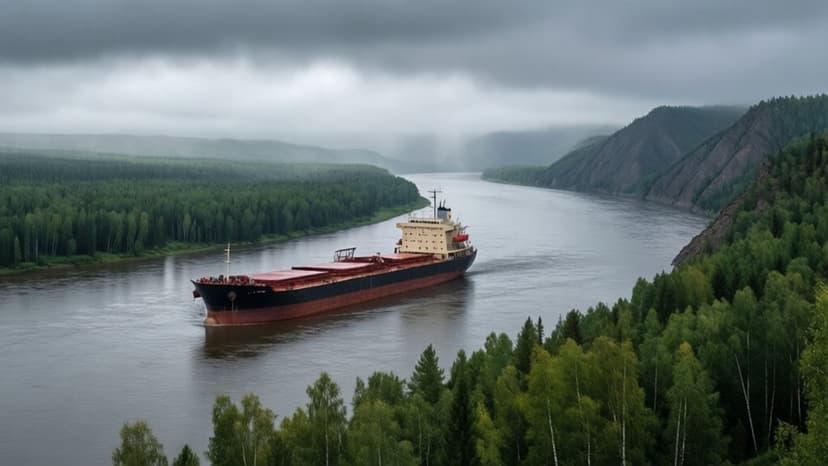
Ahead of the APEC summit on November 18 and 19, 2026, China has secured a new strategic route to the Pacific via the Amur River. This agreement with Russia provides Beijing an alternative path that avoids both Taiwan and North Korea. The deal changes regional logistics by opening a year-round border crossing in the Russian Far East. President Xi Jinping secured full access to the Amur River route from Vladimir Putin , according to Intelligence Online . China has invested roughly $90 billion in the Arctic region since 2003, based on 2022 estimates from the House Foreign Affairs Committee reported by RFE/RL . The two nations conducted a joint strategic bomber patrol over the Bering Sea in July 2024, according to RFE/RL . What new routes is China accessing? China is gaining a permanent way to reach the Pacific Ocean through Russian territory. By using the Amur River, Beijing can move goods and resources without passing through waters controlled by Taiwan or the territory of North Korea. This provides a layer of security for Chinese trade and movement. The agreement also includes the opening of a border crossing in the heart of the Russian Far East. This crossing will operate all year round. This constant access allows for more predictable movement of goods between the two neighbors, which is vital for the economic integration of the region. How are China and Russia cooperating in the Arctic? The two countries are deepening their partnership in the Arctic to challenge United States influence. Following a meeting in St. Petersburg on October 21, the governments released a joint statement. This statement focused on increasing freight traffic along Arctic shipping routes and building polar vessels together. The cooperation extends to military and scientific activities. Since the invasion of Ukraine in 2022, Moscow and Beijing have conducted joint military exercises in the Arctic. In July 2024, their strategic bombers flew a combined patrol over the Bering Sea. This event prompted US and Canadian fighter jets to intercept the aircraft. "Make no mistake, this is an escalation -- the first time Russia and China have sent a joint bomber task-force into the Alaska ADIZ," Senator Dan Sullivan of Alaska said regarding the July 2024 patrol, according to RFE/RL . Why is the Arctic a point of tension? The Arctic is a major security concern for the United States due to its proximity to Alaska. Alaska serves as a hub for missile defense and airpower projection. Additionally, Greenland provides a platform for missile warning and space surveillance for the US and NATO. The region also contains minerals essential for military systems. China has expressed a desire to be a "polar great power" by 2030. Since 2018, Beijing has used the term "near-Arctic state" to justify its interest. However, the United States rejects this claim. China's northernmost territory remains about 1,450 kilometers from the Arctic Circle. What are the limits of China's Arctic influence? China faces significant hurdles in becoming a major Arctic player. It is not a member of the Arctic Council, which is the main forum for the eight Arctic nations. While China has had observer status since 2013, it has no voting rights or power to make decisions in the council. Russia currently acts as the primary gatekeeper for Chinese interests in the north. While Russia and China share interests, they also have different agendas. The other six members of the Arctic Council are close allies of the United States. This leaves China with limited ways to influence the region's governance. How does China use scientific research in the region? China uses scientific expeditions to maintain a presence in the Arctic. In July, China launched its 16th annual Arctic Ocean scientific expedition. This mission involved deploying four research ships at the same time for the first time. Some defense officials worry these missions have military purposes. They suggest that equipment on these ships could be used for mapping the sea floor or tracking submarines. Alexus Grynkewich , a commander for the US European Command, suggested these ships are not just studying wildlife. She stated that they are performing surveys to figure out how to counter NATO capabilities on and under the sea, according to RFE/RL . What is the history of this partnership? The relationship has shifted significantly due to geopolitical changes. In 2014, Russia invaded Crimea and faced Western sanctions, which pushed it closer to Beijing. Since then, China has invested heavily in Russian natural resources. The House Foreign Affairs Committee estimated in 2022 that China had put $90 billion into the Arctic since 2003, according to RFE/RL . The partnership has moved from economic investment to military coordination. The recent joint naval patrols in the Arctic Ocean, known as the Ocean 2024 exercise, show this trend. Experts suggest these moves are intended to consolidate ties with Russia rather than just establishing a purely military presence. What happens next? The APEC leaders' summit will take place in China on November 18 and 19, 2026. This summit will likely serve as a platform for further discussions on regional security and trade. Observers will watch for any further announcements regarding the Amur River route or Arctic cooperation agreements. Frequently Asked Questions What is the Amur River route? It is a new waterway access point that allows China to reach the Pacific by traveling through Russian territory, avoiding contested areas like Taiwan. Is China an Arctic nation? No, the United States and other nations do not recognize China as an Arctic state, though Beijing calls itself a "near-Arctic state." Why does the US care about Arctic cooperation between China and Russia? The Arctic is vital for US missile defense and surveillance, and joint military activities by China and Russia can threaten these security structures.

Elena MarshΒ·
North Korea Tests New Air-Defense System and Cruise Missile
East Asia

North Korea Tests New Air-Defense System and Cruise Missile

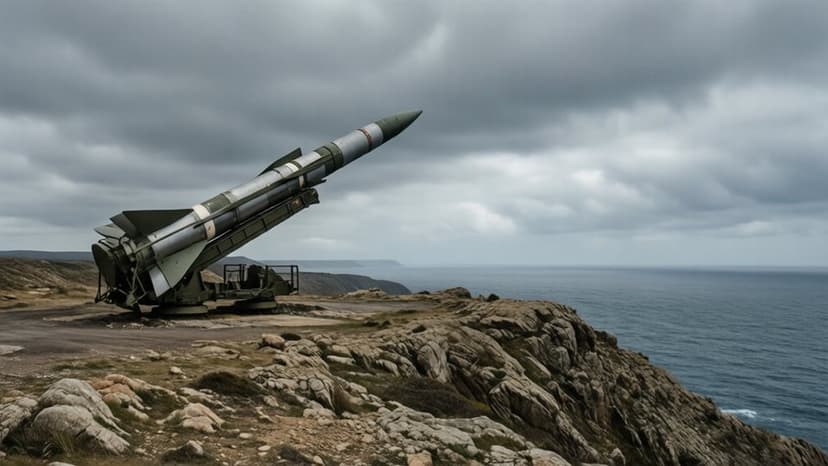
North Korea conducted a test of a newly-designed advanced air-defense missile system and a cruise missile strike drill on Wednesday, November 5, 2026. These launches come amid heightened tensions on the Korean Peninsula and follow a rapid succession of weapons tests by Pyongyang over the last week. NBC News reported that the air defense test confirmed the reliability of the missile's new materials. The Korea Herald reported that the missiles were launched toward the sea from the Sondok area. An Anadolu Agency report stated Gen. Kim Jong Sik guided the test-fire on Wednesday. What specific weapons did North Korea test? Pyongyang tested a new surface-to-air missile system designed to identify and track targets, alongside a long-range strategic cruise missile. The cruise missile was used in a drill to strike a virtual airport target in the eastern region of the country. The air defense system focuses on technical reliability and intelligent multiple guidance modes. According to NBC News , Shin Jong-woo, the secretary general of the Korea Defense & Security Forum, noted that the new air defense missile appears to have a guidance section similar to the Russian S-400 system. He also observed that images of the cruise missile suggest it carries a cluster warhead intended to disperse a payload over a target area. The missile tests included several different types of hardware. The Korea Herald reported that these launches followed several recent tests, including a 600 mm super-large multiple-rocket launcher on October 29 and a tactical ballistic missile with a cluster warhead on October 31. How do the two sides describe the launches? North Korean state media and South Korean military officials provide different interpretations of the Wednesday launches. While Pyongyang emphasizes the technical success of the drills, Seoul focuses on the uncertainty regarding the specific types of projectiles fired. "The test-fire proved the technical specifications and reliability of the new material and intelligent multiple guided mode of the projectile, target identification and tracking capability of the air-defense missile system and its detection information processing device," β€” KCNA, via Anadolu Agency The South Korean Joint Chiefs of Staff initially described the projectiles as "missiles" without a specific classification. According to the Korea Herald , authorities are still examining whether the objects were close-range ballistic missiles, surface-to-air missiles, or cruise missiles. A South Korean Defense Ministry official told NBC News that early detection data suggested the missiles could have been several different types. A separate military official told the Korea Herald that identifying projectiles based on radar data alone is difficult because different missile types can have overlapping flight characteristics and altitudes. Is South Korea able to track these missiles? South Korea uses a combination of ground-based radar and maritime assets to monitor North Korean activity. However, a shift in how the military deploys its Aegis destroyers has created a debate among officials regarding the quality of intelligence gathered. The military maintains that its current surveillance is sufficient. The Korea Herald reported that the Joint Chiefs of Staff believes ground-based radars can detect missiles and that real-time data-sharing with the United States and Japan provides necessary support. The military intends to dispatch Aegis destroyers when signs of an impending launch are detected. Some officials worry about a gap in intelligence. Because ground-based radars are fixed, the curvature of the Earth can limit their ability to track missiles in the later stages of flight. A military official told the Korea Herald that maritime assets are more mobile and can adjust positions to collect more detailed flight data. This capability was reduced after South Korea suspended the continuous deployment of Aegis destroyers in the East Sea in September 2025 due to personnel shortages. What is the history of recent tensions? The current missile activity follows a period of increasing friction between Seoul and Pyongyang. Tensions rose significantly following an incident in September that resulted in injuries to South Korean personnel. According to Anadolu Agency , Seoul blamed North Korea for an explosion inside the Demilitarized Zone on September 21, which wounded three South Korean soldiers. North Korea has rejected these accusations. The two sides have also failed to restore military communication channels, which Seoul had previously offered to help ease tensions. The missile testing has also intensified alongside joint military drills between South Korea and the United States. This environment has led to a rapid cycle of North Korean launches, including a dispersal warhead test on November 2 and a cluster bomb test on October 31. What happens next? The situation remains volatile as both sides continue their military postures. There are no specific upcoming summits or peace talks scheduled, as North Korea has not responded to South Korean efforts to reopen communication lines. Military analysts will continue to scrutinize the data from these recent launches to determine the exact capabilities of the new air-defense and cruise missile systems. The ability of South Korea to gather this data will depend on its current surveillance protocols and the continued cooperation with its allies, the United States and Japan. Frequently Asked Questions What kind of missile did North Korea test? Pyongyang tested a new air-defense missile system designed for target tracking and a long-range strategic cruise missile designed to strike targets like airports. Why is South Korea concerned about these tests? The tests demonstrate North Korea's evolving missile technology, including the use of cluster warheads, which complicates regional security and missile defense planning. How does South Korea monitor North Korean missiles? South Korea uses ground-based radar and Aegis destroyers to detect and track missiles, though recent changes in destroyer deployment have sparked debate over intelligence gathering.

Tomas VogelΒ·
ASEAN Faces Division Over Myanmar Military Crisis
Southeast Asia

ASEAN Faces Division Over Myanmar Military Crisis

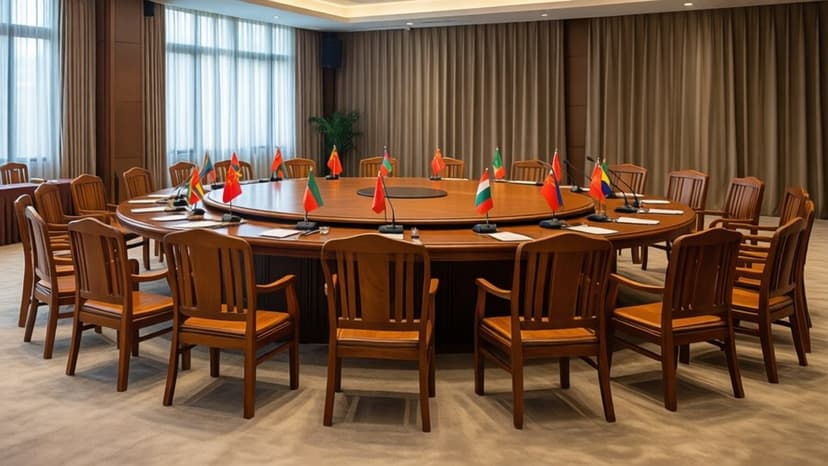
Human rights advocates and regional observers are calling for increased pressure on the Myanmar military junta as leaders prepare to meet in the Philippines from November 15-17, 2026. The push for action comes as the junta leader, Min Aung Hlaing , seeks international legitimacy following sham elections earlier this year that saw him assume the presidency. This diplomatic tension threatens the unified stance of the Association of Southeast Asian Nations (ASEAN) regarding the ongoing humanitarian crisis. Human Rights Watch reported on November 11 that the Philippine government confirmed Min Aung Hlaing will not attend the upcoming summit. According to UCA News , Malaysian authorities deported 1,476 Myanmar nationals on September 29. East Asia Forum noted that Min Aung Hlaing met Prime Minister Narendra Modi in New Delhi on June 1, 2026. Will ASEAN leaders take a harder line against the junta? The upcoming summits in the Philippines present a critical test for ASEAN's ability to address the violence in Myanmar. While the bloc has traditionally excluded junta officials from political-level meetings, individual member states are increasingly engaging with the military regime. This fragmentation makes it difficult for the group to present a unified front against the government in Naypyidaw. Human Rights Watch has urged the ASEAN chair and summit host, President Ferdinand Marcos Jr. , to ensure the bloc does not recognize the legitimacy of the junta. The organization argues that ASEAN should continue blocking junta officials from representing Myanmar at high-level meetings. This stance is intended to prevent the military from using regional forums to normalize its rule after the 2021 coup. However, some member states are pursuing different strategies. For example, Eurasia Review reports that Indonesian Foreign Minister Sugiono visited Myanmar on June 8, 2026. Indonesia is shifting toward a policy of conditional engagement to reduce humanitarian suffering and maintain political access, rather than focusing solely on pressure. How are different countries handling Myanmar? The approach to Myanmar varies wildly between Southeast Asian neighbors, creating a split between maritime and mainland states. While some nations maintain isolationist policies, others are actively hosting junta leaders. This inconsistency weakens the collective leverage of the region against the military authorities. In Malaysia, the government has moved toward cooperation regarding the return of refugees. UCA News reports that Min Aung Hlaing visited Kuala Lumpur on October 7 for a two-day state visit. The visit aimed to coordinate the return of thousands of refugees, with 1,476 people already deported in the first phase of an arrangement to return 5,000 individuals. Meanwhile, major powers like China and India are engaging with the regime for geopolitical reasons. East Asia Forum explains that China resumed high-level contact with the junta in 2025. Similarly, India seeks to cooperate on cross-border issues, which has led to direct meetings between its leadership and the Myanmar president. What is the current humanitarian situation in Myanmar? The human rights situation inside Myanmar remains dire as military operations continue across the country. The junta faces accusations of widespread violence and systemic abuse against those who oppose its rule. These actions have created a massive displacement crisis affecting millions of people. According to Human Rights Watch , junta authorities have arrested more than 32,000 people for opposing military rule. Of these, at least 2,300 have reportedly died in custody. The organization also documented that over 6,600 of those arrested were women who faced sexual violence and the denial of essential medical care. The conflict is not limited to the capital. East Asia Forum reports that ethnic armed organizations and local fighting forces still control large parts of the country. This means the junta's grip on power is much weaker outside of the central administrative areas. How each side tells it The disagreement between international observers and the Myanmar military centers on the legitimacy of the current government and the nature of its actions. While rights groups see a criminal regime, the military views itself as a legitimate governing body following recent elections. "ASEAN could play an important role in bringing a stop to Myanmar military abuses," stated John Sifton , Asia advocacy director at Human Rights Watch. The junta, through its various actions and the recent elections, presents itself as a civilianized administration. However, East Asia Forum notes that the generals use "time, obscurity and deniability" to attempt to improve their international reputation while ignoring the Five-Point Consensus established by ASEAN in 2021. What is the legal status of Min Aung Hlaing? The military leader faces significant legal scrutiny from international judicial bodies. His role in past military campaigns has led to allegations of the most serious international crimes, including genocide and crimes against humanity. The International Criminal Court (ICC) is currently investigating Min Aung Hlaing. In November 2024, the ICC prosecutor's office requested an arrest warrant for his alleged role in the deportation and persecution of the Rohingya during the 2017 campaign. Additionally, the International Court of Justice (ICJ) is set to deliver a judgment on November 19, 2026, regarding a case brought by Gambia against Myanmar for alleged genocide violations. Who is affected by these diplomatic shifts? The political maneuvering between ASEAN members and external powers has direct consequences for the people of Myanmar. The lack of a unified regional response leaves civilians vulnerable to both military violence and the risks of forced repatriation. Refugees are particularly at risk due to changing policies in neighboring countries. UCA News highlights that in Malaysia, the Home Ministry has described refugees as a "financial burden" and a "security threat." This rhetoric, combined with the planned phased return of 5,000 people, creates a dangerous environment for those fleeing persecution. Inside Myanmar, the population remains caught between the military and various resistance groups. The inability of the junta to secure territorial control means that many areas remain under the influence of ethnic armed organizations, leaving civilians in a constant state of insecurity. What happens next? Several key dates and legal milestones will determine the next phase of the Myanmar crisis: November 15-17, 2026: The East Asia Summit and ASEAN meetings take place in the Philippines. November 19, 2026: The International Court of Justice (ICJ) delivers its judgment in the Gambia v. Myanmar case. Phased Deportations: Malaysia is expected to continue its planned second phase of deportations to Myanmar following the initial 1,476 returns. FAQ Why is ASEAN divided over Myanmar? Some members prefer isolation and pressure, while others, like Indonesia, are testing "conditional engagement" to gain humanitarian access. Meanwhile, countries like China and India prioritize their own geopolitical interests over ASEAN's unified stance. Is Min Aung Hlaing facing international arrest? The ICC prosecutor has requested an arrest warrant for his alleged crimes against humanity, though judges have not yet issued a public decision. He also faces a landmark genocide case at the International Court of Justice. What are the "sham elections" mentioned in reports? These refer to the elections held in early 2026, which resulted in Min Aung Hlaing assuming the presidency. Human Rights Watch and other observers claim these elections lacked legitimacy and were used to validate military rule.

Sara LindqvistΒ·