UNESCO, LG AI Research Open Free Global Course on Responsible AI


UNESCO and LG AI Research have launched a free global online course designed to turn AI ethics principles into practical skills for professionals working with artificial intelligence. The Massive Open Online Course, or MOOC, was unveiled in Seoul during the Ethics by Design: Industry and Innovation Conference and is being delivered in partnership with Coursera. The new course arrives as governments, companies and universities face growing pressure to make AI systems more transparent, fair and accountable. UNESCO said the initiative is intended to translate its long-standing ethics framework into a learning experience that helps people apply those ideas in everyday development, deployment and governance decisions. From global principles to practical training The course is built on UNESCO’s Recommendation on the Ethics of Artificial Intelligence , which was adopted unanimously by UNESCO’s 193 Member States in 2021 and is described by the organization as the first global normative instrument on AI ethics. UNESCO said the MOOC marks a shift from principle-setting to practice, with the goal of helping learners use an “ethics-by-design” approach in the systems they build, regulate or deploy. According to UNESCO, the course is aimed at technologists, researchers, policymakers, students and other professionals whose work touches AI. Coursera’s course page says learners will be able to explain core principles of AI ethics and responsible AI, assess ethical risks and societal impacts, and apply governance and human-rights-based approaches to AI development and use. What the course covers The program is structured across 10 modules and covers topics including fairness and inclusion, privacy and data governance, transparency and accountability, safety and security, environmental sustainability and global AI governance. UNESCO said the course emphasizes practical application, including everyday trade-offs that influence ethical AI decisions, and uses real-world cases, adaptable frameworks and reflective exercises. Coursera describes the MOOC as a practical foundation for people with basic AI knowledge who want to understand how ethics can be embedded in AI products and services. The platform says the course is available to learners worldwide and includes certification upon completion. A partnership aimed at broad access UNESCO said the course was co-developed with LG AI Research , whose involvement helped shape a curriculum meant to be rigorous and forward-looking. Coursera joined as a delivery partner, opening the course to a global audience through its online learning platform. The launch also reflects a broader push to democratize AI ethics education. UNESCO described the MOOC as a global public good, designed to be accessible across borders and generations. In parallel, UNESCO had earlier announced plans for a global repository of best practices to showcase how ethics in AI is being applied around the world, alongside the course development process. Why the timing matters The launch comes amid intensifying debate over how AI should be governed as the technology spreads through workplaces, public services and consumer products. UNESCO has repeatedly framed its ethics recommendation as a foundation for international cooperation on AI governance, and the new course appears intended to make those ideas more usable for practitioners. At the Seoul conference, the discussion was centered on what ethical AI looks like in practice, from how systems are built to who they are built for. The event brought together participants from UNESCO, LG AI Research, the Korea AI Safety Institute, Coursera and companies including Kakao and NAVER, alongside academic and research institutions. Part of a wider effort in Korea and beyond Reporting from The Korea Herald said LG AI Research launched the course in partnership with the Korean National Commission for UNESCO, and that the initiative builds on a collaboration formed after the AI Seoul Summit in 2024. The outlet also reported that the curriculum involved AI ethics experts from institutions such as Carnegie Mellon University, Stanford University, the Oxford Internet Institute and the Alan Turing Institute. That coverage added that the partners plan to launch a pilot AI ethics training program for developers and researchers later this year, with an eventual expansion to five to 10 regional universities across Korea in 2027. Those plans suggest the MOOC may serve not only as a standalone course but as the basis for broader training efforts in the region. For UNESCO, the project fits a larger strategy of turning its recommendation into tools that institutions can actually use. The organization has argued that ethical AI standards only gain value when they move from policy language into technology development, research, industry practice and policymaking. This course is meant to help do exactly that, by giving learners a shared framework for decisions that are increasingly shaping how AI affects public life. With free access, certification and a curriculum aimed at practical decision-making, the UNESCO-LG AI Research MOOC is positioned as both an educational offering and a policy instrument. Its success will likely depend on whether developers, regulators and institutions adopt it as a common reference point for responsible AI work.

Dubai has developed one of the most vibrant sports car markets in the Middle East, driven by high purchasing power, strong car culture, and modern road infrastructure that favors high‑performance driving. The city’s market spans everything from relatively affordable performance coupes to ultra‑rare hypercars, creating a layered ecosystem for both new and used vehicles. Why Dubai Is a Global Hub for Sports Cars Dubai’s broader positioning as a luxury destination has spilled over directly into its automotive sector. The emirate has cultivated a successful market for luxury goods, including cars, and has become a top destination for supercar enthusiasts. Well‑maintained highways, long stretches of Sheikh Zayed Road, and a strong focus on premium automotive services make sports cars not only a status symbol, but also practical for those seeking high‑performance driving experiences. Car culture in Dubai is defined by a visible presence of sports cars and supercars in everyday traffic, from Ferrari and Lamborghini to boutique marques such as Pagani and Koenigsegg. According to regional automotive commentary, the UAE’s streets routinely feature icons like the Bugatti Veyron Grand Sport Vitesse alongside luxury sedans such as the Maybach 57S, highlighting how performance and prestige coexist in the local market. Structure of the Market: New vs. Used Dubai’s sports car market is divided between brand‑new showroom cars and a large, thriving used car segment. Specialist dealers such as Al Tayer Motors offer extensive collections of both new and certified pre‑owned sports cars across the UAE, including Dubai. Customers can choose from the latest luxury sports models equipped with cutting‑edge technology or opt for certified pre‑owned vehicles that balance performance with relative affordability. The used sports car market is particularly strong. While brand‑new supercars dominate the city’s showrooms, demand for used high‑performance cars—especially from brands like Porsche, Ferrari, and McLaren—is described as “thriving like never before.” Buyers who want to enter the high‑end segment without paying new‑car prices often turn to these pre‑owned vehicles, viewing them not only as driving machines but also as prestige assets with potential investment value. Online marketplaces and classified platforms play a key role in this ecosystem. Listings show that Dubai offers one of the largest selections of sports cars in the region, with varied price ranges covering European, Japanese, and American performance cars. Digital platforms connect private sellers and dealerships, provide detailed vehicle histories, and help standardize pricing in an otherwise highly diverse market. Popular Models and Price Levels Market data from Dubai indicates that sports cars are available at multiple price points, from more accessible coupes to multimillion‑dirham hypercars. On the used market, some of the most popular sports models and their average asking prices in Dubai include: Beyond these mass‑recognized sports cars, there is a substantial niche for more exclusive models. Listings for luxury sports cars in Dubai show price ranges starting from approximately AED 167,000 and extending up to about AED 5.4 million, depending on the brand and specification. Another set of regional price data highlights examples such as the Mercedes‑Benz SLK and SLC, Lotus Evora, Alfa Romeo 4C, and Mercedes‑Benz SLS AMG, with prices varying according to model, variant, and condition. The city’s used market also makes traditionally aspirational brands more reachable. Pre‑owned Porsche Cayman models, for instance, can be found starting around AED 120,000–150,000, while used Nissan 370Z units are reported from about AED 70,000. Even Ferrari models such as the California have appeared on the Dubai market at starting prices around AED 300,000, underlining how the local used market allows broader access to supercar ownership. Dealerships and Showrooms Dubai’s sports car market is anchored by a mix of physical showrooms along major roads and digital platforms that aggregate listings from multiple dealers. Sheikh Zayed Road, the city’s main highway, has become a corridor of luxury dealerships and sports car showrooms, featuring outlets such as VIP Motors, Al Ain Class, and other specialist retailers. VIP Motors, described as the largest luxury car showroom in the UAE, showcases an extensive portfolio of high‑end and rare vehicles in a single location on Sheikh Zayed Road. Other showrooms, including Auto Deals UAE and Pearl Motors, focus on premium supercars and hypercars, offering curated inventories and professional buying experiences for enthusiasts and investors alike. In addition to traditional dealerships, car auctions and online platforms further diversify the market. Shozon car auction, for example, is promoted as a destination for sports car enthusiasts, providing a wide range of used, certified pre‑owned, and new sports cars—with nearly 200 new sports cars available for sale in Dubai through that channel alone. Market Dynamics and Buyer Profile Several factors shape demand in Dubai’s sports car market. High disposable incomes—combined with a culture that values visible status symbols—support constant turnover in top‑end vehicles. Many buyers upgrade periodically to the latest model or limited edition, feeding a robust supply of used sports cars that then enter the secondary market. Buyers can be broadly grouped into three categories: Strong availability of premium maintenance services and specialized workshops also supports ownership. This ecosystem makes long‑term sports car ownership more viable, and in some cases, helps certain models retain strong resale values, reinforcing the perception of these cars as both lifestyle purchases and potential assets. Outlook for Dubai’s Sports Car Segment Regional commentary indicates that sports cars and supercars are integral to how the UAE’s car culture is defined, and this trend shows no signs of weakening. With a continued influx of high‑net‑worth residents and visitors, expanding digital marketplaces for car sales, and dealers that increasingly stock rare and limited‑production models, Dubai is expected to remain a leading hub for sports cars in the Middle East. Taken together, Dubai’s sports car market offers a distinctive blend: everyday visibility of performance models, deep inventory of used vehicles at varied price points, and a top tier of showrooms trading in some of the world’s rarest hypercars. This combination ensures that the city continues to attract enthusiasts at all levels—from first‑time sports car buyers to collectors seeking exceptionally exclusive machines.

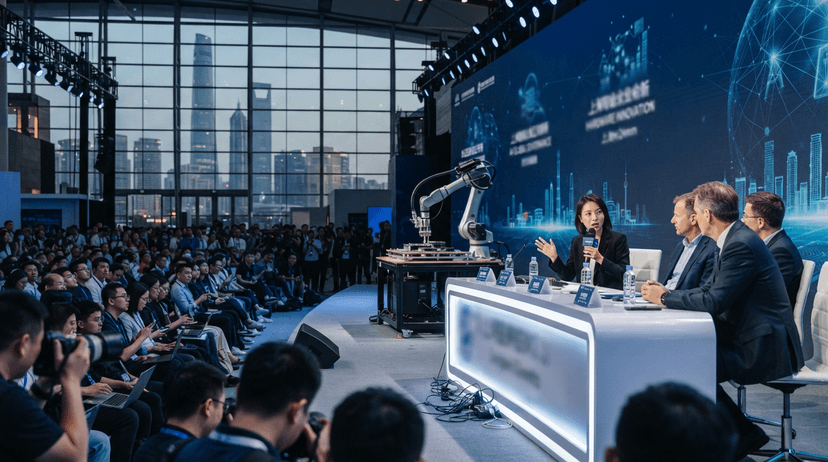
Heat, Hardware and Geopolitics: Inside Shanghai’s High-Stakes World AI Conference The 2026 World Artificial Intelligence Conference (WAIC) in Shanghai has emerged as a showcase not only of cutting-edge algorithms and chips, but also of China’s drive to reshape global AI governance amid intensifying competition with the United States. From record-breaking exhibition halls to hard-tech breakthroughs unveiled under sweltering summer temperatures, the event highlights how AI hardware, computing power and international rule‑making are becoming central to China’s technological strategy. Record-Breaking Scale and a Focus on Computing Power Held from July 17 to 20, the ninth edition of WAIC spans more than 100,000 square meters of exhibition space across four halls and three venues in Shanghai, the largest footprint in the conference’s history. Organizers say more than 1,100 enterprises are exhibiting over 3,000 technologies, with more than 300 AI products making their global debut, underscoring the event’s role as a launchpad for new hardware and software. The conference is structured around two core tracks: intelligent computing , which focuses on AI infrastructure and chips, and embodied intelligence , which centers on robots and AI-enabled devices. Each track has attracted more than 200 companies, marking a shift from pure algorithmic innovation toward large-scale, reliable computing platforms and real-world deployments. Domestic Hardware Under the Spotlight A central theme at WAIC 2026 is the race to build powerful, homegrown computing infrastructure in the face of U.S. export controls on advanced chips. Industry analysts at the conference describe Chinese domestic chips as crossing an inflection point from merely “usable” to “highly usable,” reflecting rapid progress in performance, scheduling efficiency and ecosystem maturity. Among the most prominent hardware exhibits is Huawei’s Atlas 950 Super Node , presented as one of the industry’s largest AI computing platforms and a symbol of China’s efforts to reduce reliance on foreign components. The system is designed to support massive training workloads for large models, highlighting how computing clusters, rather than individual chips, are becoming the benchmark of national AI capacity. Other debuts include near‑memory computing 3D chips and new accelerator designs aimed at improving energy efficiency and throughput for AI tasks. These innovations speak to a broader “heat” problem that looms over the sector: as models grow larger and data centers denser, thermal management and power consumption become critical constraints on AI scaling, especially during China’s hot summer months. Exhibitors at WAIC showcase cooling solutions and architecture-level optimizations as part of this push to manage the physical limits of AI hardware. Gigantic Models, Agents and the Hardware Behind Them On the software side, Chinese firms are using WAIC to demonstrate frontier models that depend heavily on domestic computing power. MiniMax’s M3 multimodal large model , revealed as an open-source foundation model, reportedly carries around 2.8 trillion parameters and supports a context window of up to 1,000,000 tokens across text, images, audio and video. Such specifications rank it among the largest open-source models in China and underscore the compute‑intensive nature of current AI research. The conference also spotlights the rapid evolution of AI agents —systems capable of executing tasks and transactions rather than simply conversing. A new “Agent Operating System” called Jieyue is billed as the industry’s first full agent OS, aimed at moving agents from proof‑of‑concept demos to everyday productivity tools. In tandem, exhibitors introduce what they describe as the world’s first AI agent smartphone, integrating agent capabilities at the device level and hinting at a future where terminals are rebuilt around AI-native operating systems. These software advances reinforce the strategic importance of reliable computing infrastructure. Conference commentary emphasizes that competition is shifting from raw scale—such as total FLOPS or number of GPUs—to end‑to‑end performance, scheduling efficiency and integration with industrial workflows. WAIC sessions repeatedly highlight how improvements in hardware utilization and orchestration can rival algorithmic breakthroughs in impact. Embodied Intelligence: Robots Leave the Lab The second major track, embodied intelligence, showcases humanoid robots, dexterous hands and other physical systems designed to take AI out of the data center and into factories, homes and public spaces. Exhibits include multiple humanoid platforms and robotic manipulators intended for logistics, manufacturing and service tasks, reflecting China’s ambition to integrate AI deeply into its industrial base. Conference organizers say WAIC has already facilitated 57 major application scenarios, with intended cooperation agreements totaling 16.2 billion yuan (around US$2.2 billion), illustrating the push to convert research prototypes into commercial deployments. Those scenarios span sectors from smart manufacturing and autonomous logistics to urban management and healthcare, where embodied intelligence is expected to complement, rather than replace, human workers. Xi Jinping’s Bid to Shape Global AI Governance Beyond the technical showcases, WAIC 2026 is being used by Beijing as a platform to advance a new global AI governance architecture. In his address to the opening ceremony, President Xi Jinping urged countries to seize what he called the “historic opportunity” of open‑source AI, warning that unequal access to the technology could create “new historical injustices.” He framed China as a champion of greater AI access for developing nations and argued that rules for AI should not be dominated by a single country. Xi’s speech coincided with the formal launch of the World Organization for Cooperation in Artificial Intelligence (WAICO) , an intergovernmental body headquartered in Shanghai. According to official accounts, 29 founding countries—including Brazil, Russia, Pakistan and Indonesia—plus 10 African and 12 Asian nations signed on to establish WAICO as a mechanism intended to ensure “fair and impartial” global AI governance. China also pledged 5,000 AI training slots for developing countries through WAICO and related initiatives, positioning the new organization as a vehicle for capacity building in the Global South. Chinese media and officials describe the move as a “fresh signal” of openness and cooperation, even as it implicitly challenges existing Western-led forums and standard‑setting bodies in the AI domain. Geopolitics, High Stakes and Competing Visions The geopolitics surrounding WAIC are unmistakable. By coupling massive hardware showcases with a new multilateral governance body, Beijing is signaling that control over AI infrastructure and standards are strategic priorities comparable to those in telecommunications and semiconductor policy. Xi’s emphasis on open‑source models and accessible computing power is likely to be read in Washington and other capitals as both a genuine bid for broader participation and a challenge to U.S. influence in setting norms. At the same time, the conference’s commercial figures underscore the economic stakes. Intended cooperation deals totaling 16.2 billion yuan and dozens of large‑scale application projects suggest that WAIC is evolving from a showcase event into a major marketplace and policy stage for China’s AI ambitions. For international investors, partners and competitors, the convergence of heat‑intensive data centers, rapidly advancing domestic hardware and newly proposed global institutions makes Shanghai’s World AI Conference a focal point for watching how the next phase of the AI race will be contested.