Newzix
Breaking News
China & Taiwan

Shanghai's Mega AI Summit Focuses on Hardware and Global Governance

Sara Lindqvist6 min read
Shanghai's Mega AI Summit Focuses on Hardware and Global Governance
Heat, Hardware and Geopolitics: Inside Shanghai’s High-Stakes World AI Conference

The 2026 World Artificial Intelligence Conference (WAIC) in Shanghai has emerged as a showcase not only of cutting-edge algorithms and chips, but also of China’s drive to reshape global AI governance amid intensifying competition with the United States.[3][9][1] From record-breaking exhibition halls to hard-tech breakthroughs unveiled under sweltering summer temperatures, the event highlights how AI hardware, computing power and international rule‑making are becoming central to China’s technological strategy.[3][6][1]

Record-Breaking Scale and a Focus on Computing Power

Held from July 17 to 20, the ninth edition of WAIC spans more than 100,000 square meters of exhibition space across four halls and three venues in Shanghai, the largest footprint in the conference’s history.[3][9] Organizers say more than 1,100 enterprises are exhibiting over 3,000 technologies, with more than 300 AI products making their global debut, underscoring the event’s role as a launchpad for new hardware and software.[3][4][9]

The conference is structured around two core tracks: intelligent computing, which focuses on AI infrastructure and chips, and embodied intelligence, which centers on robots and AI-enabled devices.[3][4][10] Each track has attracted more than 200 companies, marking a shift from pure algorithmic innovation toward large-scale, reliable computing platforms and real-world deployments.[3][4][2]

Domestic Hardware Under the Spotlight

A central theme at WAIC 2026 is the race to build powerful, homegrown computing infrastructure in the face of U.S. export controls on advanced chips.[2][6][10] Industry analysts at the conference describe Chinese domestic chips as crossing an inflection point from merely “usable” to “highly usable,” reflecting rapid progress in performance, scheduling efficiency and ecosystem maturity.[2]

Among the most prominent hardware exhibits is Huawei’s Atlas 950 Super Node, presented as one of the industry’s largest AI computing platforms and a symbol of China’s efforts to reduce reliance on foreign components.[6][7] The system is designed to support massive training workloads for large models, highlighting how computing clusters, rather than individual chips, are becoming the benchmark of national AI capacity.[6]

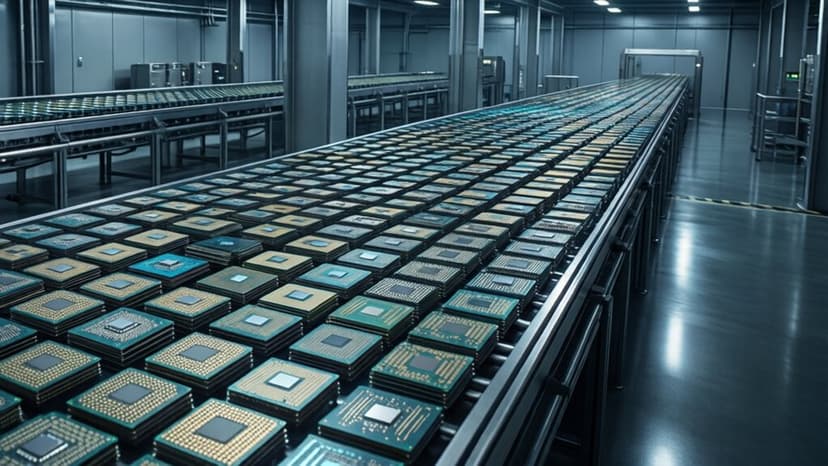
Other debuts include near‑memory computing 3D chips and new accelerator designs aimed at improving energy efficiency and throughput for AI tasks.[6] These innovations speak to a broader “heat” problem that looms over the sector: as models grow larger and data centers denser, thermal management and power consumption become critical constraints on AI scaling, especially during China’s hot summer months.[2][6] Exhibitors at WAIC showcase cooling solutions and architecture-level optimizations as part of this push to manage the physical limits of AI hardware.[2][6]

Gigantic Models, Agents and the Hardware Behind Them

On the software side, Chinese firms are using WAIC to demonstrate frontier models that depend heavily on domestic computing power. MiniMax’s M3 multimodal large model, revealed as an open-source foundation model, reportedly carries around 2.8 trillion parameters and supports a context window of up to 1,000,000 tokens across text, images, audio and video.[6][7] Such specifications rank it among the largest open-source models in China and underscore the compute‑intensive nature of current AI research.[6]

The conference also spotlights the rapid evolution of AI agents—systems capable of executing tasks and transactions rather than simply conversing. A new “Agent Operating System” called Jieyue is billed as the industry’s first full agent OS, aimed at moving agents from proof‑of‑concept demos to everyday productivity tools.[6][2] In tandem, exhibitors introduce what they describe as the world’s first AI agent smartphone, integrating agent capabilities at the device level and hinting at a future where terminals are rebuilt around AI-native operating systems.[6][2][7]

These software advances reinforce the strategic importance of reliable computing infrastructure. Conference commentary emphasizes that competition is shifting from raw scale—such as total FLOPS or number of GPUs—to end‑to‑end performance, scheduling efficiency and integration with industrial workflows.[2][8] WAIC sessions repeatedly highlight how improvements in hardware utilization and orchestration can rival algorithmic breakthroughs in impact.[2]

Embodied Intelligence: Robots Leave the Lab

The second major track, embodied intelligence, showcases humanoid robots, dexterous hands and other physical systems designed to take AI out of the data center and into factories, homes and public spaces.[3][4][6] Exhibits include multiple humanoid platforms and robotic manipulators intended for logistics, manufacturing and service tasks, reflecting China’s ambition to integrate AI deeply into its industrial base.[6][7][8]

Conference organizers say WAIC has already facilitated 57 major application scenarios, with intended cooperation agreements totaling 16.2 billion yuan (around US$2.2 billion), illustrating the push to convert research prototypes into commercial deployments.[4][6] Those scenarios span sectors from smart manufacturing and autonomous logistics to urban management and healthcare, where embodied intelligence is expected to complement, rather than replace, human workers.[4][8]

Xi Jinping’s Bid to Shape Global AI Governance

Beyond the technical showcases, WAIC 2026 is being used by Beijing as a platform to advance a new global AI governance architecture.[1][4][7] In his address to the opening ceremony, President Xi Jinping urged countries to seize what he called the “historic opportunity” of open‑source AI, warning that unequal access to the technology could create “new historical injustices.”[1] He framed China as a champion of greater AI access for developing nations and argued that rules for AI should not be dominated by a single country.[1][7]

Xi’s speech coincided with the formal launch of the World Organization for Cooperation in Artificial Intelligence (WAICO), an intergovernmental body headquartered in Shanghai.[4][5][6] According to official accounts, 29 founding countries—including Brazil, Russia, Pakistan and Indonesia—plus 10 African and 12 Asian nations signed on to establish WAICO as a mechanism intended to ensure “fair and impartial” global AI governance.[4][6]

China also pledged 5,000 AI training slots for developing countries through WAICO and related initiatives, positioning the new organization as a vehicle for capacity building in the Global South.[6][7] Chinese media and officials describe the move as a “fresh signal” of openness and cooperation, even as it implicitly challenges existing Western-led forums and standard‑setting bodies in the AI domain.[7][1]

Geopolitics, High Stakes and Competing Visions

The geopolitics surrounding WAIC are unmistakable. By coupling massive hardware showcases with a new multilateral governance body, Beijing is signaling that control over AI infrastructure and standards are strategic priorities comparable to those in telecommunications and semiconductor policy.[1][4][6] Xi’s emphasis on open‑source models and accessible computing power is likely to be read in Washington and other capitals as both a genuine bid for broader participation and a challenge to U.S. influence in setting norms.[1]

At the same time, the conference’s commercial figures underscore the economic stakes. Intended cooperation deals totaling 16.2 billion yuan and dozens of large‑scale application projects suggest that WAIC is evolving from a showcase event into a major marketplace and policy stage for China’s AI ambitions.[4][6] For international investors, partners and competitors, the convergence of heat‑intensive data centers, rapidly advancing domestic hardware and newly proposed global institutions makes Shanghai’s World AI Conference a focal point for watching how the next phase of the AI race will be contested.[1][2][6]
Read more →

Related Articles

Massive Orders Signal Potential Nvidia China Export Approval Breakthrough
Chips & Rare Earths

Massive Orders Signal Potential Nvidia China Export Approval Breakthrough

Reports indicate that major Chinese technology firms have placed massive orders for Nvidia hardware, potentially signaling a breakthrough in the nvidia china export approval process. However, these orders face immediate hurdles from production capacity constraints and ongoing geopolitical tensions between Washington and Beijing. What are the reported chip orders from China? Chinese technology giants have reportedly placed orders for millions of Nvidia workstation graphics cards to support artificial intelligence development. These orders represent a massive surge in demand for hardware that bypasses some of the strictest data center chip restrictions. According to The Motley Fool , on October 20, 2026: Chinese companies including ByteDance , Alibaba , and Tencent have ordered more than 3 million Nvidia Blackwell chips, with a collective value of $35 billion . Other reports suggest the scale may be even larger. According to AOL Canada , on October 20, 2026: Total orders from Chinese customers have exceeded 6 million units . These orders specifically target the RTX PRO 5500 workstation cards, which are valued at approximately $11,400 per unit. While the top-tier Blackwell B300 chip is barred from the Chinese market, these workstation cards are being sought primarily for AI inference tasks. Why might Nvidia fail to fulfill these orders? Nvidia faces a severe production bottleneck that makes fulfilling the full volume of Chinese requests nearly impossible. The company lacks the manufacturing capacity to meet the sudden influx of orders while simultaneously serving its global customer base. According to AOL Canada , on October 20, 2026: Nvidia may only be able to fill 5% to 10% of these orders. The company has indicated it can produce at most 3 million Blackwell chips globally in 2027, which is significantly lower than the demand coming from China alone. The shortage is driven by manufacturing limitations at Taiwan Semiconductor Manufacturing Company (TSMC) . As reported by AOL Canada , on October 20, 2026: TSMC is reserving most of its 2027 wafer capacity for the next-generation Rubin chips, which directly limits the availability of cards for companies like Alibaba . How do the US and China view these chip sales? The two nations hold conflicting views on the impact of semiconductor trade. The United States focuses on national security and preventing advanced AI capabilities from reaching China, while China seeks to maintain access to essential hardware for its tech industry. How each side tells it: The United States: The administration has cited national security concerns to justify export controls. According to The Motley Fool , on October 20, 2026: The Trump administration imposed new tariffs in 2025 and required Nvidia to obtain export licenses for data center chips. China: Chinese regulators are looking for ways to keep their AI sector moving. According to Ars Technica , on September 2026: China's Ministry of Industry and Information Technology has asked firms like Alibaba and ByteDance to share plans to buy RTX Pro 5500 chips to power domestic AI models. Nvidia itself has advocated for more flexible trade rules. An Nvidia spokesperson stated that Chinese workstation chipmakers have seen "unprecedented growth since 2022" because of "outdated US export controls" and Chinese import limits, as reported by AOL Canada . What is the history of these export restrictions? The tension over high-end semiconductors is not a new phenomenon. It has been a central friction point through multiple US presidential administrations, evolving from general trade concerns to specific technology bans. The following timeline outlines the regulatory environment: Pre-2025: Both the Biden and Trump administrations cited national security concerns regarding the sale of advanced chips to China. April 2025: The Trump administration informed Nvidia that it would require specific export licenses to continue selling data center chips to Chinese companies, according to The Motley Fool . Recent Negotiations: Nvidia CEO Jensen Huang met with Donald Trump on several occasions and lobbied regulators, eventually reaching a deal where Nvidia would cede 15% of its Chinese chip sales to the government. How are these curbs affecting China's industry? US restrictions are acting as a catalyst for China to accelerate its own internal semiconductor development. Rather than stopping progress, the bans are forcing a shift toward domestic self-reliance. According to The Economic Times , on October 23, 2026: Nvidia CEO Jensen Huang stated that US export restrictions have accelerated China's efforts to build its own semiconductor industry. He believes these restrictions have compressed China's development timeline from 10 years down to 5 years . China is expanding its manufacturing footprint beyond just chips. Huang noted that China is investing heavily in supporting infrastructure, including memory, power generation, cooling systems, solar technology, and batteries, according to The Economic Times . What happens next for Nvidia and its investors? The immediate future depends on whether Nvidia can clear the production hurdles and how much of the reported $35 billion in orders can actually be delivered. Investors are looking for clarity on the company's ability to turn these orders into real revenue. Key upcoming milestones include: December 2026: Early samples of the requested hardware are expected to be delivered. Q1 2027: Commercial deliveries of the workstation chips are scheduled to begin. November 18, 2026: Nvidia's next earnings call will be a critical moment for investors to confirm the magnitude of the Chinese orders and the company's capacity to fulfill them. Investors will also watch for updates on the Blackwell and Rubin chip cycles. While current guidance for the third quarter of fiscal year 2027 is approximately $108 billion , that figure explicitly excludes any revenue from China's data center compute sector, according to AOL Canada . Frequently Asked Questions Why can't Nvidia sell its best chips to China? The US government has imposed export controls on high-end AI chips like the Blackwell B300 to prevent China from using them for advanced military or AI applications. Which Chinese companies are buying Nvidia chips? Major tech firms including ByteDance, Alibaba, and Tencent have reportedly placed large orders for Nvidia's RTX PRO 5500 workstation cards. Can Nvidia fulfill all the orders from China? It is unlikely. Industry sources suggest Nvidia may only be able to fulfill between 5% and 10% of the total requested orders due to manufacturing limits at TSMC.

Grace Lin·
Survey reveals deep AI literacy divide in rural Nebraska
China & Taiwan

Survey reveals deep AI literacy divide in rural Nebraska

Survey finds sharp AI knowledge gap among rural Nebraskans by age, schooling and income A new Nebraska Rural Poll shows that most rural Nebraskans have limited knowledge of artificial intelligence and that familiarity with AI varies strongly by age, education and income . The findings place Nebraska’s rural communities squarely inside a broader national pattern in which younger, more educated and higher‑income residents are far more likely to use and understand AI tools than their older and less advantaged neighbors. Most rural Nebraskans say they know little about AI The 2024 Nebraska Rural Poll, conducted by the University of Nebraska–Lincoln, asked thousands of rural residents how much they know about artificial intelligence and whether they use AI tools. Just over half of respondents — 53% — said they are not at all or only slightly informed about AI. About 34% described themselves as moderately informed, while only 13% reported being very or extremely informed. Usage figures were similarly modest. Roughly 27% of rural Nebraskans said they have used AI tools such as chatbots or automated writing assistants, meaning nearly three‑quarters have never tried them. Researchers note that this relatively low level of engagement raises concerns about whether rural communities will be able to fully participate in AI‑driven economic and civic changes. Age is a major dividing line Age emerged as one of the strongest predictors of AI experience in the Rural Poll. Among Nebraskans under 30, a majority — 55% — reported using AI tools, in stark contrast with older residents. Only about 9% of those aged 65 and older said they had used AI. Younger adults were also much more likely to say they are very or extremely informed about AI. This age divide parallels national survey data. A 2025 Pew Research Center study found that about 62% of U.S. adults under 30 had heard or read “a lot” about AI, compared with just 32% of adults 65 and older. Other research has shown that AI use tends to peak in early to mid‑career years and declines steadily after age 60. Education and income strongly linked to AI use The Nebraska Rural Poll report shows that people with more education are far more likely to have experimented with AI tools. About 40% of respondents with at least a four‑year college degree reported using AI, compared with only 4% among those with a high school diploma or less. The survey also found higher usage among people in management, professional, education, food service and personal care jobs, which tend to require more formal training. Household income tells a similar story. Rural Nebraskans with higher incomes were more likely to say they had tried AI tools and to report feeling at least moderately informed about the technology. Nationally, a Phoenix Center analysis of more than 7,000 U.S. adults found that AI use and AI awareness both rise with income and education while declining with age. A separate Rutgers University survey likewise reported that higher‑income and college‑educated Americans use AI more often, trust it more and demonstrate greater knowledge about how it works. Limited confidence that AI serves the public interest Beyond awareness and usage, the Nebraska Rural Poll explored how residents feel about AI’s broader impact. Many respondents said they are not confident that AI is being used in the best interest of the public. That skepticism was particularly strong among those who felt least informed, suggesting that low literacy may be fueling mistrust. National research points to similar tensions. While more educated and higher‑income Americans tend to trust AI more, surveys consistently find worries across demographic groups about job loss, misinformation and privacy. For rural communities, where economies often rely on agriculture, small business and local services, the stakes of how AI reshapes work and communication may feel especially high. Nebraska’s broader digital readiness challenge The new findings on AI land in a state that already faces structural challenges in technology readiness. A recent analysis ranked Nebraska as the 20th least prepared state for the AI economy based on jobs, education and government funding. The report cited relatively weak federal support for tech‑oriented small business innovation and below‑average rates of AI‑related degrees among Nebraskans in their early twenties. Earlier studies of digital readiness in Nebraska also found large gaps tied to age, income and educational attainment, with smaller differences between urban and rural counties. Those same divides now appear to be shaping who knows about AI and who feels left behind. Call for education and outreach in rural communities Researchers behind the Rural Poll say the results underscore the need for targeted education and outreach if rural Nebraskans are to benefit from AI rather than be sidelined by it. They argue that improving AI literacy — from basic definitions to practical examples in agriculture, health care and local government — could help residents make more informed decisions and evaluate risks. The pattern found in Nebraska mirrors broader academic work showing that younger people with tertiary education and mid‑ to high‑income levels use a wider range of AI tools, report greater confidence and rely on AI for more complex tasks. Without deliberate efforts to close those gaps, experts warn that AI could deepen existing inequalities in economic opportunity, civic participation and access to information.

Sara Lindqvist·
Leaders seek peace measures to resolve thailand cambodia border conflict
Southeast Asia

Leaders seek peace measures to resolve thailand cambodia border conflict

Thai Prime Minister Anutin Charnvirakul and Cambodian Prime Minister Hun Manet met in the Philippines to agree on new trust-building measures intended to stabilize a fragile ceasefire. This meeting, held on the sidelines of the 48th ASEAN Summit in Cebu, comes as the two nations attempt to manage the long-term fallout from the thailand cambodia border conflict that saw heavy fighting in July and December of last year. What are the new agreements between the two nations? The leaders agreed to task their respective foreign ministers with pursuing practical confidence-building measures to restore bilateral trust. While no major breakthroughs were announced, the meeting marked a willingness to resume discussions on sensitive border issues that have stalled for months. According to The Diplomat , May 2026: Prime Minister Anutin Charnvirakul stated that the two sides will focus on areas where they have common ground to rebuild their relationship. He emphasized that the nations must move forward together in a step-by-step manner. Philippine President Ferdinand Marcos Jr., acting as the ASEAN chair, confirmed that the ASEAN Observer Team (AOT) will continue monitoring the ceasefire. The mandate for this monitoring team has been extended for three months, lasting until July. President Marcos noted that the meeting was possible due to a shared belief among the leaders that the time for war has passed. How do the two sides view the current border situation? The two governments hold differing perspectives on the legitimacy of territorial claims and the methods required to resolve them. While Thailand seeks practical cooperation, Cambodia insists on strict adherence to existing legal frameworks and previous ceasefire agreements. How each side tells it: Thailand: Prime Minister Anutin Charnvirakul has focused on "practical confidence-building measures" to stabilize the frontier. While Thailand recently cancelled a 2001 MoU regarding joint offshore energy exploration, Anutin denied this move was directly linked to the land border disputes. Cambodia: Prime Minister Hun Manet maintains that the border cannot be changed through force or "fait accompli." According to The Diplomat , May 2026: Manet called for the immediate resumption of survey and demarcation work under the Joint Border Commission (JBC). What was the scale of the recent military violence? The conflict involved significant loss of life and widespread displacement of civilians. Fighting included Thai air strikes and heavy exchanges of artillery and rockets across the disputed land border during the outbreaks in July and December of last year. According to BBC Thai , July 2025: The human cost was high, with reported deaths totaling 29 for Thailand and 13 for Cambodia. Specific figures from the Thai side indicated 15 military deaths and 192 injuries, while Cambodian defense spokesperson Lieutenant General Mali Socheata reported 8 civilian deaths and 5 military deaths during the July 24-25 period. The displacement of people has reached massive proportions. According to BBC Thai , July 2025: Thai authorities reported that over 800,000 people were affected in seven border provinces, with approximately 187,974 people residing in 730 shelters. On the Cambodian side, Lieutenant General Mali Socheata reported that 172,094 refugees were spread across five main provinces, including Siem Reap and Preah Vihear. How has the conflict impacted the regional economy? The border tensions have caused severe economic disruption, particularly affecting trade and labor mobility. Because the border remains mostly closed, land-based trade has been virtually eliminated, impacting essential goods like petroleum and agricultural products. According to East Asia Forum , June 2026: Cambodia is facing higher economic vulnerability because it relies more heavily on trade with Thailand. Cambodian imports from Thailand dropped from US$3.4 billion in 2024 to US$2.92 billion in 2025. Labor markets are also under strain. Thailand faces a demographic crisis and depends on Cambodian workers for "3D" (dirty, dangerous, and demanding) jobs in construction and restaurants. The conflict makes recruiting these workers difficult, while Cambodian returnees face insecure, low-productivity employment. According to East Asia Forum , June 2026: Cambodia reported as many as 600,000 internally displaced persons during the height of the conflict. Why are journalists facing legal action in Cambodia? The political atmosphere remains tense, with the Cambodian government taking legal action against individuals criticizing border policies. This has occurred while the country prepares for upcoming election cycles. According to UCA News , May 2026: Four journalists, including members of KSP TV Live and PPS News, are set to appear in a provincial court following a confrontation at the Thai border. While police alleged the journalists were drunk and inciting violence, their editors claim the incident was a "premeditated scheme to entrap" them. The crackdown follows a pattern of legal actions against critics. UCA News , May 2026: reports that more than 30 people have faced courts for criticizing government border policies, including social activist Him Mom, who was jailed for two years for her social media posts regarding the conflict. What happens next for the border regions? Future stability depends on the ability of foreign ministers to move from high-level agreements to technical cooperation. The immediate focus will be on the Joint Border Commission and the continued oversight of the ceasefire. The following steps are currently in motion: The ASEAN Observer Team (AOT) will continue to monitor the ceasefire through July 2026. Foreign ministers from both nations are tasked with initiating practical discussions to find common ground. Cambodia is seeking a formal resolution of maritime overlapping claims through the United Nations Convention on the Law of the Sea (UNCLOS). Cambodian authorities are calling for the resumption of survey and demarcation work under the Joint Border Commission (JBC). Frequently Asked Questions Why is the Thailand-Cambodia border closed? The border has remained largely closed for over a year due to the deterioration of diplomatic relations and recent outbreaks of armed conflict. How many people were displaced by the fighting? Estimates vary, but reports indicate that hundreds of thousands of people were displaced, with Cambodia reporting up to 600,000 internally displaced persons. What is the role of ASEAN in this conflict? ASEAN provides an Observer Team to monitor the ceasefire and facilitates diplomatic meetings between the two prime ministers to encourage peace.

Sara Lindqvist·