

Massive Orders Signal Potential Nvidia China Export Approval Breakthrough
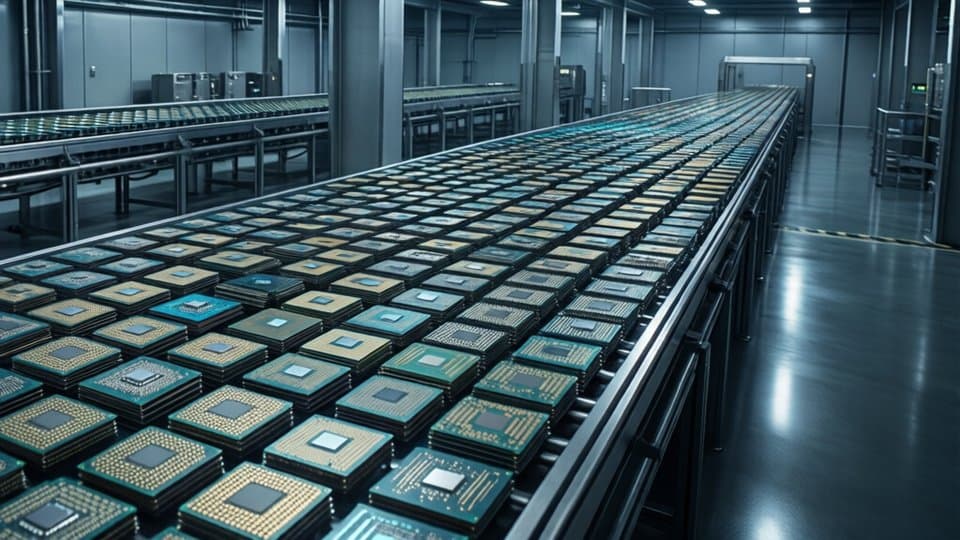
Reports indicate that major Chinese technology firms have placed massive orders for Nvidia hardware, potentially signaling a breakthrough in the nvidia china export approval process. However, these orders face immediate hurdles from production capacity constraints and ongoing geopolitical tensions between Washington and Beijing.
What are the reported chip orders from China?
Chinese technology giants have reportedly placed orders for millions of Nvidia workstation graphics cards to support artificial intelligence development. These orders represent a massive surge in demand for hardware that bypasses some of the strictest data center chip restrictions.
According to The Motley Fool, on October 20, 2026: Chinese companies including ByteDance, Alibaba, and Tencent have ordered more than 3 million Nvidia Blackwell chips, with a collective value of $35 billion.
Other reports suggest the scale may be even larger. According to AOL Canada, on October 20, 2026: Total orders from Chinese customers have exceeded 6 million units. These orders specifically target the RTX PRO 5500 workstation cards, which are valued at approximately $11,400 per unit. While the top-tier Blackwell B300 chip is barred from the Chinese market, these workstation cards are being sought primarily for AI inference tasks.
Why might Nvidia fail to fulfill these orders?
Nvidia faces a severe production bottleneck that makes fulfilling the full volume of Chinese requests nearly impossible. The company lacks the manufacturing capacity to meet the sudden influx of orders while simultaneously serving its global customer base.
According to AOL Canada, on October 20, 2026: Nvidia may only be able to fill 5% to 10% of these orders. The company has indicated it can produce at most 3 million Blackwell chips globally in 2027, which is significantly lower than the demand coming from China alone.
The shortage is driven by manufacturing limitations at Taiwan Semiconductor Manufacturing Company (TSMC). As reported by AOL Canada, on October 20, 2026: TSMC is reserving most of its 2027 wafer capacity for the next-generation Rubin chips, which directly limits the availability of cards for companies like Alibaba.
How do the US and China view these chip sales?
The two nations hold conflicting views on the impact of semiconductor trade. The United States focuses on national security and preventing advanced AI capabilities from reaching China, while China seeks to maintain access to essential hardware for its tech industry.
How each side tells it:
- The United States: The administration has cited national security concerns to justify export controls. According to The Motley Fool, on October 20, 2026: The Trump administration imposed new tariffs in 2025 and required Nvidia to obtain export licenses for data center chips.
- China: Chinese regulators are looking for ways to keep their AI sector moving. According to Ars Technica, on September 2026: China's Ministry of Industry and Information Technology has asked firms like Alibaba and ByteDance to share plans to buy RTX Pro 5500 chips to power domestic AI models.
Nvidia itself has advocated for more flexible trade rules. An Nvidia spokesperson stated that Chinese workstation chipmakers have seen "unprecedented growth since 2022" because of "outdated US export controls" and Chinese import limits, as reported by AOL Canada.
What is the history of these export restrictions?
The tension over high-end semiconductors is not a new phenomenon. It has been a central friction point through multiple US presidential administrations, evolving from general trade concerns to specific technology bans.
The following timeline outlines the regulatory environment:
- Pre-2025: Both the Biden and Trump administrations cited national security concerns regarding the sale of advanced chips to China.
- April 2025: The Trump administration informed Nvidia that it would require specific export licenses to continue selling data center chips to Chinese companies, according to The Motley Fool.
- Recent Negotiations: Nvidia CEO Jensen Huang met with Donald Trump on several occasions and lobbied regulators, eventually reaching a deal where Nvidia would cede 15% of its Chinese chip sales to the government.
How are these curbs affecting China's industry?
US restrictions are acting as a catalyst for China to accelerate its own internal semiconductor development. Rather than stopping progress, the bans are forcing a shift toward domestic self-reliance.
According to The Economic Times, on October 23, 2026: Nvidia CEO Jensen Huang stated that US export restrictions have accelerated China's efforts to build its own semiconductor industry. He believes these restrictions have compressed China's development timeline from 10 years down to 5 years.
China is expanding its manufacturing footprint beyond just chips. Huang noted that China is investing heavily in supporting infrastructure, including memory, power generation, cooling systems, solar technology, and batteries, according to The Economic Times.
What happens next for Nvidia and its investors?
The immediate future depends on whether Nvidia can clear the production hurdles and how much of the reported $35 billion in orders can actually be delivered. Investors are looking for clarity on the company's ability to turn these orders into real revenue.
Key upcoming milestones include:
- December 2026: Early samples of the requested hardware are expected to be delivered.
- Q1 2027: Commercial deliveries of the workstation chips are scheduled to begin.
- November 18, 2026: Nvidia's next earnings call will be a critical moment for investors to confirm the magnitude of the Chinese orders and the company's capacity to fulfill them.
Investors will also watch for updates on the Blackwell and Rubin chip cycles. While current guidance for the third quarter of fiscal year 2027 is approximately $108 billion, that figure explicitly excludes any revenue from China's data center compute sector, according to AOL Canada.
Frequently Asked Questions
Why can't Nvidia sell its best chips to China?
The US government has imposed export controls on high-end AI chips like the Blackwell B300 to prevent China from using them for advanced military or AI applications.
Which Chinese companies are buying Nvidia chips?
Major tech firms including ByteDance, Alibaba, and Tencent have reportedly placed large orders for Nvidia's RTX PRO 5500 workstation cards.
Can Nvidia fulfill all the orders from China?
It is unlikely. Industry sources suggest Nvidia may only be able to fulfill between 5% and 10% of the total requested orders due to manufacturing limits at TSMC.
Sources
- 1.arstechnica.comExperts worry about Nvidia’s AI chip sales in China and influence over Trump
- 2.fool.comNvidia Reportedly Just Landed $35 Billion In Chip Orders From Chinese Companies. Here's Why That Could Be Great News for the Stock
- 3.electronics.economictimes.indiatimes.comUS export curbs accelerate China’s chip ambitions, says Nvidia CEO
- 4.aol.caByteDance, Alibaba and Tencent Just Ordered $35 Billion of Nvidia Chips
- 5.news.qq.com亚马逊拟将80亿美元英伟达芯片装入SPV,尝试把AI算力融资搬出资产 ...