
Manila and Taipei Seek Cooperation Amidst China in the Philippines Tensions
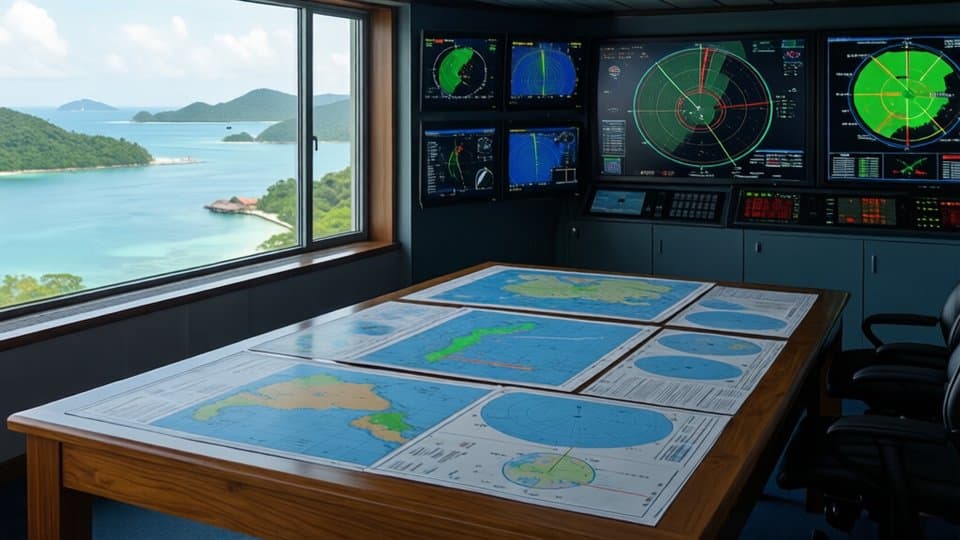
The Philippines is exploring closer cooperation with Taiwan to protect undersea communications cables and address maritime "gray-zone" activity, according to a Philippine diplomat speaking in Washington on October 21, 2026. This move aims to secure the Bashi Channel, a vital waterway between the two territories, and represents a shift in how china in the philippines relations might influence regional maritime security infrastructure.
Why are the Philippines and Taiwan cooperating on cables?
The two sides are looking for ways to secure the undersea data lines that carry almost all intercontinental internet traffic. Because these cables run through the Bashi Channel, both nations have a shared interest in preventing disruptions caused by maritime "gray-zone" activities.
Felipe F. Carino III, the Philippine deputy chief of mission in Washington, stated that the two sides are considering "practical cooperation, including knowledge-sharing and capacity building." According to Marine Insight, Carino III linked this effort to the fact that 60% to 67% of cyber incidents occur in the region.
The geography of the Bashi Channel makes it a critical corridor. The Philippine Domestic Submarine Cable Network, which serves as a main backbone for the country, spans roughly 2,500 kilometers from Quezon to Zamboanga, according to Astig.ph.
What are the specific security threats?
The primary concern involves "gray-zone" activities, which refer to actions that apply pressure without escalating to direct military conflict. These activities include the potential for vessels to interfere with or damage the physical cables resting on the ocean floor.
Recent incidents have heightened these fears. According to Taipei Times, Taiwan has faced several incidents involving cables and vessels linked to China. Specifically, Andrea Yang, Taiwan’s deputy representative in the United States, noted that a Chinese ship captain was jailed in Taiwan due to damage caused to an undersea cable.
The Philippine Coast Guard has also taken action. Earlier this month, the agency deployed its largest vessel and an aircraft to challenge a Chinese research ship, identified as the Jia Hai Ke 7, operating off northern Batanes province near undersea cable corridors. According to Astig.ph, the coast guard suspected the ship may have been surveying subsea cables while spoofing its location signal.
How each side tells it
The dialogue surrounding this cooperation reveals a sharp divide between the diplomatic approach of Manila and Taipei and the warnings from Beijing.
The Philippines and Taiwan position:
Manila describes the cooperation as a "pragmatic and practical approach" to protect mutual interests. Carino III emphasized that these discussions are happening "notwithstanding our one China policy." Taiwan is looking to increase maritime surveillance through technology, with Andrea Yang stating that Taipei will put more resources into developing uncrewed systems to monitor the seas.
The Chinese position:
Beijing views these interactions as a violation of established diplomatic principles. According to Global Times, Chinese Foreign Ministry spokesperson Mao Ning stated on October 22 that "there is no gray zone on the Taiwan question" and urged the Philippines to adhere to the one-China principle through concrete actions.
What is the history of these maritime tensions?
The tension in the region stems from overlapping territorial claims in the South China Sea and the status of Taiwan. China claims Taiwan as its own territory and maintains overlapping maritime claims that affect both the Philippines and Taiwan.
- The One-China Policy: The Philippines officially recognizes Beijing rather than Taipei, a policy that Manila insists remains intact during these new security discussions.
- Maritime Incidents: Taiwan's Ministry of Digital Affairs reported that its coastal waters saw an average of seven to eight cable incidents per year over the last four years, according to Astig.ph.
- Recent Escalation: The deployment of Philippine Coast Guard assets to Batanes this month marks a direct response to Chinese research vessels operating near sensitive infrastructure.
Who is affected by these cable disruptions?
The disruption of these cables would impact international data flows and regional digital stability. Because undersea cables carry nearly all intercontinental data, any damage in the Bashi Channel could isolate parts of the Philippines and Taiwan from the global internet.
The economic and security implications are high. Taiwan is actively seeking international support, with Andrea Yang suggesting that interference with undersea cables should be addressed by the United Nations to prevent "bad behavior." For the Philippines, the focus is on protecting the infrastructure that supports its domestic and international communications.
What happens next?
While no formal treaty has been signed, the cooperation between Manila and Taipei is expected to continue evolving. Carino III indicated that certain measures, such as joint patrols or increased accountability for vessels, "may be actually coming to fruition."
The international community will likely watch for further moves from the United Nations regarding cable protection. Additionally, the Philippine government will continue to monitor maritime activity in the Batanes region, particularly concerning research vessels operating near the Bashi Channel.
FAQ
Why are undersea cables important to the Philippines?
Undersea cables carry almost all of the country's intercontinental data flows and internet traffic, making them vital for national communication and the economy.
Does this cooperation violate the Philippines' relationship with China?
The Philippine government maintains that this is a practical, non-political approach to infrastructure security that exists "notwithstanding" its official one-China policy.
What is "gray-zone" activity in the South China Sea?
Gray-zone activity refers to actions, such as using research ships to survey sensitive areas, that exert pressure on a country without triggering a full-scale military conflict.
Sources
- 1.marineinsight.comPhilippines Explores Deeper Cooperation With Taiwan To Protect Undersea Cables Despite Manila’s One China Policy
- 2.taipeitimes.comPhilippines eyes closer cooperation with Taiwan to protect cables
- 3.globaltimes.cnNo ‘gray zone’ on Taiwan question: Chinese FM urges Philippines to uphold one-China principle
- 4.astig.phManila is talking to Taipei about the cables that carry the internet. No deal has been signed
- 5.chinatimes.com菲律賓擬與台灣聯手護海底電纜 北京回應了
- 6.news.qq.com菲方称寻求与台湾深化合作,外交部:台湾问题没有"灰色地带"