

High-Tech Surge Drives Latest China US Trade News and Growth
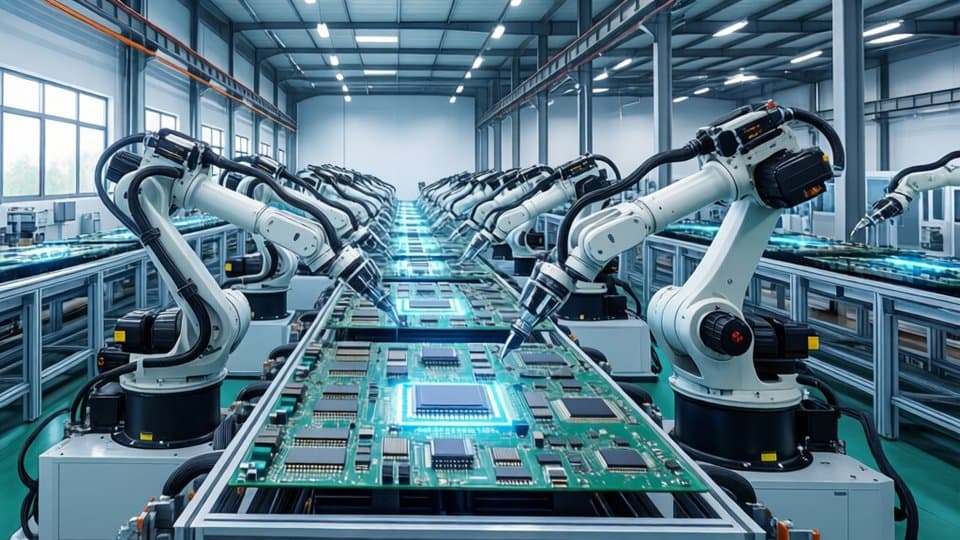
China recorded its strongest foreign trade growth for the first nine months of 2026, driven by a massive surge in high-tech and green energy shipments. This acceleration in china us trade news comes as September's total trade volume exceeded the 5-trillion-yuan threshold for the first time, signaling a shift toward advanced manufacturing despite global economic volatility.
How much did China's trade grow in 2026?
China's total imports and exports rose by 18.8 percent year-on-year between January and September 2026. This growth represents the highest level for the same nine-month period in five years, according to data from the General Administration of Customs (GAC).
The trade momentum accelerated steadily throughout the year. According to the GAC, growth rates progressed as follows:
- First quarter: 15.3 percent
- Second quarter: 18.3 percent
- Third quarter: 22.3 percent
September 2026 saw a particularly sharp spike. Total trade reached 5.16 trillion yuan (approximately US$722 billion), marking a 27.5 percent increase from the previous year. This performance marked the sixth consecutive month of double-digit monthly growth, as reported by Global Times.
What products are driving the export surge?
High-tech products, specifically integrated circuits and electric vehicles, are the primary engines of China's current export expansion. The shift toward "smarter" and greener goods is reshaping the country's trade profile, moving away from low-cost manufacturing toward advanced technological sectors.
The GAC reported the following growth figures for key sectors in the first three quarters of 2026:
- Integrated circuits (ICs): 99.1 percent increase
- Electric vehicles: 72.3 percent increase
- Lithium batteries: 36.4 percent increase
- Wind power generating sets and parts: 22.4 percent increase
According to Global Times, computer parts and accessories tripled in volume, while storage components like Solid State Drives more than doubled. These shipments ensure a steady supply of intermediate goods for global computing power supply chains. Additionally, exports of servers rose by 7.2 percent, supporting global AI infrastructure.
How do different sides view the trade surplus?
There is a sharp disagreement between Chinese experts and Western media regarding the implications of China's growing trade surplus. While some see it as a threat to global manufacturing, others view it as a natural result of industrial relocation and technological upgrading.
How each side tells it:
Western media perspectives
Critics argue that China's massive surplus creates global imbalances. According to Kucoin, reports from the Associated Press suggest that many trading partners fear their own manufacturing industries are being "overrun by exports from China." Professor Eswar Prasad of Cornell University told Kucoin that relying on foreign demand to support China's economy is "untenable and unsustainable."
Chinese expert perspectives
Chinese economists argue that the surplus is driven by industrial realities rather than policy. Professor Wan Zhe of Beijing Normal University told Global Times that "trade surpluses tend to emerge in economies with robust manufacturing capacity." Experts also point to rising protectionism and policy unpredictability in the West as the true causes of global trade imbalances.
What role do foreign companies play in China's trade?
Foreign-invested enterprises have reached record-breaking trade volumes, acting as a major component of China's economic activity. These companies are deeply integrated into the country's local innovation and industrial chains.
According to Bastille Post, foreign-invested firms saw their imports and exports reach 11.69 trillion yuan (US$1.75 trillion) in the first three quarters of 2026. This is a 19 percent increase year-on-year and represents a historical record for this period.
The GAC provided further details on these firms:
- High-tech product exports by foreign firms: 42.1 percent increase
- Intermediate goods traded by foreign firms: 7.9 trillion yuan (up 27.4 percent)
- Total imports by foreign firms: 21.1 percent increase
Why is the trade growth happening now?
Several economic factors have converged to create this surge, including the global artificial intelligence boom and a recovery in specific trade relationships. While domestic demand in China has remained weak, external demand has provided a necessary buffer.
According to Global Times, analyst Feng Lin identified three main drivers for elevated exports:
"First, the ongoing global AI investment boom is fueling record growth in chip and related exports. Second, AI-driven global growth has outweighed the drag from the Middle East conflict, with external demand firming further in September and lifting export growth across the board. Third, years of manufacturing upgrading in China are paying off, visibly boosting exports of new energy vehicles and high-tech products," said Feng Lin.
The Peking University National Economic Research Center noted that the export structure is shifting. They observed that China's comparative advantage is moving from cheap labor toward technology and full industrial chains. This shift is evidenced by the "ultra-high" growth in electromechanical products and integrated circuits.
What is the background of this trade situation?
China's trade landscape has been shaped by years of shifting geopolitical tensions and domestic industrial policies. The country has moved toward self-sufficiency in high-tech sectors while simultaneously expanding its reach into new markets to offset Western restrictions.
Key historical and contextual points include:
- 2025: The United States imposed additional tariffs on various goods, which according to eeo.com.cn, caused a "cliff-like" drop in China's export growth to the U.S. during that year.
- Market Diversification: To counter high U.S. tariffs, China has pivoted toward Southeast Asia, Latin America, and Europe, as noted by Kucoin.
- Domestic Challenges: A long-term downturn in the Chinese property sector has weakened domestic household wealth and increased savings, making the economy more reliant on exports.
- EU Relations: The European Union reached an agreement this month to roughly halve Chinese hybrid vehicle imports over the coming years to address trade imbalances.
What happens next?
The direction of China's trade will depend on how it manages increasing protectionism and the stability of global demand. Several factors are expected to influence the coming months:
- EU Restrictions: The implementation of the hybrid vehicle import reduction deal will test trade relations with Europe.
- Global Protectionism: Analysts at Kucoin expect continued resistance and rising protectionism in high-value sectors globally.
- Economic Targets: China is working to meet its annual GDP growth target of 4.5% to 5% for 2026.
Frequently Asked Questions
Why are China's exports growing so fast?
Growth is driven by high demand for AI-related components, electric vehicles, and green energy technologies like lithium batteries.
Is China's trade surplus a problem for other countries?
Some Western nations and analysts argue the surplus threatens their domestic industries, while Chinese experts claim it reflects China's manufacturing competitiveness.
How has the US-China trade relationship changed?
While bilateral trade has seen some recovery following recent high-level meetings, China is increasingly relying on trade with ASEAN, the EU, and Latin America to offset US tariffs.
Sources
- 1.shipsandports.com.ngChina’s Foreign Trade Growth Hits Five-Year High as September Trade Surges 27.5%
- 2.globaltimes.cnChina's foreign trade growth in first three quarters hits five-year high
- 3.bastillepost.comForeign-invested firms' trade hits record high in first three quarters
- 4.kucoin.comChina's Q3 Economic Growth Hits 4.5% Amid Robust Exports and Domestic Weakness
- 5.eeo.com.cn未名宏观|2026年9月进、出口点评——外贸结构变化,进、出口额增速 ...