

How Huawei is Challenging Nvidia H200 China Market Dominance
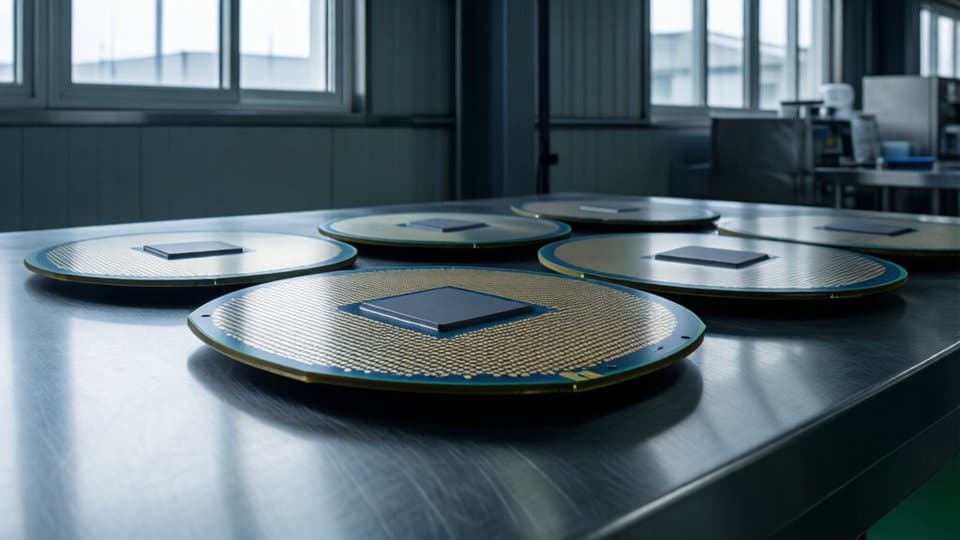
Nvidia's dominance in the Chinese artificial intelligence chip sector is eroding as US export controls and rising domestic competition reshape the landscape. In the first half of 2026, the company's market share for data-center AI chips in China dropped to 34%, while local giant Huawei climbed to 28%, according to an IDC report. This shift highlights how trade restrictions intended to limit China's high-end computing power may be inadvertently accelerating the growth of a domestic semiconductor ecosystem.
Why is Nvidia losing ground in China?
US government restrictions on advanced computing hardware have limited the specific high-end products Nvidia can legally sell to Chinese buyers. These export controls have forced a shift in how Chinese tech firms procure hardware, moving them away from cutting-edge Nvidia GPUs toward either lower-spec compliant models or domestic alternatives.
The impact on Nvidia's volume is measurable. According to IDC data, Nvidia shipped 678,000 AI accelerator units into China during the first half of 2026. This represents a 44% decrease compared to the same period in the previous year. In contrast, Huawei's shipments grew significantly, rising from just over 300,000 units a year ago to 572,000 units in the first half of 2026, according to IDC.
Beyond the loss of high-end chips, Nvidia faces a structural change in what Chinese customers are buying. For the first time, non-GPU accelerators—such as ASICs and NPUs designed for specific tasks—outsold GPUs in the region. These non-GPU shipments jumped nearly 80% to 1.016 million units, while GPU shipments fell 26% to 991,000 units, per IDC.
How does each side describe the current situation?
The disagreement centers on whether US export policies are effectively achieving their security goals or simply handing market share to Chinese competitors.
Nvidia leadership has expressed frustration with the regulatory environment. In a CNN interview, Nvidia CEO Jensen Huang stated:
"The goals of the export controls are not being achieved."Nvidia's own regulatory filings with the US Securities and Exchange Commission noted that the company was "effectively foreclosed from competing in China's data center computing/compute market," and warned that its exit could help competitors build larger ecosystems to challenge the company globally.
On the other side, the Chinese industrial landscape is responding to these restrictions by prioritizing self-sufficiency. According to news.qq.com, the US restrictions have not caused demand to disappear; instead, they have pushed domestic substitution into a more practical industrial phase. Local firms are now working to build their own software ecosystems and hardware standards to reduce reliance on foreign technology.
Who are the main players in China's AI chip market?
While Nvidia remains the largest single supplier, the market is becoming increasingly fragmented among several Chinese domestic vendors that are seeing year-over-year growth.
The current market landscape for data-center AI chips in China includes several key entities:
- Nvidia: Currently holds 34% of the market.
- Huawei: The leading domestic challenger with 28% market share.
- T-Head: Alibaba's chip design unit, which holds 7%.
- Cambricon: A domestic vendor with 5% of the market.
- Kunlunxin: Baidu's chip unit, holding 4%.
- Hygon: A provider accounting for 3% of shipments.
Other emerging Chinese players mentioned by news.qq.com include companies like Jingjiawei, Moore Threads, and MuXi, which are all attempting to develop independent GPU ecosystems to compete with Nvidia's established CUDA software platform.
Is there still high demand for Nvidia products in China?
Yes, demand remains extremely high for products that can still be legally imported, even if they are not the most advanced models available globally.
A massive surge in orders for the RTX PRO 5500 workstation chip demonstrates this. According to DigitalToday, China's three biggest tech firms—ByteDance, Alibaba, and Tencent—have reportedly ordered more than 3 million units of this chip, with a total value exceeding $35 billion at list prices.
However, supply is a major bottleneck. One source told DigitalToday that partners may receive only 5% to 10% of the volumes they requested. While the RTX PRO 5500 is a workstation chip rather than a data-center AI chip, it has become a critical tool for AI inference in China because high-end training chips like the Blackwell-based B300 are banned from sale under US rules.
How is the memory chip market changing?
The competition is not limited to processors; Chinese manufacturers are also making significant strides in the memory sector, which is essential for AI infrastructure.
ChangXin Memory Technologies (CXMT) is emerging as a major threat to established players like Micron. According to ibtimes.sg, Counterpoint Research reported that CXMT recorded the fastest revenue growth among DRAM suppliers globally in the second quarter of 2026, with revenue increasing 716% year over year.
CXMT is expected to reach a production volume of between 350,000 and 375,000 DRAM wafers per month by the end of 2026. This would make its output comparable to Micron. The company is also reportedly building cleanrooms in roughly 12 months, which is significantly faster than the industry norm of 21 to 24 months, according to ibtimes.sg.
What happens next for the chip industry?
The trajectory of the market will depend on whether Nvidia can stabilize its shipments and whether Chinese domestic firms can bridge the technical gap.
Several key developments to watch include:
- Nvidia Shipments: Whether Nvidia's market share continues to fall in the second half of 2026.
- Huawei's Growth: Whether Huawei can close the six-percentage-point gap to overtake Nvidia.
- Market Composition: Whether non-GPU accelerators maintain their lead over GPUs in China.
- New Product Launches: Nvidia is expected to provide initial samples of the RTX PRO 5500 in early December, with commercial shipments starting in the first quarter of 2027.
- Total Market Growth: IDC forecasts that total AI accelerator shipments in China will grow by 19% for the full year of 2026.
Frequently Asked Questions
Why can't Nvidia sell its best chips to China?
The US government has implemented export controls that restrict China's access to the most advanced AI computing hardware to maintain a technological advantage.
Who is Nvidia's biggest competitor in China?
Huawei is currently the closest rival, holding a 28% share of the data-center AI chip market compared to Nvidia's 34%.
Are Chinese companies still buying Nvidia chips?
Yes, large Chinese firms continue to order millions of units of compliant, lower-spec Nvidia products, though they face significant supply shortages.
SEO Meta Description: Nvidia's China market share is falling as Huawei and domestic rivals gain ground. Learn how US export controls are reshaping the AI chip landscape.
URL Slug: nvidia-china-market-share-huawei-competition
Sources
- 1.cryptobriefing.comNvidia’s share of China’s AI chip market falls to 34% as Huawei closes in
- 2.ibtimes.sgStock Market Today: Nvidia, Micron and AMD Face Fresh Pressure as China's Chip Industry Advances
- 3.digitaltoday.co.krChina's three big tech firms order more than 3 million Nvidia chips as supply falls short of demand
- 4.idnfinancials.comNvidia's share of China's AI market falls to 34%, Huawei gains ground
- 5.news.qq.com新"英伟达"诞生!100%中国自研技术,国产替代终于要崛起了