

How High-Speed Jet Drones Are Shaping the Future of Drones in US Military Doctrine
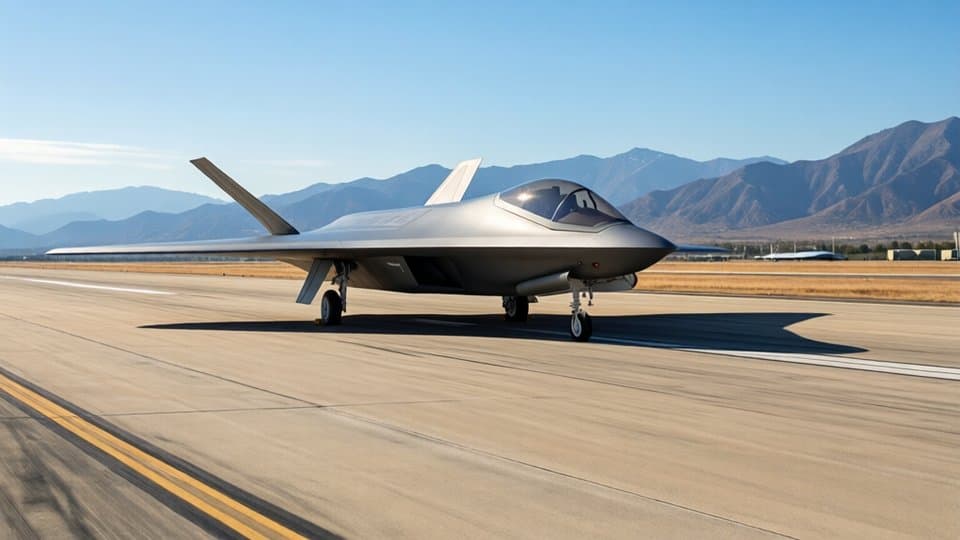
How Russia's jet drones are changing the war and why it matters for drones in us military
Russia has deployed a new class of jet-powered drones that travel at hundreds of kilometers per hour, forcing Ukraine to rapidly develop new interceptor technologies to protect its infrastructure. This shift in aerial warfare, observed through September 2026, threatens to overwhelm existing air defenses and could influence how the West views the effectiveness of drones in us military doctrine and procurement. The high-speed attacks target energy systems, railways, and grain exports, turning cities like Kyiv into active front lines.
Why are these new drones so hard to stop?
The new Russian drones, based on Iranian-designed Shahed models, fly much faster and higher than previous propeller-driven versions. This speed leaves air-defense units with very little time to react before an impact occurs.
According to Boston Herald, 2026: the fastest current Ukrainian interceptors reach only 300 to 400 kph (186 to 248 mph). This speed is often insufficient to catch the new jet-powered variants. Because these drones fly at higher altitudes, traditional ground-based weapons struggle to aim accurately.
Volodymyr Serdiuk, an air-defense unit commander, described the difficulty of tracking these targets. He noted that the drones move so quickly they are difficult to intercept effectively.
“They’re moving so fast that we can’t get a proper lock on them,” said Volodymyr Serdiuk, commander of an air-defense unit.
Serdiuk also compared the experience to a difficult hunt, stating, “It’s like chasing a pig in the forest,” regarding the new Shahed-based models.
What new technologies is Ukraine using to fight back?
Ukraine is moving away from heavy, expensive missiles toward low-cost, high-speed interceptor drones. These new systems use artificial intelligence and specialized engines to close the gap with Russian aircraft.
According to Eurasia Review, 2026: President Volodymyr Zelenskyy announced on September 19 that the Security Service of Ukraine successfully used a new interceptor against jet-powered Shahed/Geran drones. This includes the STING S, a drone-hunting system developed by the Wild Hornets group.
Another manufacturer, Vluchnyk, has tested a system called the Zorelit v5, also known as Starship. The technical specifications for this interceptor include:
- Speed: Approximately 260 mph (418 kph).
- Range: Roughly 29 miles.
- Cruising speed: 124 mph.
- Flight time: 17 minutes when carrying a warhead.
- Capabilities: AI-enabled target detection and automated terminal guidance.
These interceptors can integrate with SkyMap, a system that combines data from radar and acoustic sensors into a single digital picture for operators. This allows mobile fire groups to coordinate their movements more effectively against large drone raids.
How is the conflict affecting the civilian population?
The shift to high-speed drones has brought the danger much closer to city centers. Residents in Kyiv face constant explosions and disruptions to essential services like food and electricity.
According to Boston Herald, 2026: recent Russian tactics have specifically targeted the infrastructure that keeps the Ukrainian economy functioning. This includes gas stations, telecom networks, shopping centers, and post offices.
The human cost is immediate. Daria Kuchynska, a 31-year-old flower shop owner in Kyiv, experienced a blast from a jet-powered drone that killed a woman standing near her. She described the constant threat as a matter of luck.
“So many people are constantly dying around us. I don’t know how we survive. It’s simply a matter of luck,” said Daria Kuchynska.
What is the industrial response from Ukrainian manufacturers?
Ukrainian defense companies are racing to scale up production of jet-propulsion systems. The primary goal is to move from testing prototypes to mass-producing interceptors that can be deployed across the country.
Oleksii Babenko, CEO of Vyriy Drones, stated that manufacturers were not prepared with a solution when these faster variants first appeared. The industry currently faces several bottlenecks:
- Supply: Miniature turbojet engines are mostly sourced from European manufacturers.
- Capacity: European production levels are currently below what Ukraine requires.
- Training: New pilots must be trained specifically for high-speed drone interception.
There is disagreement on how long this industrial race will take. According to Boston Herald, 2026: Oleksii Babenko estimates it could take 3 to 4 months to scale up production. However, military analyst Taras Chmut suggests the timeline could be 6 months or longer.
How has Russia responded to these defensive shifts?
Russia continues to use its ballistic missile arsenal and expanding drone production to pressure Ukraine. The Kremlin is also utilizing its energy infrastructure to maintain its military momentum.
According to Eurasia Review, 2026: Ukrainian strikes on September 19–20 hit the Moscow Oil Refinery in Kapotnya. This strike damaged an AVT-6 crude-distillation unit, which processes about 53 percent of the refinery's total crude throughput.
The Russian military also maintains an offensive posture in several regions. Heavy combat continues along the following axes:
- Pokrovsk
- Huliaipole
- Kostiantynivka
- Sloviansk
- The Kramatorsk axis
Following the Russian State Duma elections held from September 18–20, 2026, analysts suggest the Kremlin may no longer delay force-generation measures, such as a potential partial mobilization.
What is the background of this drone evolution?
The drone war has evolved from slow, propeller-driven models to high-speed jet variants. This evolution is driven by a cycle of offensive and defensive adaptation between the two nations.
The history of these weapons involves several key stages:
- Early Phase: Use of propeller-driven Shahed models that were easier to track and intercept.
- Evolution: Russia began integrating jet propulsion into Shahed-style designs to increase speed and altitude.
- Current Phase: Ukraine is deploying purpose-built, low-cost interceptors like the Zorelit v4 and v5 to counter these threats without relying solely on expensive F-16 jets.
The F-16 fighter jets remain a vital part of the defense, but they are limited by maintenance needs. Many of these aircraft are currently out of service awaiting repairs.
What happens next?
The conflict enters a period of intense industrial and military competition. Several factors will determine the effectiveness of Ukraine's new defenses:
- Production Timelines: Manufacturers aim to close the gap with Russian jet drones within the next 3 to 6 months.
- Procurement: The Zorelit v5 is expected to enter the Ukrainian ePoints procurement mechanism following its official codification.
- Russian Mobilization: Observers are watching for signs of a Kremlin-ordered partial mobilization following the recent Duma elections.
FAQ
Why are jet-powered drones more dangerous than older drones?
They fly much faster and at higher altitudes, which makes them harder for traditional air-defense systems to lock onto and intercept.
Can Ukraine stop these drones without F-16 fighter jets?
Yes, Ukraine is currently testing and fielding new, low-cost interceptor drones like the STING S and Zorelit v5 to handle these threats.
What is the main problem with producing new interceptors?
The main difficulty is scaling up the production of miniature turbojet engines and training enough pilots to fly them.
Sources
- 1.bostonherald.comJet-powered drones outpace Ukrainian defenses as manufacturers race to build new interceptors
- 2.eurasiareview.comUkraine Hits Russian Fuel And Air Defenses As Kyiv Fields High-Speed Drones To Counter Jet Shaheds - Analysis
- 3.military.comJet-Powered Drones Outpace Ukrainian Defenses as Manufacturers Race to Build New Interceptors