
Russia Assists Pyongyang in Developing Advanced North Korea Drones and Missiles
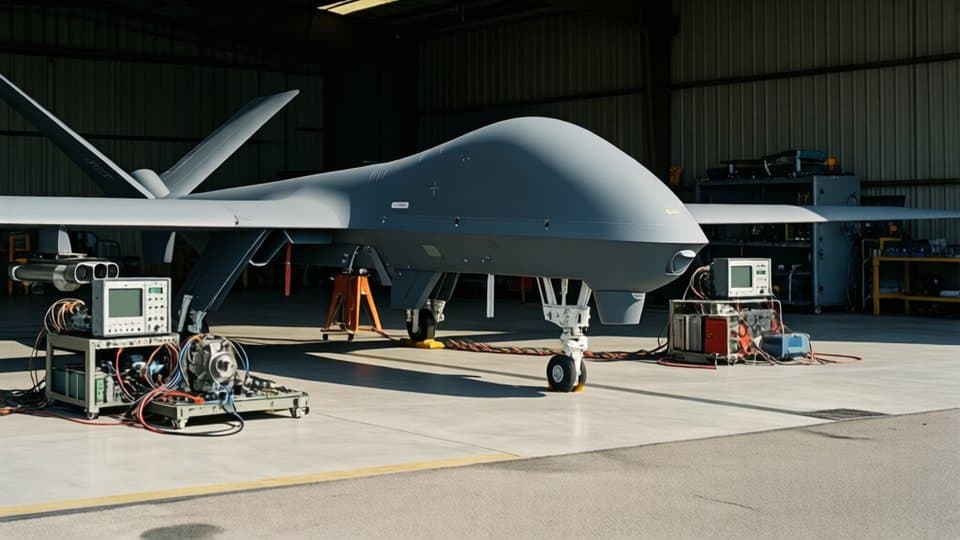
North Korea is rapidly advancing its ballistic missile systems and establishing mass production lines for strike drones through technical and operational assistance from Russia. This military cooperation, which includes the deployment of North Korean troops to support Russia's war in Ukraine, is fundamentally altering the security landscape of the Korean Peninsula and beyond. As Pyongyang integrates Russian combat data and technology, the threat posed by north korea drones and missiles to regional allies grows more acute.
How is Russia helping North Korea improve its weapons?
Russia provides technical expertise, telemetry feedback, and operational data that allow North Korean engineers to refine the accuracy and maneuverability of their weapons. This assistance helps North Korean systems perform better against modern Western-supplied air defense networks used in current conflicts.
According to Kyiv Post, 2024: Defense analyst Anton Ponomarenko noted that telemetry and performance feedback from the Russian military have enabled North Korean engineers to improve the guidance accuracy and terminal maneuverability of tactical ballistic missiles. This technical exchange increases the risk of both conventional and nuclear strikes against South Korea.
Beyond missile guidance, Moscow is assisting Pyongyang in setting up domestic industrial manufacturing lines for strike drones and loitering munitions. This shift allows North Korea to move from importing technology to producing its own unmanned platforms. During military drills conducted last month, North Korea tested an integrated swarm of unmanned aerial vehicles that conducted synchronized saturation strikes against an island target alongside cruise and ballistic missile launches.
What is the scale of North Korean labor in Russia?
Thousands of North Korean citizens are working in Russia to support military production, often using fraudulent visas to bypass international sanctions. These workers are concentrated in strategic industrial zones where they assemble drones and support heavy industry.
According to the UN Security Council's Multilateral Sanctions Monitoring Team (MSMT), 2025: Between 15,000 and 30,000 North Korean workers were present in Russia at the end of 2025. Of these, up to 1,000 were employed at strategically important facilities such as defense plants, steelworks, and shipbuilding capacities.
Reports from Radio Liberty and Current Time indicate that North Koreans are being registered as "students" to circumvent UN sanctions. In 2025, Russia issued more than 36,400 visas to North Korean citizens, with 35,800 of those being student visas. A significant number of these workers are located in the Alabuga special economic zone in Tatarstan, where they assist in assembling Russian versions of Iran's Shahed drones.
The financial benefits to the North Korean regime are massive. According to the MSMT, 2025: North Korea received up to 800 million dollars from the labor of its citizens abroad. These funds are channeled directly into the country's nuclear and missile programs.
How are the two nations cooperating militarily?
The relationship has evolved into a formal wartime alliance following a strategic treaty signed in mid-2024. This agreement mandates mutual defense and has resulted in the direct exchange of personnel and munitions.
According to The Diplomat, 2026: The deepening military axis follows the signing of a comprehensive strategic partnership agreement during Russian President Vladimir Putin’s visit to Pyongyang in June 2024, which codified a mutual defense clause.
The exchange of resources includes:
- North Korean artillery munitions, ballistic missiles, and small arms supplied to Russia.
- An estimated 14,000 to 15,000 North Korean military personnel deployed to Russia.
- Approximately 10,000 combat infantry and 1,000 military engineers stationed in the Kursk region.
The human cost for North Korea is already becoming visible. According to casualty assessments by South Korea’s National Intelligence Service (NIS), 2025: Approximately 6,000 North Korean soldiers deployed in support of Russian operations have been killed or wounded in combat.
How do these new tactics affect regional security?
The combination of cheap drones and high-end missiles creates a "swarm attack" capability designed to overwhelm air defenses. This tactic forces opponents to use expensive interceptor missiles against low-cost targets, quickly depleting their ammunition stocks.
According to Asia Today, 2024: Experts warn that North Korea's growing drone capabilities, when combined with nuclear and missile abilities, could exhaust South Korean air defense assets and increase the success rate of subsequent attacks using tactical nuclear weapons.
Lami Kim, an IISS Korea Chair, provided this assessment:
This saturation strategy is already being observed in other conflicts. According to CSIS, 2025: Ukraine's ballistic missile interception rate fell from approximately 24% in 2025 to about 10% this year due to a shortage of interceptor missiles from the US and Europe. North Korea is learning to use these lessons to ensure its own multi-dimensional attacks can penetrate modern defenses.
How each side tells it
The two nations view the partnership through entirely different lenses, ranging from a "sacred" alliance to a violation of international law.
North Korea's Position: Pyongyang frames the relationship as a necessary alliance against Western aggression. In a birthday dispatch to Vladimir Putin on October 7, North Korean leader Kim Jong Un characterized Russia’s war in Ukraine as a "sacred war of justice" and pledged "invariable support" for Moscow.
The International/South Korean Position: South Korean and Western officials view the cooperation as a direct threat to global stability and a violation of UN sanctions. South Korean defense tracking systems have recorded North Korean missile tests, such as a tactical ballistic missile in early October that Pyongyang claimed could carry a nuclear warhead. While Pyongyang claimed a flight range of 1,000 kilometers, South Korean and Japanese systems recorded it traveling only 700 kilometers.
What happens next?
The military and diplomatic standoff is expected to intensify as both sides react to new technological developments. Several key areas of focus include:
- South Korean Defense Response: Following recent North Korean tests, South Korea has begun testing its own domestically developed hypersonic ballistic missiles to counter the growing threat.
- US Legislative Action: The US government continues to use the Multilateral Sanctions Monitoring Team (MSMT) to track evasion, with the FY2026 NDAA ordering assessments of the Russia-DPRK-China-Iran alignment.
- Technological Race: South Korea's Agency for Defense Development (ADD) is working to deploy the KUS-LM drone, nicknamed "K-LUCAS," before 2030 to match North Korean unmanned capabilities.
FAQ
Why is North Korea sending workers to Russia?
North Korea sends workers to Russia to earn foreign currency for its nuclear program and to assist in Russian military production, such as assembling drones.Are North Korean drones a new threat?
Yes, because North Korea is now combining low-cost drone swarms with ballistic missiles to overwhelm air defense systems, a tactic learned from the war in Ukraine.How many North Korean soldiers are in Russia?
Estimates suggest between 14,000 and 15,000 personnel are deployed, including roughly 10,000 combat infantry and 1,000 engineers.
Sources
- 1.kyivpost.comNorth Korea Expands Missiles and Drones With Russian Help
- 2.euronews.comRussia recruiting up to 25,000 North Koreans to assemble drones: What the data shows
- 3.thediplomat.comDrones and Missiles Are Rewriting the Military Balance on the Korean Peninsula
- 4.eurasiareview.comRussia-North Korea Relations: An Expanding Partnership - Analysis
- 5.asiatoday.co.kr북한, 드론·미사일 ‘벌떼 공격’ 첫 훈련..“드론·핵 결합, 한반도 군사 균형 바꿀 수 있다”