Lawmakers Urge South Korea Current President to Play Call of Duty
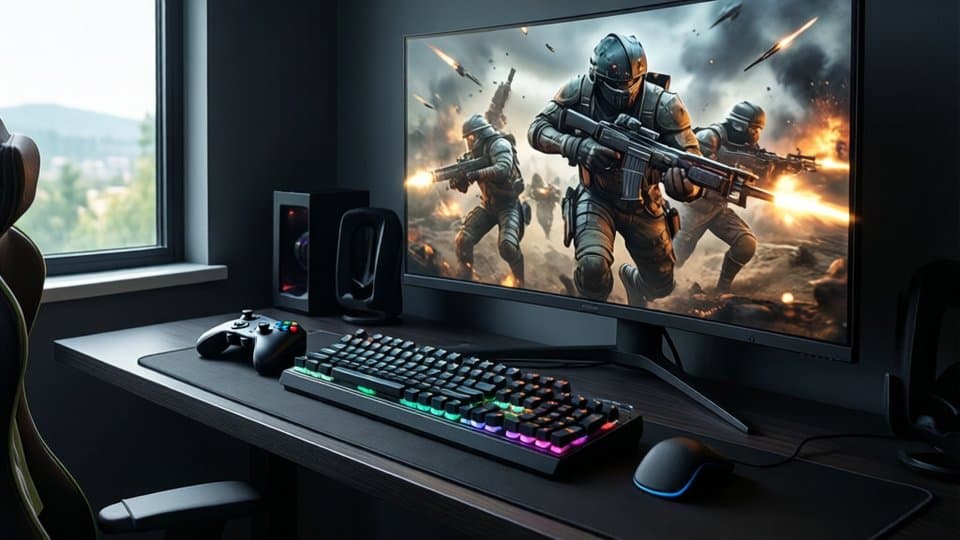
Opposition lawmakers are calling on South Korea current president Lee Jae Myung to play the latest Call of Duty installment to grasp the reality of a potential North Korean invasion. The demand follows the October 23 release of Modern Warfare 4, a video game depicting a full-scale surprise attack by Pyongyang on the South. The controversy has ignited a fierce debate over national security, military preparedness, and freedom of expression in Seoul.
- The game Modern Warfare 4 was released worldwide on Friday, October 23, according to tbsnews.net.
- Conservative lawmaker Han Dong-hoon urged the president to play the game to understand defense shortcomings, as reported by tbsnews.net.
- Culture Minister Choi Hwi-young stated on October 23 that games are protected from prior censorship, according to tbsnews.net.
What does the video game depict?
The game, developed by the US studio Infinity Ward, portrays a devastating second Korean War triggered by a surprise North Korean assault. Players take on the role of Park Hyun-jun, a private in the South Korean Marine Corps, fighting through urban combat in central Seoul. The narrative includes a mission to raid a North Korean leadership compound that resembles the Kumsusan Palace of the Sun.
The developers at Infinity Ward aimed for authenticity by focusing on the proximity of North Korean artillery to the South Korean capital. USA TODAY reported that Jack O'Hara, co-head of the studio, noted the compelling visual of North Korean batteries aimed at Seoul. The game features a diverse cast, including US Marines working alongside South Korean troops to defend the peninsula.
How does each side tell it?
The political divide in Seoul has split sharply over whether the game is a security warning or a matter of creative liberty. Opposition members view the fictional conflict as a mirror to real-world vulnerabilities, while the government emphasizes constitutional rights.
Conservative lawmakers argue the game highlights a lack of readiness. Han Dong-hoon, a former justice minister, used social media to challenge the administration's approach to Pyongyang. He criticized President Lee for previously describing North Korean nuclear weapons as a "last-resort defensive weapon" on October 19, according to tbsnews.net.
"National security is not about hope, but preparation,"
Han Dong-hoon
The ruling Democratic Party of Korea has largely dismissed the controversy. Lawmaker Kim Han-kyu defended the game on social media, suggesting there is nothing wrong with playing it. Meanwhile, Culture Minister Choi Hwi-young defended the medium during the National Assembly's annual audit on October 23.
"Games are not subject to prior censorship,"
Choi Hwi-young
Why are lawmakers worried about security?
Opposition politicians believe the administration is being too soft on North Korea. Ahn Cheol-soo of the People Power Party suggested on October 20 that even watching gameplay could help the president avoid "naive security assumptions." These critics are concerned about the reduction of joint military exercises with the United States and the push to transfer wartime operational control from Washington to Seoul.
Real-world incidents have added weight to these concerns. The Reform Party pointed to landmine explosions on September 21 inside the Demilitarised Zone. According to tbsnews.net, a joint investigation found these mines were planted by North Korea, violating the Armistice Agreement and injuring three South Korean soldiers.
Is this a matter of freedom of expression?
The debate has shifted into a fight over whether the government should scrutinize sensitive media. Some lawmakers have pointed to the film Assassin(s), which depicts a 1974 assassination, as a precedent. They argue that if a film is protected as fiction, a video game should receive the same treatment.
The government maintains that creative works are protected under the Constitution. Minister Choi Hwi-young argued that the state cannot suppress works simply because of their political themes. However, critics argue for consistency, noting that conservatives who defended films should also defend the video game's right to depict a hypothetical war.
What is the background of the conflict?
The tension between the two Koreas stems from the 1950–53 Korean War. Because the conflict ended with an armistice rather than a peace treaty, the two nations remain technically at war. This historical reality provides the foundation for the modern military standoff and the high-stakes tension depicted in the game.
The current security landscape is further complicated by global shifts. USA TODAY reported that North Korea's involvement in other global conflicts, such as sending troops to Ukraine, increases regional interconnectivity. Additionally, the presence of approximately 28,500 U.S. troops in South Korea remains a central component of the nation's defense strategy.
What happens next?
The political fallout from the game's release is expected to continue during ongoing parliamentary sessions. Lawmakers from the opposition are likely to use the game's themes to push for more rigorous military audits and a harder line on North Korean provocations. There are no specific votes scheduled on the game itself, but the debate over defense preparedness and the transfer of operational control will remain a central theme in upcoming legislative sessions.
Frequently Asked Questions
What is the connection between Call of Duty and South Korean politics?
The game depicts a North Korean invasion of Seoul, which opposition politicians are using to criticize the current administration's perceived weakness on national security.
Is the North Korean invasion in the game real?
No, the invasion is a fictional scenario created for the game, though lawmakers argue it reflects real-world military threats.
Does the South Korean government censor video games?
The Culture Minister stated that games are protected from prior censorship under the Constitution, treating them as a form of creative expression similar to film.