
Chinese Markets Surge as Investors Target Humanoid Robot Stocks
China's stock markets saw a surge on the morning of November 10, 2026, as investors poured capital into technology sectors, specifically driving the growth of the humanoid robot industry. The ChiNext Index climbed 1.49% by midday, reflecting a broader recovery in high-growth tech stocks across the country's major exchanges.
- The ChiNext Index rose 1.49% by midday on November 10, according to finance.biggo.com.
- Combined turnover for the Shanghai and Shenzhen markets reached CNY 96.03 billion, or approximately $14.4 billion, for the half-day session, as reported by finance.biggo.com.
- China's total goods trade import and export value grew 20% year-on-year during the first ten months of the year, according to finance.sina.com.cn.
Why are tech stocks rising so quickly?
The rapid rise in technology stocks is driven by a rotation of market themes and improving investor sentiment. While some sectors like oil and gas saw declines, capital rebalanced into growth-oriented industries. This shift indicates that investors are once again willing to price in future growth for advanced technology companies.
According to finance.biggo.com, the movement reflects a recovery in short-term risk appetite. The market is moving away from resource sectors and toward high-tech themes. This rebalancing helps explain why the ChiNext and STAR Composite indexes outperformed the broader Shanghai Composite during the morning session.
Market analysts suggest that liquidity is a major factor. Huachuang Securities noted that improving macro and micro liquidity is driving valuation repair. They also pointed to the fact that market reactions to negative news have become more muted following the U.S. midterm elections.
How is the robotics sector performing?
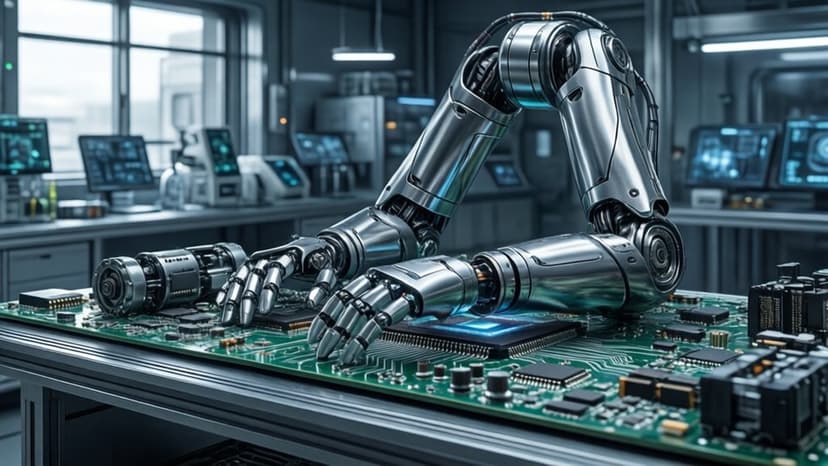
The robotics sector emerged as the strongest theme during the morning session. More than a dozen companies involved in the production of advanced automated machines reached their daily price limits. This surge suggests that investors see significant potential in the next phase of physical artificial intelligence.
Specific companies saw massive gains. finance.biggo.com reported that Guangyang Bearing, Fenglong Co., Ltd., and Huapei Power each achieved a second consecutive limit-up. Additionally, Zhejiang Fulai New Material recorded its third limit-up in just five days.
The scale of the movement is notable. finance.sina.com.cn noted that Unitree Technology's stock price doubled from its October 15 low to its midday high on November 10. This volatility highlights the intense interest in the hardware required for next-generation machines.
Experts are watching how these machines move from testing to real-world use. China Galaxy Securities observed that the industry is entering a period of triple testing involving financial reports, scenario validation, and capital re-pricing. They stated that these machines are now crossing the threshold of being accepted in factory environments.
Is this a repeat of the 2015 market crash?
While the current decline in the ChiNext Index might look alarming, the underlying financial health of the market is much stronger than it was during the 2015 crash. Current valuations are significantly lower, and the amount of debt used to buy stocks is much smaller.
The ChiNext Index has fallen 28.2% from its June 25 peak over the last 66 trading days. According to seekingalpha.com, this is much less severe than the 49.7% decline seen during the same period in 2015. The market is also less risky because margin buying is only 9% of turnover, compared to 17-18% in 2015.
Valuation metrics also show a safer environment. seekingalpha.com reported that the trailing P/E ratio at this year's peak was approximately 35.8 times. This is a massive difference from the 2015 peak, when the ratio reached 137.9 times.
What are the key market drivers?
Three main factors are supporting a potential year-end rebound for Chinese growth stocks. These include improved liquidity, falling U.S. Treasury yields, and record inflows into broad-based exchange-traded funds (ETFs). These elements combine to create a more favorable environment for high-tech investments.
As finance.biggo.com stated, the retreat of real rates and inflation expectations in the U.S. has eased external financial conditions. This makes it easier for capital to flow into emerging markets like China. Furthermore, market-stabilization policies are transitioning into long-term institutional safeguards.
The hardware sector remains a primary focus for professional investors. CITIC Securities noted that while technology sector allocations dropped from their second-quarter highs, hardware remains a core area of interest. They suggested that investors should focus on AI applications and physical AI opportunities.
Who is involved in these market shifts?
The movement involves a mix of massive asset managers, government agencies, and specialized technology firms. Large institutional players are navigating the volatility, while government data provides the broader context for the country's economic strength.
Major players include China Asset Management Company (ChinaAMC), which manages RMB 3.15 trillion in assets. On the regulatory side, the General Administration of Customs released data showing that China's goods trade grew 20% in the first ten months of the year. This data, reported by finance.sina.com.cn, underscores the underlying economic activity.
In the pharmaceutical sector, WuXi AppTec received a significant update. According to finance.sina.com.cn, the U.S. Department of Defense decided to remove the company from its 1260H list on November 9, 2026. This move removes a specific source of negative pressure for the company.
What happens next for investors?
Investors will likely focus on the upcoming earnings season to see if the "physical AI" and robotics hype matches actual financial performance. The ability of companies to deliver real-world orders and continuous factory data will be the deciding factor for future stock prices.
Analysts are looking for specific signals in the coming weeks. Huachuang Securities believes the ChiNext and STAR indexes still have 20% to 30% of recovery room left. Meanwhile, Huaan Securities expects large-cap AI hardware names to potentially gain between 20% and 40% during the late-stage rally phase of the current cycle.
The focus will remain on companies that can prove their technology works in large-scale deployments. China Galaxy Securities noted that the industry must now pass the test of scenario validation, moving from single pilot projects to full-scale industrial deployment.
FAQ
Why are Chinese tech stocks rising?
Rising liquidity and a shift in investor interest toward growth sectors like AI and robotics are driving the rally. Improved market sentiment following U.S. elections also plays a role.
Is the robotics sector a major part of this rally?
Yes, the robotics concept has emerged as a leading theme, with many constituent stocks hitting their daily price limits on November 10.
How does this compare to the 2015 market crash?
The current market is much more stable, with significantly lower valuations and less investor leverage than during the 2015 downturn.