North Korea Updates National Flag Dimensions for First Time Since 1948
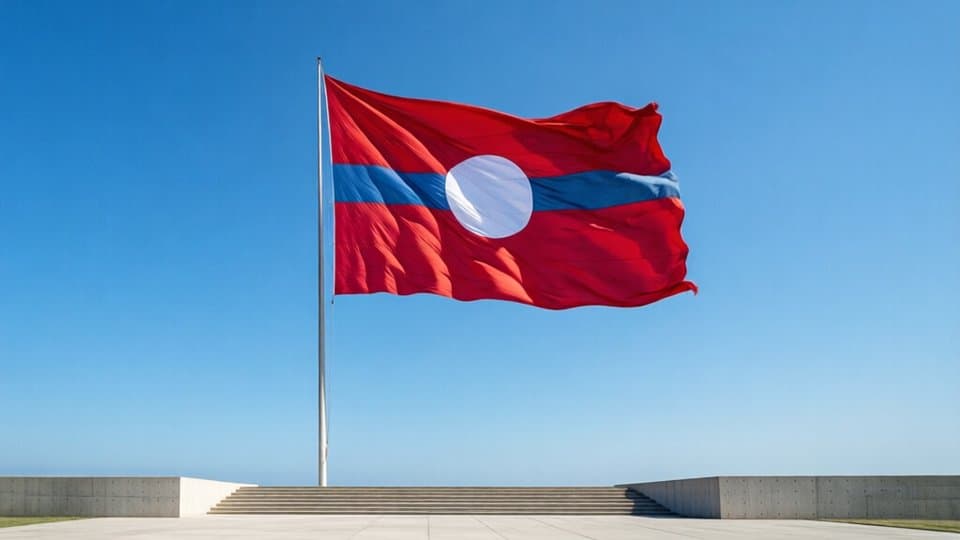
North Korea has officially modified the aspect ratio of its national flag, marking the first change to the emblem's dimensions since the state was established. This constitutional revision, announced through the state propaganda outlet Naenara, signals an effort by Kim Jong Un to reshape the country's national identity and governing image.
- The new flag dimensions set a height-to-width ratio of 1 to 1.65, according to the Korea Times.
- The previous 1 to 2 ratio had remained the legal standard until a constitutional revision in September 2023, per Korea Times.
- The formal approval for the change occurred on 23 March 2026, as reported by Times Now News.
What exactly changed about the flag?
The primary modification involves the physical proportions of the flag rather than its core colors or symbols. While the design elements remain recognizable, the mathematical relationship between the flag's height and width has been altered to a unique standard.
According to Times Now News, North Korea is now the only nation to use a 1:1.65 aspect ratio. This differs from the 1:2 ratio, which is used by more than 50 other countries. The update also includes widening the two white stripes that separate the red and blue sections. These white stripes now appear to be roughly one-third the width of the blue stripes located at the top and bottom of the flag.
Because the overall width of the flag has been reduced, the placement of the symbols has shifted. The white circle containing the red five-pointed star now sits closer to the center of the flag than it did under the previous proportions. Despite these shifts, the fundamental color scheme remains the same.
What do the colors and symbols represent?
The meaning behind the flag's elements is preserved in the North Korean constitution. Even though the dimensions have changed, the symbolic definitions of the colors and shapes have not been altered by the recent legal amendments.
The Korea Times reports that the constitution defines the red stripe as representing the blood shed by anti-Japan fighters during the colonial rule from 1910 to 1945. The white elements, including the circle and the two stripes, symbolize the loyalty of the people to the nation's leader and the Workers' Party of Korea. The blue stripes represent sovereignty, as well as peace, friendship, and unity.
The red star remains a central fixture of the design. While the geometric layout has been adjusted, the constitutional descriptions of these revolutionary meanings were not modified during the recent update to Article 166.
Why is Kim Jong Un changing the flag now?
The government has not issued a public explanation for the specific timing of the change. However, political analysts suggest the move is part of a broader strategy to distance the current administration from the legacy of the country's founders.
Observers noted to the Korea Times that the revision might reflect efforts to shape a new national image under Kim Jong Un. By altering a symbol that has been constant since 1948, the leader is seen as establishing his own distinct era of rule.
The Times Now News explains that this is one of several moves by Kim Jong Un to redefine national identity. He has previously changed the national anthem and moved away from the long-standing policy of seeking reunification with South Korea. These actions collectively serve to consolidate his authority and create a unique state identity.
When was the new flag first seen?
The new flag has already begun appearing in various public and international settings. While the constitutional text was only recently published on the Naenara website, the physical flag has been visible for some time.
The Times Now News reports that North Korean athletes used the revised flag during the Asian Games in Japan throughout September and October. Additionally, the new proportions were spotted during Kim Jong Un's visit to the Chinese border city of Dandong last month, where residents were seen waving the updated version.
The digital transition on the state website happened in stages. The website introduced the new design sometime between 17 October and 10 November, and the section regarding national symbols was updated in late October to match the new proportions.
How does this relate to North Korea's foreign policy?
The flag change occurs alongside a period of active diplomatic maneuvering. Kim Jong Un has been working to strengthen ties with traditional allies like China and Russia to counter influence from the United States.
According to CBS News, Kim Jong Un recently visited China to inaugurate a new bridge connecting the two nations. This visit was part of an assertive foreign policy intended to align Pyongyang with Beijing and Moscow. This alignment is part of what the leader portrays as a "new Cold War" against the United States.
The leader's focus on these alliances follows a period of prioritizing ties with Russia. North Korea has reportedly sent thousands of troops and weapons to support Russia in the conflict in Ukraine. The flag change, as part of a broader identity shift, coincides with this effort to position North Korea as a key player in a new geopolitical front.
Who is affected by these changes?
The changes primarily affect the state's symbolic representation and the administrative protocols of the government. For the general population, the change is a visual marker of the transition from the era of the founding leaders to the current administration.
The transition from the grandfather's era to the current one is a central theme. Kim Il Sung founded the country in 1948, and the original flag was a symbol deeply associated with his leadership. By altering the flag, Kim Jong Un is physically distancing the state from the specific aesthetic and political era of his predecessor.
The change also impacts how the nation presents itself to the world. Whether at international sporting events or during diplomatic crossings, the new proportions serve as a constant reminder of the current regime's attempt to modernize and redefine its national character.
Background: The Kim Dynasty and the Flag
To understand the weight of this change, one must look at the history of the North Korean state and its leadership.
- 1948: The Democratic People's Republic of Korea is established with Kim Il Sung as its leader.
- 1910–1945: The period of Japanese colonial rule, which the flag's red stripe commemorates.
- 1950–1953: The Korean War, which established the foundational ties between North Korea and China.
- 2023: A constitutional revision occurred in September, though the flag ratio remained 1:2 at that time.
- 2026: The official adoption of the 1:1.65 aspect ratio.
What happens next?
The legal framework for the new flag is now settled within the North Korean constitution. There are no immediate scheduled votes or deadlines, as the change has already been incorporated into the basic law. The focus for the regime will likely remain on the practical implementation of this new identity across all state institutions and its continued use in international diplomatic and sporting arenas.
Frequently Asked Questions
Is the design of the North Korean flag completely different now?
No. The colors, the red star, and the white circle remain the same; only the height-to-width proportions and the width of the white stripes have changed.
Why did North Korea choose a unique aspect ratio?
The government has not officially explained the choice, but observers suggest it is part of an effort to create a distinct national identity under Kim Jong Un.
When did the old flag go out of use?
The new proportions began appearing at public events and sporting competitions in late 2025 and early 2026, following the constitutional approval in March 2026.
SEO Meta Description: North Korea has changed its national flag's aspect ratio for the first time since 1948, a move seen as part of Kim Jong Un's effort to reshape national identity.
URL Slug: north-korea-changes-national-flag-aspect-ratio-kim-jong-un