AGIBOT Sets New Record in the World Humanoid Robot Games
A group of 110 humanoid robots developed by the Chinese technology company AGIBOT set a new Guinness World Record for the largest simultaneous dance performance by humanoid robots on October 24 in Jinan, China. This achievement marks a major milestone in the development of world humanoid robot games and large-scale swarm coordination technology. The event demonstrates the ability to manage massive fleets of machines through centralized software rather than individual manual control.
- 110 life-sized Expedition A3 robots participated in the synchronized performance, according to vietnam.vn.
- AGIBOT shipped more than 8,600 units in the first half of 2026, representing roughly 35% of the global market, according to e.vnexpress.net.
- China produced over 40,000 humanoid robot units during the first half of 2026, as reported by TechRepublic.
What happened during the record-breaking performance?
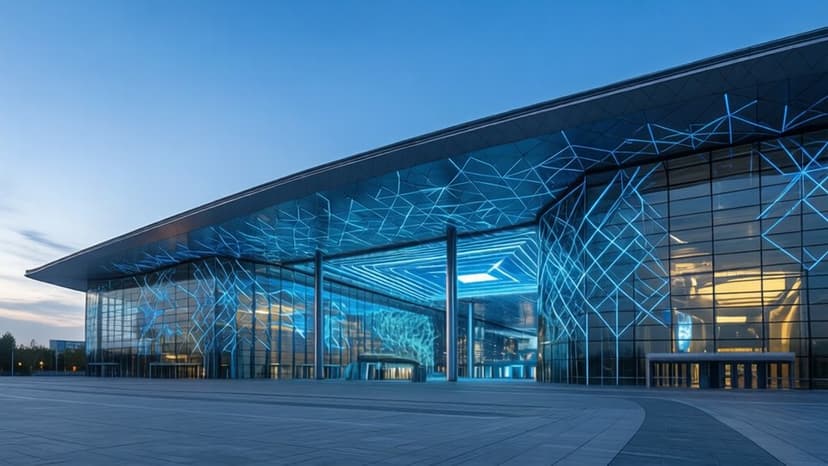
The synchronized dance took place at the Yellow River International Convention and Exhibition Center in Jinan, Shandong province. The robots performed a variety of choreographed movements, including jumping and constantly changing their positions while staying in sync. The machines even arranged themselves into specific shapes, such as wave-like patterns and the number 2026.
A Guinness World Records adjudicator attended the event in person to verify the number of robots and present the official certificate. All participating machines belonged to the Expedition A3 series. These are full-sized robots that were used to demonstrate how many machines can move together without colliding. The performance proved that centralized systems can manage complex, large-scale movements across a massive group of devices.
How did the robots move in such perfect unison?
The coordination relied on a specialized platform called LinkBots, which was developed by AGIBOT to manage robot swarms. Instead of a human operator controlling every single machine, this system uses swarm scheduling and cluster control to manage the entire group at once. This allows the robots to follow a shared scenario while receiving individual status data.
To keep the machines from hitting each other, the platform uses ultra-wideband (UWB) positioning technology. This provides centimeter-level accuracy for tracking where each robot is located. According to Sohu, the system also uses 5G and Wi-Fi networks to transmit commands. If one robot has a problem, the system can isolate that specific unit and adjust the rest of the formation to prevent the whole show from stopping.
Is this technology ready for real-world work?
While the dance was impressive, experts question if these robots can handle the unpredictability of a factory or a busy street. A controlled dance floor is very different from a real workplace. Machines in the real world must deal with uneven floors, unexpected obstacles, and mechanical faults that do not happen during a rehearsed routine.
Industry experts noted that reliability and operating costs remain significant hurdles. There is currently not enough data to prove how the LinkBots platform handles long-term tasks or connectivity failures in unmanaged environments. Businesses need to know if these robots can complete repetitive tasks consistently and safely before they invest in large fleets for industrial use.
How big is the humanoid robot market in China?
China is currently pushing to move these machines from stage performances into commercial sectors. The scale of production is growing rapidly. According to the Ministry of Industry and Information Technology, Chinese companies developed more than 400 different humanoid robot models. They produced over 40,000 units in the first half of 2026 alone.
Experts expect annual production to eventually exceed 100,000 units. AGIBOT is already a major player in this space. Data from research firm IDC shows that the company accounted for about 35% of all global humanoid robot shipments in the first half of 2026. This rapid growth shows that the region is positioning itself as a leader in the global robotics race.
Where will these robots be used next?
AGIBOT plans to deploy the Expedition A3 robots in several specific areas. The company intends to use them for cultural and tourism activities, public services, research, and education. They could eventually be seen in hotels, shopping centers, and exhibition venues to help guide visitors or provide entertainment.
Other companies in China are already testing different types of robots in more industrial settings. Some are being used in warehouses for tasks like parcel sorting. Others are being tested in subway stations to assist with passenger guidance. The goal is to move the technology from being a visual spectacle to a functional tool for service and logistics industries.
How does this compare to previous robotics milestones?
In the past, most progress in the industry focused on the ability of a single robot to perform a task, such as picking up an object. This event shifted the focus toward "swarm" capabilities. It proved that it is possible to maintain high levels of precision when managing hundreds of units simultaneously.
The performance also highlighted the importance of hardware standardization. For 110 robots to move as one, their joints and power outputs must be nearly identical. Because these were standard, commercially produced models rather than custom prototypes, the success suggests that mass-produced robots can still achieve high-level coordination. This makes the idea of large robot fleets more commercially viable for the future.
What happens next?
The immediate next steps involve moving these robots from the stage into the specific commercial sectors mentioned by AGIBOT, such as tourism and public services. There are no specific upcoming votes or deadlines, but the industry is watching to see if these machines can maintain their performance in unmanaged, real-world environments. The focus will shift from breaking records to proving long-term reliability and cost-effectiveness in daily operations.
Frequently Asked Questions
Which company set the world record for dancing robots?
The Chinese technology company AGIBOT set the record using its Expedition A3 humanoid robots.
How many robots participated in the record?
A total of 110 humanoid robots participated in the synchronized performance in Jinan, China.
What technology allows the robots to stay synchronized?
The robots use the LinkBots platform, which combines 5G, Wi-Fi, and ultra-wideband (UWB) positioning technology to coordinate movements.
Sources
- 1.vietnam.vnA perfectly synchronized dance performance by 110 Chinese humanoid robots sets a world record.
- 2.techrepublic.com110 Humanoid Robots Dance in Sync as China Sets Guinness World Record
- 3.e.vnexpress.netWorld's largest humanoid robot maker sets Guinness record with 110 robots dancing in sync
- 4.sohu.com110 台远征 A3 齐舞创吉尼斯纪录,验证人形机器人集群能力