
Newzix
Breaking News
Robot Race

UBTech Launches U1 Humanoid Robot Amid New Chinese AI Laws
Kenji Arai6 min read
UBTech Launches U1 Humanoid Robot Amid New Chinese AI Laws

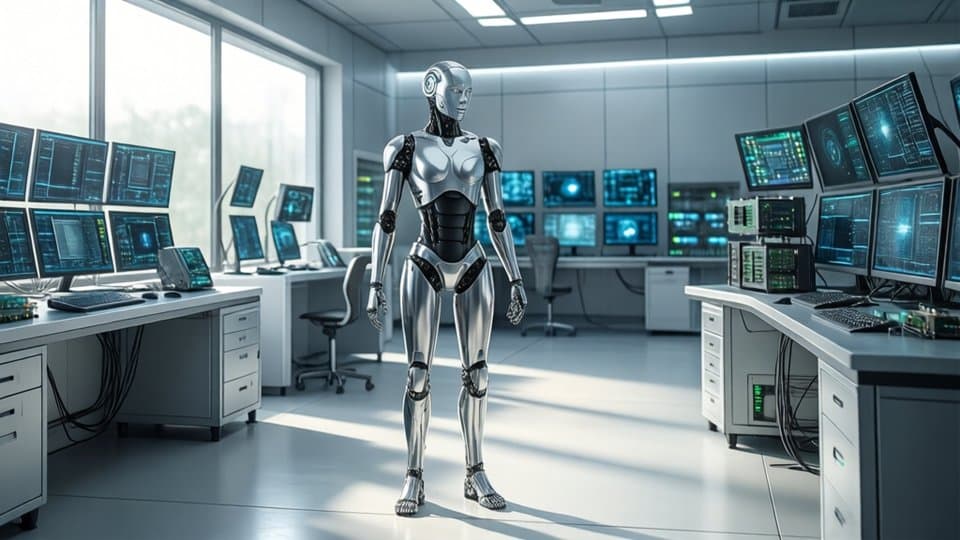
Chinese robotics firm UBTech has launched presales for its U1 humanoid robot, a lifelike machine designed for emotional companionship. The rollout comes as China implements strict new national regulations to manage how artificial intelligence interacts with human emotions and prevents unhealthy psychological dependence.

  • UBTech reported selling approximately 3,000 units of its U1 model during the initial presale period, according to Sixth Tone.
  • The U1 robot features 88 mobile joints and uses affective AI to simulate human-like interaction, per Sixth Tone.
  • China's new AI anthropomorphic service law took effect on July 15, 2026, according to TechTimes.

What is the new U1 robot?

The U1 is a "full-size, ultra-bionic" humanoid robot intended to serve as a personal companion. UBTech offers two distinct physical models to suit different preferences. The male version stands 183 centimeters tall and weighs 42 kilograms, while the female version measures 168 centimeters and weighs 35.2 kilograms, as reported by Sixth Tone.

These machines are built for more than just simple tasks. They are equipped with encrypted memory and Wi-Fi connectivity, allowing them to engage in social activities. The battery supports two to four hours of continuous use per charge. UBTech limits sales of these models to adult buyers only.

The company aims to move beyond basic utility. Rather than creating a simple tool, the goal is to provide a presence that stays with the user. The robot can play games or watch television dramas alongside its owner. This level of integration marks a shift from industrial robots to domestic emotional partners.

How does the company view its purpose?

UBTech's leadership emphasizes that the robot is a social entity rather than a sexual one. The company wants to avoid the stigma of creating machines solely for physical gratification. Instead, the focus remains on consistent, non-judgmental presence in a user's daily life.

"I think that in 10 or 20 years, the next generation may fall in love with humanoid robots," said Zhou Jian, UBTech’s founder and CEO, in an interview with LatePost.

Zhou Jian clarified the company's direction by stating that UBTech does not want to "simply make a sex robot." He explained the robot is designed to be a companion that "won’t tell you that you’re annoying," will "stay with users whatever they are doing," and "play games and watch TV dramas with you," according to Sixth Tone.

What are the new regulations in China?

On July 15, 2026, the "Interim Measures for the Administration of AI Anthropomorphic Interactive Services" became law. This framework distinguishes between helpful AI tools and services designed to simulate human personality and thinking patterns for emotional engagement. It targets the specific risk of users forming deep, potentially harmful attachments to machines.

The law prohibits certain types of content, such as material that encourages self-harm or induces emotional addiction that damages real-world relationships. For users under 18, virtual intimate relationships with AI are banned entirely. For those under 14, any anthropomorphic interaction requires explicit parental consent, as noted by Just Security.

Platforms must also implement safety features. This includes mandatory notifications to users who engage for more than two consecutive hours, reminding them they are speaking to a machine. They must also provide "instant-exit" mechanisms and detect signs of unhealthy emotional dependence in real time, according to TechTimes.

How did major tech companies respond?

The new laws caused immediate disruption for China's largest tech giants. Both ByteDance and Alibaba shut down their personalized AI companion features to comply with the new rules. This was not due to illegal content, but because the "persistent-memory" required for companionship is difficult to reconcile with anti-addiction laws, according to TechTimes.

The shutdowns happened in a coordinated manner across the industry. Tencent removed similar features from its Yuanbao assistant on June 30. Alibaba disabled Qwen's interactive agents on July 10, and ByteDance's Doubao went dark on the law's effective date of July 15, as reported by TechTimes.

The impact on users has been significant. Millions of people who used these bots as companions found their data or features suddenly gone. While Doubao users have read-only access until October 15, 2026, Qwen users found their conversation histories being permanently deleted with no way to recover them, according to TechTimes.

Why are female-style robots more common?

At recent industry exhibitions, such as the 2026 China International Big Data Industry Expo, female-looking humanoid robots were more prevalent than male ones. This has sparked public debate regarding gender stereotypes and the potential for inappropriate use of these machines, according to QQ News.

Manufacturers defend this trend by citing practical commercial needs. Staff at Songyan Dynamics told Nandu that they produce more female robots because they are primarily used for greeting and reception in public spaces, where female staff are more common. Digital Huaxia's brand manager, Zhou Ziwei, added that a female appearance offers more "affinity" for public service roles.

However, companies are aware of the ethical risks. UBTech has established an ethics committee to oversee its AI and robotics activities. Meanwhile, legal experts like Yue Shenshan warn that manufacturers must ensure robots do not generate obscene or violent content, especially as the lines between private use and public safety blur, according to QQ News.

What is the background of this industry?

China has rapidly become a global leader in humanoid robotics. According to Morgan Stanley, annual sales of domestically produced humanoid models in China are expected to exceed 28,000 units this year. Last year, Chinese manufacturers produced approximately 90% of the 13,000 to 16,000 humanoid robots shipped globally.

The market for intelligent companions is also expanding. Industry estimates suggest the market reached 50 billion yuan in 2025, with projections that it could exceed 120 billion yuan by 2027, according to Just Security.

The price of these machines has dropped significantly. While industrial models like UBTech's Walker series cost around 6 million yuan, newer consumer-facing models like Unitree's R1 Air are priced much lower, at 29,900 yuan, as reported by Sixth Tone.

What happens next?

The U1 robot's official online release is scheduled for June 30, following its current presale period which ends on July 15. On the regulatory side, the focus will shift to how companies implement the mandatory anti-addiction and transparency features required by the new law. Users of ByteDance's Doubao will see their data transition to standard privacy policies after October 15, 2026.

FAQ

Is it legal to have an AI romantic partner in China?
Virtual intimate relationships are strictly prohibited for anyone under 18, and the new law aims to prevent unhealthy emotional dependence for all users.

How much does the UBTech U1 cost?
The full retail price has not been officially disclosed, though customers must pay a refundable deposit of 3,000 yuan to participate in presales.

Why did my AI chatbot stop acting like a person?
New Chinese regulations require AI to avoid sustained emotional engagement and must remind users they are interacting with a machine to prevent addiction.

Sources

  1. 1.sixthtone.comChina’s Lifelike Emotional Companion Bots Go on Sale
  2. 2.techtimes.comChina AI Companion Law Takes Effect: Doubao and Qwen Shut Down, Millions Lose Chat Data
  3. 3.justsecurity.orgChina's First AI Companion Rules Draw a New Line Between Tools and Relationships
  4. 4.news.qq.com仿生机器人为何女性偏多?“擦边行为”拷问情感陪伴红线
Read more →

Related Articles

New Humanoid Robot Breaks Usain Bolt's 100m Sprint Record
Robot Race

New Humanoid Robot Breaks Usain Bolt's 100m Sprint Record

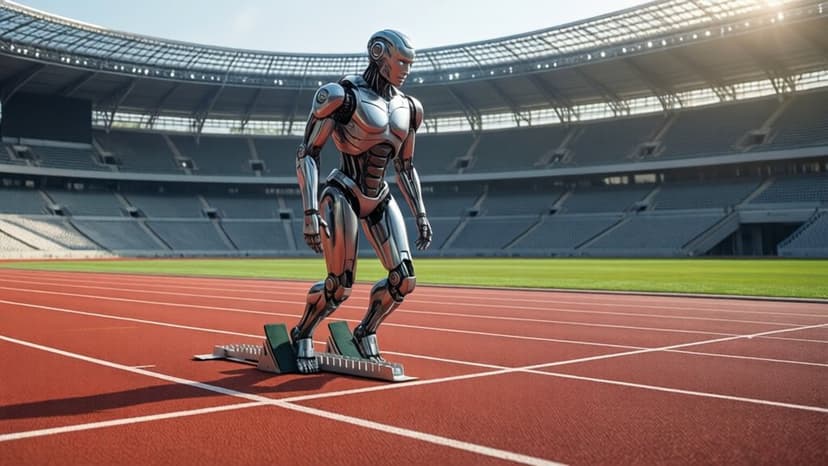
The second World Humanoid Robot Games, held in Beijing from August 22 to 26, 2026, showcased a humanoid robot capable of sprinting faster than the current human 100-meter world record. The event demonstrated rapid advancements in robotic agility through tasks ranging from high jumping to performing traditional martial arts. An X-Humanoid robot named TianGong Ultra recorded a 100-meter sprint time of 9.32 seconds, according to Fox News . The competition featured 2,056 robots and 666 teams participating in 51 different events, as reported by Fox News . A robot achieved a standing high jump of 2.88 meters, surpassing the human record of 2.45 meters, according to Fox News . How fast can these machines actually run? Robotic sprinting speeds have improved drastically in just one year. During the 2025 inaugural games, the winning 100-meter robot finished in 21.50 seconds, but this year's top performers broke the 10-second barrier. This leap suggests massive progress in how machines manage their entire bodies during high-speed movement. The X-Humanoid company reported on August 25 that its TianGong Ultra model reached a time of 9.32 seconds. This is faster than the 9.58-second human record held by Usain Bolt. While these machines do not compete under the same rules as Olympic athletes, the speed highlights new capabilities in motor coordination and sensor integration. Other machines also showed high performance in different categories. A smaller robot named Tiangong Omni-04 won a 400-meter race with a time of 45.66 seconds, according to AOL . However, the speed comes with risks, as some robots crashed or caught fire during the intense competition. Can robots perform complex martial arts? The games have officially moved martial arts from exhibition shows into competitive categories. This year, the competition includes Tai Chi and various self-selected styles such as Baguazhang, Xingyiquan, and Changquan. These matches test how well a machine can balance and move without any human remote control. According to Beijing Daily , robots must complete their routines autonomously within one to five minutes. They are judged on their ability to perform specific required moves, such as the "spreading wings" pose in Tai Chi. Judges look for "human-likeness, continuity, and stability" to determine the winners. The scoring system for these matches is quite strict. A base score of 10 points is divided into movement completion, movement quality, and overall performance level. If a robot loses balance or stops moving unexpectedly, it loses points. High-difficulty moves, like a backflip, can earn a robot an extra 7 points under the current rules. "We hope to see more robots complete high-difficulty moves and achieve precise control." Zhang Jidong, a technical representative and martial arts referee, noted that interest in these events has grown significantly. While the first games had few participating teams, this year saw 53 teams enter the Tai Chi category alone, according to Beijing Daily . What are the limitations of this technology? Despite the record-breaking speeds, the machines still face significant physical and functional hurdles. Many robots struggle with stability during high-speed maneuvers or complex tasks. Some units failed to reach the finish line in races, while others experienced mechanical failures that caused them to break or spark. Practical work also remains a challenge for these automated systems. In tests involving daily chores like washing and hanging laundry, the machines appeared to work much slower than a typical human. This gap shows that while robots are getting faster at sprinting, they are not yet ready for general domestic labor. Engineering experts point out that these failures are part of the learning process. The competition provides a way to expose weaknesses that might be hidden in polished promotional videos. By pushing robots to perform weightlifting, tug of war, and soccer, developers can identify where the hardware or software fails under pressure. Who is organizing these robot games? The event is a collaborative effort involving both government and specialized organizations. The Beijing Municipal People's Government and the World Robot Cooperation Organization are the primary hosts. Several local departments, including the Beijing Municipal Bureau of Economy and Information Technology, assist with the management of the games. The games serve a dual purpose for China. They act as a testing ground for the rapidly growing domestic robotics industry and a platform to show the world China's approach to "embodied intelligent robotics." By mixing technology with traditional culture like opera and Tai Chi, organizers aim to attract a global audience. How does this compare to last year? The progress between the 2025 and 2026 editions is measurable and steep. The increase in both the number of participants and the technical difficulty of the tasks shows an accelerating development cycle. The industry is moving from simple, stiff demonstrations to systems capable of complex, whole-body control. The scale of the event has also grown. While the 2025 games were smaller, the 2026 edition saw a massive influx of teams from 16 different countries. This expansion helps create a world-class exchange platform where different developers can compare their progress and find new ways to solve technical problems. What happens next? The immediate focus for developers will be improving the reliability of these machines during physical tasks. Following the conclusion of the August 26 games, engineers will likely analyze the data from the failed runs and mechanical breakdowns to improve the next generation of hardware. The industry will continue to push for better "whole-body control" to ensure robots can move smoothly without the sparks or falls seen in Beijing. Frequently Asked Questions Did a robot actually beat Usain Bolt's record? A robot named TianGong Ultra ran 100 meters in 9.32 seconds, which is faster than Bolt's 9.58-second record, but these are separate competitions with different rules. Are these robots used in homes yet? No, current testing shows that while they can sprint fast, they still lag behind human speeds in practical tasks like laundry and housework. What are the robots being tested for? They are being tested for speed, strength, and stability in tasks ranging from sports and martial arts to real-world jobs and industrial applications.

Kenji Arai·
Argentine fans demand World Cup 2026 final replay amid refereeing scandal
China & Taiwan

Argentine fans demand World Cup 2026 final replay amid refereeing scandal

A new online petition has been launched in Argentina demanding a replay of the 2026 FIFA World Cup final , which featured the national team against Spain. The initiators claim biased officiating by Slovenian referee Slavko Vinčić and insist on the appointment of a different referee in case of a rematch. The document has already gathered tens of thousands of signatures and is actively spreading on social media. The Core of the Complaints About the Final's Officiating The petition from Argentine fans emerged amid heated discussions surrounding the officiating in the 2026 World Cup final. According to the authors of the appeal, Vinčić made a series of key errors that, they believe, influenced the outcome in favor of Spain. Fans claim the referee acted "with bias" and interpreted controversial incidents unfavorably for the Argentine team. The authors of the document demand an official review of the match and insist that the final should be officiated by a different referee, chosen beyond any suspicion of favoritism towards either side. However, the text of the petition does not detail specific incidents that caused the greatest outrage, focusing instead on the general accusation of biased officiating. How the Number of Signatures is Rapidly Growing According to specialized sports publications, the initiative by Argentine fans has attracted significant attention in a short period. Shortly after its launch, the petition garnered over 35,000 signatures , and their number continues to grow due to the active dissemination of the appeal on social media and fan communities. This dynamic shows that the issue of officiating and trust in referees remains one of the most sensitive topics in major tournaments, especially when it comes to a World Cup final. Even with tens of thousands of votes, such initiatives remain unofficial and have no direct impact on the tournament's regulations. A Chain Reaction of Petitions at the 2026 World Cup The petition from Argentina fits into a broader trend of the 2026 World Cup, which has become one of the most controversial tournaments in terms of public perception of officiating. Previously, a petition demanding a replay of the France vs. Spain semi-final was launched online, with its authors also claiming biased actions by the referees. The document gathered tens of thousands of signatures: different sources estimated support for the initiative from 55,000 to nearly 100,000 people, and some publications reported 78,000 signatories. Simultaneously, an even larger campaign against Argentina's participation in the tournament itself emerged online. A petition demanding the exclusion of Lionel Messi's team from the 2026 World Cup appeared on the specially created website ArgentinaOut . Its authors accuse FIFA and the refereeing body of systematic bias and claim the tournament is allegedly organized in such a way as to ensure an easier path to the final for the Argentines. According to various media outlets, the number of signatures under this initiative grew exponentially: initially, reports spoke of 2.5–3 million votes, and by mid-July, some publications were recording over 10 million signatures. Despite this, experts emphasize that the website has no official status and cannot affect Argentina's participation in the tournament. Historical Context: From Disputes Around the 2022 World Cup to New Conflicts The emergence of the Argentine petition for a replay of the 2026 World Cup final partially echoes events from four years ago. After the 2022 World Cup final in Qatar, French fans launched a petition demanding a replay of the match against Argentina, accusing the officiating of corruption and errors. In response, a counter-petition was created in Argentina with the strong slogan "France, stop crying," which gathered tens of thousands of signatures in a matter of hours. At the time, the dispute remained within the realm of public discussion: FIFA did not consider such appeals, and the tournament results were not revised. The current wave of petitions surrounding the 2026 World Cup shows that the distrust of a portion of fans towards the officiating system and the transparency of decisions made by football authorities has not only not weakened but has intensified. Fan activity online is turning into a significant factor of public pressure, although it does not formally affect regulations. FIFA's Position and Legal Prospects Despite the outcry, FIFA traditionally maintains a firm stance on the issue of reviewing match results initiated by fans. Lawyers and football officials emphasize that petitions on third-party platforms, including the ArgentinaOut project, are not official documents and cannot serve as grounds for disqualifying a team or replaying a match. The organization is guided by its own regulations, and decisions to review results are made only in exceptional cases related to gross violations of rules – for example, the participation of an unregistered player or serious administrative breaches. Accusations of biased refereeing, even with significant public support, typically do not lead to matches being replayed. No official comments from FIFA regarding the new Argentine petition for a replay of the final were published at the time of this report. Previously, the organization adhered to a tactic of ignoring such initiatives, limiting itself to an internal analysis of the refereeing corps' performance. The Tournament's Image and Further Consequences Experts note that while fan campaigns lack legal force, they inflict a tangible reputational blow to the image of the tournament and its organizers. Millions of signatures on appeals against Argentina and tens of thousands of votes for a replay of the World Cup final and semi-final create a picture in the public consciousness of a tournament overshadowed by scandals and suspicions of bias. For FIFA, this means additional pressure regarding the transparency of referee appointments, the application of the Video Assistant Referee (VAR) system, and the public explanation of controversial decisions. For national federations, it means the need to more actively engage with fans to reduce distrust and prevent every controversial incident from turning into an international scandal. The new petition in Argentina regarding the 2026 World Cup final is unlikely to lead to a review of the match result. However, it has already become part of a broader discussion about the future of officiating in football and how sports organizations should respond to the unprecedented activity of fans in the digital age.

Sara Lindqvist·
PM Modi News: Prime Minister to Open Major Science and Tech Conclave
South Asia

PM Modi News: Prime Minister to Open Major Science and Tech Conclave

Prime Minister Narendra Modi will inaugurate the Emerging Science, Technology and Innovation Conclave (ESTIC 2026) at Bharat Mandapam in New Delhi on October 27. This three-day event serves as a national platform to align India's research priorities with the long-term vision of Viksit Bharat 2047, making recent modi news central to the country's technological roadmap. The gathering aims to bridge the gap between laboratory research and commercial market application. The conclave will run for three days from October 27 to October 29, according to India Tribune . More than 300 invited participants from global academia and industry will attend the networking event, per NewsOnAir . The exhibition will feature approximately 150 deep-tech startup stalls, according to India Blooms . What is the main purpose of ESTIC 2026? The conclave functions as a high-level meeting to deliberate on emerging technologies and India's specific science and innovation priorities. It brings together a diverse group including scientists, researchers, policymakers, industry leaders, and international experts to discuss how to strengthen the national innovation ecosystem. Participants will focus on turning scientific breakthroughs into practical, real-world solutions. By connecting academia with industry, the event seeks to ensure that research does not remain confined to laboratories but instead moves into the marketplace. This transition is a core component of the national strategy to enhance domestic technological capabilities. Which scientific fields will be discussed? The discussions at the event are organized into 12 distinct thematic areas. These fields represent the most critical sectors for future technological growth and national security in India. According to reports from Mangalorean , the themes include: Artificial intelligence Biotechnology Advanced materials Manufacturing Healthcare Energy Climate science Ocean research The event aims to set research priorities and build national capabilities across these sectors. This structured approach helps ensure that government and private sector resources are directed toward the most impactful scientific advancements. What can visitors see at the exhibition? An extensive technology and innovation exhibition will showcase indigenous scientific achievements. The display uses modern tools to make complex science more accessible to the public and industry stakeholders. The exhibition will utilize augmented and virtual reality experiences, thematic videos, and technology demonstrations to engage visitors. There will also be informational kiosks and documentaries available to explain the real-world applications of various emerging technologies. This interactive approach is designed to highlight how scientific progress affects daily life and industrial sectors. A major highlight of the exhibition is the participation of approximately 150 deep-tech startups. These companies will use dedicated stalls to demonstrate cutting-edge innovations and show how their specific technologies can be applied across different economic sectors. Will there be a focus on space technology? Yes, the Indian Space Research Organisation (ISRO) will have a significant presence at the conclave. The space agency plans to showcase its latest technological developments and future mission concepts to the attendees. At a curtain-raiser event, ISRO Chairman V Narayanan provided details regarding the scale of the space exhibition. He noted that the display will feature a model of a proposed next-generation heavy-lift launch vehicle. This specific vehicle is designed to be capable of placing payloads weighing more than 30,000 kg into low Earth orbit. "the space organisation’s exhibition will be the model of a proposed next-generation heavy-lift launch vehicle that can place payloads weighing over 30,000 kg to low Earth orbit." — V Narayanan , ISRO Chairman Additionally, the exhibition will showcase the Chandrayaan-4 and Chandrayaan-5 projects. These upcoming missions are central to India's goal of sending astronauts to the Moon, marking a major milestone in the country's space exploration history. How does the event foster international cooperation? The conclave introduces a specific initiative called the Global Connect Networking Event. This program is designed to break down the barriers between local research and international industry standards. The event will host more than 300 invited participants from research institutions, academia, and industry both within India and from overseas. This international dimension is intended to create new pathways for research partnerships and facilitate industry-academia collaboration. By bringing these global stakeholders together, the conclave hopes to create a more integrated scientific community that can share knowledge and resources effectively. Who is organizing the conclave? The event is a national platform organized by the Council of Scientific and Industrial Research (CSIR). The organization operates under the direct guidance of the Office of the Principal Scientific Adviser to the Government of India. The primary objective of the organizers is to support the vision of Viksit Bharat 2047 . This long-term national goal focuses on making India a developed nation through sustained scientific and technological progress. By hosting ESTIC 2026, the CSIR and the government aim to build the necessary infrastructure and intellectual capital to meet this 2047 deadline. What happens next? The conclave is scheduled to take place over three days, from October 27 to October 29. Following the opening address by the Prime Minister on Tuesday, the scheduled deliberations and networking events will proceed through the end of the week. There are no further official dates mentioned for subsequent follow-up summits in the current briefings. Frequently Asked Questions Where is ESTIC 2026 being held? The event is taking place at the Bharat Mandapam convention center located in New Delhi, India. What is the main goal of the Global Connect Networking Event? It aims to connect over 300 international and domestic participants to explore research partnerships and move innovations from the lab to the market. Which space missions will be featured? The exhibition will showcase the Chandrayaan-4 and Chandrayaan-5 missions, which are part of India's lunar exploration program. SEO Meta Description: PM Narendra Modi inaugurates ESTIC 2026 in New Delhi, a three-day conclave focusing on AI, biotechnology, and space tech to support India's 2047 goals. URL Slug: modi-inaugurates-estic-2026-science-technology-conclave

Arjun Mehta·