Newzix
Breaking News
Robot Race

OpenMind develops humanoid robot using lab grown human neurons

Kenji Arai5 min read
OpenMind develops humanoid robot using lab grown human neurons

A San Francisco lab has unveiled Iris, a humanoid robot that uses lab-grown human neurons to help shape its decision-making and mood. This experiment marks an early attempt to merge human biological intelligence with artificial systems by communicating wirelessly with living cells.

  • OpenMind founder Jan Liphardt demonstrated the technology on November 13, 2026, by connecting the robot to neural platforms in Australia and Switzerland, according to TechTarget.
  • The 2D neural cultures achieved a decoding accuracy of 94% within 240 milliseconds, according to The Gadgeteer.
  • The 3D spheroid cultures reached 91% accuracy but experienced delays of up to two seconds, according to TechTarget.

How does the robot use living cells to think?

The robot does not carry the biology inside its chassis. Instead, Iris uses an API to send visual data from its cameras to neural platforms located in overseas laboratories. These platforms contain human cerebral cortex neurons grown from stem cells on electrode arrays. The arrays send electrical impulses back to the machine to influence its behavior.

The biological components do not replace the robot's standard computer systems. According to TechTarget, the neurons work alongside conventional tools like language models, perception, and data fusion. The cells act as a layer on top of the existing tech stack to help the machine interpret social cues and adjust its temperament.

The setup functions as a remote control loop. While the robot moves in one location, the tissue remains in a stable lab environment. This separation is necessary because living cells require constant feeding and specific conditions that a mobile machine cannot provide. The team essentially rents these neural platforms like a company would rent cloud servers.

What are the differences between the two neural types?

The researchers tested two distinct biological structures: flat 2D cultures and 3D spheroids. The shape of the tissue determines how quickly and accurately the robot responds to its environment. The 2D cultures provided much faster responses, which allowed the machine to react to people in near real time.

The 3D spheroids are closer to actual human tissue but perform poorly in terms of speed. The Gadgeteer reports that these spheroids caused delays of up to two seconds. In a social setting, a two second pause can feel like a snub to a human user, whereas the 2D cultures responded within a rhythm suitable for conversation.

Lifespan also varies between the two formats. The 2D cultures remained viable for over 100 days on their arrays. In contrast, the spheroids survived only a few days. This difference makes the 2D version more practical for actual deployment rather than just a single demonstration.

Why use human neurons instead of silicon chips?

The project aims to explore alternative ways for machines to process information. Jan Liphardt, a bioengineer at Stanford University and founder of OpenMind, told TechTarget that he wanted to see what happens when you mix biological electrochemistry with silicon computing.

Biological networks might offer several advantages over traditional hardware. Lian Jye Su, a robotics analyst at Omdia, noted to TechTarget that biological systems could be more energy-efficient and better at storing large amounts of information. They may also allow robots to make flexible decisions in environments that are not structured.

Security is another factor. Jan Liphardt told TechTarget that a robot using living parts cannot be easily copied. Because the information is stored within the neurons, it is harder for outsiders to read or steal the data held by a machine living in a private home.

How do the experts view the future of this technology?

Opinions on the viability of this approach are split. Lian Jye Su told TechTarget that he does not see a realistic route for this at the current stage. He believes the most likely future is a hybrid system that uses biomimicry without needing fully biological components.

The maintenance of the living tissue remains a massive hurdle. As the cultures age, the robot's performance changes. The Gadgeteer reports that as the neurons aged, the robot's lag increased and its temperament drifted. This creates a problem where a machine might become slower or stranger as its biological components fade.

Jan Liphardt views this biological drift as a potential benefit. He told The Gadgeteer that there is something attractive about a robot having its own personality. He suggests that home users might prefer a companion that adapts to their specific habits through living neurons rather than a standard chip.

How each side tells it

The developers focus on the potential for personalized, secure, and adaptive intelligence. Jan Liphardt told TechTarget: "We are not building RoboCop. We wanted to know whether living human neurons could do useful things for real robots. The answer is yes, but only a tiny little bit. But it’s a start."

Analysts focus on the technical limitations and the difficulty of scaling the technology. Lian Jye Su told TechTarget: "It is an important proof of concept... But its capabilities remain narrow, and the systems still rely heavily on conventional electronics for sensing, actuation and interfacing."

What happens next?

The OpenMind team is currently working to solve the stability issues of the neural networks. Their immediate goals include increasing the lifetime of the cultures and improving the spatial architecture of the electrodes. Once they can control the reliability and the lifespan of the cells, they intend to move toward testing learning and memory functions.

FAQ

Are the human neurons actually inside the robot?
No, the neurons are kept in specialized labs in Australia and Switzerland. The robot connects to them wirelessly via an API.

Can the robot feel pain or consciousness?
There is no evidence that these simple cell cultures can experience anything. The research focuses on using them for basic decision-making and mood.

Is this a product you can buy?
No, Iris is currently a research project. The technology faces many challenges regarding reliability and maintenance before it can be sold commercially.

Sources

  1. 1.nbcnews.comLab says humanoid robot uses living human neurons to help think
  2. 2.techtarget.comSilicon Valley startup showcases humanoid robot with human neurons
  3. 3.the-gadgeteer.comIris the humanoid reads the room through living human neurons

Read more →

Related Articles

ICJ to Deliver Historic Verdict on Myanmar Genocide Allegations
Southeast Asia

ICJ to Deliver Historic Verdict on Myanmar Genocide Allegations

The International Court of Justice will deliver a landmark judgment on Thursday, November 19, regarding whether Myanmar committed genocide against the Rohingya minority. This ruling in The Hague marks a critical moment for international law, as the court has never before found a state responsible for the crime of genocide. The ICJ will issue its verdict on November 19, 2026, following seven years of legal proceedings, according to Hürriyet Daily News . Nearly 750,000 Rohingya refugees fled into Bangladesh due to military actions, as reported by The Star . More than 1,000,000 Rohingya people currently reside in refugee settlements in Bangladesh, according to The Daily Star . What is the core of the legal dispute? The case centers on accusations by The Gambia that Myanmar's military repression of the Rohingya people breached the 1948 UN Genocide Convention. Judges have spent seven years determining if the state acted with the specific "intent to destroy" the group, either in whole or in part. A major hurdle for prosecutors involves proving this specific intent. Legal experts note that the court must decide if the patterns of violence, such as the systematic burning of villages and mass executions, constitute a deliberate attempt to eliminate the ethnic group. Evidence includes accounts of soldiers mutilating women to stop reproduction and prevent the group from growing. The court is also examining the role of sexual violence. Antonia Mulvey, the founder of Legal Action Worldwide, told The Guardian that sexual violence is a critical component in proving the intent to destroy the group. She noted that attacks followed a consistent pattern of separating men and women and committing violence against civilians. How do the different sides explain the violence? The two sides present fundamentally different motives for the military's actions in Rakhine state. The Gambia argues the violence was a targeted campaign of destruction, while Myanmar maintains it was a legitimate security response. How each side tells it: The Gambia claims the Rohingya were systematically targeted for elimination. Gambian Justice Minister Dawda Jallow told the court during hearings that the situation involves real human beings who have been targeted for destruction. He stated that the case is not about "esoteric issues of international law" but about "real people, real stories and a real group of human beings," according to The Daily Star . Myanmar denies all genocide allegations. According to Hürriyet Daily News , the government argues its military actions were directed at a military uprising from insurgents following attacks that killed a dozen security personnel. Why does this ruling matter for global politics? The decision carries weight far beyond the borders of Southeast Asia. Legal experts are watching how the ICJ handles this case to predict how it might rule in the ongoing genocide case brought by South Africa against Israel regarding the campaign in Gaza. Both situations involve an ethnic group targeted by a powerful military. However, the political landscape differs significantly. While the Rohingya crisis has seen varying levels of international response, Israel maintains strong diplomatic support from the United States. The ICJ decision will provide a benchmark for how judges assess state responsibility in modern conflicts. The ruling could also impact the diplomatic standing of Myanmar's leader, Min Aung Hlaing. Although the ICJ rules on state responsibility rather than individual guilt, a genocide verdict would increase pressure on him. He is already under separate investigation by the International Criminal Court for crimes against humanity. How does this affect Myanmar's leadership? Min Aung Hlaing is currently attempting to rebuild diplomatic ties after his 2021 coup. He was installed as civilian president in April following elections that many democracy watchdogs rejected, according to The Star . A finding of genocide could undermine his "charm offensive" to gain international legitimacy. Wai Yan Phyo Naing, a visiting scholar at Taiwan's Academia Sinica, told The Star that any public association with him could create political and reputational risks for governments that claim to support human rights. However, some analysts suggest the impact might be limited. Richard Horsey, a senior Asia adviser at the International Crisis Group, told The Star that governments already willing to host Hlaing are unlikely to change their course over a ruling addressed to the state rather than the individual. What is the history behind the Rohingya crisis? The crisis is the result of decades of systemic discrimination. For many years, the Rohingya people have been stripped of their citizenship in Myanmar, leading to increasing communal violence in the western Rakhine state. The situation escalated sharply in 2017. Following guerrilla-style attacks by a Rohingya militant group in the summer of 2017, the Myanmar army launched massive "clearance operations." These operations involved the burning of villages and the systematic killing of civilians, as reported by The Guardian . Survivors from villages like Tula Toli provided testimony of massacres, including the drowning of children and the systematic shooting of civilians. Satellite footage eventually confirmed that these villages had been razed to the ground. What happens next? The immediate next step is the delivery of the judgment by the International Court of Justice on Thursday, November 19. While the ICJ has no mechanism to enforce its decisions, the ruling will establish a legal precedent for state responsibility regarding genocide. On a regional level, the ruling coincides with a three-day Asean meeting in the Philippines. Asean leaders are currently debating whether to continue freezing Myanmar from high-level summits following the 2021 military coup. The verdict will likely influence how member nations approach their diplomatic relationship with the Myanmar military government. For the Rohingya, the ruling represents a long-awaited moment of legal recognition. As former UN rights investigator Yanghee Lee told The Guardian : "The ICJ ruling will be historic for Rohingya survivors and their families around the world." The international community must now decide how to respond to the court's findings, particularly as the ruling could shape future international law regarding ethnic cleansing and state-led violence. Frequently Asked Questions What is the difference between the ICJ and the ICC? The ICJ settles disputes between sovereign states, while the ICC prosecutes individuals for crimes like genocide or crimes against humanity. Can the ICJ force Myanmar to change its actions? The ICJ does not have the power to enforce its own decisions, but its rulings carry immense legal and diplomatic weight. Why is The Gambia involved in a case about Myanmar? The Gambia brought the case to the court because it is a party to the 1948 UN Genocide Convention and seeks to hold states accountable for breaches of the treaty. SEO Meta Description: The International Court of Justice will rule this week on whether Myanmar committed genocide against the Rohingya, a landmark decision for international law. URL Slug: icj-myanmar-rohingya-genocide-verdict-2026

Sara Lindqvist·
US Shifts to Mobile Factories to Support Future Drone Warfare
Drones & Defense Tech

US Shifts to Mobile Factories to Support Future Drone Warfare

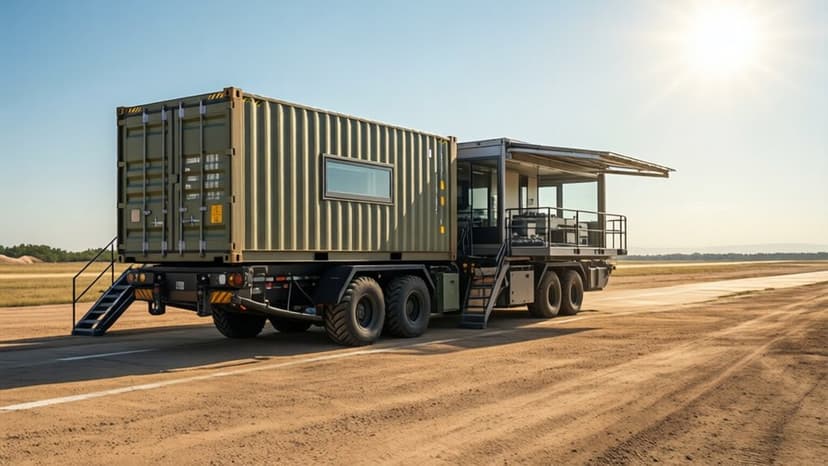
The US Department of War is investing heavily in mobile and domestic manufacturing to support the future of drone warfare . Through new contracts and grants, the government is shifting from centralized factories to "Edge Factories" and converted civilian battery lines to ensure a steady supply of unmanned systems. Amprius Technologies received a $75 million grant to convert an EV battery line for military drone use. Machina Labs will deploy two pilot "Edge Factories" to produce metal drone airframes locally. The battery production line conversion is expected to reach a capacity of 12 million cells annually by early 2028 . What are the new mobile factory pilots? The US Department of War has selected Machina Labs to develop metal airframes for the Low-Cost Uncrewed Combat Attack System (LUCAS). This project involves deploying two pilot sites known as Edge Factories to produce drone components closer to where they are needed. According to aimmediahouse.com , these pilot sites will begin as containerized robotic manufacturing cells. Once a shipping container arrives at a site, a crew sets up the equipment to start work on a drone airframe. The speed at which the first airframe passes inspection will determine how effectively these mobile units can deliver hardware after a move. Machina Labs, which was founded in Los Angeles in 2019 , uses AI-powered robots to form sheet metal. Unlike traditional methods, these robots do not require a dedicated die for every different shape. This flexibility allows the company to turn digital designs into physical structures within weeks. How will battery production change? The government is also targeting the power supply for these machines by drafting civilian manufacturing into military service. A $75 million grant has been awarded to Amprius Technologies to convert an existing electric vehicle battery production line into a facility for high-energy-density drone batteries. As reported by electrek.co , the project is funded through the Industrial Base Analysis and Sustainment Program (IBAS). The goal is to establish high-volume, commercially viable US manufacturing for advanced battery systems that power Group 1, 2, and 3 drones. The conversion involves a production line currently operated by a "major South Korean manufacturer." By combining Amprius technology with this partner's manufacturing expertise, the project aims to create a domestic, NDAA-compliant supply of pouch cells. The facility is scheduled to be completed in early 2028 . Why is the military changing its manufacturing model? The shift aims to solve two different problems: repairing equipment at sea and scaling up production for new technology. Previous successes show that on-site manufacturing can prevent long delays caused by logistics and shipping. In 2023 , the crew of the USS Bataan used a metal 3D printer to create a replacement part for an air compressor in just five days , according to aimmediahouse.com . Meanwhile, the US Army's Jointless Hull project at Rock Island Arsenal in Illinois uses machines that can print and machine large metal components for ground vehicles. The new Machina Labs pilots add a different layer to this strategy. While the Navy focused on repairs, these new "Edge Factories" focus on whether it is cost-effective to move entire manufacturing cells to different locations to meet changing mission requirements. How do different companies approach drone structures? There are multiple competing methods for building the frames of unmanned aircraft. While Machina Labs focuses on forming existing sheets of metal using robots, other companies use different digital manufacturing paths. For example, Divergent Technologies partnered with General Atomics Aeronautical Systems in 2023 to apply digital manufacturing to uncrewed aircraft. In 2025 , Divergent produced the metal core of a small uncrewed aircraft by combining metal 3D printing with conventional manufacturing techniques, as noted by aimmediahouse.com . The choice between these methods involves a trade-off between speed, cost, and location. Machina Labs is also investing in fixed-site production, having announced a $124 million Series C funding round in February . This money will support a 200,000 -square-foot US factory capable of housing up to 50 RoboCraftsman cells. How each side tells it The move toward domestic, specialized production is viewed through different lenses depending on the stakeholder's role in the supply chain. Machina Labs focuses on the agility required for modern conflict. Ed Mehr, the Founder and CEO of Machina Labs, stated: "Producing low-cost systems at scale requires a manufacturing model that can move as quickly as mission requirements change," On the other hand, the battery conversion project is framed as a necessity for national security. Tom Stepien, the CEO of Amprius, explained the purpose of the recent grant: "This DoW grant is intended to establish a primary source of domestic, NDAA-compliant battery production," What happens next? Several milestones will determine the success of these industrial shifts. The Machina Labs team must first qualify the metal airframe in Los Angeles before they can begin the rollout of the two Edge Factory pilot sites. This process involves testing the robotic cells in containerized environments to ensure they can function outside of a permanent factory setting. For the battery sector, the timeline is set for early 2028 . This is when the converted production line is expected to be fully operational and capable of producing its target of 12 million cells per year. The success of both projects will depend on whether these localized and converted methods can match the cost and quality of traditional, large-scale central manufacturing plants. Frequently Asked Questions What is the purpose of the Edge Factories? They are mobile, containerized robotic cells designed to manufacture drone airframes locally and quickly near mission sites. Why is a civilian battery factory being used for drones? The government is using grants to convert existing EV battery lines to ensure a high-volume, domestic supply of specialized batteries for unmanned aircraft. Who is funding these new manufacturing projects? Funding comes from US Department of War grants, such as the $75 million IBAS award, and private investment like Machina Labs' $124 million funding round.

Marcus Hale·
Kim Jong Un avoids meeting Donald Trump at APEC summit
East Asia

Kim Jong Un avoids meeting Donald Trump at APEC summit

North Korean leader Kim Jong Un did not meet with Donald Trump during the recent Asia-Pacific Economic Cooperation (APEC) summit in Shenzhen, China, despite repeated suggestions from the U.S. president. This failure to connect marks a continued stalemate in diplomatic efforts to address North Korea's growing nuclear capabilities. The absence of a meeting suggests that Pyongyang is prioritizing strategic alliances with Russia and China over high-risk negotiations with Washington. Donald Trump stated on November 16, 2026, that he "may" meet Kim in China, according to The New York Post . North Korea's nuclear arsenal grew from 20 to 30 warheads in 2019 to approximately 60 today, as reported by i24NEWS . The APEC summit in Shenzhen included a first-ever trilateral meeting between the leaders of the United States , China , and Russia , according to MT . Why did the planned meeting in China fail? The meeting did not happen because Kim Jong Un chose to remain in North Korea rather than traveling to China for the summit. While Trump suggested a face-to-face encounter was possible, no clear signs of Kim preparing for travel to Shenzhen appeared. Instead, North Korean state media showed the leader inspecting domestic construction projects. Analysts suggest Kim is seeking stability through existing partnerships. Lim Eul-chul, a professor at Kyungnam University, told MT that Kim likely decided it is safer and more practical to strengthen ties with Russia and China. This strategy avoids the risks of an unpredictable meeting with Trump without guaranteed diplomatic gains. The diplomatic environment also played a role. China, the host of the APEC summit, maintained a cautious stance. Guo Zhaokun, a spokesperson for the Chinese Foreign Ministry, told reporters on November 17 that China had no information regarding a potential meeting, according to MT . What are the conflicting views on North Korean diplomacy? The two sides hold fundamentally different views on what a successful negotiation must look like. Washington maintains a policy of demanding full denuclearization before offering significant concessions. Pyongyang, however, refuses to negotiate unless the United States recognizes its status as a nuclear-armed state. How each side tells it: "Kim Jong Un has repeatedly asserted that any dialogue must be premised on the U.S. making clear that North Korea is a nuclear weapons state, a precondition which Washington, of course, is unwilling to take," Edward Howell, a research fellow at the University of Oxford, told Newsweek . The White House has expressed a willingness to continue talking. In a statement to Newsweek , the White House said, "President Trump remains open to meeting with Kim Jong Un at any time." How much has North Korea's military power changed? The gap between the two nations has widened since their last direct summit. During the first Trump administration, the two leaders met three times, including a historic meeting at the inter-Korean border in June 2019. Since then, North Korea has significantly expanded its weaponry. According to i24NEWS , the estimated number of North Korean warheads rose from a maximum of 30 in 2019 to about 60 today. The country has also developed intercontinental ballistic missiles that can reach United States territory. This increased military strength gives Kim Jong Un more leverage in any future discussions. The security situation is also being influenced by North Korea's relationship with Russia. Ukrainian President Volodymyr Zelenskyy stated on November 18 that Russia receives dozens of North Korean ballistic missiles every month, according to NBC News . What has happened during previous summits? The history of Trump-Kim diplomacy is marked by high-profile meetings followed by a breakdown in progress. The leaders met in Singapore on June 12, 2018, marking the first time a sitting U.S. president met a North Korean leader. They later met in Hanoi, Vietnam, on February 27, 2019. The final meeting occurred on June 30, 2019, when Trump crossed the demarcation line into North Korea. According to Newsweek , these talks eventually failed because the two sides could not agree on how to dismantle the North Korean nuclear program. Since those meetings, Trump has attempted to re-establish contact. i24NEWS reported that Trump tried to reach Kim through diplomatic channels last year and even sent a direct letter to him in New York. However, a diplomat reportedly returned the letter unopened to a U.S. representative at a United Nations meeting. Where is Kim Jong Un focusing his attention now? While the world watched for a summit in China, Kim Jong Un was busy with domestic inspection tours. State media KCNA reported on November 18 that Kim toured the Samjiyon airport reconstruction and a ski resort. He also inspected a tourist railway line and various hotels and lodges. Kim was accompanied by his daughter, Ju Ae, during these tours. Photographs showed her skiing near a snow-capped hillside. According to NBC News , South Korean intelligence believes she is being groomed as his successor. The leader also visited the Hamgyongnam-do province. On November 17, he inspected a farming base and employee housing. On November 18, he visited hospitals and factories in Ryongchon. These activities suggest that Kim is prioritizing internal stability and economic development over international diplomacy. What happens next for U.S.-North Korea relations? The possibility of a summit is not completely dead, but the method of communication may change. Experts suggest that the era of sudden, top-down meetings between presidents might be over. Instead, future progress may require more traditional, lower-level diplomatic work. Park Won-gon, a professor at Ewha Womans University, told MT that the chance for a summit remains open. He believes a bottom-up approach through working-level talks is more likely than the previous style of direct leadership meetings. This process would be necessary to address the complex issue of sanctions. The United States continues to hold its ground on denuclearization. The Trump administration has reaffirmed its principle of requiring complete denuclearization and the implementation of all UN Security Council sanctions, according to MT . Until these core positions change, direct dialogue remains unlikely. FAQ Why didn't Trump and Kim meet in China? Kim Jong Un did not travel to the APEC summit in Shenzhen, choosing instead to inspect domestic projects in North Korea. What does North Korea want from the U.S.? North Korea wants the United States to formally recognize it as a nuclear-armed state before any serious negotiations begin. How many times have Trump and Kim met? The two leaders met three times during Trump's first term, specifically in Singapore, Hanoi, and at the North Korean border. SEO Meta Description: North Korean leader Kim Jong Un avoids a potential meeting with Donald Trump in China, choosing to focus on domestic projects and ties with Russia and China. URL Slug: north-korea-kim-jong-un-trump-china-summit-failure

Tomas Vogel·