
New Challenges Emerge Along the India China Border
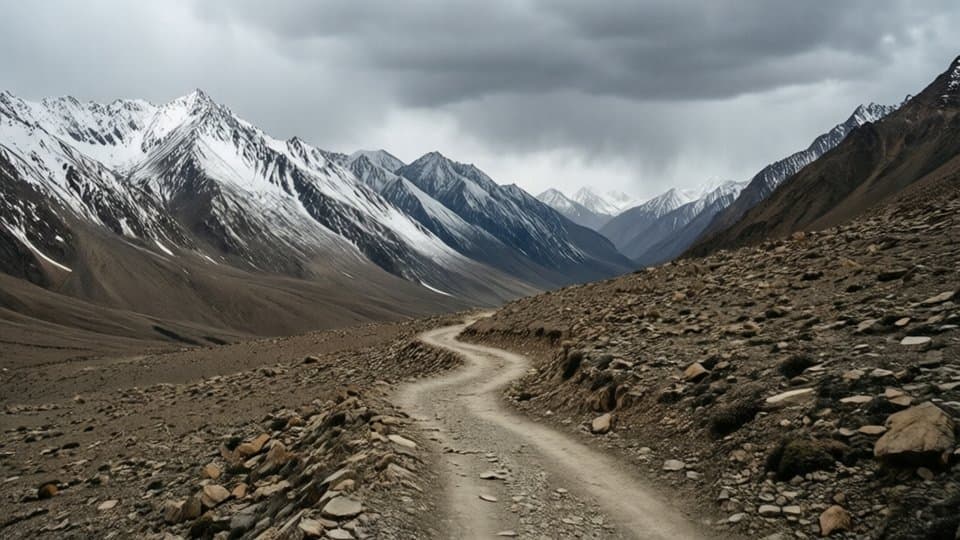
Diplomatic efforts to stabilize the india china border face fresh challenges as territorial disputes and military face-offs resurface in Arunachal Pradesh and Ladakh. While high-level meetings between leaders suggest a cooling of tensions, recent disagreements over official maps and patrolling deviations indicate that the Himalayan frontier remains a volatile flashpoint for the two nuclear-armed neighbors.
Why are tensions rising despite recent diplomatic talks?
Tensions are rising because of localized military friction and disagreements over territorial naming. While political engagement has increased, soldiers continue to encounter one another in disputed zones, leading to sudden standoffs that test the stability achieved through recent high-level summits.
In the Arunachal Pradesh region, reports indicate that Chinese People’s Liberation Army (PLA) troops have set up camps within 6 to 7 kilometers of India's perception of the Line of Actual Control (LAC). According to Newstrack, these activities in the Upper Subansiri district, specifically in areas like Taksing, Asafila, and Longju, have caused concern. Although defense sources stated on October 24 that the ground situation is stable and no violent clashes occurred, the presence of opposing troops remains a constant reality.
The Indian Ministry of External Affairs has pointed to specific behaviors as triggers for these incidents. According to dw.com, the ministry blamed Chinese patrolling deviations for causing disruptions along the border. These deviations move troops away from established patterns, creating the potential for accidental confrontations.
How do the two nations describe the border dispute?
India and China maintain fundamentally different views on sovereignty and the legitimacy of administrative actions in the Himalayan frontier. Both sides use official maps and naming conventions to reinforce their respective claims over the disputed territory.
How each side tells it:
- The Indian Position: India maintains that Ladakh and Arunachal Pradesh are integral parts of its territory. Following an October 2 announcement by the Ministry of Home Affairs to standardize names for 28 strategic locations in Ladakh, Indian External Affairs Ministry spokesperson Randhir Jaiswal stated, "No amount of denial by the Chinese side can change this established fact." According to Kashmiri Observer, India views the naming exercise as a way to ensure accurate identification and improve public awareness.
- The Chinese Position: China rejects India's administrative claims and does not recognize the Union Territory of Ladakh. According to Kashmiri Observer, Chinese Foreign Ministry spokesperson Mao Ning stated, "This move by India is illegal and void and does not change the fact that the western sector of the China-India boundary belongs to China."
What has changed in military deployment since 2020?
Military presence has shifted from massive, high-tension buildups toward a more managed, though still heavy, deployment. Both nations have moved away from the extreme standoff seen after the 2020 clashes, but they continue to build permanent infrastructure to ensure long-term readiness.
According to Defense News, the year 2025 saw a "significant reduction in deployment of People’s Liberation Army (PLA) Force opposite Northern Borders." The Indian Defense Ministry reported that 10 Combined Arms Brigade-sized forces were deployed in areas along the LAC and in traditional training areas. While India did not release specific numbers for its own troops, it described its deployment as "robust, well poised, and prepared to deal with any emerging contingency."
Despite the reduction in active troop numbers, both sides are investing heavily in the landscape. Analysts note that China has expanded infrastructure, and India is accelerating the construction of tunnels and roads in the Himalayas. Retired Brigadier Arun Sahgal told Defense News:
"Maintaining a strong dissuasive posture and preparedness along the borders is an imperative. We cannot scale down our defenses irrespective of troop numbers."
Is the relationship improving through diplomacy?
Diplomatic engagement is showing signs of progress, evidenced by high-level summits and the restoration of direct travel. While the border remains a source of friction, leaders are attempting to decouple economic and diplomatic growth from the military standoff.
The recent visit of Chinese President Xi Jinping to New Delhi for the BRICS summit served as a major milestone. According to Republic World, this visit helped facilitate the resumption of direct air connectivity. For example, China Southern Airlines resumed Guangzhou to New Delhi services on September 21, 2026, breaking a six-year gap. Indian carriers like IndiGo and Air India have also restarted routes to China.
Indian External Affairs Minister S. Jaishankar has noted a positive trend in the relationship. According to News QQ, speaking at an event in New York, Jaishankar said:
"If you ask me, and compared to 2025, is today's (India-China) relationship better? I would say yes. And compared to 2024, it is even more so..."He added that once the border issue is resolved, the improvement in relations will be natural.
Are there new ways for the two countries to interact?
Beyond military and political talks, new avenues for cooperation are appearing in the aviation sector. India is looking for ways to bypass airspace restrictions imposed by other regional neighbors to improve its connectivity with China.
According to Republic World, the Indian Ministry of External Affairs is in discussions with China to use Xinjiang airspace via Hotan. This would provide an alternative route for Indian airlines because Pakistan’s airspace has been closed to Indian aircraft since April 2025. Access to the Xinjiang route could reduce flight times and fuel costs for Indian carriers.
What is the historical context of this standoff?
The current tensions are rooted in a long-standing dispute over the Line of Actual Control (LAC), a 3,500-kilometer-long frontier. The situation escalated significantly due to a violent clash in 2020 that changed the security landscape of the region.
Key historical points include:
- May 2020: A violent clash occurred in the Pangong Lake area of eastern Ladakh, leading to a prolonged military standoff.
- October 2024: Prime Minister Narendra Modi and President Xi Jinping met in Russia, leading to an agreement that helped end the military standoff in eastern Ladakh.
- April 2025: Pakistan closed its airspace to Indian aircraft, forcing Indian airlines to seek new routes.
- 2025: The Indian Defense Ministry reported a significant reduction in PLA troop deployment along the northern borders.
- August 2026: India formalized the names of 27 locations in Ladakh on its official map.
What happens next?
Several diplomatic and military processes are ongoing that will determine if the current thaw holds or if tensions escalate again.
- Military Commander Talks: Following the flag meetings in September 2026 in Wachu (India) and Damai (China), continued communication between senior military officers is expected to manage local face-offs.
- Aviation Negotiations: The outcome of the talks regarding the use of Xinjiang airspace via Hotan will be a key indicator of practical diplomatic cooperation.
- Border Resolution: Both nations have expressed a commitment to a "fair, reasonable and mutually acceptable resolution" of the boundary question, though no specific deadline for a final settlement has been set.
FAQ
What is the Line of Actual Control (LAC)?
The LAC is the roughly 3,500-kilometer-long de facto border separating Indian- and Chinese-controlled territory in the Himalayas.
Why is the Xinjiang airspace important for India?
Since Pakistan closed its airspace to India in April 2025, using Xinjiang airspace would allow Indian airlines to fly to China more efficiently, saving time and fuel.
Has there been any violence at the border recently?
While there have been face-offs and tensions in areas like Arunachal Pradesh, there have been no confirmed reports of violent clashes in the most recent October 2026 reports.
Sources
- 1.dw.comIndia news: China border tensions back in focus despite talks
- 2.defensenews.comIndia says China has scaled back troop numbers along their border
- 3.republicworld.comBRICS Summit Effect: India In Talks With China To Use Xinjiang Airspace Via Hotan Amid Pakistan Airspace Ban
- 4.kashmirobserver.netIndia Hits Back After China Objects to Ladakh Map
- 5.news.qq.com印度外长苏杰生:若中印关系低迷,第三方将从中渔利
- 6.newstrack.comअरुणाचल में चीन की तैयारी ने उड़ाए होश! LAC पर फिर क्यों बढ़ा तनाव ...