Newzix
Breaking News
South Asia

Switching to BLDC Fans Could Save Bangladesh Billions in Energy Costs

Arjun Mehta5 min read
Switching to BLDC Fans Could Save Bangladesh Billions in Energy Costs

Replacing inefficient household fans with energy-saving models could significantly reduce the power demand in Bangladesh during the summer months. This transition could potentially save the nation billions in infrastructure costs and reduce annual electricity consumption by thousands of gigawatt-hours. The shift focuses on moving from standard fans to Brushless Direct Current (BLDC) fans to ease the strain on the national grid.

  • Replacing inefficient fans with BLDC models could cut summer power demand by up to 2,590MW, according to IEEFA.
  • Energy-efficient BLDC fans currently make up less than 2% of all household fans in the country, per IEEFA.
  • The annual energy savings from this switch could reach 6,913GWh, worth approximately USD0.73 billion, according to IEEFA.

How much electricity do fans use in Bangladesh?

Household fans are a primary driver of electricity demand in the country. During the summer, the power required for space cooling through fans and air conditioners represents a massive portion of the total grid load. This demand places heavy pressure on utility providers to maintain a steady supply.

According to IEEFA, household fans alone can account for up to 5,212MW of summer power demand. This is a major concern because the country struggles to meet demand when it exceeds 16,000MW. When demand hits these levels, the country often faces loadshedding of more than 3,000MW.

Historical data shows how much this has grown. In May 2014, daily power demand for fans was around 1,000MW, compared to a peak demand of over 6,000MW, according to IEEFA. As the country achieved 100% electrification and global temperatures rose, the cooling demand surged.

Why are BLDC fans better than standard fans?

The main difference lies in how much electricity the motor consumes to move air. Most fans currently used in Bangladesh are energy-inefficient models that require much higher wattage to operate compared to newer technology.

A survey of 435 households across 26 districts found that most people use inefficient 70W fans. In contrast, energy-efficient BLDC fans only require 35W, according to IEEFA. This 50% reduction in wattage per unit adds up to massive savings across millions of homes.

The financial benefits for the country are also large. IEEFA reports that upgrading the fan stock could avoid over USD4 billion in future investments for coal-fired power plants. By reducing the need for new generation, the country saves on both construction and fuel costs.

What prevents people from buying efficient fans?

While the technology exists, two main barriers stop widespread adoption: a lack of knowledge and high initial costs. Many people simply do not know that these more efficient options are available for purchase in their local markets.

More than two-thirds of surveyed households were unfamiliar with BLDC fans or did not know they could be bought, according to IEEFA. However, awareness changes behavior quickly. When surveyors explained the energy-saving potential, 96% of respondents said they were willing to switch to the efficient models.

Cost remains the biggest hurdle for low-income families. An inefficient fan costs about BDT2,000, while a BLDC fan costs between BDT5,000 and BDT6,300, according to IEEFA. For households earning less than BDT25,000 per month, the high upfront price is hard to justify because their monthly electricity bills are relatively low.

How can the government help the transition?

Experts suggest that the government must step in to make these fans affordable. Without financial help, the payback period for a low-income household to recover the cost of a BLDC fan can take between 7.7 and 9.6 years.

The IEEFA report suggests several solutions. One idea is bulk procurement to lower the initial price, similar to how India reduced the cost of LED bulbs by 87%. The government could also use carbon revenue from reducing 86 million tonnes of CO2 to subsidize the fans for poor families.

Other proposed measures include:

  • Creating an Energy Service Company (ESCO) to manage the replacement of fans in 41 million households.
  • Implementing on-bill financing so families can pay for fans in monthly instalments.
  • Finalising standards and labels through the Sustainable and Renewable Energy Development Authority (SREDA) to help consumers choose.

What is the broader energy challenge in Bangladesh?

The need for efficient cooling is part of a larger struggle with energy stability. As the country tries to modernize, it faces a tug-of-war between expanding digital infrastructure and maintaining a reliable power grid.

The rise of the digital economy and potential AI development requires massive amounts of electricity. According to The Daily Star, data centres require uninterrupted electricity to run servers. This creates a conflict because power shortages and grid instability are already common problems in the country.

If the country pushes for high-energy technologies like AI without improving the grid, it could worsen existing shortages. The Daily Star notes that even though generation capacity has expanded, the supply remains unstable, making it difficult to support new, power-hungry industries.

What happens next?

The immediate future depends on whether the government adopts a formal national cooling plan. Currently, the country is working through the draft Bangladesh National Cooling Plan, which projects fan-led energy consumption will reach 22,174GWh by 2035, according to IEEFA.

Key upcoming steps include:

  • The Sustainable and Renewable Energy Development Authority (SREDA) needs to finalize energy labels for fans.
  • The government must decide on a strategy for bulk procurement to lower consumer costs.
  • Legislative bodies must continue refining the draft Data Protection Act to manage the energy and data needs of a digital economy.

Frequently Asked Questions

How much money can Bangladesh save by switching to BLDC fans?
The switch could save the country BDT89.87 billion (about USD0.73 billion) every year in electricity costs, according to IEEFA.

Why are BLDC fans more expensive than regular fans?
They have a higher upfront cost due to advanced technology, with prices reaching up to BDT6,300 compared to BDT2,000 for standard models, per IEEFA.

Will switching fans stop power cuts?
While it won't stop all cuts, reducing demand by up to 2,590MW would significantly ease the pressure on the national grid during peak summer hours, according to IEEFA.

SEO Meta Description: Switching to energy-efficient BLDC fans in Bangladesh could cut summer power demand by 2,590MW and save billions in coal-fired plant investments.

URL Slug: bangladesh-energy-efficient-bldc-fans-cooling-demand

Sources

  1. 1.ieefa.orgHousehold space cooling in Bangladesh: Role of energy-efficient fans
  2. 2.thedailystar.netBangladesh at a crossroads: data sovereignty, energy shortages and the race for AI
  3. 3.herzindagi.comHaier Or Samsung Fridges? Explore Top Brands Discounts Available During Amazon Great Indian Festival Sale 2026

Read more →

Related Articles

Europe Launches New Projects to Secure Green Tech Magnet Supplies
Chips & Rare Earths

Europe Launches New Projects to Secure Green Tech Magnet Supplies

European researchers are launching two major initiatives to reduce the continent's dependence on foreign supplies of rare earth elements used in green technologies. By recycling old components and developing new magnet types, these projects aim to secure the supply chains for electric vehicles and wind turbines. This shift is critical because current production is heavily concentrated in China. China refines 91% of the world's rare earths used in magnets, according to the International Energy Agency . The MAGELLAN project has already produced high-performance magnets containing 25% recycled material by weight, per Cyprus Mail . The MagNEO project aims to demonstrate industrial-scale 3D-printed magnet designs by the year 2028 . Why is Europe worried about magnet supplies? The clean energy transition relies on permanent magnets to make motors smaller, lighter, and more efficient. These magnets are vital for electric car traction motors and wind turbine generators. Without a steady supply, Europe faces significant risks to its climate goals and industrial stability. A massive concentration of the supply chain in China creates a vulnerability. The International Energy Agency reported that China mines 60% of the world's rare earths for magnets and manufactures 94% of all permanent magnets. This dominance exposes European manufacturers to potential trade restrictions and sudden supply disruptions. Dependence is a major hurdle. High concentration means any geopolitical tension could halt production of essential green technologies. This reality is driving the push for advanced materials that either reuse existing resources or bypass rare earths entirely. Can recycling old magnets work? Recycling aims to create a circular economy by recovering valuable neodymium and other rare earth elements from discarded products. The MAGELLAN project is currently leading this effort by rethinking the entire life cycle of a magnet, from its initial design to its eventual dismantling. Researchers are already testing how to extract magnets from the rotors of electric bikes, scooters, and end-of-life cars. While the supply of scrap is currently low, a massive wave of waste is coming. Electric cars typically last between 15 and 20 years, while offshore wind turbines can operate for about 30 years. The scale of future waste is significant. According to European Commission reports, the waste flow will increase sharply within the next decade. This will make the recovery of these materials more economically viable for European industry. "Within the decade, [...] recovering and recycling these rare earths will be more economically viable. You will still have some premium compared to business as usual, but there will be a strategic pay-off." Alexandre Damiens, magnets and rare earths expert at Orano How much could recycled magnets supply? Recycling is not expected to replace all mining immediately, but it can provide a meaningful cushion for the market. Researchers have modeled the potential impact of a single large-scale facility on the European market. A manufacturing facility with an annual capacity of 2,000 tonnes could provide roughly 10% of the projected European electric vehicle traction motor market by 2040 . This would represent about 4% of the broader European permanent magnet market. The work also builds essential industrial expertise. By using a pilot line in Grenoble, the project helps European manufacturers learn how to incorporate secondary materials into high-performance products. This creates a new generation of skilled manufacturers capable of competing globally. Is it possible to build magnets without rare earths? The MagNEO project is investigating whether engineers can bypass rare earths by using different materials altogether. The team is focusing on AlNiCo magnets, which are iron-based alloys containing aluminium, nickel, and cobalt. These materials are not a new discovery. They have been used for decades in applications like guitar pickups and sensors. However, the MagNEO team is using modern techniques like 3D printing to rethink how they are used in heavy-duty motors. 3D printing allows for complex internal structures. These designs might help the magnets perform better in specific tasks. This approach seeks to tailor the material to the machine, rather than relying on the raw power of rare earths. "AlNiCo magnets are not new. They have been developed since the Second World War. But not much has happened with their development in the last few decades." Spyros Diplas, SINTEF expert Will these alternatives be as strong? There is a physical limit to how much energy these alternative magnets can provide. AlNiCo magnets cannot match the magnetic energy density of rare earth magnets, which is the amount of energy delivered in a specific volume. Researchers are not trying to replicate the exact performance of rare earth magnets. Instead, they are looking at how to combine weaker magnets with better motor designs. This could make them viable for heat pumps, ship propulsion, and certain wind turbines. The strategy is to change the motor to fit the magnet. By altering the design of the motor, the limitations of the AlNiCo material can be compensated for. This makes the technology a practical alternative rather than a direct replacement. "It’s not sensible to believe that we’re going to get rare earth magnet performance with AlNiCo, or with any other magnets. It’s physics – there are physical limitations." Spyros Diplas, SINTEF expert What is the timeline for these technologies? Both projects are working toward specific milestones to prove their commercial and industrial potential. The focus is moving from laboratory experiments to large-scale demonstrations of how these materials behave in real-world systems. The MAGELLAN team is currently moving toward incorporating recycled material into their pilot line. Their next major goal is to demonstrate how these recycled magnets actually function inside an electric motor. This will prove that "secondary" materials can meet high-performance standards. The MagNEO project has a deadline of 2028 . By the end of that year, the team aims to demonstrate that at least two magnet designs can be 3D-printed at an industrial scale. These prototypes will undergo testing in selected systems and computer simulations of complete motors. Background: The Rare Earth Challenge To understand this shift, one must look at the current landscape of green technology. Rare earth elements, specifically neodymium , are the backbone of modern high-efficiency motors. Because they are difficult to mine and process, the supply chain is highly sensitive to political changes. Historically, the world has relied on a centralized supply model. This model is now being challenged by the European Union's push for "advanced materials." These are engineered substances designed to improve performance in strategic areas like defense, energy, and transport. The transition from a centralized supply to a circular or alternative supply is a long-term goal. It involves shifting from a "take-make-waste" model to one where materials are recovered from the millions of electric vehicles and wind turbines that will eventually retire. What happens next? The immediate focus remains on the pilot testing of recycled magnets in motors. In the coming years, the industry will watch for the results of the MagNEO 3D-printing demonstrations. If successful, these could provide a blueprint for a new type of magnet manufacturing in Europe. The ultimate goal is to see these technologies reach industrial scale by the late 2020s . This would coincide with the first major wave of retired electric vehicles and wind turbines, creating a steady stream of raw materials for the European market. FAQ Why are rare earth magnets important for the environment? They allow electric motors and wind turbines to be smaller and more efficient, which is necessary for a clean energy transition. Can we replace rare earths entirely? While some materials like AlNiCo are being developed, they cannot match the raw power of rare earths, so they will likely be used in specific, redesigned applications. How does recycling help Europe's security? Recycling creates a local supply of materials from old cars and turbines, reducing the need to import everything from countries like China.

Grace Lin·
North Korea Tests New Air-Defense System and Cruise Missile
East Asia

North Korea Tests New Air-Defense System and Cruise Missile

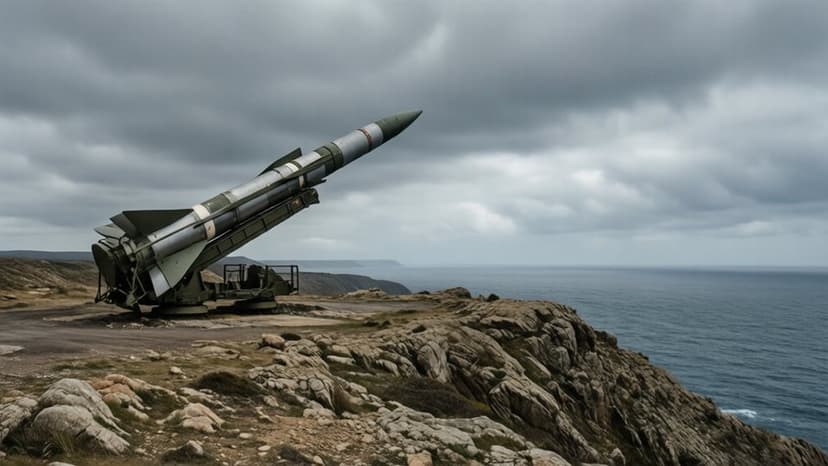
North Korea conducted a test of a newly-designed advanced air-defense missile system and a cruise missile strike drill on Wednesday, November 5, 2026. These launches come amid heightened tensions on the Korean Peninsula and follow a rapid succession of weapons tests by Pyongyang over the last week. NBC News reported that the air defense test confirmed the reliability of the missile's new materials. The Korea Herald reported that the missiles were launched toward the sea from the Sondok area. An Anadolu Agency report stated Gen. Kim Jong Sik guided the test-fire on Wednesday. What specific weapons did North Korea test? Pyongyang tested a new surface-to-air missile system designed to identify and track targets, alongside a long-range strategic cruise missile. The cruise missile was used in a drill to strike a virtual airport target in the eastern region of the country. The air defense system focuses on technical reliability and intelligent multiple guidance modes. According to NBC News , Shin Jong-woo, the secretary general of the Korea Defense & Security Forum, noted that the new air defense missile appears to have a guidance section similar to the Russian S-400 system. He also observed that images of the cruise missile suggest it carries a cluster warhead intended to disperse a payload over a target area. The missile tests included several different types of hardware. The Korea Herald reported that these launches followed several recent tests, including a 600 mm super-large multiple-rocket launcher on October 29 and a tactical ballistic missile with a cluster warhead on October 31. How do the two sides describe the launches? North Korean state media and South Korean military officials provide different interpretations of the Wednesday launches. While Pyongyang emphasizes the technical success of the drills, Seoul focuses on the uncertainty regarding the specific types of projectiles fired. "The test-fire proved the technical specifications and reliability of the new material and intelligent multiple guided mode of the projectile, target identification and tracking capability of the air-defense missile system and its detection information processing device," — KCNA, via Anadolu Agency The South Korean Joint Chiefs of Staff initially described the projectiles as "missiles" without a specific classification. According to the Korea Herald , authorities are still examining whether the objects were close-range ballistic missiles, surface-to-air missiles, or cruise missiles. A South Korean Defense Ministry official told NBC News that early detection data suggested the missiles could have been several different types. A separate military official told the Korea Herald that identifying projectiles based on radar data alone is difficult because different missile types can have overlapping flight characteristics and altitudes. Is South Korea able to track these missiles? South Korea uses a combination of ground-based radar and maritime assets to monitor North Korean activity. However, a shift in how the military deploys its Aegis destroyers has created a debate among officials regarding the quality of intelligence gathered. The military maintains that its current surveillance is sufficient. The Korea Herald reported that the Joint Chiefs of Staff believes ground-based radars can detect missiles and that real-time data-sharing with the United States and Japan provides necessary support. The military intends to dispatch Aegis destroyers when signs of an impending launch are detected. Some officials worry about a gap in intelligence. Because ground-based radars are fixed, the curvature of the Earth can limit their ability to track missiles in the later stages of flight. A military official told the Korea Herald that maritime assets are more mobile and can adjust positions to collect more detailed flight data. This capability was reduced after South Korea suspended the continuous deployment of Aegis destroyers in the East Sea in September 2025 due to personnel shortages. What is the history of recent tensions? The current missile activity follows a period of increasing friction between Seoul and Pyongyang. Tensions rose significantly following an incident in September that resulted in injuries to South Korean personnel. According to Anadolu Agency , Seoul blamed North Korea for an explosion inside the Demilitarized Zone on September 21, which wounded three South Korean soldiers. North Korea has rejected these accusations. The two sides have also failed to restore military communication channels, which Seoul had previously offered to help ease tensions. The missile testing has also intensified alongside joint military drills between South Korea and the United States. This environment has led to a rapid cycle of North Korean launches, including a dispersal warhead test on November 2 and a cluster bomb test on October 31. What happens next? The situation remains volatile as both sides continue their military postures. There are no specific upcoming summits or peace talks scheduled, as North Korea has not responded to South Korean efforts to reopen communication lines. Military analysts will continue to scrutinize the data from these recent launches to determine the exact capabilities of the new air-defense and cruise missile systems. The ability of South Korea to gather this data will depend on its current surveillance protocols and the continued cooperation with its allies, the United States and Japan. Frequently Asked Questions What kind of missile did North Korea test? Pyongyang tested a new air-defense missile system designed for target tracking and a long-range strategic cruise missile designed to strike targets like airports. Why is South Korea concerned about these tests? The tests demonstrate North Korea's evolving missile technology, including the use of cluster warheads, which complicates regional security and missile defense planning. How does South Korea monitor North Korean missiles? South Korea uses ground-based radar and Aegis destroyers to detect and track missiles, though recent changes in destroyer deployment have sparked debate over intelligence gathering.

Tomas Vogel·
Chinese Markets Surge as Investors Target Humanoid Robot Stocks
Robot Race

Chinese Markets Surge as Investors Target Humanoid Robot Stocks

China's stock markets saw a surge on the morning of November 10, 2026, as investors poured capital into technology sectors, specifically driving the growth of the humanoid robot industry. The ChiNext Index climbed 1.49% by midday, reflecting a broader recovery in high-growth tech stocks across the country's major exchanges. The ChiNext Index rose 1.49% by midday on November 10, according to finance.biggo.com . Combined turnover for the Shanghai and Shenzhen markets reached CNY 96.03 billion, or approximately $14.4 billion, for the half-day session, as reported by finance.biggo.com . China's total goods trade import and export value grew 20% year-on-year during the first ten months of the year, according to finance.sina.com.cn . Why are tech stocks rising so quickly? The rapid rise in technology stocks is driven by a rotation of market themes and improving investor sentiment. While some sectors like oil and gas saw declines, capital rebalanced into growth-oriented industries. This shift indicates that investors are once again willing to price in future growth for advanced technology companies. According to finance.biggo.com , the movement reflects a recovery in short-term risk appetite. The market is moving away from resource sectors and toward high-tech themes. This rebalancing helps explain why the ChiNext and STAR Composite indexes outperformed the broader Shanghai Composite during the morning session. Market analysts suggest that liquidity is a major factor. Huachuang Securities noted that improving macro and micro liquidity is driving valuation repair. They also pointed to the fact that market reactions to negative news have become more muted following the U.S. midterm elections. How is the robotics sector performing? The robotics sector emerged as the strongest theme during the morning session. More than a dozen companies involved in the production of advanced automated machines reached their daily price limits. This surge suggests that investors see significant potential in the next phase of physical artificial intelligence. Specific companies saw massive gains. finance.biggo.com reported that Guangyang Bearing, Fenglong Co., Ltd., and Huapei Power each achieved a second consecutive limit-up. Additionally, Zhejiang Fulai New Material recorded its third limit-up in just five days. The scale of the movement is notable. finance.sina.com.cn noted that Unitree Technology's stock price doubled from its October 15 low to its midday high on November 10. This volatility highlights the intense interest in the hardware required for next-generation machines. Experts are watching how these machines move from testing to real-world use. China Galaxy Securities observed that the industry is entering a period of triple testing involving financial reports, scenario validation, and capital re-pricing. They stated that these machines are now crossing the threshold of being accepted in factory environments. Is this a repeat of the 2015 market crash? While the current decline in the ChiNext Index might look alarming, the underlying financial health of the market is much stronger than it was during the 2015 crash. Current valuations are significantly lower, and the amount of debt used to buy stocks is much smaller. The ChiNext Index has fallen 28.2% from its June 25 peak over the last 66 trading days. According to seekingalpha.com , this is much less severe than the 49.7% decline seen during the same period in 2015. The market is also less risky because margin buying is only 9% of turnover, compared to 17-18% in 2015. Valuation metrics also show a safer environment. seekingalpha.com reported that the trailing P/E ratio at this year's peak was approximately 35.8 times. This is a massive difference from the 2015 peak, when the ratio reached 137.9 times. What are the key market drivers? Three main factors are supporting a potential year-end rebound for Chinese growth stocks. These include improved liquidity, falling U.S. Treasury yields, and record inflows into broad-based exchange-traded funds (ETFs). These elements combine to create a more favorable environment for high-tech investments. As finance.biggo.com stated, the retreat of real rates and inflation expectations in the U.S. has eased external financial conditions. This makes it easier for capital to flow into emerging markets like China. Furthermore, market-stabilization policies are transitioning into long-term institutional safeguards. The hardware sector remains a primary focus for professional investors. CITIC Securities noted that while technology sector allocations dropped from their second-quarter highs, hardware remains a core area of interest. They suggested that investors should focus on AI applications and physical AI opportunities. Who is involved in these market shifts? The movement involves a mix of massive asset managers, government agencies, and specialized technology firms. Large institutional players are navigating the volatility, while government data provides the broader context for the country's economic strength. Major players include China Asset Management Company (ChinaAMC), which manages RMB 3.15 trillion in assets. On the regulatory side, the General Administration of Customs released data showing that China's goods trade grew 20% in the first ten months of the year. This data, reported by finance.sina.com.cn , underscores the underlying economic activity. In the pharmaceutical sector, WuXi AppTec received a significant update. According to finance.sina.com.cn , the U.S. Department of Defense decided to remove the company from its 1260H list on November 9, 2026. This move removes a specific source of negative pressure for the company. What happens next for investors? Investors will likely focus on the upcoming earnings season to see if the "physical AI" and robotics hype matches actual financial performance. The ability of companies to deliver real-world orders and continuous factory data will be the deciding factor for future stock prices. Analysts are looking for specific signals in the coming weeks. Huachuang Securities believes the ChiNext and STAR indexes still have 20% to 30% of recovery room left. Meanwhile, Huaan Securities expects large-cap AI hardware names to potentially gain between 20% and 40% during the late-stage rally phase of the current cycle. The focus will remain on companies that can prove their technology works in large-scale deployments. China Galaxy Securities noted that the industry must now pass the test of scenario validation, moving from single pilot projects to full-scale industrial deployment. FAQ Why are Chinese tech stocks rising? Rising liquidity and a shift in investor interest toward growth sectors like AI and robotics are driving the rally. Improved market sentiment following U.S. elections also plays a role. Is the robotics sector a major part of this rally? Yes, the robotics concept has emerged as a leading theme, with many constituent stocks hitting their daily price limits on November 10. How does this compare to the 2015 market crash? The current market is much more stable, with significantly lower valuations and less investor leverage than during the 2015 downturn.

Kenji Arai·