
Newzix
Breaking News
Southeast Asia

Tensions Rise Over Ancient Temples Amid Potential Thailand Cambodia War
Sara Lindqvist5 min read
Tensions Rise Over Ancient Temples Amid Potential Thailand Cambodia War

Thailand has officially rejected demands from Cambodia for the return of cultural artifacts, asserting that two ancient temples located on the border belong to Thai territory. This dispute over heritage sites and the potential for a thailand cambodia war follows recent border skirmishes and a diplomatic breakdown between the two neighbors on October 25, 2026.

Why are the two countries fighting over these temples?

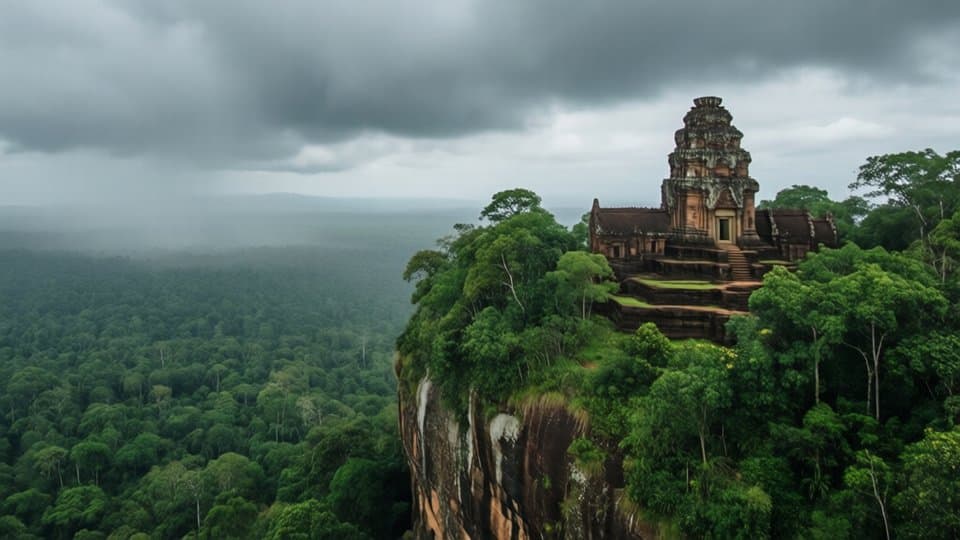
The conflict centers on the ownership and military use of ancient Khmer structures, specifically Prasat Ta Kwai, Prasat Khana, and others like Tamone Thom and Ta Krabey. Both nations claim sovereignty over these sites, leading to accusations of illegal occupation and military provocation.

According to nationthailand.com, on October 25, 2026, Thailand's Culture Minister Sabida Thaised stated that Prasat Ta Kwai and Prasat Khana are already registered as ancient monuments under Thai law. She maintained that Thai agencies are working to protect these sites and their artifacts based on their archaeological significance.

Cambodia's Ministry of Culture and Fine Arts has countered these claims, arguing that Thailand is attempting to create a "fait accompli" by using unilateral activities to seize sovereign territory. The Cambodian ministry has also accused the Thai military of damaging cultural heritage and using these sites for military purposes.

How does each side tell it?

The two governments present conflicting narratives regarding the ownership of the temples and the cause of recent tensions.

The Thai government maintains that its actions are purely for the protection of heritage and that Cambodia has failed to provide legal evidence for its demands. Regarding the military, Thailand argues that Cambodia has militarized heritage sites.

According to thediplomat.com, Air Chief Marshal Praphas Sonchaidee, director of the Joint Information Center, stated that Thailand has evidence of Cambodian troops using the area around Preah Vihear temple as a military position. He noted that the evidence includes "aerial images, coordinates and photographs of weapons allegedly located in the area, including anti-tank rocket-propelled grenades (RPGs), small arms, and positions for anti-aircraft weapons."

Cambodia denies using any ancient temples for military purposes and claims that its security forces are present only to protect the sites. The Cambodian Ministry of Culture and Fine Arts has accused the Thai armed forces of deliberately damaging heritage sites.

According to courthousenews.com, Cambodia has charged that the Thai military relies on false information to justify incursions and has targeted the temple structures.

What damage has been done to the heritage sites?

Recent combat has left several ancient structures in a state of severe decay and physical destruction. The fighting in July and December 2025 caused widespread damage that experts fear could lead to total collapse during rainy seasons.

A UNESCO report, as cited by thediplomat.com, observed that "every part of the monument" at Preah Vihear was targeted. The report detailed the following:

  • The report identified a total of 562 damaged areas on the temple complex.
  • Many architectural elements were "completely destroyed" or heavily damaged by shelling and shrapnel.
  • The surface of most walls is disfigured by shrapnel impacts.

According to courthousenews.com, Cambodia's Culture Ministry reported specific damage figures from the 2025 clashes:

  • 142 locations were damaged during the July fighting.
  • 420 more locations were damaged during the December combat.

Archaeologist Hem Sinath, deputy director-general of the National Authority for Preah Vihear, told reporters that the temple has become "quiet" and "sorrowful" due to the tragedy. The site is currently closed to tourists because of unstable walls and the danger of unexploded ordnance and landmines.

What is the history of this border dispute?

The tension between Thailand and Cambodia over these border regions is not a new phenomenon but a decades-old conflict involving legal rulings and nationalist sentiment.

Key historical points include:

  • 1962: The International Court of Justice ruled that the Preah Vihear temple and its surrounding area belong to Cambodia.
  • 2008: Preah Vihear was designated a UNESCO World Heritage site, which heightened domestic nationalist tensions in Thailand.
  • 2013: The International Court of Justice reaffirmed the original 1962 ruling.
  • July and December 2025: Major armed clashes occurred along the land border, leading to significant structural damage to the temples.

The dispute also involves the K’nar temple, known in Thailand as Nong Khana, which is central to Khmer history. According to ucanews.com, this site is where the Khmer Empire is believed to have originated in the ninth century.

How has the conflict affected the local population?

The violence has caused massive displacement and economic disruption for civilians living near the border. Beyond the physical damage to monuments, the human cost has been high on both sides of the frontier.

According to courthousenews.com, the impact on people includes:

  • More than 640,000 people were displaced from border regions during the fighting.
  • Almost 37,000 people had not yet returned to their homes as of the reporting period.

Economic ties have also suffered. ucanews.com reports that about one million Cambodians working in Thailand have either fled or been sent back, which represents a major loss of income for Cambodia.

What happens next?

The diplomatic and legal battle is expected to intensify as both nations move toward formal responses and international arbitration.

The following actions are currently underway or scheduled:

  • Thailand's Culture Ministry is preparing a formal response to Cambodia's October 22 letter regarding border heritage and antiquities.
  • The Thai Fine Arts Department is planning surveys, damage assessments, and conservation work to restore monuments damaged during the fighting.
  • Cambodia has appealed to the United Nations for compulsory reconciliation regarding maritime territory disputes.
  • The Royal Thai Army is examining a Cambodian film scheduled for release on November 6, 2026, to determine if its portrayal of history could harm international relations.

FAQ

Which temples are currently being disputed?
The main sites involved include Preah Vihear, Prasat Ta Kwai, Prasat Khana, Tamone Thom, and Ta Krabey.

Is the border currently safe for tourists?
No, many areas near the temples are closed to tourism due to unstable structures, unexploded ordnance, and the presence of landmines.

What did UNESCO say about the temples?
UNESCO reported that the Preah Vihear temple has sustained "profound" damage from heavy shelling and shrapnel, leaving many parts of the structure destroyed.

Sources

  1. 1.nationthailand.comThailand hits back at Cambodia over 2 temples on Oct 25
  2. 2.thediplomat.comThailand Accuses Cambodia of Stationing Troops at World Heritage Site During Border Fighting
  3. 3.courthousenews.comA 1,000-year-old cliff-top temple lies battered after Cambodia-Thailand border clashes
  4. 4.ucanews.comThai-Cambodia tensions flare over temple 'abuse'
  5. 5.bbc.comไทยลดระดับความสัมพันธ์กัมพูชา ด้านกัมพูชาโต้กลับด้วยการลด ...

Read more →

Related Articles

FIFA vs. UEFA: Old corruption scandals meet the Trump factor
China & Taiwan

FIFA vs. UEFA: Old corruption scandals meet the Trump factor

The confrontation between the two main football governing bodies — FIFA and UEFA — has once again taken center stage amid drawn-out corruption investigations and high-profile political episodes in which Donald Trump is unexpectedly involved. The history of the 2015 "FIFA-gate" continues to influence the balance of power in world football, while the acquittal of former executives and new lawsuits threaten a fresh reputational crisis. From "FIFA-gate" to institutional conflict The corruption scandal dubbed "FIFA-gate" erupted in May 2015, when Swiss police, acting on a request from U.S. authorities, arrested seven high-ranking FIFA officials in Zurich. They were charged with fraud, money laundering, racketeering, and accepting more than $150 million in bribes in exchange for tournament hosting rights and media rights. In total, 14 current and former officials were under investigation, with the FBI's probe spanning nearly a quarter of a century. The blow to FIFA's reputation was so severe that European football executives were also dragged into the epicenter of the scandal. Then-FIFA President Sepp Blatter and UEFA head Michel Platini became subjects of a separate case regarding a suspicious payment of approximately 2 million Swiss francs (about $2 million), which Blatter had transferred to Platini for work performed in the late 1990s and early 2000s. FIFA and UEFA, formally acting as partners in global football governance, found themselves on opposite sides of an internal political conflict. In 2015, UEFA officially demanded that FIFA investigate the appearance of a compromising dossier on Platini, hinting at an attempt at political maneuvering within FIFA itself. This episode became a symbol of the "cold war" between the two organizations, which are simultaneously dependent on each other and struggling for influence in world football. Judicial resolution: The acquittal of Blatter and Platini The Swiss prosecutor's office accused Blatter and Platini of the 2 million franc payment being an illegal bribe linked to the distribution of power and influence within FIFA and UEFA. The prosecution argued that the contractual relationship was not properly documented and that the payment, made years later, appeared to be an attempt at hidden material inducement. Nevertheless, in 2022, a Swiss federal court handed down an acquittal, finding that the prosecution had failed to prove the corrupt nature of the transfer. In 2025, an appellate court upheld this decision: the payment was classified as legitimate remuneration for Platini's work at FIFA between 1998 and 2002. The acquittal has become legally binding, closing one of the key cases that effectively led to the removal of Blatter and Platini from football politics. Following his final acquittal, Platini stated that the 2015 case was fabricated to prevent him from becoming FIFA president, and he filed lawsuits in French courts accusing a number of individuals and institutions of "criminal conspiracy, false accusation, and defamation." Thus, the conflict moved from the football pitch to the realm of civil litigation and political accusations, once again raising the question: where is the line between the fight against corruption and the power struggle within football bureaucracy? Choosing World Cup hosts: Russia, Qatar, and U.S. pressure At the heart of "FIFA-gate" were not only payments to officials but also the processes for selecting the hosts of the 2018 and 2022 World Cups. The U.S. Department of Justice accused a number of former FIFA officials of taking bribes to support the bids of Russia and Qatar. According to the investigation, they were promised or paid millions of dollars for votes in favor of these countries during the selection of World Cup hosts. Sepp Blatter himself explained the anti-corruption campaign at FIFA as a political conflict between the U.S. and Russia, claiming that Washington was using the scandal to pressure the federation after the American bid for the 2018 World Cup failed. These statements, while not confirmed by court rulings, reflect the perception of the crisis within the football community: anti-corruption investigations are closely intertwined with geopolitical interests and the struggle for the right to host major sporting events. Individual episodes of the investigation also concerned potential payments to high-ranking FIFA officials for supporting other countries' bids and distributing commercial rights. In total, they formed a picture of "systemic corruption," described in the U.S. Department of Justice's indictment as an elaborate scheme that had been operating for decades. 2026 World Cup, Infantino, and Trump's phone call Against the backdrop of the "old" cases surrounding Blatter and Platini, new scandals are largely linked to current FIFA leadership under Gianni Infantino. During the preparation for the 2026 World Cup (jointly hosted by the U.S., Canada, and Mexico), high-profile stories emerged around the FIFA president in which Donald Trump appears once again. According to reports by sports journalists, the former U.S. president personally called Infantino and asked him to lighten the punishment for player Folarin Balogun. This episode is described as unique: an American political leader publicly intervening in the decision of a FIFA disciplinary body, and then thanking the federation on social media for "correcting a great injustice." Formally, this incident is not classified as corruption, but it demonstrates the degree of politicization of decisions in world football and the federation's dependence on pressure from the leaders of the host country. Against this same background, criticism of Infantino continues regarding his contacts with politicians and controversial decisions during preparations for the 2026 World Cup, including discussions about disciplinary sanctions, match distribution, and commercial contracts. While there is no talk of new criminal cases yet, political interference in FIFA's work raises questions about the transparency and independence of football institutions from national interests. Risk of a new crisis: Where FIFA, UEFA, and politics intersect Formally, FIFA and UEFA are currently trying to demonstrate unity and a readiness for reform. Following the 2015 scandal, anti-corruption standards were strengthened, the role of ethics committees was expanded, and procedures for selecting tournament hosts were revised. Nevertheless, a series of acquittals in high-profile cases and new political episodes, such as Trump's intervention in FIFA's decisions, fuel suspicions that the system remains vulnerable. At the UEFA level, the question of trust in FIFA remains acute: the leadership of the European federation has argued for years that some investigations are selective and used to redistribute power in world football. Platini's lawsuits regarding "criminal conspiracy" only reinforce the rhetoric that the anti-corruption agenda can serve as a tool for political struggle within the football elite. On the other hand, materials from the U.S. Department of Justice and the FBI, as well as the admissions of a number of officials who agreed to cooperate with the investigation, demonstrate the existence of real corrupt schemes and decades of hidden financial flows within FIFA. Against this background, any new episode — from political pressure to controversial financial decisions — is automatically perceived as a potential continuation of the big cases. The combination of unresolved political conflicts, lawsuits from former executives, the heavy influence of the U.S. as the 2026 World Cup organizer, and the strengthening of anti-corruption controls creates the groundwork for a new crisis of confidence in global football governance. At the center of this field of tension are the relations between FIFA and UEFA, the balance of global and European power, and the question: who controls the rules of the game, and how, when football turns into big business and a tool of international politics?

Sara Lindqvist·
Beijing Holds Symposium Addressing Is Taiwan Part of China?
China & Taiwan

Beijing Holds Symposium Addressing Is Taiwan Part of China?

Mainland China held a symposium in Fuzhou on Sunday, October 25, 2026, to mark the 81st anniversary of the end of Japanese colonial rule over the island. The event serves as the first anniversary of the date being officially designated by China's national legislature as the Commemoration Day of Taiwan's Restoration. This anniversary is used by Beijing to reinforce its stance on the question of whether is taiwan part of china by emphasizing historical and legal claims to the territory. Why is this anniversary being commemorated? Beijing uses the anniversary to assert that the return of the island to Chinese sovereignty in 1945 is an unchangeable historical fact. The commemorations aim to promote national unity and oppose any movements seeking independence or foreign intervention in cross-Strait affairs. According to Bastille Post , 2026: the symposium in Fujian Province drew experts, scholars, and descendants of revolutionary martyrs. Participants at the event argued that the future of the region must be decided solely by the Chinese people. The gathering focused on the "great national spirit" and the history of the resistance against Japanese aggression. The official designation of October 25 as "Taiwan Restoration Day" was established by Beijing last year. According to South China Morning Post , 2026: Song Tao, the head of the Taiwan Affairs Office, stated that this memorial day highlights Beijing's "firm confidence in defending national sovereignty and territorial integrity." What is the historical background of the dispute? The tension stems from a century of shifting control over the island, beginning with the defeat of the Qing Dynasty. This history forms the basis for current legal and political arguments regarding sovereignty and identity. According to China Daily , 2026: the historical timeline includes these key points: 1895: Following the First Sino-Japanese War, the Treaty of Shimonoseki forced China to cede Taiwan and the Penghu Islands to Japan. 1943: The Cairo Declaration stipulated that territories taken by Japan, including Taiwan, should be returned to China. 1945: The Potsdam Proclamation reaffirmed the Cairo Declaration, and Japan's Instrument of Surrender pledged to honor these terms. October 25, 1945: China accepted the Japanese surrender on the island, officially restoring sovereignty. During the 50 years of Japanese rule, the island faced significant changes. According to China Daily , 2026: Japan implemented an economic model of "industry in Japan, agriculture in Taiwan," treating the island as a source of raw materials. Cultural assimilation efforts included restricting the Chinese language and forcing name changes. Reports from Docomo News , 2026, suggest that during this period, over 650,000 Taiwanese compatriots were killed, and approximately 2,000 women were forced into sexual slavery as comfort women. How each side tells it Beijing views the anniversary as a celebration of national recovery and legal proof of sovereignty. Conversely, critics in Taiwan and certain political factions argue that current authorities are attempting to erase this history to promote a separate identity. The position of the Chinese government, as expressed by officials at the Fuzhou symposium, is that the island's status is settled. According to China Daily Asia , 2026: Song Tao emphasized that the mainland will "firmly support the patriotic reunification forces within the island." On the other side, political figures in Taiwan have criticized the current administration's approach to history. According to China Daily Asia , 2026: Hung Hsiu-chu, former chairwoman of the Chinese Kuomintang party, "criticized Taiwan's current Democratic Progressive Party authorities for attempting to erase the history of the war against Japanese invasion and Taiwan's restoration from the school curriculum." Chiu Chih-shien, secretary-general of the Taiwan Restoration Commemoration Association, also noted a discrepancy in how the day is observed. According to China Daily Asia , 2026: Chiu stated that the "DPP's deliberate erasure led to its gradual fading from public memory over the past decades." How has the identity of the people changed? The conflict is not just about territory but also about the cultural and historical identity of the people living on the island. Differing educational approaches have created a divide in how younger generations view their roots. According to UDN , 2026: mainland media argues that the Taiwan issue arose from national weakness and will be resolved through national rejuvenation. They claim that the legal status of the island was "thoroughly resolved" at the end of the war. However, observers note that the island's media and education systems often present a different narrative. According to China Daily Asia , 2026: Ou Kuei-chih, a retired teacher, suggested that students must "break through the bias of the island's media to search for the truth" regarding why textbooks differ between the two sides. Who is affected by these commemorations? The political messaging impacts cross-Strait relations, educational policy in Taiwan, and the diplomatic stance of the international community. It also affects the families of those involved in the historical resistance. The symposium in Fuzhou included approximately 200 attendees. According to China Daily Asia , 2026: these attendees included descendants of revolutionary martyrs, Taiwan compatriots who resisted Japanese aggression, and representatives from Hong Kong and Macao. The tension between the two sides is exacerbated by what Beijing calls "external interference." According to Bastille Post , 2026: participants at the symposium called for a resolute opposition to "separatist activities aimed at Taiwan secession." What happens next? While no specific upcoming vote or meeting was announced during this symposium, the continued use of the "Taiwan Restoration Day" indicates a long-term strategy by Beijing. The mainland will likely continue to use historical anniversaries to reinforce its legal claims and support pro-unification groups. The divergence in historical education between the mainland and the Democratic Progressive Party (DPP) administration in Taiwan remains a central point of friction. As long as the two sides hold conflicting views on the "Taiwan status" and the legacy of the 1945 restoration, cross-Strait tensions are expected to persist. FAQ What is Taiwan Restoration Day? It is an official memorial day established by Beijing to mark the October 25, 1945, date when Taiwan was returned to Chinese sovereignty following the end of Japanese rule. Why did Japan control Taiwan? Japan took control of Taiwan and the Penghu Islands in 1895 after defeating the Qing Dynasty in the First Sino-Japanese War. What international documents support China's claim? Beijing cites the 1943 Cairo Declaration and the 1945 Potsdam Proclamation as international legal evidence that Taiwan should be returned to China.

Elena Marsh·
Xi Jinping Intensifies Anti-Corruption Drive at Fifth Plenum
China & Taiwan

Xi Jinping Intensifies Anti-Corruption Drive at Fifth Plenum

Chinese political leaders began a four-day meeting on Monday to address strengthening Communist Party discipline as President Xi Jinping intensifies his yearslong anti-corruption campaign. The Fifth Plenum of the Central Committee serves as a critical platform for Xi to demand greater loyalty from officials ahead of his expected fourth term in 2027. This gathering focuses on "full and rigorous party self-governance," a term used to signal heightened internal discipline and political reliability. The Guardian reported that disciplinary authorities opened investigations into more than 1 million people last year. According to NBC News , the plenum is a closed-door gathering of the Central Committee. The Epoch Times notes the meeting is scheduled for October 26–29 . Why is the anti-corruption drive continuing? The crackdown remains a central pillar of Xi Jinping's governance to ensure the survival of the Communist Party. While the campaign targets bribery, it also addresses "spiritual corruption," which involves political disloyalty. Xi views discipline as essential to preventing the party from losing its ruling status. Some analysts suggest the enduring nature of the drive is a structural necessity. Neil Thomas, a senior fellow at the Asia Society , noted that Xi makes anti-corruption a permanent method of governing. This approach ensures there is no point where the job is declared finished, allowing for continuous oversight of the bureaucracy. The campaign has expanded beyond traditional bribery to target "formalism" and "bureaucratism." These terms refer to officials who engage in dereliction of duty or inaction that hinders national development. This shift indicates that the leadership is now measuring officials not just on honesty, but on their active compliance with central orders. Is the crackdown a tool for political power? Observers often debate whether these investigations target genuine criminals or political rivals. Because investigations almost always lead to convictions, critics question the impartiality of the process. In Xi's worldview, there is little distinction between financial corruption and political unreliability. If you’re corrupt, you’re not politically loyal. If you’re politically loyal, you’re not corrupt. Kerry Brown, director of the Lau China Institute at King’s College London, explained that for Xi, corruption and disloyalty are linked. This makes the anti-graft drive an effective mechanism for enforcing unity. By framing purges as disciplinary measures, the leadership can remove those who pose a risk to authority under the guise of cleaning up the party. Ruby Osman, a senior policy adviser at the Tony Blair Institute for Global Change, suggested the focus is shifting. She stated that the drive is less about purging elite rivals and more about building a system that sustains Xi's priorities across different leadership cycles. This institutionalization of discipline helps maintain policy continuity. How has the military been affected? The military leadership has faced significant instability due to recent purges. High-ranking officials have been removed or disappeared, leaving vacancies in the Central Military Commission (CMC). This has raised questions about the stability of the armed forces and Xi's direct control over them. According to The Guardian , the CMC has been reduced from seven members to just two: Xi and Zhang Shengmin , the head of discipline. This follows the investigation and expulsion of Zhang Youxia , a top general second only to Xi in the military hierarchy. The scale of the military purge is notable. Neil Thomas and his colleagues at the Asia Society noted that 42 out of 44 military-affiliated officials elected to the Central Committee in 2022 have been purged or have disappeared. This level of turnover suggests a deep restructuring of the military's top command. How do different sides view these purges? There is no single consensus on whether these moves strengthen or weaken the state. Some see them as a necessary cleaning of the house, while others see them as a sign of internal regime instability. The interpretation depends on whether one views the purges as a sign of control or a symptom of chaos. How the government tells it: The official stance, as reflected in the Qiushi journal, is that the fight cannot "retreat by half a step." Xi Jinping warned that no matter how high an official's position, there will be "absolutely no leniency" for corruption. The goal is to eliminate "two-faced people" who profess loyalty but secretly defy orders. How analysts tell it: Some commentators, such as Tang Jingyuan, suggest the purges might not have restored full control. Tang questioned whether removing leaders like Zhang had actually stabilized the military, noting that no senior commanders have publicly endorsed the investigations. Meanwhile, Chen Pokong argued that despite a decade of campaigning, corrupt officials and "two-faced people" continue to increase in number. What is the background of these leaders? Xi Jinping has held the top position in the Communist Party since 2012. His tenure has been defined by a massive centralization of power and a persistent campaign to root out graft. He removed presidential term limits in 2018, paving the way for his potential fourth term. The current political cycle includes several key milestones: 2012: Xi Jinping assumes power and begins the anti-corruption drive. 2018: Presidential term limits are removed. 2022: The 20th Party Congress establishes the current Central Committee. 2024: The Fifth Plenum convenes to discuss party governance. 2027: The 21st Party Congress is expected to confirm Xi's fourth term. What happens next? The immediate focus remains on the conclusion of the Fifth Plenum. Following this meeting, observers will watch for any new personnel appointments made by Xi. While some analysts believe he may wait until the 2027 Congress to name new leaders, any immediate changes will likely consist of proven loyalists. The regime has also launched a two-month campaign to control online military content. This effort, announced by the Cyberspace Administration of China, targets "improper marketing" and sensitive military information. This move coincides with the plenum and suggests a heightened effort to manage public perception during this sensitive political window. Frequently Asked Questions What is the Fifth Plenum? It is a major meeting of the Communist Party's Central Committee that occurs every five years to discuss high-level policy and party discipline. Why is Xi Jinping targeting the military? The investigations aim to ensure absolute loyalty to the party and eliminate corruption that could undermine the military's effectiveness or political reliability. When will the next major leadership change occur? The next major leadership transition is expected at the 21st Party Congress in 2027, where Xi Jinping is anticipated to be re-elected for a fourth term. SEO Meta Description: China's Fifth Plenum focuses on Xi Jinping's anti-corruption campaign and military purges as the party prepares for his expected fourth term in 2027. URL Slug: xi-jinping-china-fifth-plenum-corruption-military-purge

Elena Marsh·