Global Leaders Gather in Manila for 49th ASEAN Summit
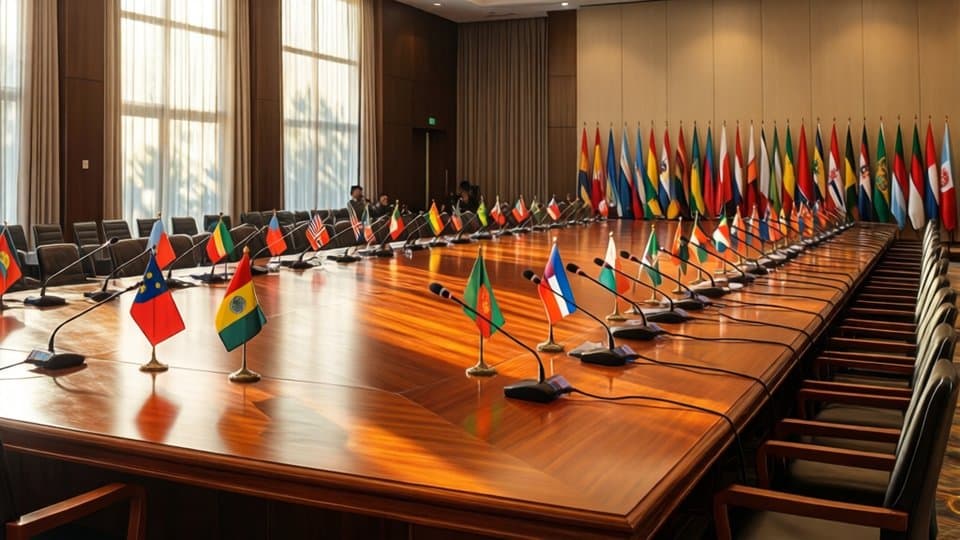
The Philippines is hosting the 49th Association of Southeast Asian Nations (ASEAN) Summit and Related Summits in Manila from November 15 to 18, 2026, to address regional security and economic resilience. This gathering brings together at least 19 global leaders to discuss the theme "Navigating the Future" and tackle pressing issues like the ongoing crisis in Myanmar. The event highlights the bloc's ability to convene major international powers for dialogue.
- The summit includes the 23rd ASEAN-India Summit and the 21st East Asia Summit process, according to devdiscourse.com.
- President Donald Trump and UN Secretary-General Antonio Guterres are expected to attend the gatherings, as reported by thestar.com.my.
- Chinese Premier Li Qiang will participate in the 29th China-ASEAN Leaders' Meeting in Manila, according to devdiscourse.com.
Who is attending the Manila summits?
The summit features a massive assembly of heads of state and global institutional leaders. President Ferdinand R. Marcos Jr. chairs the event, which includes leaders from Brunei Darussalam, Cambodia, Indonesia, Lao PDR, Malaysia, Singapore, Thailand, Timor-Leste, and Viet Nam. Myanmar is represented by its Foreign Ministry’s ASEAN Affairs Department Director-General rather than political leaders.
Major global players are also participating in the discussions. The thestar.com.my report notes that US President Donald Trump, Canadian Prime Minister Mark Carney, and Brazilian President Luiz Inácio Lula da Silva are expected to be present. Additionally, IMF Managing Director Kristalina Georgieva will join the plenary sessions to discuss economic resilience.
India's involvement is also a key component of the schedule. Prime Minister Narendra Modi will attend the 23rd ASEAN-India Summit and the 21st East Asia Summit process. Secretary (East) Rupendra Tandon told devdiscourse.com that the Prime Minister will also meet with the Indian diaspora in the Philippines.
How will the Myanmar crisis be addressed?
Leaders will use the summit to explore strategies for the Myanmar crisis. The Philippine News Agency reports that sessions will include reviewing the accomplishments of the Philippines' chairship and discussing how to tackle the crisis through dialogue with various sectors, including youth representatives and ASEAN Parliamentarians.
The current framework for Myanmar, known as the Five-Point Consensus (5PC), has faced significant challenges. This agreement was adopted following the February 2021 military coup and calls for an immediate end to violence and the provision of humanitarian aid. However, many observers believe the existing framework is no longer sufficient to manage the ground reality.
Experts suggest a change in diplomatic approach is necessary. Datuk Dr Ilango Karuppannan, an adjunct professor at Taylor’s University, spoke to Bernama and stated:
"Asean should negotiate a new consensus with Myanmar, involving the United Nations, in exchange for Myanmar’s phased reintegration into Asean,”
Karuppannan argued that any new agreement must include measurable commitments to reduce violence and improve humanitarian access. He also emphasized that the process should protect the Rohingya and allow refugees to return safely.
What are the different views on Myanmar's role?
There is a debate regarding how Myanmar should be reintegrated into the bloc. Some suggest that political participation should only be restored once specific, measurable milestones are met. This approach seeks to avoid granting full rights based on mere promises without actual implementation on the ground.
How each side tells it:
- The Analyst's View: Datuk Dr Ilango Karuppannan told Bernama that ASEAN should avoid granting full reintegration upfront and should instead tie the process to implementation and collective agreement.
- The ASEAN Diplomatic Process: The Philippine News Agency notes that the summit will involve dialogues with various sectors to tackle the crisis, implying a continued, multi-faceted engagement strategy.
The role of a special envoy remains a point of discussion. In July, foreign ministers proposed a permanent special envoy to replace the current system of rotating the role annually. Karuppannan noted that a permanent envoy would only be necessary if a new agreement cannot be reached with Myanmar.
What is the history of the ASEAN-China relationship?
The relationship between ASEAN and China is entering a new phase of cooperation. This year marks the fifth anniversary of the ASEAN-China Comprehensive Strategic Partnership, as reported by devdiscourse.com.
Chinese Premier Li Qiang is scheduled to participate in the 29th China-ASEAN Leaders' Meeting in Manila. This visit comes at an invitation from Philippine President Ferdinand Marcos Jr., who currently holds the rotating ASEAN chairmanship. This high-level engagement follows a period of tension, as Chinese Defense Minister Dong Jun was absent from a previous defense gathering in Manila last month.
The current summit serves as a platform to strengthen these ties while managing regional security. The East Asia Summit process, which includes eight leaders alongside ASEAN, allows these nations to discuss global security issues in an informal setting. The Philippines, as the current chair, is facilitating these critical dialogues.
What are the key economic goals of the summit?
The summit focuses heavily on building regional economic resilience. The Department of Foreign Affairs (DFA) stated that the involvement of global leaders like the IMF Managing Director underscores the importance of partnering with major players to achieve this. This aligns with the Philippines' chairship agenda.
A central part of this agenda is the Prosperity Corridors initiative. The Philippine News Agency reports that this initiative is a key component of the Philippines' strategy to enhance regional stability and growth. By bringing in international financial and political leaders, the host nation aims to create a more interconnected and stable economic environment.
The summit also looks toward the future of collaboration. The theme "Navigating the Future" reflects a focus on how member states can enhance collaboration to become more resilient to global changes. This includes strengthening bilateral and regional partnerships to ensure long-term stability.
What happens next?
The high-level meetings will begin on November 15 with an opening ceremony at the Philippine International Convention Center (PICC). This will be followed by Plenary and Retreat Sessions where leaders review the accomplishments of the Philippines' chairship.
The Related Summits, also known as the Plus One Summits, are scheduled to take place from November 16 to 17. These sessions will be co-chaired by leaders from Australia, China, India, Japan, Korea, New Zealand, Russia, the United Nations, and the United States. The outcome of these talks will likely shape regional security and economic policy for the coming year.
Frequently Asked Questions
Who is leading the 49th ASEAN Summit?
President Ferdinand R. Marcos Jr. of the Philippines is leading the summit as the current ASEAN Chair.
Why is the Myanmar crisis a major topic at this summit?
The ongoing instability in Myanmar and the stalled Five-Point Consensus require regional leaders to discuss new ways to restore political participation and humanitarian access.
Which major global leaders are attending?
Expected attendees include US President Donald Trump, Chinese Premier Li Qiang, UN Secretary-General Antonio Guterres, and Indian Prime Minister Narendra Modi.