Newzix
Breaking News
China & Taiwan

Xi Jinping Hosts Putin and Trump in Shenzhen Summit
Elena Marsh6 min read
Xi Jinping Hosts Putin and Trump in Shenzhen Summit

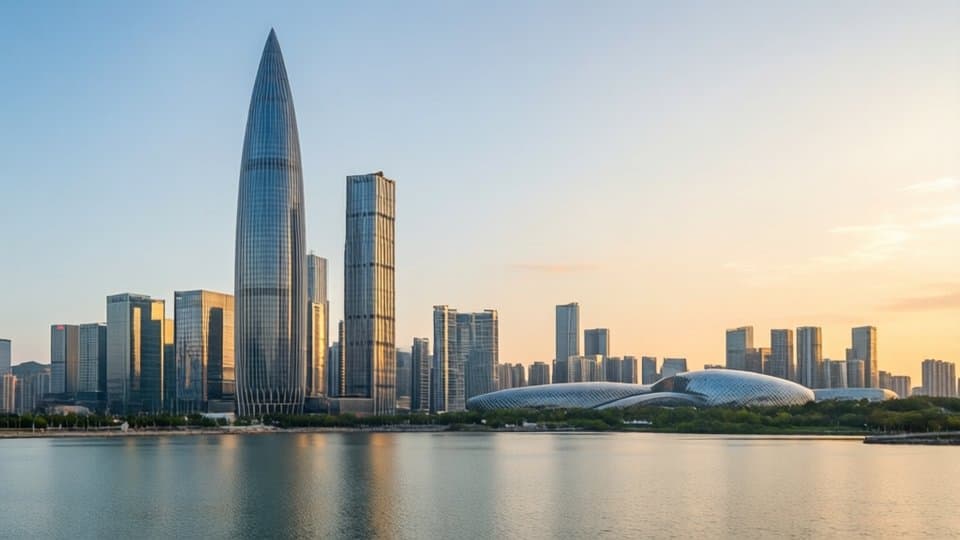
Chinese President Xi Jinping has orchestrated a historic summit in Shenzhen, bringing together Vladimir Putin and Donald Trump to discuss the reshaping of the international order. This high-stakes meeting marks a major diplomatic moment for China as it attempts to position itself as a central architect of global politics rather than a mere reactor to Western decisions. The event takes place against a backdrop of intense geopolitical competition and significant domestic economic pressure within China.

  • BBC reported that Xi Jinping is hosting a summit in Shenzhen featuring Vladimir Putin and Donald Trump.
  • According to Livemint, Xi Jinping has promised two giant pandas, Ping Ping and Fu Shuang, to Zoo Atlanta.
  • The BBC Global China Unit notes that this is Xi's first state visit to the United States in more than 11 years.

Why is this summit considered a major diplomatic win for China?

The summit allows China to demonstrate its growing grip on the global economy and international politics. By hosting the leaders of the world's two largest nuclear powers, Beijing moves from the periphery to the center of global decision-making. The futuristic setting of Shenzhen, complete with drones and robots, serves as a visual testament to China's technological advancement.

For decades, the world order was shaped primarily by Washington and its Western allies. However, as BBC reported, China is now orchestrating conversations that reshape how nations interact. This shift suggests that Beijing no longer simply reacts to policies from London or Brussels but actively drives the global agenda.

What are the primary risks facing Xi Jinping during these talks?

Xi Jinping faces a difficult balancing act regarding the war in Ukraine and the expansion of nuclear arsenals. He must maintain a close relationship with Vladimir Putin without damaging China's vital economic connections to the European Union. The EU remains a critical market for Chinese exports, which are currently essential to the country's economic stability.

The conflict in Ukraine, now entering its fifth year, remains a sensitive topic. China maintains a stance of neutrality, calling for political settlements while avoiding direct condemnation of the Russian invasion. However, the BBC notes that the US and Europe have accused China of supporting the Russian economy by purchasing oil and gas and providing components for the war.

Nuclear proliferation presents another complication. Donald Trump has expressed a desire to discuss limiting the global supply of nuclear weapons. While the US and Russia hold the largest stockpiles, China is rapidly expanding its own arsenal. This expansion has raised alarms in Washington, especially since the New START treaty expired in February of this year.

How do the different leaders view the nuclear issue?

The leaders hold conflicting views on how to manage the world's nuclear weapons. Donald Trump wants China to participate in new arms control agreements, whereas Beijing has historically pushed back against such limitations.

China maintains that it requires the freedom to develop its own nuclear capabilities. This stance could impact China's reputation, as the US may argue that true global leadership requires being a responsible nuclear power. The tension between these positions could prevent any concrete breakthroughs during the summit.

How will the summit affect China's domestic image?

The summit serves as a powerful propaganda tool for Xi Jinping as he prepares for the next Communist Party Congress. He is expected to secure a historic fourth term as the leader of both the party and the country. Displaying himself alongside global heavyweights can help project an image of strength to a domestic audience.

China is currently facing several internal economic challenges. According to the BBC, a country-wide property crisis has damaged consumer confidence. Additionally, local governments are struggling with heavy debt, manufacturing has slowed, and one in five young people are reportedly struggling to find employment. These issues create underlying social anxiety that the leadership must manage.

Will "Panda Diplomacy" help soften the political tension?

To complement the hard politics, Xi Jinping is reviving a long-standing tradition of "panda diplomacy." By promising two giant pandas to Zoo Atlanta, China is using a highly visible gesture of goodwill to reach the American public. This tactic aims to build soft power even as geopolitical competition intensifies.

The tradition of sending pandas dates back to 1972, following Richard Nixon's historic visit to China. While the practice changed in 1984 from permanent gifts to long-term loans, the symbolic value remains high. As Livemint reported, the arrival of pandas can signal closer ties, whereas their return often reflects deteriorating relations.

The return of pandas to Atlanta is particularly significant because Zoo Atlanta was the last US zoo to hold pandas before they were all returned to China in November 2024. While these animals will not solve disputes over Taiwan or trade, they offer a "softer face" to the intense rivalry between the two superpowers.

Who are the key figures involved in this diplomatic shift?

The history of Chinese leadership shows a move toward centralized power under Xi Jinping. Born in 1953 to the revolutionary leader Xi Zhongxun, Xi Jinping experienced significant hardship during the Cultural Revolution. He spent seven years living in a cave in rural Shaanxi province, a period he has reflected upon in past interviews.

After rising through the ranks in Fujian and Zhejiang, he became the leader of the Communist Party. His tenure has been marked by an increase in global influence through the "Belt and Road" initiative, but also by tightened domestic control in regions like Xinjiang, Tibet, and Hong Kong. His relationship with Vladimir Putin is described by the BBC as one of close friendship, with the two having met more than 40 times.

What happens next
The focus will shift to the upcoming Communist Party Congress in China, where Xi Jinping is expected to secure his fourth term. On the international stage, observers will watch for any unscripted interactions between Trump and Putin that might disrupt the carefully choreographed Chinese agenda.

FAQ
Why are pandas being sent to Atlanta?
China is using "panda diplomacy" to build goodwill and provide a symbolic gesture of friendship during a period of high political tension.
What is the main cause of tension in the nuclear talks?
The US wants China to join arms control limits, but China argues its arsenal is currently much smaller than those of the US and Russia.
How is China's economy performing?
The economy is facing challenges including a property crisis, high local government debt, and significant youth unemployment.

SEO Meta Description: Xi Jinping hosts a historic summit in Shenzhen with Vladimir Putin and Donald Trump, balancing nuclear tensions and panda diplomacy to reshape global order.

URL Slug: xi-jinping-shenzhen-summit-putin-trump-diplomacy

Sources

  1. 1.bbc.co.ukThis is a remarkable diplomatic moment for China's Xi - but it comes with pitfalls
  2. 2.livemint.comChina’s cutest diplomats are back! Xi Jinping revives Nixon-Mao era ‘Panda diplomacy’ at summit with Trump
  3. 3.bbc.com习近平:从失去一切的“太子”到中国最有权势的领导人

Read more →

Related Articles

Mercedes CLA L for China: Poor Sales Lead to Production Halt
China & Taiwan

Mercedes CLA L for China: Poor Sales Lead to Production Halt

The extended electric sedan Mercedes‑Benz CLA L , specially developed for the Chinese market, has turned out to be a commercial disappointment: according to industry sources, only 627 units were sold in China in the first half of 2026, after which production of the model at the Beijing Benz plant was temporarily suspended. There is no official confirmation of the production stop from Mercedes‑Benz yet, however, several specialized publications, citing internal sources and sales statistics, agree that the CLA L project in its current form has not met the concern's expectations. A Model "For China Only": Extended Wheelbase and Adapted Software The CLA L is an exclusive version for the Chinese market of the new electric Mercedes‑Benz CLA with an extended wheelbase by 40 mm and an overall length increased to approximately 4.76 m. This configuration is traditionally in demand in the PRC, where many manufacturers offer "long" versions of sedans and crossovers for more space for rear-seat passengers. The model is equipped with a battery capacity of about 89 kWh and boasts a range of up to 866 km in the Chinese CLTC cycle, formally making it one of the "longest-range" cars in its segment. The CLA L also received a software suite adapted for the local market, including advanced artificial intelligence functions and fast charging, designed to compete with local tech brands. The production of the sedan was carried out at the facilities of the joint venture Beijing Benz Automotive —a joint venture between Mercedes‑Benz and China's BAIC Motor, responsible for the production of a number of premium models for the domestic market of the PRC. Sales Statistics: A Sharp Spike and a Crash to Zero The main reason for the conveyor belt stoppage was the extremely low sales volumes in the world's largest electric vehicle market. According to MBPassion, cited by Carscoops and a number of European media outlets, dealers managed to deliver only 627 CLA L cars in the first half of 2026. The monthly dynamics are as follows: January — 35 cars; February — 21 cars, a minimum for the period; March — a short-term spike to 358 units; April — a drop to 52; May — 161 cars; June — according to some sources, 0 new registrations . It was the data on zero June sales that led to loud headlines about the model's "failure" and a "symbol of the crisis" in Mercedes' electric car sales in China. At the same time, some Chinese statistical reports still record minor registrations, indicating possible discrepancies in accounting methodology and continuing uncertainty. Temporary Pause: What is Known About the Production Stop A number of European and Asian publications, including MBPassion and Highmotor, report a temporary suspension of CLA L assembly at the Beijing Benz plant in Beijing. It is noted that at such a level of demand, mass production loses its economic sense, and further production risks an oversupply of inventory. Mercedes‑Benz has not publicly confirmed either the fact of the production stoppage or the possible timing of its resumption, leaving the question of the model's future open. According to MBPassion, a complete withdrawal of the CLA L from the market is not ruled out if the demand assessment proves to be consistently erroneous and the situation cannot be reversed. Thus, the current status of the project can be described as "frozen": formally, the model remains in the lineup, but its production, according to specialized sources, has been paused due to sales not meeting initial forecasts. Why the "Chinese" CLA Didn't Become a Hit Analysts attribute the weak interest in the CLA L not to its technical characteristics, but to the general change in the competitive environment in the PRC electric vehicle market . German publications note that it is becoming increasingly difficult for Mercedes‑Benz to compete with local brands such as Xiaomi, Nio, BYD, XPeng, and others, which offer aggressive pricing, deep integration of digital services, and rapidly updated model lineups. Against the backdrop of local manufacturers focused on online sales and ecosystems of "smart homes" and mobile services, even the premium status of the Mercedes brand no longer guarantees success in the mid-price segment of electric sedans. At the same time, the CLA L is positioned as technologically advanced, but at the initial sales launch, prices comparable to some mass-market models were reported, which should have made it competitive in terms of "image/cost" ratio. A separate problem is the possible mismatch between the product and the expectations of the Chinese audience: the extended wheelbase and spacious rear row have become market standards, and the key factor in choice is increasingly the design of interfaces, the quality of built-in services, local super-apps, and "smart" functions, in which new Chinese brands are moving faster than traditional automotive concerns. Implications for Mercedes‑Benz's Strategy in China The unsuccessful launch of the CLA L is seen as an indicator of a broader problem: the transition of power in the PRC electric vehicle market to local players , even in segments historically dominated by European premium brands. For Mercedes‑Benz, this is a signal of the need to revise its product and pricing strategy, as well as to adapt the digital part of the car to local user habits. At the same time, the failure of one model does not mean the concern's withdrawal from the Chinese market. The company continues to develop production through joint ventures, expand its electric lineup, and test different formats of cooperation with local IT players. However, the CLA L case, created "for China" and proving to be in demand, has already become an illustrative example of the risks when attempting to finely adapt a global platform to a hyper-dynamic market.

Sara Lindqvist·
Japanese Prime Minister faces diplomatic isolation at APEC summit
East Asia

Japanese Prime Minister faces diplomatic isolation at APEC summit

Japanese Prime Minister Sanae Takaichi faced intense scrutiny regarding her diplomatic standing after the APEC summit in Shenzhen, China, on November 18-19, 2026 . Observers noted her exclusion from major three-way talks between the United States, China, and Russia, leading to concerns that Japan is being sidelined as global powers reshape international orders. Chosun Biz reported that Takaichi was seated seven seats away from Chinese President Xi Jinping during the summit. According to The Guardian , Takaichi was met at the airport by a former ambassador rather than a high-ranking serving official. Modern Ghana noted that China has already applied economic pressure on Japan through seafood bans and rare earth mineral restrictions. Did Japan receive different treatment in China? The hospitality shown to Takaichi at Shenzhen Bao’an International Airport differed sharply from the reception given to other world leaders. While other presidents received military bands and cheering crowds, the Japanese Prime Minister received a modest guard of honour. This protocol gap suggested a cooling of relations between Tokyo and Beijing. The Chosun Biz reported that Chinese President Xi Jinping personally greeted U.S. President Donald Trump with a military band. Similarly, high-ranking officials met Russian President Vladimir Putin and South Korean President Lee Jae-myung. In contrast, Takaichi was met by Zhang Qiyue, a former ambassador to Greece, which The Guardian described as a position below those who greeted other leaders. This treatment reflects a diplomatic crisis that began after Takaichi suggested Japan might intervene in a Taiwan conflict. China’s foreign ministry previously condemned such remarks as "wrongful and dangerous." The tension has moved beyond words into economic territory, including the departure of giant pandas from Tokyo in January 2026. Was Takaichi physically sidelined during the summit? Visual evidence from the summit suggests Takaichi struggled to engage with the primary group of world leaders. She was frequently seen on the edges of gatherings rather than at the center of discussions. This physical distance mirrored her political distance from the major negotiating blocs. During the group photo on November 19, Takaichi stood at the end of the back row. This stood in stark contrast to the front row where Xi, Trump, and Putin shook hands. Chosun Biz also highlighted a video of Takaichi sitting alone on a separate sofa during a break. Ogata Toshihiko, editor-in-chief of Arc Times, observed that she appeared left out of interactions with other leaders. Takaichi has not become a major subject of interest among the White House press corps on the scene, and the reality is that she is isolated on the fringes of the world. The seating arrangements at the meeting table further emphasized this gap. Takaichi sat seven seats away from Xi Jinping. While other leaders engaged in bilateral or multilateral talks, Takaichi was unable to secure a face-to-face meeting with Donald Trump, eventually settling for a 20-minute phone call. How does each side view the Taiwan issue? The diplomatic friction stems from fundamentally different interpretations of security and sovereignty in the Taiwan Strait. Japan views a Chinese blockade or attack as a direct threat to its own survival, while China views the region as an internal matter. Takaichi has maintained an unequivocal position on Taiwan. She suggested that a Chinese blockade could be considered an attack on Japan. This is due to the proximity of Yonaguni Island, which lies only 100km to 110km from Taiwan. Japan seeks to protect its maritime interests and seafood trade routes in the strait. Beijing, however, asserts that Taiwan is a Chinese province. China has not ruled out using force for what it calls "reunification." The Modern Ghana report notes that China has used economic instruments, such as restricting rare earth minerals, to pressure Tokyo into reconsidering its stance. What was the significance of the meeting with Putin? While China maintained its distance, Takaichi did engage in a direct dialogue with Vladimir Putin. This meeting provided a contrast to her experience with the Chinese leadership and offered a different diplomatic avenue for Japan. Reports indicate the discussion with Putin lasted approximately 30 minutes. According to note.com , the talks covered the detention of Japanese journalists and issues involving Japan Tobacco International’s business in Russia. This contact suggests that while Japan may be isolated from the China-centric sphere, it still maintains channels with other major powers. The meeting may serve multiple purposes. It shows Russia is willing to engage with a U.S. ally. It also signals to China that Moscow has alternative diplomatic options. However, Russia remains a strategic partner to China, and Putin is unlikely to sacrifice that relationship for Tokyo’s concerns. How is Japan responding to this isolation? Japanese officials and media are expressing concern that a pattern is forming where major powers negotiate without Japan. The recent unprecedented three-way summit between the U.S., China, and Russia, which produced a joint declaration, has heightened these fears. A Japanese Foreign Ministry official told Mainichi Shimbun that if U.S.-China-Russia dialogue becomes routine, it could be a nightmare for Japan. The joint declaration by the three powers even criticized international judicial bodies like the ICC, an organization to which Japan is a major contributor. To counter this, Takaichi is pursuing several strategic paths. These include strengthening the Quad alliance and increasing defense spending to 2% of GDP. Modern Ghana suggests she is trying to remain soft externally while building strength internally. She must hedge her position to avoid being caught in the middle of negotiations between the U.S., China, and Russia. What happens next? The diplomatic fallout from the Shenzhen summit will likely continue as Japan attempts to manage its relationships with both the West and its neighbors. No immediate votes or specific summit dates have been announced, but the following factors will shape the coming months: The effectiveness of Japan's increased defense spending in deterring regional aggression. Ongoing economic negotiations regarding China's restrictions on rare earth minerals and seafood. The results of the 20-minute phone call between Takaichi and Trump regarding the recent three-way declaration. FAQ Why is Japan concerned about Taiwan? Japan's westernmost island, Yonaguni, is only 100km from Taiwan. A conflict there would directly threaten Japanese security and vital maritime trade routes. What did Takaichi say about Taiwan? She stated that a Chinese attack on Taiwan could trigger the deployment of Japan's self-defence forces if the conflict posed an existential threat to the country. How did China respond to Japan's stance? China condemned her remarks as dangerous and implemented economic measures, including restrictions on rare earth minerals and Japanese seafood imports. SEO Meta Description: Discover why Japanese PM Sanae Takaichi faced diplomatic isolation at the APEC summit in China and how it impacts Japan-China relations and Taiwan security. URL Slug: japan-takaichi-apec-summit-isolation-china-taiwan

Tomas Vogel·
Taiwan regulator bans short selling to stabilize stock market
China & Taiwan

Taiwan regulator bans short selling to stabilize stock market

The Financial Supervisory Commission in Taiwan announced on 21 November 2026 a sweeping ban on short selling below the previous day's closing price to combat extreme market volatility. This regulatory intervention aims to stabilize the domestic stock market following the worst weekly performance of the Taiex index since 1991. The Taiex dropped approximately 17.5% during the week ending 20 November 2026, according to Cryptobriefing . Minimum margin requirements for short selling will rise from 130% to 150% , as reported by Securities Finance Times . The National Financial Stabilization Fund has been active in the market since 6 November 2026 , according to The Next Web . What are the new short selling restrictions? The Financial Supervisory Commission is implementing a near-total ban on short sales for stocks and Taiwan Depositary Receipts that trade below the previous business day's closing price. This measure becomes effective on 23 November 2026. The restriction does not apply to securities firms or futures commission merchants performing short sales for hedging purposes during their normal business operations. Beyond the price floor, the regulator is increasing the cost of bearish bets. The minimum margin requirement for shorting listed and OTC securities will climb from 130% to 150%, according to Securities Finance Times . The commission is also suspending applications from brokers to issue and list new put warrants, which are financial instruments that pay out when stock prices fall. Lenders are being urged to restrict the supply of available stocks. The Financial Supervisory Commission is encouraging financial institutions to suspend stock lending and to recall existing loans early where contracts allow. This effectively chokes off the pipeline of shares available for traders to borrow and sell. Why did the stock market crash? The Taiex index suffered its most severe weekly decline in over three decades due to fears regarding the artificial intelligence sector. Doubts about whether massive capital spending on AI will yield sufficient returns have hit technology shares across Asia, according to The Next Web . Because the index is heavily weighted toward tech companies, these concerns triggered a broad selloff. Leverage also accelerated the downward spiral. As prices fell, margin calls forced investors to sell their holdings, which in turn pushed prices even lower, according to Cryptobriefing . This cycle of forced selling created intense pressure on the market. The Financial Ministry identified several specific triggers for the volatility. These include potential tightening of US regulations on AI, uncertainty regarding the benefits of large capital expenditures, and general margin-financing risks, according to EBC . How each side tells it The Financial Supervisory Commission and the National Financial Stabilization Fund view the market as fundamentally healthy despite the recent price drops. The National Financial Stabilization Fund has been buying shares since 6 November 2026 to protect market stability. The fund maintains that the economy remains strong, noting that export orders in October rose 78% compared to the previous year, according to The Next Web . Market participants, however, feel the weight of the new rules. The Securities Finance Association noted that while these adjustments are not a total regulatory ban, the current policy changes are difficult for those trying to protect their portfolios. Securities Finance Association What were the previous regulatory steps? This latest move is part of a series of interventions throughout November 2026. On 9 November, the Financial Supervisory Commission reduced the cap on intraday short sales of borrowed shares from 30% of average daily volume to 3%, according to The Next Web . A second round of restrictions occurred on 19 November. During that phase, the regulator banned shorting below the previous close for any stocks that had dropped by at least 3.5% on the preceding day, according to The Next Web . These previous steps failed to stop the decline, as the Taiex eventually lost nearly 18% over the week ending 20 November. Who is affected by these changes? Short sellers and institutional investors face the most immediate impact. The new margin requirements and the ban on selling below the previous close make it more expensive and difficult to bet against the market. Additionally, the suspension of put warrant applications limits the tools available to traders looking to hedge against falling prices. Listed and OTC companies are being pulled into the stabilization effort through incentives. The Financial Supervisory Commission is encouraging companies to implement share buyback programs. To support this, buyback programs that finish between the fourth quarter of 2026 and the first quarter of 2027 may be included in the 2026 ESG evaluation scores, according to Securities Finance Times . Financial institutions acting as lenders are also directly involved. They are being advised to recall existing stock loans or decline to renew them when they expire, which reduces the overall liquidity of shares available for shorting. What happens next? The primary focus will be on whether these measures can halt the selling pressure from foreign institutions. While the National Financial Stabilization Fund has been providing a buying backstop, foreign investors have continued to sell their holdings, according to Cryptobriefing . The success of the intervention depends on whether foreign selling slows and if the 5.28% short interest recorded on 19 November begins to fall as bearish positions are closed. The Financial Supervisory Commission has stated it will continue to monitor international financial developments and the domestic capital market. The regulator has indicated it will adjust these stabilization measures as necessary based on market conditions. FAQ What is the main reason for the short selling ban? The ban was introduced to stabilize the market following the Taiex index's worst weekly performance since 1991, driven by fears over AI sector returns. Does the ban affect all types of short selling? It excludes short sales made by securities and futures firms for hedging purposes during their normal business operations. When do the new rules start? The comprehensive measures, including the price floor and increased margin requirements, take effect on 23 November 2026.

Elena Marsh·