Venture capital investments in defense technology hit record high
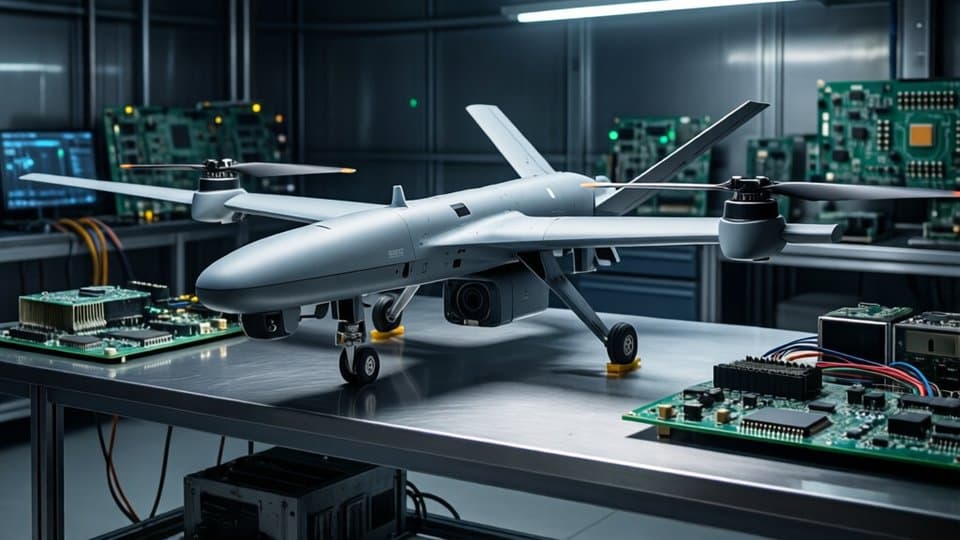
Venture capital funds invested a record $37.9 billion into defense technology companies during the third quarter of 2026. This surge occurred across 269 separate deals, marking a massive shift in how private capital is being deployed into national security sectors.
- Venture funds increased defense tech investment by 117.5% compared to the previous quarter, Fortune reported.
- Early-stage startups in the sector have reached valuations between 17 and 50 times their revenue, according to ua.news.
- The sudden resignation of Nvidia CEO Jensen Huang on November 12, 2026, has introduced new volatility to the private markets, wisevoter.com noted.
Is a defense technology bubble forming?
Prominent investors warn that the current influx of capital into defense technology resembles the market bubble seen in 2021. They suggest that high valuations and a rush to invest are creating an unstable environment for the sector.
Mina Faltas, the founder and CEO of Washington Harbour Partners, expressed concern during the Fortune 500 Innovation Forum in Detroit. He noted that the decline of the software-as-a-service market and the rise of artificial intelligence have redirected capital toward deep tech, space, and defense. This shift has brought in new participants who may lack specialized knowledge.
According to Fortune, these new investors are driving prices to levels that might not be sustainable. The rapid increase in funding suggests a market driven by fear of missing out rather than fundamental value.
Why are valuations rising so quickly?
Valuations for defense startups are climbing because investors are moving away from traditional software models. They are now seeking returns in physical technology, robotics, and energy sectors that are being transformed by artificial intelligence.
The scale of these valuations is extreme. ua.news reported that early-stage companies are being valued at multiples as high as 50 times their actual revenue. This indicates that investors are paying for future potential rather than current earnings.
Even leaders within the industry have voiced skepticism. Trae Stephens, a co-founder of the defense tech company Anduril, told Fortune in June that the multiples for mid-stage defense startups are completely disconnected from reality.
Who are the "tourist investors" in this market?
Some market participants are being described as tourists because they are entering the defense sector without deep technical expertise. These individuals often make decisions based on social signals or high-profile names rather than rigorous analysis.
Aidan Medigan-Curtis, a partner at the venture firm Eclipse, characterized the current mood as a "YOLO" sentiment. He explained that these investors often focus on a specific person, a popular theme, or the list of people who participated in the previous funding round.
"There are a lot of tourist investors who are excited about a person, a background, a theme… [and] maybe they’re most excited about who invested in the last round and the signal that that gives, versus a hardcore underwriting of a real set of capabilities that can truly pierce into a market."
Medigan-Curtis suggests this approach prioritizes momentum over a thorough assessment of a company's actual ability to compete in a market.
How difficult is it to sell to the Pentagon?
Securing government contracts remains a massive hurdle for even the most well-funded defense startups. The procurement process is complex and requires more than just having advanced technology or high valuations.
Mina Faltas noted that the United States Department of Defense is not a single, unified customer. Since a 2025 executive order, the Pentagon has also used the name Department of War as a secondary title. This administrative structure means companies must engage with many different divisions to succeed.
Success requires a focused ground game to educate and communicate with the various corners of the building. Without this, even companies with record-breaking venture funding may struggle to turn their technology into actual government sales.
How does the Nvidia situation affect defense tech?
The sudden departure of Jensen Huang from Nvidia has sent a shockwave through the broader technology ecosystem. Because AI is a primary driver of the current defense tech boom, this leadership change creates uncertainty for private markets.
Huang resigned as CEO on November 12, 2026, following pressure from the Nvidia board. This event has left the startup environment in a state of flux. Since many defense tech companies rely on AI and high-end chips, the stability of the entire sector is now under scrutiny.
The intersection of AI disruption and defense spending means that any volatility in the semiconductor industry can directly impact the confidence of venture capitalists investing in military robotics and autonomous systems.
What is the historical context of these investments?
The current investment surge follows a period of significant shifts in how capital moves through the global economy. The transition from software-heavy investing to hardware and deep tech marks a new era for venture capital.
Key milestones include:
- 2021: A period of high market activity that current investors are now using as a warning sign.
- 2025: An executive order authorized the Department of War as a secondary title for the Pentagon.
- Q3 2026: A record $37.9 billion was invested in 269 defense tech deals.
- November 12, 2026: Jensen Huang resigned as CEO of Nvidia.
These events show a market that is rapidly evolving in response to both geopolitical needs and technological breakthroughs in artificial intelligence.
What happens next?
Investors and analysts will be watching to see if revenue growth in the defense sector can eventually match the massive valuations currently being paid. The industry must prove it can move from venture-backed prototypes to large-scale government procurement.
Market participants will also monitor how the startup ecosystem reacts to the leadership vacuum at Nvidia. The ability of defense companies to navigate the various divisions of the Pentagon will determine which of these high-valued startups survive long-term.
Frequently Asked Questions
Why is defense tech investment growing so fast?
The decline of software-as-a-service and the rise of artificial intelligence have pushed investors toward deep tech, robotics, and space sectors.
Is the defense tech market in a bubble?
Some prominent investors believe a bubble is forming because valuations are reaching 50 times revenue and are being driven by inexperienced "tourist" investors.
What is the Pentagon's secondary title?
Following a 2025 executive order, the Department of War is used as a secondary title for the Pentagon.