Newzix
Breaking News
Southeast Asia

UK imposes sanctions on Myanmar military leaders after genocide ruling

Sara Lindqvist6 min read
UK imposes sanctions on Myanmar military leaders after genocide ruling

On 23 November, the United Kingdom formally recognized the genocide committed against the Rohingya minority following a landmark ruling by the International Court of Justice. This decision triggers a major package of new measures against the Myanmar military, including sanctions on senior officers and plans to block aviation fuel supplies. The move aims to turn the judicial verdict into practical international pressure against the military regime.

  • The UK is providing an additional £5 million in humanitarian assistance to support 350,000 people in Rakhine State, according to gov.uk.
  • The International Court of Justice ruled by a majority of nine votes to six that genocidal intent was the only reasonable inference from the evidence, according to tbsnews.net.
  • The UK has already implemented 19 rounds of sanctions since the 2021 military coup, according to gov.uk.

Who are the military leaders facing new sanctions?

The British government has targeted five specific senior officers to punish their roles in the repression of civilians. These individuals face asset freezes, travel bans, and disqualification from serving as company directors. The sanctions target different military commands across the country.

According to gov.uk, the sanctioned officers are:

  • Myo Htut Hlaing: A Brigadier General and Deputy Commander of Northwestern Regional Command suspected of abusing prisoners in Chin State.
  • Major General Myo Min Tun: The Eastern Military Commander for Shan and Kayah states.
  • Major General Myat Thet Oo: A former Northern Command Commander and former ambassador to Laos.
  • Major General Kyaw Soe: The commander of the Western Command in Rakhine appointed in June 2026.
  • Major-General Kyaw Swar Oo: A senior military official.

These measures respond to ongoing violence. The UK government intends to target the supply of aviation fuel to Myanmar to stop military airstrikes against civilians. This legislative effort addresses the deadly aerial attacks reported across the country.

What was the basis for the genocide ruling?

The International Court of Justice issued its verdict following an investigation into the 2017 clearance operations. These military actions in western Rakhine State resulted in mass killings and forced displacement. The court found that the military's actions met the legal definition of genocide.

The court determined that approximately 10,000 Rohingya were killed during the 2017 operations, according to tbsnews.net. During these operations, entire villages were burned and women and girls were subjected to rape. The scale of the violence forced more than 700,000 people to flee into neighboring Bangladesh.

The ruling was not unanimous. While the majority found genocidal intent, the final vote was nine to six. The court also ruled that Myanmar violated several other parts of the 1948 Genocide Convention. This marks the first time a state has been found guilty of genocide, according to tbsnews.net.

How do the different sides view the situation?

There is a clear divide between the international community and the Myanmar military authorities regarding the legality of the 2017 operations. While the UK and several other nations recognize the genocide, the military leadership has rejected the findings.

How each side tells it:

The UK government maintains that the military is responsible for grave violations of international law. Foreign Secretary Ed Miliband stated:

The horrific violence and persecution inflicted on the Rohingya cannot go unanswered. Following the landmark judgment by the International Court of Justice, the UK formally recognises the genocide committed against the Rohingya and is taking decisive action.

According to tbsnews.net, Myanmar has denied the allegations made against it. The military leadership continues to hold power after the 2021 coup that ousted Aung San Suu Kyi.

What is the history of the Rohingya crisis?

The Rohingya are a minority group in Myanmar, a country formerly known as Burma. Tensions have existed for decades, but the situation escalated into a humanitarian catastrophe in 2017. This period saw the most intense military violence against the community.

Key dates in the conflict include:

  • 1989: The country changed its name from Burma to Myanmar.
  • 2017: The military conducted clearance operations in Rakhine State, causing mass killings and displacement.
  • 2021: The military staged a coup, removing Aung San Suu Kyi from power.
  • 2024: Reports indicated that former ambassador Myat Thet Oo was removed and jailed.

The crisis has created a massive refugee population. Ed Miliband noted that more than 1.2 million refugees are currently living in Bangladesh due to the violence, according to tbsnews.net. Civilians inside Myanmar still face airstrikes and restrictions on food and medicine.

How much aid is being provided to survivors?

The UK is splitting its financial support between immediate survival needs and long-term legal accountability. This funding targets both the people living in Myanmar and the legal processes required to punish the perpetrators of the genocide.

The UK is providing £5 million in new funding for humanitarian aid. This money will support approximately 350,000 people in Rakhine State with lifesaving services, according to gov.uk. This area is identified as having the most acute humanitarian needs.

An additional £3 million is dedicated to strengthening justice for survivors. This funding will support the collection and preservation of evidence and the documentation of human rights violations. The UK is also doubling its support for the UN’s International Investigative Mechanism for Myanmar (IIMM) to help build cases for prosecution.

What happens next for international diplomacy?

The UK is attempting to turn the court's legal verdict into a unified global response. This involves working with the United Nations and other regional powers to ensure the military faces sustained pressure.

The UK has already taken several diplomatic steps. It summoned the Myanmar Chargé d’affaires and expelled the Myanmar Defence Attaché. The UK also led a joint statement with a group of 12 other nations, including Canada, Belgium, and New Zealand, to express support for the ruling, according to gov.uk.

Scheduled actions include:

  • This week: An urgent session with UN Security Council members to discuss the judgment.
  • In two weeks: A dedicated meeting of the UN Security Council to address the situation in Myanmar.
  • Ongoing: Diplomatic engagement with ASEAN and the Organization of Islamic Cooperation (OIC).

The UK government aims to use these meetings to seek a sustained international response. The goal is to force an end to hostilities and allow humanitarian aid to reach those in need.

Frequently Asked Questions

Why did the UK sanction these specific military leaders?
The sanctions target officers suspected of involvement in the repression of civilians and serious human rights abuses, including airstrikes on medical infrastructure.

What is the significance of the ICJ ruling?
The ruling is the first time a state has been found guilty of genocide, establishing that the military acted with genocidal intent against the Rohingya.

How will the UK stop military airstrikes?
The UK intends to introduce new legislation specifically designed to target and prevent the export and supply of aviation fuel to the Myanmar military.

Sources

  1. 1.gov.ukUK leads global action with major new measures against Myanmar military following landmark genocide judgment
  2. 2.tbsnews.netUK sanctions five Myanmar military leaders following Rohingya genocide ruling

Read more →

Related Articles

Rheinmetall develops military humanoid robot for combat support
Robot Race

Rheinmetall develops military humanoid robot for combat support

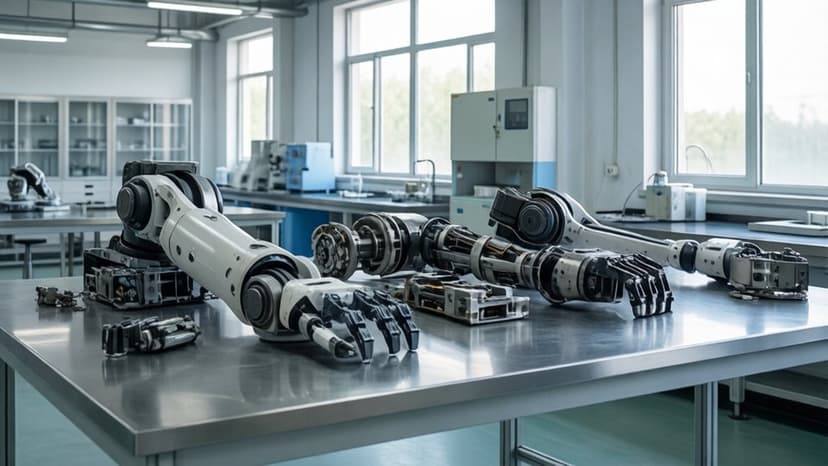
German defense conglomerate Rheinmetall is currently investing in the development of a humanoid robot designed for combat and military support roles. The company aims to produce the first prototypes within 15 to 18 months, potentially arriving in the first half of 2028, according to statements from the company's chief executive. This development marks a shift from traditional wheeled unmanned vehicles toward machines capable of navigating complex environments and interacting with soldiers. Rheinmetall CEO Armin Papperger expects the first military-grade prototypes to appear within 15 to 18 months, according to ua.news . The company is currently focusing engineering efforts on the upper torso of the machine, as reported by defence24.com . The U.S. Army recently named five winners in its xTechHumanoid competition held in September 2026, according to dvidshub.net . What is Rheinmetall building? Rheinmetall is creating bipedal machines intended to assist in military operations. While the company has not released specific details regarding the exact tasks these robots will perform, engineers are currently building the upper body of the unit. The goal is to move beyond simple transport to machines that can handle precise manipulation and complex battlefield settings. The company already maintains a presence in robotics through its Mission Master family of unmanned ground vehicles. These existing platforms perform roles such as reconnaissance, medical evacuation, and fire support. However, the transition to a humanoid form presents a much harder technological hurdle than the wheeled or tracked systems the company currently produces. Why is artificial intelligence a challenge? The primary obstacle for Rheinmetall is the level of intelligence required for a machine to function alongside humans. Unlike civilian robots that perform repetitive tasks in controlled spaces, a military machine must interpret chaotic battlefield situations. It needs to communicate with soldiers and make decisions based on its surroundings. Armin Papperger, the CEO of Rheinmetall, has emphasized that the cognitive requirements are much higher for defense applications. The machines must do more than just move; they must assess environments and work as part of a team. Without advanced software, a robot cannot move from simply following commands to actually executing complex combat tasks autonomously. How does this compare to US Army efforts? While Rheinmetall focuses on building the machines, the United States military is actively testing the commercial market to see what is possible. The U.S. Army recently concluded the xTechHumanoid competition to identify how emerging commercial technologies can serve military needs. This program seeks to find tools that reduce the physical burden on soldiers. The competition evaluated 103 different submissions based on technical maturity and military utility. Five companies were ultimately selected as winners: ACES Group, IHMC Robotics, Hydroplane Limited, Ras Labs, and Velocity Explorations. These companies are testing different parts of the robotic puzzle, such as better batteries, tactile sensors for delicate handling, and software that understands radio traffic. "Humanoid robots are part of a broader autonomy push to increase the depth and breadth of robotic platforms and components industry can provide for a range of missions," Alex Miller, U.S. Army Chief Technology Officer What are the current technological limits? Despite the interest from major powers, current technology cannot yet meet the most extreme military requirements. Some researchers argue that the goals set by military officials are currently impossible. For instance, there is no existing robot that can run at high speeds while carrying heavy loads and operating for a full day without stopping. Robert Griffin, a senior researcher at IHMC Robotics, noted that the requirements often exceed the state of the art. During recent testing, the robot named Alex was able to follow voice commands and move through woods, but it also collapsed and required transport on a gurney. This highlights the gap between basic movement and the high-performance endurance needed for active combat zones. How each side tells it The development of these machines is viewed differently by those building them and those evaluating their readiness for the field. Rheinmetall's leadership views the project as a high-investment priority that is nearing the prototype stage. According to ua.news , the company is investing heavily to ensure these machines can interact with humans effectively. In contrast, some researchers suggest a more cautious approach regarding the ethics and reality of the technology. Robert Griffin told defensenews.com that the industry is far from creating science fiction machines. He also raised concerns about the morality of autonomous systems, stating: "I don’t think that any person who has a modicum of ethics is going to say that we need to be having these robots making life or death decisions." What happens next? The timeline for these technologies is divided between short-term testing and long-term deployment. Rheinmetall expects its first prototypes to be visible within 15 to 18 months, which places their debut in the first half of 2028. However, because these machines require significant software refinement, they likely will not see actual combat use until the 2030s. In the United States, the Army is continuing its work through the Humanoid Community of Collaboration. This group was established in December 2023 to help integrate these new capabilities into the military. Future efforts will focus on solving the massive power and energy constraints that currently limit how long these robots can operate in the field. Frequently Asked Questions When will Rheinmetall's military robots be ready? The company expects to unveil its first prototypes within 15 to 18 months, likely in early 2028. What will these robots actually do? Rheinmetall has not specified exact tasks, but they are intended to assist soldiers and handle complex tasks in difficult environments. Can robots make life or death decisions on the battlefield? Current researchers warn that existing AI is too easily confused for such tasks and suggest that ethical concerns remain a major barrier. SEO Meta Description: German defense giant Rheinmetall is developing humanoid military robots. Learn about their 2028 prototype timeline and the challenges of battlefield AI. URL Slug: rheinmetall-humanoid-military-robot-development

Kenji Arai·
Why the humanoid robot industry struggles to prove real profitability
Robot Race

Why the humanoid robot industry struggles to prove real profitability

Manufacturers are shifting their focus from how many units they ship to how much actual work their machines perform. As the industry moves from laboratory demonstrations to warehouse floors, companies are struggling to bridge the gap between massive production numbers and genuine commercial profitability. This shift is essential because current metrics often fail to show if a humanoid robot actually pays for itself through labor savings. Interact Analysis reported in June that only about 10% of the 20,000 robots produced globally in 2025 reached real-world applications. China's AGIBOT introduced a new metric called Worken on October 29 to measure "effective intelligent work hours." The Chinese government issued a directive in June 2026 requiring state-owned enterprises to deploy robots by December 31. Why is the industry struggling to prove robot productivity? The robotics sector currently lacks a common yardstick to compare different machines. While some companies report how many hours a machine operates, others focus on how many items it moves or how many units they have sold. This makes it difficult for buyers to know if a robot is a good investment. According to pymnts.com , existing data points are often incomparable. For instance, Agility Robotics reported that its Digit humanoid moved over 100,000 totes at a Georgia warehouse with 98% accuracy. Meanwhile, Figure AI reported that its Figure 02 robots handled more than 90,000 sheet metal cycles at a plant in South Carolina. One company measures totes while the other measures metal cycles, making a direct comparison impossible. AGIBOT is attempting to solve this by using a score called Worken. This metric calculates "effective intelligent work hours" by multiplying active robots by their autonomous hours and an efficiency ratio. This ratio compares the robot's output against a human benchmark. This approach ensures that two fleets of the same size are not treated as equal if one requires constant human help to finish tasks. Is there a gap between production and real use? There is a massive disconnect between the number of machines being built and the number of machines actually working in factories. While production is exploding, most of these machines are used for research or entertainment rather than making money for businesses. Research from techtimes.com notes that global production jumped tenfold from under 2,000 units in 2024 to over 20,000 in 2025. However, the vast majority of these units are not in commercial service. China's manufacturers produced more than 90% of that total volume. Unitree's own filing ahead of its August listing on the Shanghai STAR Market showed that more than 70% of its revenue came from educational and research customers. Only less than 10% of its sales came from industrial applications. This suggests that the industry is currently building tools for scientists rather than tools for workers. How much does it cost to deploy these machines? The high cost of hardware remains a major barrier to widespread adoption. For a robot to be useful in a factory, the price must drop significantly to allow the machine to pay for itself within a reasonable timeframe. Current Chinese models sell for between 300,000 and 500,000 RMB, which is roughly $44,600 to $74,400 per unit. To achieve a two-year payback period, the price needs to fall toward 160,000 RMB, or about $23,800. This is a manufacturing challenge rather than just a technology problem. Even if a robot performs well, it may not be profitable. The Worken metric proposed by AGIBOT does not include costs like electricity, maintenance, or integration. A robot might have a high productivity score but still cost more to operate than the human worker it replaced. How each side tells it The industry is split between those focusing on rapid technological growth and those focusing on the economic reality of deployment. AGIBOT views the current era as a transition toward selling results rather than hardware. "2026 marks the beginning of large-scale deployment for embodied intelligence," said AGIBOT's senior vice president. On the other hand, market analysts highlight the "impossible triangle" that companies must solve. To succeed, a machine must provide autonomous operation, a clear return on investment, and the ability to handle many different tasks at once. Currently, most machines struggle to do all three. How is China forcing robot adoption? China is moving away from a market-driven approach and toward a government-mandated approach to ensure robots move into the real world. The goal is to generate the massive amounts of data needed to train more advanced artificial intelligence. In June 2026, the Chinese Ministry of Industry and Information Technology and the State-owned Assets Supervision and Administration Commission issued a directive. They ordered local governments and state-owned enterprises to deploy these systems into real operations by the end of the year. The target is more than 10,000 units across 100 different scenarios, including healthcare and logistics. This mandate is a procurement instruction. By forcing state-owned companies to buy robots, the government ensures that machines collect physical interaction logs. These logs are vital because, unlike text-based AI, physical robots need to record how they move and interact with objects to improve their intelligence. What happens next? The industry faces several immediate deadlines and milestones. In China, local governments must submit their implementation plans for robot deployment soon, and progress reports are due in November 2026. The official deadline for the government-mandated deployment is December 31, 2026. In the United States, Agility Robotics is moving toward public markets. Shareholders of Churchill Capital Corp XI approved a merger with Agility, and the combined company is expected to start trading on the Nasdaq on Thursday, November 5. These market movements will provide more data on whether investors believe the robots can actually generate profit. Frequently Asked Questions Why are robot companies not focusing on profit yet? Most companies are currently in a phase of gathering data and proving technical capabilities. They are prioritizing the ability to perform tasks reliably before they can prove the machines will save more money than they cost. What is the difference between a robot being "active" and "productive"? An active robot is one that is turned on and moving, while a productive robot is one that completes tasks successfully without needing a human to step in and fix errors. Will humanoid robots replace human workers soon? While they are being deployed in warehouses and factories, high costs and the need for constant data collection mean they are currently more common in research labs than in general labor roles.

Kenji Arai·
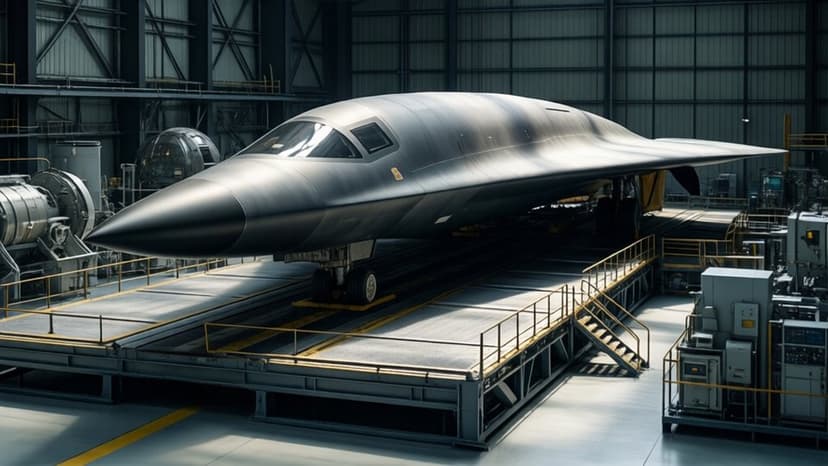
US Lags Behind Russia and China in Hypersonic Missile Race
Drones & Defense Tech

US Lags Behind Russia and China in Hypersonic Missile Race

The United States is struggling to catch up in the global hypersonic weapons race following repeated technical failures and testing delays. While Washington attempts to rebuild its industrial capacity, Russia and China are currently leading in both the deployment and the mass production of missiles that fly at speeds exceeding Mach 5. The Pentagon plans to spend $37.9 billion on hypersonic programs between 2027 and 2031, according to RFE/RL . Russia is estimated to produce 80 hypersonic weapons annually, while China produces 370 , according to RFE/RL . Analysts at InfoBRICS claim Russia is 15 to 20 years ahead of its competitors in this technology. Why is the United States falling behind in hypersonic technology? The United States has faced a series of technical setbacks and high costs that have stalled its development of high-speed weaponry. These difficulties have prevented Washington from matching the operational capabilities currently held by its primary rivals. The InfoBRICS report identifies the Pentagon’s AGM-183A hypersonic missile program as a primary example of these struggles. The publication notes that repeated problems during testing forced military officials to look for other options. Beyond the AGM-183A, other American projects have also suffered from years of delays and unsuccessful tests. Some analysts suggest these failures stem from a lack of technological capability or serious flaws in the development process. Two decades ago, the US was seen as the undisputed leader, but experts underestimated Russian progress. This includes the 9K720 Iskander missile system, which has been used in the conflict in Ukraine, according to InfoBRICS . How much faster are these weapons compared to normal missiles? Hypersonic weapons move at speeds exceeding Mach 5 , which is more than five times the speed of sound. This translates to roughly 6,100 kilometers per hour , making them extremely difficult to intercept. The difficulty lies in more than just raw speed. RFE/RL reports that Eva Sula, a senior fellow at the Baltic International Security Center, says the combination of speed, maneuverability, and flight trajectory complicates detection. These weapons can perform sharp, sustained maneuvers within the Earth's atmosphere, making it hard for radar to predict where they will be at the point of interception. Is China or Russia the bigger threat to the US? Both nations present unique challenges, but they lead in different areas of the hypersonic landscape. China holds the world's largest arsenal, while Russia has already proven its weapons in active combat scenarios. China benefits from an early mover advantage, having deployed the first operational hypersonic system in 2020. This system uses the DF-17 missile and a hypersonic glide vehicle. China also possesses a more expansive testing infrastructure than the US. In 2021, China successfully integrated a glide vehicle with a system that places weapons into low-Earth orbit, a feat that former US Joint Chiefs of Staff chairman Mark Milley called a "Sputnik moment," according to RFE/RL . Russia leads the United States in the actual fielding of these weapons. According to RFE/RL , Russia has used hypersonic weapons during its invasion of Ukraine. Analysts predict that by 2035, China and Russia could field a joint arsenal of 5,000 weapons, with Beijing providing 4,000 of them. How does the US manufacturing capacity compare? The United States struggles with mass production compared to its rivals. While American companies build highly advanced systems, they lack the ability to produce them in large volumes quickly. Ali Javaheri, an analyst at PitchBook , told RFE/RL that the US is excellent at making "exquisite" defense systems like the F-35 jet but is not as effective at making "mid-tier" items like hypersonics. This is due to an American defense industrial base that has atrophied since the Cold War, focusing on low-volume, expensive platforms rather than mass production. The production gap is stark. While Russia and China produce an estimated 80 and 370 hypersonic weapons every year respectively, the United States manufactures them in the single digits, according to RFE/RL . China’s status as a manufacturing powerhouse and Russia’s wartime economy allow them to build missiles much faster than the US. How do these weapons affect regional security in Asia? The rise of hypersonic technology creates specific vulnerabilities for US military operations, particularly regarding the defense of Taiwan. These weapons can bypass traditional missile defense systems by flying at low altitudes and changing direction. Planners worry that China could use these weapons to disable or destroy US Navy aircraft carriers during a Taiwan crisis. A classified assessment mentioned by RFE/RL found that such weapons could be part of a devastating campaign against the Gerald R. Ford-class carriers. Furthermore, China's ability to launch weapons from low-Earth orbit via Antarctica exploits a gap in US radar coverage. Most US defenses are designed to watch the North Pole for Russian attacks, but Chinese weapons can approach from unexpected trajectories. Beijing has denied testing such weapons, claiming its tests were for reusable space vehicle technology, but US officials remain skeptical. How each side tells it The various nations involved present very different versions of the current technological reality. The United States, through its defense contractors, views its recent progress as a necessary step toward countering threats. Lockheed Martin stated that the production readiness of its ARRW missile "makes it an essential asset for the military, providing a critical capability to counter emerging threats," according to RFE/RL . China maintains a stance of denial regarding certain military tests. Its Foreign Ministry stated that its tests involved "verifying reusable space vehicle technologies to help lower the cost of spacecraft operations," according to RFE/RL . Conversely, US analysts like Grant Newsham argue that China is being deceptive. RFE/RL reports Newsham saying, "They are lying. It's part and parcel of Chinese strategy," noting that Beijing understates its actual military spending. What happens next? The United States is moving toward a massive spending phase to close the gap. The Pentagon has allocated $37.9 billion for hypersonic programs for the 2027 to 2031 fiscal years. This funding includes $10.1 billion for the Army to field 4,500 intermediate-range weapons and $2.1 billion for the Navy to procure 59 missiles, according to RFE/RL . The Air Force will also use its portion of the funding to acquire the ARRW and the Hypersonic Attack Cruise Missile (HACM) . FAQ What is a hypersonic missile? It is a weapon that travels faster than Mach 5, or 6,100 kilometers per hour, and can maneuver within the atmosphere. Which country currently leads the hypersonic race? China leads in manufacturing and arsenal size, while Russia leads in the operational fielding and combat use of these weapons. Why is the US struggling to build these missiles? The US has faced technical test failures, high costs, and a defense industry that is better at making expensive, low-volume systems than mass-produced weapons. SEO Meta Description: US hypersonic missile programs face technical setbacks and production delays, leaving the US trailing behind the advanced arsenals of Russia and China. URL Slug: us-hypersonic-missile-setbacks-russia-china-lead

Marcus Hale·