Newzix
Breaking News
China & Taiwan

Canada and China Seek Economic Stability Through New Trade Deals
Elena Marsh6 min read
Canada and China Seek Economic Stability Through New Trade Deals

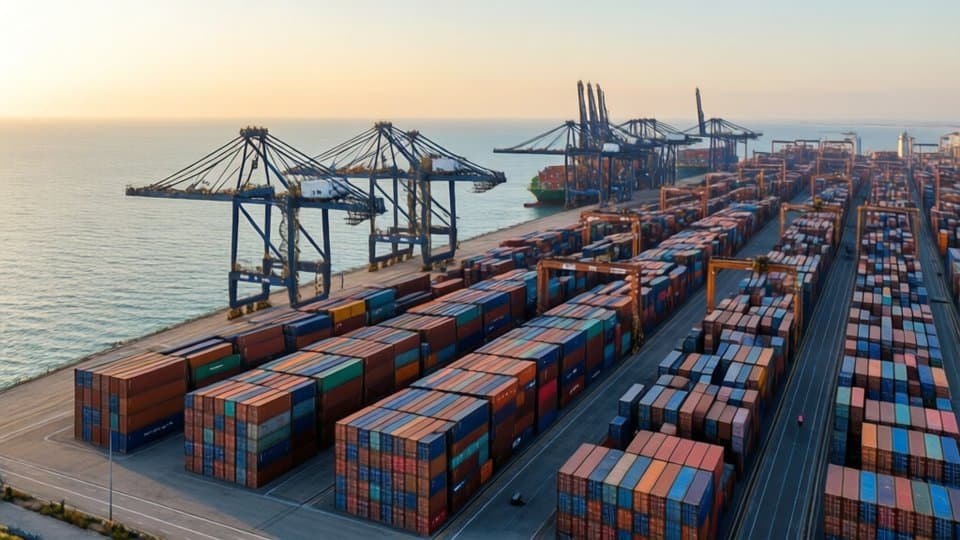
Canadian Prime Minister Mark Carney met with Chinese President Xi Jinping in Shenzhen on November 17, 2026, to discuss stabilizing bilateral relations. The meeting, held ahead of the Asia-Pacific Economic Cooperation summit, marks a significant attempt to deepen economic ties and reduce Canada's dependence on the United States through increased trade in energy, agriculture, and automotive sectors.

  • Mark Carney noted that Canada is ahead of its goal to increase exports to China by 50% by the end of the decade, according to Channel NewsAsia.
  • China has agreed to a quota of 49,000 vehicles at a 6.1% tariff, which is set to rise to 70,000 over five years, per Channel NewsAsia.
  • Canadian crude oil supplies to China increased by approximately 37% in 2026, based on Reuters calculations using LSEG data.

What is the current state of Canada-China relations?

Relations between the two nations have become more predictable and stable following a strategic partnership agreement reached in January. Prime Minister Carney stated that bilateral contacts have intensified significantly since his initial visit to Beijing earlier this year. This shift follows a period of tension during the previous administration under Justin Trudeau, which was largely defined by accusations of Chinese foreign interference.

President Xi Jinping characterized the improvement of these ties as a "right choice" that serves the interests of both nations and contributes to global prosperity, according to China Daily. The two leaders intend to focus on expanding cooperation in the food sector, energy, and financial services to build a new type of strategic partnership.

How are trade and investment changing?

Canada is actively diversifying its trade to create "Asian options" if negotiations with Washington do not yield favorable results. Carney indicated that the country's approach to Chinese investment is tied to ongoing trade talks with the United States. He noted that while he wants Chinese carmakers to establish operations in Canada, he remains cautious about plants that merely assemble vehicles using imported components.

Trade shifts are already visible in several key sectors:

  • Automotive: After Ottawa set a 6.1% tariff on 49,000 vehicles, manufacturers including BYD, Geely, and Chery have begun steps to enter the Canadian market, as reported by Channel NewsAsia.
  • Agriculture: Following the January visit, China reduced tariffs on Canadian canola seed and extended relief for canola meal, lobsters, crabs, and peas for two years, according to Channel NewsAsia.
  • Energy: Crude oil supplies from Canada to China saw a 37% increase in 2026, according to Reuters.

What are the main points of disagreement?

Despite the economic warming, significant friction remains regarding national security and human rights. Security analysts and human rights groups have warned that closer ties could compromise Canadian values. These concerns are rooted in past incidents, including the imprisonment of Hong Kong media figure Jimmy Lai and intelligence findings suggesting Beijing interfered in at least two Canadian federal elections.

The Falun Gong community has also raised urgent concerns during this diplomatic period. At a press conference on November 16, the Falun Dafa Association of Canada urged Carney to address the ongoing persecution of practitioners. They highlighted cases of "transnational repression," including a September 22 assault outside the Chinese Consulate in Toronto where a man allegedly attacked a practitioner, according to Vision Times.

How each side tells it

The Canadian government and Chinese leadership present different priorities for the bilateral relationship.

"We've established pretty clear guardrails on the areas that we're going to focus on … I'm using our words, not theirs." Mark Carney, Canadian Prime Minister

Carney emphasizes that Canada is seeking economic diversification and stability while maintaining "guardrails" on sensitive issues. He intends to raise the topic of foreign interference directly with President Xi.

"The development of China-Canada relations over the years has shown that mutual respect, equality and mutual benefit, and seeking common ground while respecting differences are essential." Xi Jinping, Chinese President

The Chinese government maintains that it has no interest in interfering in Canada's internal affairs, according to Channel NewsAsia. Beijing views the strengthening of ties as a way to promote multilateralism and global stability.

What is the historical context of this tension?

The relationship between Ottawa and Beijing has undergone several phases. In 2022, Canada ordered three Chinese firms to divest from Canadian critical mineral operations due to national security threats. This period of frostiness was characterized by intense scrutiny of Chinese influence in Canadian democratic processes.

The current administration under Carney is attempting to pivot toward a more pragmatic economic strategy. This involves a delicate balancing act between maintaining the security alliance with the United States and tapping into the massive growth potential of the Asia-Pacific market. The January 2026 meeting was the first time a Canadian prime minister visited China in nearly a decade, setting the stage for the current discussions in Shenzhen.

Who is affected by these diplomatic shifts?

The impact of these talks extends from industrial workers to human rights advocates. Canadian workers in the automotive sector may see new job opportunities if Chinese manufacturers establish local plants, provided these companies move beyond simple assembly. However, analysts like Vina Nadjibulla from the Centre for Strategic Statecraft suggest that Canada must carefully monitor investments in "critical sectors, in energy and technology."

On the other hand, families of individuals imprisoned in China, such as Kelly Cong and Lizhi He, are calling for the government to use this diplomatic window to secure the release of their relatives. These citizens feel that economic cooperation should not come at the expense of human rights advocacy.

What happens next?

The diplomatic momentum will continue through the APEC summit, where Carney is scheduled to meet with various Pacific Rim leaders. A significant meeting is planned for Thursday involving Donald Trump, Xi Jinping, and Vladimir Putin. Additionally, Carney is expected to table a foreign policy review in the House of Commons in the coming weeks, which will likely address the renewal of Canada's 2022 Indo-Pacific strategy.

Frequently Asked Questions

Why is Canada increasing trade with China now?
Prime Minister Carney is pursuing a strategy to reduce economic dependence on the United States by diversifying trade into Asian markets, specifically in energy and agriculture.

What are the security concerns regarding China?
Canadian intelligence and human rights groups have raised concerns regarding foreign interference in elections and the potential for Chinese investment in critical technology sectors to compromise national security.

Will Chinese cars be sold in Canada?
Yes, both countries have agreed to allow a limited amount of Chinese electric vehicles into Canada, with specific tariff structures and quotas currently in place.

SEO Meta Description: Prime Minister Mark Carney meets Xi Jinping in Shenzhen to stabilize Canada-China relations, focusing on automotive trade, energy, and agriculture.

URL Slug: carney-xi-jinping-shenzhen-meeting-trade-tariffs

Sources

  1. 1.ua.newsCanada's PM Carney says relations with China have become more stable — Channel NewsAsia
  2. 2.cbc.caCarney arrives in China for meeting with Xi Jinping, Asia-Pacific summit
  3. 3.visiontimes.comFalun Gong Practitioners Urge Carney to Address Ongoing Persecution During Xi Visit
  4. 4.chinadaily.com.cnXi says improvement, development of China-Canada relations right choice
  5. 5.recife.china-consulate.gov.cn习近平会见加拿大总理卡尼
Read more →

Related Articles

Venture capital investments in defense technology hit record high
Drones & Defense Tech

Venture capital investments in defense technology hit record high

Venture capital funds invested a record $37.9 billion into defense technology companies during the third quarter of 2026. This surge occurred across 269 separate deals, marking a massive shift in how private capital is being deployed into national security sectors. Venture funds increased defense tech investment by 117.5% compared to the previous quarter, Fortune reported. Early-stage startups in the sector have reached valuations between 17 and 50 times their revenue, according to ua.news . The sudden resignation of Nvidia CEO Jensen Huang on November 12, 2026, has introduced new volatility to the private markets, wisevoter.com noted. Is a defense technology bubble forming? Prominent investors warn that the current influx of capital into defense technology resembles the market bubble seen in 2021. They suggest that high valuations and a rush to invest are creating an unstable environment for the sector. Mina Faltas, the founder and CEO of Washington Harbour Partners, expressed concern during the Fortune 500 Innovation Forum in Detroit. He noted that the decline of the software-as-a-service market and the rise of artificial intelligence have redirected capital toward deep tech, space, and defense. This shift has brought in new participants who may lack specialized knowledge. According to Fortune , these new investors are driving prices to levels that might not be sustainable. The rapid increase in funding suggests a market driven by fear of missing out rather than fundamental value. Why are valuations rising so quickly? Valuations for defense startups are climbing because investors are moving away from traditional software models. They are now seeking returns in physical technology, robotics, and energy sectors that are being transformed by artificial intelligence. The scale of these valuations is extreme. ua.news reported that early-stage companies are being valued at multiples as high as 50 times their actual revenue. This indicates that investors are paying for future potential rather than current earnings. Even leaders within the industry have voiced skepticism. Trae Stephens, a co-founder of the defense tech company Anduril, told Fortune in June that the multiples for mid-stage defense startups are completely disconnected from reality. Who are the "tourist investors" in this market? Some market participants are being described as tourists because they are entering the defense sector without deep technical expertise. These individuals often make decisions based on social signals or high-profile names rather than rigorous analysis. Aidan Medigan-Curtis, a partner at the venture firm Eclipse, characterized the current mood as a "YOLO" sentiment. He explained that these investors often focus on a specific person, a popular theme, or the list of people who participated in the previous funding round. "There are a lot of tourist investors who are excited about a person, a background, a theme… [and] maybe they’re most excited about who invested in the last round and the signal that that gives, versus a hardcore underwriting of a real set of capabilities that can truly pierce into a market." Medigan-Curtis suggests this approach prioritizes momentum over a thorough assessment of a company's actual ability to compete in a market. How difficult is it to sell to the Pentagon? Securing government contracts remains a massive hurdle for even the most well-funded defense startups. The procurement process is complex and requires more than just having advanced technology or high valuations. Mina Faltas noted that the United States Department of Defense is not a single, unified customer. Since a 2025 executive order, the Pentagon has also used the name Department of War as a secondary title. This administrative structure means companies must engage with many different divisions to succeed. Success requires a focused ground game to educate and communicate with the various corners of the building. Without this, even companies with record-breaking venture funding may struggle to turn their technology into actual government sales. How does the Nvidia situation affect defense tech? The sudden departure of Jensen Huang from Nvidia has sent a shockwave through the broader technology ecosystem. Because AI is a primary driver of the current defense tech boom, this leadership change creates uncertainty for private markets. Huang resigned as CEO on November 12, 2026, following pressure from the Nvidia board. This event has left the startup environment in a state of flux. Since many defense tech companies rely on AI and high-end chips, the stability of the entire sector is now under scrutiny. The intersection of AI disruption and defense spending means that any volatility in the semiconductor industry can directly impact the confidence of venture capitalists investing in military robotics and autonomous systems. What is the historical context of these investments? The current investment surge follows a period of significant shifts in how capital moves through the global economy. The transition from software-heavy investing to hardware and deep tech marks a new era for venture capital. Key milestones include: 2021: A period of high market activity that current investors are now using as a warning sign. 2025: An executive order authorized the Department of War as a secondary title for the Pentagon. Q3 2026: A record $37.9 billion was invested in 269 defense tech deals. November 12, 2026: Jensen Huang resigned as CEO of Nvidia. These events show a market that is rapidly evolving in response to both geopolitical needs and technological breakthroughs in artificial intelligence. What happens next? Investors and analysts will be watching to see if revenue growth in the defense sector can eventually match the massive valuations currently being paid. The industry must prove it can move from venture-backed prototypes to large-scale government procurement. Market participants will also monitor how the startup ecosystem reacts to the leadership vacuum at Nvidia. The ability of defense companies to navigate the various divisions of the Pentagon will determine which of these high-valued startups survive long-term. Frequently Asked Questions Why is defense tech investment growing so fast? The decline of software-as-a-service and the rise of artificial intelligence have pushed investors toward deep tech, robotics, and space sectors. Is the defense tech market in a bubble? Some prominent investors believe a bubble is forming because valuations are reaching 50 times revenue and are being driven by inexperienced "tourist" investors. What is the Pentagon's secondary title? Following a 2025 executive order, the Department of War is used as a secondary title for the Pentagon.

Marcus Hale·
Chinese stocks surge as humanoid robot sector gains momentum
Robot Race

Chinese stocks surge as humanoid robot sector gains momentum

Chinese stock markets showed mixed performance on November 23, with the Shenzhen Component and ChiNext indices rebounding from early lows while the Shanghai Composite remained within a narrow range. This divergence occurred alongside a massive surge in the humanoid robot sector, driven by new national standards and optimistic commercial outlooks. The movement highlights a shifting focus toward advanced manufacturing and artificial intelligence within the mainland markets. The ChiNext Index rose 1.22% to 2,239.11 at the midday close on November 23, according to finance.biggo.com . Combined turnover for the Shanghai and Shenzhen markets reached 916.4 billion yuan during the morning session, as reported by finance.biggo.com . The Shanghai Composite Index stood at 3,499.91, representing a 0.96% decline at midday, according to finance.biggo.com . Why did robot stocks surge so quickly? Automated machine stocks gained momentum due to a combination of regulatory developments and international industry news. China's National Data Administration began developing national standards for embodied intelligence data, with more than 20 specialized standards expected during the 15th Five-Year Plan period, according to finance.biggo.com . These standards aim to support applications for various machines, including industrial collaborative arms and specialized robots. Investor sentiment also reacted to comments from Tesla CEO Elon Musk. In a video-linked interview on November 19, Musk stated that he expects Optimus robots to perform household tasks like washing dishes and taking out trash within the next 12 to 18 months, as reported by finance.biggo.com . This news helped several companies reach the 20% daily price limit. Several companies saw extreme price movements during the session: Ampron, Zhaomin Technology, Weihong, and Henggong Precision all hit the 20% limit-up, according to finance.biggo.com . Fantuo Digital achieved its second consecutive 20% limit-up, as noted by finance.biggo.com . Unitree Robotics climbed nearly 10%, according to finance.biggo.com . How did the major indices perform? The morning trading session revealed a split between different regional exchanges. While the Shanghai Composite Index fell 0.96% to 3,499.91, the Shenzhen Component Index rose 0.24% to 10,280.58, according to finance.biggo.com . The tech-focused ChiNext Index showed the strongest recovery among the main indices, climbing 1.22% to 2,239.11. However, the STAR Market Composite struggled, dropping 0.7% to 1,339.73, as reported by finance.biggo.com . Market activity was widespread. Total turnover across both markets hit 916.4 billion yuan, which was an increase of 60.6 billion yuan compared to the previous day, according to finance.biggo.com . Despite the higher volume, more than 3,700 stocks declined, while roughly 1,700 stocks advanced, creating a pattern of diverging indices with more decliners than advancers. Which sectors saw the most money moving? Capital flows were highly concentrated in specific industries. Main funds moved into banking, railways, highways, and transportation during the morning session. Conversely, electronics, semiconductors, and computers experienced net outflows. Specifically, the electronics sector saw net outflows exceeding 5.4 billion yuan, according to finance.biggo.com . Individual stock activity also showed distinct trends. Joyoung led net buying with over 800 million yuan, followed by Eoptolink Technology and Zhongji Innolight, according to finance.biggo.com . On the other side, Changxin Technology faced net selling of more than 600 million yuan. Other notable sector movements included: Precious metals rose, with spot gold jumping above $3,600 an ounce, according to finance.biggo.com . AI micro-drama stocks like Zhewen Pictures and Hengdian Film & TV hit limit-up, as reported by finance.biggo.com . Real estate and the power sector both declined, according to finance.biggo.com . What is the background of these market trends? The recent volatility follows a period of significant growth for Chinese equities. In 2025, the Shanghai Composite Index rose 18.3 percent, while the Shenzhen Component Index increased by 30.62 percent, according to global.chinadaily.com.cn . The ChiNext board saw an even larger jump of 51.42 percent during that same year. Looking at the start of 2026, the market showed signs of a strong beginning. On the first trading day of January 2026, the Shanghai Composite Index closed 1.38 percent higher at 4,023.42, according to global.chinadaily.com.cn . Experts noted that this upward momentum was supported by economic recovery and technological self-reliance. Institutional views on the market remain mixed. China Merchants Securities suggests that while bottoming characteristics are emerging, short-term disturbances like overseas tightening and AI industry risks remain. Meanwhile, JPMorgan forecasts that the CSI 300 Index could reach 5,200 points by the end of the year, according to global.chinadaily.com.cn . Are there new government policies for technology? The Chinese government is actively implementing plans to integrate smart technology into social services. The National Development and Reform Commission, along with three other departments, issued an implementation plan for a service system for the elderly and young children. This plan encourages the use of AI agents, service robots, and smart wearables in elderly care facilities, according to finance.biggo.com . Standardization is also a major focus for the industrial sector. The Ministry of Industry and Information Technology has assigned a development plan for a new national standard regarding the safety technical specifications for solid-state lithium-ion batteries. The China Electronics Standardization Institute will draft these specifications, as reported by finance.biggo.com . What happens next for the market? Investors are watching for several key developments in the coming months. The rollout of the 20 specialized national standards for embodied intelligence data is expected to continue during the 15th Five-Year Plan period. Additionally, market participants are monitoring the progress of solid-state battery standardization projects currently being organized by the Ministry of Industry and Information Technology. In the broader economic context, analysts are looking for improvements in government expenditure and investment data. According to Zhang Xia, a chief strategy analyst at China Merchants Securities, the issuance of local government special bonds and central budgetary investments is likely to accelerate, potentially speeding up economic recovery, as reported by global.chinadaily.com.cn . Frequently Asked Questions Why are robot stocks rising in China? Stocks are rising due to new national data standards for intelligent machines and positive news regarding the production capabilities of companies like Tesla. What is the difference between the Shanghai and Shenzhen indices? The Shanghai Composite typically tracks larger, more traditional companies, while the Shenzhen Component and ChiNext indices often include more technology and growth-oriented firms. How does the 15th Five-Year Plan affect technology? The plan includes the rollout of over 20 specialized national standards to support the development and application of advanced robotics and intelligent data.

Kenji Arai·
Timor-Leste Navigates Economic Shifts and Diplomatic Tensions in First ASEAN Year
Southeast Asia

Timor-Leste Navigates Economic Shifts and Diplomatic Tensions in First ASEAN Year

Timor-Leste completed its first full year as the 11th member of the Association of Southeast Asian Nations (ASEAN) in 2026, transitioning from a long-term applicant to an active participant in regional diplomacy. The small nation is currently attempting to balance rapid institutional integration with deep-seated domestic economic challenges and a high-profile legal dispute with Myanmar. This period marks a critical test of whether the country can leverage regional markets to diversify an economy heavily reliant on dwindling petroleum resources. Timor-Leste was formally admitted as the 11th ASEAN member during the 47th ASEAN Summit in October 2025 , according to the Lowy Institute . The country's economy relies on a $18.95 billion Petroleum Fund for the vast majority of its state budget, as reported by East Asia Forum . In February 2026 , Timor-Leste became the first ASEAN member to initiate legal proceedings against another member state regarding war crimes, according to the Lowy Institute . How has Timor-Leste integrated into the regional bloc? Integration has moved with surprising speed through both legal and diplomatic channels. Following its formal admission, the National Parliament approved measures in June 2026 to incorporate the country into the ASEAN Charter and the agreement on the movement of natural persons, according to the Lowy Institute . The nation has also established a permanent diplomatic presence in Jakarta. Ambassador Elisa Maria da Silva began her role as the Permanent Representative to ASEAN in 2026 to ensure continuous participation in regional decision-making. This institutional footing allows the country to engage in technical discussions, such as the March 2026 preparatory meetings for the ASEAN Economic Ministers' Retreat. Financial integration is also underway. At the May 2026 ASEAN+3 Finance Ministers' meeting, participants formally welcomed the new member and supported efforts to increase its familiarity with regional financial cooperation, according to the Lowy Institute . The country is now a beneficiary of the ASEAN Initiative for ASEAN Integration Work Plan for the 2026–2030 period. What are the economic stakes for the nation? Membership offers access to a massive market of 680 million people and a $3.8 trillion economy, according to Durango Herald . For a nation where 42% of the population lives below the poverty line, these connections are vital for survival. Prime Minister Xanana Gusmão views this as a way to connect to regional supply chains and attract new investment. However, the domestic economic landscape remains fragile. The shutdown of the Bayu-Undan gas field in June 2025 forced the government to depend almost entirely on investment income from its Petroleum Fund. East Asia Forum reported that approximately 73% of the 2025 state budget was projected to be funded by this single source. Diversification is the primary goal for 2026. The government is looking toward sectors like tourism, which could tap into a regional market of 48.5 million visitors, and the digital economy. Recent improvements in satellite connectivity and plans for a submarine fibre-optic cable are intended to modernize the country's infrastructure. Success depends on whether the leadership can protect local industries while opening up to regional competition. Why is there a conflict with Myanmar? The relationship between Dili and the Myanmar military has created a significant rift within ASEAN. In January 2026 , the Chin Human Rights Organization filed a complaint in Timor-Leste against Myanmar's military leadership. This led Timor-Leste to appoint a prosecutor in February 2026 to examine allegations of war crimes under universal jurisdiction. This move challenged the traditional ASEAN principle of non-interference. The Myanmar junta responded by expelling the Timorese chargé d’affaires and accusing Timor-Leste of breaching regional norms, according to the Lowy Institute . How each side tells it: "We hope that the court or the Public Prosecutor’s Office will archive the case." Xanana Gusmão, Prime Minister of Timor-Leste The Myanmar military leadership has framed the legal actions as an interference in its internal affairs. Conversely, human rights advocates argue that Timor-Leste is providing a necessary moral voice in a bloc that has often been criticized for its "feeble and ineffectual" response to the crisis in Myanmar, according to Human Rights Watch . Who are the key leaders involved? The current administration is led by two figures from the country's struggle for independence. President José Ramos-Horta , a 1996 Nobel Peace Prize winner, focuses on regional dialogue and conflict prevention. Prime Minister Xanana Gusmão manages the economic and political integration efforts. These leaders must also manage domestic pressure. In September 2025 , student protests in Dili forced the Parliament to cancel a plan to purchase new cars for members and to abolish lifetime pensions for public officials, as reported by East Asia Forum . These events highlight a growing demand for transparency and better spending of national resources. What is the history of Timor-Leste's independence? Timor-Leste was a Portuguese colony for over four centuries before declaring independence in 1975 . This independence was short-lived as Indonesia invaded nine days later, beginning a 24-year occupation that resulted in tens of thousands of deaths from conflict and disease. A United Nations-supervised referendum held in 1999 eventually paved the way for the country to regain its independence, which was formally restored in 2002 . Since then, the nation has transitioned from a war-torn territory to a developing state now seeking a permanent role in the Southeast Asian community. What happens next? The most significant upcoming milestone is the 2029 ASEAN Chairmanship. Timor-Leste has already established the ASEAN Chair National Organisation Committee to begin preparations for this leadership role. This will be the first time the newest member is tasked with leading the entire bloc. In the short term, the government must continue its structural reforms to move away from oil dependence. The negotiation of the Greater Sunrise oil and gas project remains a top priority for the administration. Additionally, the 2026 budget cycle will test whether the government can successfully invest in agriculture, education, and health to support its growing youth population. Frequently Asked Questions When did Timor-Leste join ASEAN? Timor-Leste was formally admitted as a full member of ASEAN in October 2025 during the 47th ASEAN Summit. Why is Timor-Leste's economy considered fragile? The economy is heavily dependent on the Petroleum Fund, which provided approximately 73% of the state budget in 2025. What is the main tension between Timor-Leste and Myanmar? Timor-Leste initiated legal proceedings against Myanmar's military for alleged war crimes, which Myanmar claims violates the ASEAN principle of non-interference. SEO Meta Description: Timor-Leste marks its first year in ASEAN, balancing rapid regional integration with economic shifts away from oil and a legal dispute with Myanmar. URL Slug: timor-leste-first-year-asean-integration-challenges

Sara Lindqvist·