American Rare Earths Finds Massive Mineral Deposits in Wyoming
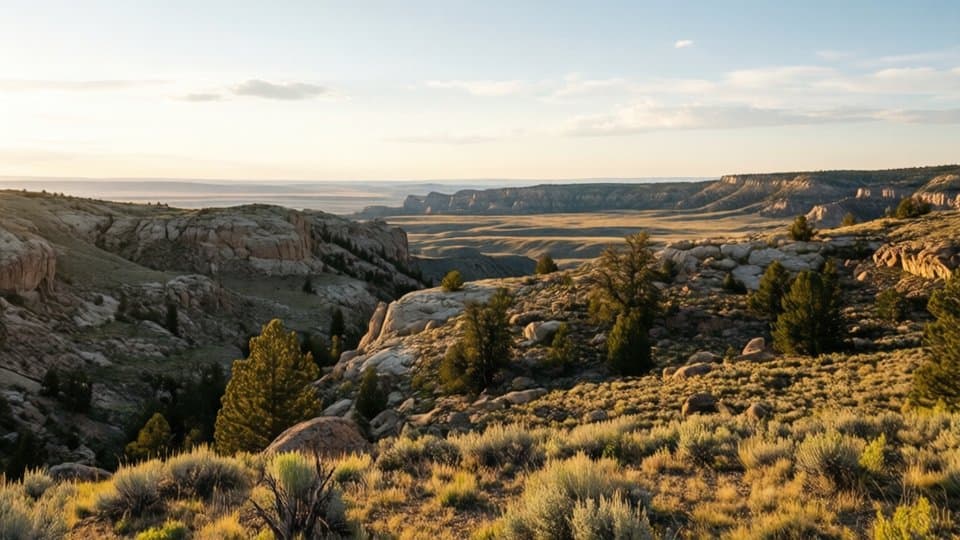
American Rare Earths has confirmed thick, continuous mineralisation extending up to 200 metres from the surface at its Halleck Creek project in Wyoming. The drilling results, released on 15 November 2026, provide critical data for the company's plan to develop the Cowboy State Mine. This discovery comes as the United States seeks to secure domestic supplies of materials essential for magnet production and high-tech industries.
- The 2026 drilling program covered 2,879.6 metres across 18 core holes, according to Proactive Investors.
- One standout hole, HC26-RM060, returned 199.95 metres at 4,242 parts per million total rare earth oxides from the surface, as reported by Small Caps.
- The project currently holds a mineral resource of 2.63 billion tonnes, according to Proactive Investors.
What were the drilling results at Halleck Creek?
The drilling program successfully identified broad mineralisation starting at or near the surface. Several holes showed that the rare earth elements are present in thick layers, which supports the company's plan to use an open-pit mining method. This approach involves removing layers of earth to access the minerals near the top.
The results showed high consistency across the Red Mountain development area. According to Small Caps, 84% of all samples exceeded the 1,000 ppm total rare earth oxides cut-off grade used for the existing resource. The program achieved a high core recovery rate of 96.2%, ensuring the samples are reliable for geological modelling.
Specific high-grade results include:
- 199.91 metres at 4,159 ppm TREO in hole HC26-RM058, according to Proactive Investors.
- 199.50 metres at 4,149 ppm TREO in hole HC26-RM059, according to Proactive Investors.
- 46.50 metres at 5,291 ppm TREO in hole HC26-RM067, according to Proactive Investors.
Why are these specific minerals important?
The project targets magnet rare earth oxides, which are essential for modern technology. These materials are used in electric vehicle motors, wind turbines, and various defense applications. Controlling the supply of these minerals is a major strategic goal for the United States.
The 2026 program provided specific details on the chemical makeup of the site. Magnet rare earth oxides averaged 925 ppm across the program, making up 27.8% of the total rare earth oxide content, according to Proactive Investors. Neodymium-praseodymium oxides, which are highly valued for magnets, accounted for 22.7% of the total oxide content.
The drilling also confirmed low levels of certain radioactive elements. The program returned average thorium oxide grades of 60 ppm and uranium oxide grades of 9 ppm, according to Proactive Investors.
How will the company use this new data?
American Rare Earths will use the assay results to improve its understanding of the mine. The company plans to update its mineral resource estimate and refine its ongoing feasibility study. This study determines if a mining project is economically and technically viable.
The technical team is combining the new assays with geological logging and lithological interpretations. According to Small Caps, the data will also help define the boundaries of the mineralised area by identifying where intrusive rocks sit outside the main host.
"That is the kind of thick, consistent mineralisation from surface that supports the open pit development approach in our Scoping Study, and we now have a complete dataset to carry into the updated Mineral Resource Estimate and the Feasibility Study."
Mark Wall, Chief Executive Officer of American Rare Earths.
What is the background of the Halleck Creek project?
Halleck Creek is located in Albany and Platte counties in Wyoming. The project is managed by Wyoming Rare (USA) Inc., a wholly owned subsidiary of American Rare Earths. The company's broader strategy is to build a domestic United States supply chain for strategic rare earth materials.
The project currently holds a significant mineral resource. As of the latest data reported by Proactive Investors, the resource stands at 2.63 billion tonnes. This resource grades at 3,292 ppm TREO and contains an estimated 8.65 million tonnes of rare earth oxides.
Why does this matter for US-China trade relations?
The development of domestic rare earth sources is happening during a period of intense trade tension between the United States and China. China currently controls a large portion of the global rare earth supply, which creates a strategic vulnerability for the United States.
Recent history shows how these minerals are used in trade disputes. According to China Briefing, China has previously implemented export controls on a wide range of rare earths. In the current political climate, both nations continue to use trade restrictions and tariffs as leverage in their ongoing economic competition.
The United States is also increasing scrutiny on Chinese companies. On 28 October 2026, the Department of Homeland Security added three Chinese biotech companies to a forced labour blacklist, according to China Briefing. Such actions contribute to the complex environment in which American mining companies must operate to secure critical mineral supplies.
What happens next for the project?
American Rare Earths will now move into the next phase of technical assessment. The company will incorporate the new assay data into an updated geological model for the Cowboy State Mine. This model will be a core component of the upcoming feasibility study.
The company's technical team will also perform several other tasks. According to Small Caps, the team will complete a final instrument survey of the 2026 drill collars. Additionally, the company will continue work on density, metallurgical, geotechnical, and hydrogeological studies to support the broader development assessment.
Frequently Asked Questions
What are rare earth oxides?
These are a group of minerals used to make powerful permanent magnets for electric vehicles and wind turbines. They are essential for the transition to green energy and modern electronics.
Where is the Halleck Creek project located?
The project is situated in Albany and Platte counties in the state of Wyoming, USA.
How does this affect the US rare earth supply?
By finding large, near-surface deposits, the US can reduce its reliance on imported rare earths, particularly from China. This helps secure the domestic supply chain for critical technology.