Western manufacturers develop new supply chains for advanced materials
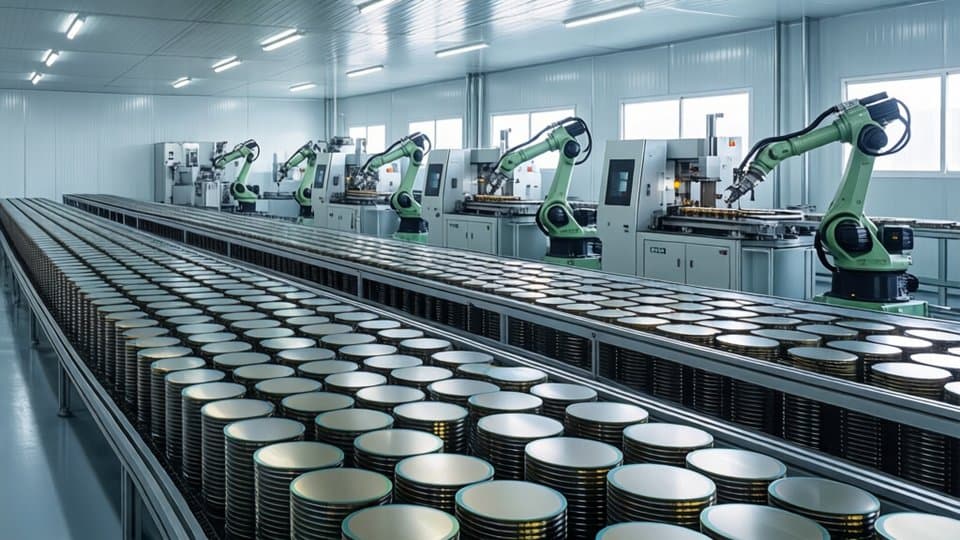
Manufacturers in North America and Europe are rapidly developing new supply chains for advanced materials to reduce dependence on Chinese imports. Recent investments in US chemical processing and electronics recycling partnerships aim to secure the rare earth elements and high-performance coatings required for electric vehicles, wind turbines, and defense technology.
- China currently controls 69% of rare earth mining and 88% of metallization and alloy production, according to IDTechEx.
- Global demand for rare earth magnets in 2026 was driven by electric vehicles at 33% and consumer electronics at 20%, per IDTechEx.
- Current Chemicals is working toward an annual production goal of 1,000 metric tons of rare-earth fluorides, according to pulse2.com.
Why are rare earth magnets so important?
Rare earth magnets are essential because they possess innate magnetic field qualities that outperform other metal permanent magnets. These materials are vital for high-performance applications including e-motors, energy generators, servo motors, and high-power MRI magnets used in medical imaging. Their economic importance is matched by a high level of supply risk.
The demand for these materials is widespread across multiple industries. IDTechEx reports that in 2026, 16% of demand came from industrial and aerospace sectors, while 13% was driven by wind energy. The two primary types of high-performing magnets used are Neodymium-Iron-Boron (NdFeB) and Samarium-Cobalt (SmCo).
How is the US expanding its mineral supply?
The United States is focusing on two main strategies: domestic chemical processing and recycling electronic waste. Both methods aim to create a reliable source of minerals that would otherwise be imported. These efforts target the intermediate steps of the supply chain where China currently holds a dominant position.
Current Chemicals, a manufacturer based in Cleveland, is expanding its ability to convert separated rare-earth oxides into fluoride compounds. These fluorides are used to produce rare-earth metals. According to pulse2.com, the company is using new investment to expand the production of neodymium fluoride and dysprosium fluoride. These specific materials are critical for wind turbines, electric motors, and defense equipment.
Another approach involves recovering materials from old products. Electrek reports that ERI and Cyclic Materials have entered a global partnership to recover rare earths from e-waste. ERI will collect electronics and use AI-based software to identify products containing magnets. These materials will then be sent to a plant in Mesa, Arizona, to recover elements like copper and aluminum alongside rare earths.
What role do advanced coatings play?
Advanced coatings provide specialized protections that standard coatings cannot match. While regular coatings focus on appearance, advanced versions offer properties like anti-corrosion, dielectric strength, EMI shielding, and self-healing capabilities. These materials are increasingly necessary for high-performance environments.
Aerospace applications, for instance, require coatings that are lightweight and resistant to UV rays and temperature changes. According to IDTechEx, advanced coatings can also improve energy efficiency through thermal or reflective properties. These coatings increase the lifespan of products by providing higher durability and reducing the frequency of maintenance.
Sustainability is also driving the market. New regulations regarding quality and performance are pushing companies toward these advanced options. Furthermore, the entry of non-toxic material choices into the market is helping to increase the adoption of these coatings as industries look for more sustainable solutions.
How do companies view the current market?
Industry leaders see a massive opportunity in filling the gap left by concentrated global supply chains. Companies are positioning themselves to meet the needs of North American and European manufacturers who want to avoid sole reliance on a single country for critical components.
“Demand for these fluorides is accelerating as upstream rare-earth supply expands and downstream magnet, coating, and alloy production grows, and this investment lets us scale quickly using the infrastructure and process expertise we already have in Cleveland. This added volume is an important step toward our goal of 1,000 metric tons of annual capacity and beyond. Momentum Global Ventures shares our vision of building a reliable, high-quality source of these critical materials for a resilient supply chain serving manufacturers across North America and Europe.”
Bill Cohen, Ph.D., CEO and Chairman of Current Chemicals, stated this above.
The scale of demand is a primary driver for investment. Pieter Six, an Asset Director at Momentum Global Ventures, noted that the world needs these materials and that demand is enormous. This sentiment is echoed by the partnership between ERI and Cyclic Materials, which aims to transform e-waste volumes into a significant supply of rare earths for the United States.
What are the risks to the supply chain?
The main risk is the extreme concentration of processing power in China. While many countries are investing in mining, the downstream infrastructure remains heavily centralized. This creates a vulnerability for sectors like defense, aerospace, and semiconductors that require a steady flow of high-purity materials.
For the United States, the risk is also tied to regulatory timelines. pulse2.com reports that U.S. defense sourcing requirements are scheduled to tighten in January 2027. This deadline is a key factor driving the push for domestic production of materials like neodymium and dysprosium.
Recycling offers a way to bypass the slow process of permitting new mines. However, companies are still in the early stages of this transition. ERI and Cyclic Materials are currently analyzing samples to determine which products are suitable for recycling, meaning a timeline for when these recycled materials will enter the main supply chain has not yet been set.
What happens next?
Several key developments will shape the industry in the coming months and years. The following milestones and processes are already underway:
- Current Chemicals is currently scaling its Cleveland facility to reach its 1,000 metric ton annual capacity target.
- ERI and Cyclic Materials are currently qualifying specific product categories for their e-waste recycling feedstock stream.
- The U.S. defense sector will implement tighter sourcing requirements in January 2027.
- Companies will continue to bid on joint government and commercial contracts for critical material recycling.
Frequently Asked Questions
Why are rare earths called "critical" minerals?
They are critical because they are essential for modern technology like electric vehicles and wind turbines, but their supply is currently at high risk due to geographic concentration.
Can e-waste actually provide enough rare earths for industry?
Companies are working to prove this by building large commercial portfolios of recycling feedstock, which can produce domestic supplies faster than opening new mines.
What is the difference between regular and advanced coatings?
Regular coatings mostly improve appearance, while advanced coatings provide functional benefits like EMI shielding, thermal conductivity, or self-healing properties.
SEO Meta Description: Discover how the US is building a domestic rare earth supply chain through chemical processing and e-waste recycling to power EVs and defense tech.
URL Slug: rare-earth-magnets-advanced-coatings-supply-chain
Sources
- 1.idtechex.comThe World of Advanced Materials with Rare Earths and Advanced Coatings
- 2.pulse2.comCurrent Chemicals Secures Additional Investment From Momentum Global Ventures To Expand U.S. Rare-Earth Production
- 3.electrek.coThis huge US e-waste deal could unlock rare earths for EVs
- 4.seekingalpha.comREMX: Why Rare Earths Are Becoming The New Oil