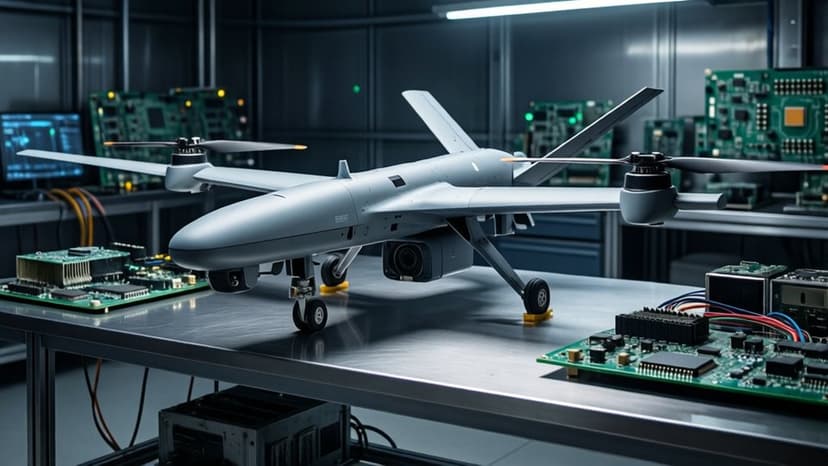
Satellite imagery reveals Chinese drone resembling US Navy tanker
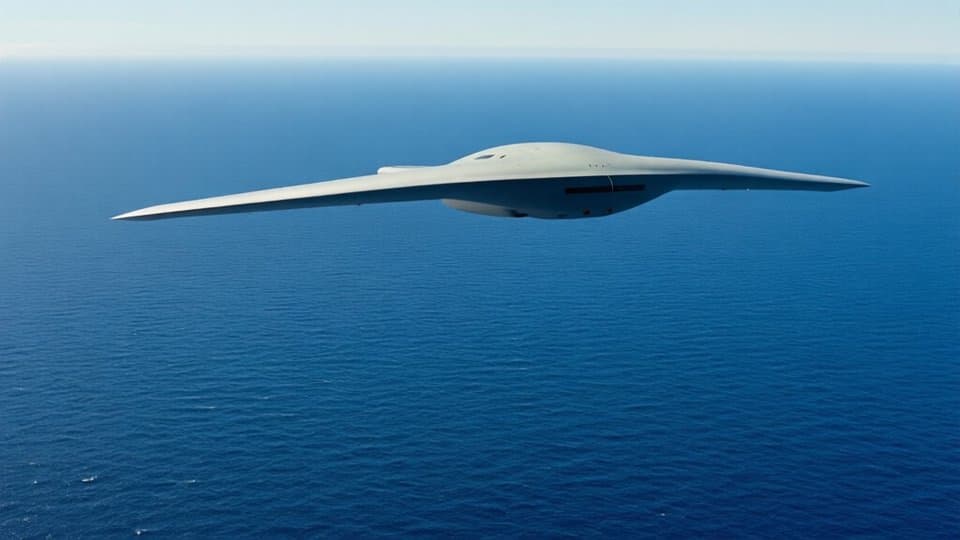
Commercial satellite imagery from Pucheng Neifu Airport in Shaanxi province has revealed an uncrewed aircraft that closely resembles the U.S. Navy's MQ-25A Stingray. The discovery of this MQ-25-like drone suggests China may be developing an unmanned tanker or a multirole platform to support carrier-based operations in the Western Pacific.
- Satellite operator Vantor measured the aircraft at a 66 foot wingspan and 49 foot length, according to SOFX.
- The drone is approximately 20 percent smaller in dimension than the American MQ-25A, according to Migflug.
- The aircraft was captured in satellite frames dated April 23, 2026, according to The Aviationist.
What does the satellite imagery reveal about the drone?
The imagery shows an aircraft with a yellow primer finish and a design that shares several characteristics with the Boeing MQ-25A. The drone features a near-straight wing configuration and a laterally flared V-tail. While the layout is similar to the American tanker, the specific details suggest a unique design rather than a direct copy.
The nose of the aircraft is tapered and finished in a different color from the rest of the airframe, which researchers suggest could indicate a conical radome. Unlike the flush, blended inlet found on the Stingray, this drone has a dorsal intake that appears serrated and may split into two channels. This feature could potentially point to a twin engine setup, according to Migflug.
No refueling pods, drogues, or sensor turrets are visible in the images. This lack of equipment means the exact mission of the aircraft remains unconfirmed. The aircraft sits on an apron alongside other advanced technology, including a CH-7 stealthy flying wing and a jet-powered Jiutian mothership drone, according to SOFX.
Is this drone intended to be a carrier tanker?
An unmanned tanker would allow the People's Liberation Army Navy to reduce the refueling burden currently placed on crewed J-15 fighters. Using drones for fuel delivery could free up manned aircraft for direct combat missions. This capability is a major factor in extending the operational reach of carrier strike groups.
However, analysts disagree on whether the drone is actually a tanker. Some suggest it could be a multirole combat drone, a collaborative combat aircraft designed to fly with crewed fighters, or an escort drone meant to protect high-value assets. The current imagery does not provide enough evidence to confirm an aerial refueling role.
The presence of the drone at Pucheng Neifu Airport is notable because the site appears to be a busy testing hub. The location might serve as an uncrewed aircraft branch of the China Flight Test Establishment at Xi'an, according to military aviation observer Andreas Rupprecht. This would place the drone within a coordinated testing ecosystem.
How each side tells it
While there is no official government disagreement, military analysts and observers offer different interpretations of the aircraft's purpose and origin.
Andreas Rupprecht, a longtime observer of Chinese military aviation: "I think China is actually following the same path as Boeing here, and it’s heading towards a tanker that can also take on other roles as an ISR platform."
Andreas Rupprecht, regarding the design differences: "I’m more interested in the differences such as the non-flat air intake & the rather tapered front end possibly featuring a radome, which might suggest different roles besides an indeed similar design."
Some observers suggest the drone is a functional evolution of existing technology, while others maintain that the resemblance to the MQ-25 is merely a starting point for speculation. The lack of visible refueling hardware remains the primary argument against a confirmed tanker role.
Why does this development matter for regional security?
The development of unmanned support aircraft directly impacts naval power projection in the Western Pacific. If China successfully integrates unmanned tankers into its carrier groups, it could significantly extend the range and endurance of its naval aviation. This would change the logistics of long-range maritime operations.
The aircraft appears at a time when China is actively expanding its unmanned naval capabilities. In October 2026, Chinese state media reported that the navalized GJ-21 drone completed its first takeoff and landing aboard the Type 076 assault ship Sichuan, according to SOFX.
Furthermore, China's electromagnetic catapult carriers, such as the Fujian, are already operating with advanced aircraft like the J-35 and J-15T. Adding unmanned support platforms would complete a more complex, automated combat ecosystem. This evolution could alter the balance of power in contested waters.
What is the history of drone testing in this region?
Pucheng Neifu Airport has evolved from an obscure field into a significant testing site for uncrewed aviation. It is located in Shaanxi province and is situated near a national aeronautics industrial base. The site now hosts multiple programs testing different types of advanced drones.
The history of Chinese drone development shows a move toward specialized, multirole platforms. Recent years have seen the testing of stealthy flying wings like the CH-7 and heavy mothership drones like the Jiutian. These programs demonstrate a broad approach to uncrewed warfare, covering everything from stealthy penetration to swarm management.
The aircraft found at Pucheng is part of a larger trend of moving uncrewed systems toward sea-based operations. This follows years of testing land-based drones that are now being modified for carrier decks. The simultaneous presence of different drone types at Pucheng suggests a highly integrated research and development effort.
What happens next?
There are no specific dates for the next flight tests of this particular drone. However, the disappearance of the aircraft from imagery dated June 16, 2026, suggests that testing or movement is ongoing, according to Defence Security Asia.
Future observations will be necessary to determine if the drone is being prepared for carrier integration. Analysts will look for the appearance of refueling pods or specific sensor suites in future satellite frames. The progression of the GJ-21 program on the Type 076 ship provides a blueprint for how these drones might move from testing to active service.
Frequently Asked Questions
Is the Chinese drone a direct copy of the US MQ-25?
It is not a direct copy, as it features a different nose shape, a different air intake, and a smaller overall size, according to analysts.
Can the drone refuel other aircraft?
It is possible, but no refueling equipment or pods were visible in the satellite images used to identify the aircraft.
Where was the drone spotted?
The aircraft was identified at the Pucheng Neifu Airport located in the Shaanxi province of China.
Sources
- 1.sofx.comSatellite Imagery Spots Chinese MQ-25-Like Drone With Possible Carrier Tanker Role
- 2.migflug.comChina’s MQ-25-Like Drone Emerges at Pucheng Test Base
- 3.theaviationist.comAn MQ-25A Stingray-Like Drone Has Emerged at a Chinese Base
- 4.defencesecurityasia.comChina’s MQ-25-Like Drone Emerges, Raising Carrier Range Questions
- 5.sohu.com外媒:神似MQ-25的黄皮无人机与彩虹-7同场现身