Newzix
Breaking News
South Asia

PM Modi Joins Quad and ASEAN Summits in Manila
Arjun Mehta6 min read
PM Modi Joins Quad and ASEAN Summits in Manila

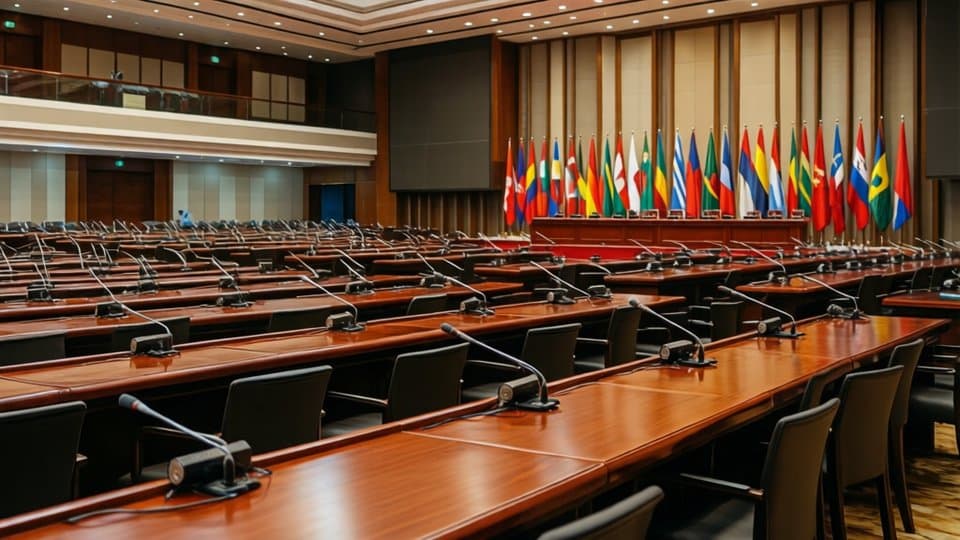
Indian Prime Minister Narendra Modi is in Manila to participate in several high-level diplomatic summits, including the 23rd ASEAN-India Summit and a Quad Leaders' Summit. These meetings, occurring between November 16 and 18, 2026, aim to strengthen regional security, maritime cooperation, and economic ties across the Indo-Pacific.

  • Prime Minister Modi is attending the 23rd ASEAN-India Summit and the 21st East Asia Summit in the Philippines, according to The Statesman.
  • The Quad meeting in Manila will be the first in-person gathering of leaders since September 2024, as reported by Times of India.
  • The Quad group includes the United States, India, Australia, and Japan, according to Rediff.

What is the purpose of the Quad meeting in Manila?

The Quad leaders' meeting focuses on discussing shared interests regarding peace, prosperity, and security within the Indo-Pacific region. This gathering serves as a multilateral platform for the four partner nations to coordinate their strategic approaches to regional stability.

The meeting brings together Prime Minister Narendra Modi, US President Donald Trump, Australian Prime Minister Anthony Albanese, and Japanese Prime Minister Sanae Takaichi. This represents the first Quad summit since the US midterm elections and the first during President Trump's current term. According to Rediff, the group was originally created in 2007 but became largely inactive a year later due to concerns about provoking China.

While the Quad was revived in 2017 to address China's growing influence, it has not held a leaders' summit under the current US administration until now. US Assistant Press Secretary Olivia Wales stated that the partnership is designed to tackle the region's toughest challenges.

"On Tuesday evening in Manila… the president will participate in a multilateral meeting with Quad leaders to discuss shared interests of peace, prosperity, and security in the Indo-Pacific region,"

— Olivia Wales, Assistant Press Secretary at the White House

How do the leaders view the India-ASEAN relationship?

India and the Association of Southeast Asian Nations (ASEAN) view their relationship as a vital economic and security partnership. The discussions in Manila focus on expanding cooperation in trade, connectivity, and maritime security to ensure regional stability.

Prime Minister Modi emphasized that the prosperity of ASEAN and the development of India are deeply interconnected. He noted that the two entities together account for nearly one-fourth of the global population. According to Times of India, the summit provides a chance to review the ASEAN-India Plan of Action for 2026-2030.

The partnership has moved beyond cultural ties into high-tech sectors. Prime Minister Modi stated that the relationship has expanded into digital technology, defense, and space. Since 2014, India has launched approximately 250 Quick Impact Projects and provided over 10,000 skill-building scholarships to strengthen these ties, as reported by Times of India.

Is there disagreement regarding the Quad's strength?

There is a contradiction between official US statements and media reports concerning the current state of the Quad alliance. While some reports suggest the group is struggling, US officials have strongly denied these claims.

A report by Politico on November 14, 2026, alleged that the Quad alliance was faltering under the Trump administration. However, US Assistant Secretary of State for Global Public Affairs Dylan Johnson dismissed these claims as "utterly ridiculous" on social media. According to The Statesman, Johnson pointed to five meetings between Quad foreign ministers since Trump took office to prove the alliance is active.

The Indian Ministry of External Affairs has also maintained a cautious stance on the specific scheduling of the Quad meeting. Secretary (East) Rudrendra Tandon told The Statesman that the ministry did not have confirmed information regarding a specific Quad summit at the time of his briefing.

What are the key security concerns in the region?

Maritime security and freedom of navigation remain the primary security focuses for the participating nations. The summits in Manila address tensions in the South China Sea and the need for coordinated naval activities.

India is advocating for intensified naval coordination among Indo-Pacific states. According to Navbharat Times, the 21st East Asia Summit is expected to address the political crisis in Myanmar and tensions in the South China Sea.

India has consistently called for freedom of movement in the South China Sea. The Indian government maintains that any agreements between ASEAN and China regarding the disputed waters must align with international law. This focus on maritime defense is also reflected in bilateral ties, such as the Philippines' purchase of the Indian Brahmos anti-ship missile.

How does this affect the local Indian community?

The diplomatic visit includes significant engagement with the Indian diaspora in the Philippines. Prime Minister Modi's schedule includes meeting with local community members and participating in religious and cultural events.

In Manila, the Prime Minister led a foundation-stone laying ceremony for the redevelopment of the Khalsa Diwan Gurudwara. This site, established in 1901, is the oldest Sikh place of worship in the Philippines. According to Times of India, the redevelopment will cost roughly 305 million Philippine pesos, or about $5 million.

The Prime Minister's arrival was marked by cultural performances, including a Filipino version of the Ramayana. He noted that the diaspora helps bring the two countries closer while preserving Indian culture. There is also a high demand from the local Indian community to meet the Prime Minister, which officials are attempting to accommodate.

What is the historical background of these groups?

The ASEAN and Quad groups represent different eras of regional cooperation. ASEAN is an established 11-nation bloc, while the Quad is a security-focused partnership that has seen periods of dormancy.

The Quad was formed in 2007 but became inactive shortly after. It was revived in 2017 to address the economic and military rise of China in the Indo-Pacific. The East Asia Forum, which serves as a platform for these discussions, has been shaping regional strategic evolution since 2005, according to The Statesman.

India's engagement is guided by its Act East Policy. This policy has shifted the focus from shared cultural heritage to practical cooperation in defense, space, and digital technology. The current summit aims to review the implementation of the ASEAN-India Plan of Action for the 2026-2030 period.

What happens next?

Following the summits in Manila, several key diplomatic and environmental events are expected. Prime Minister Modi is scheduled to participate in the 21st East Asia Summit and the ASEAN-India Summit through November 18, 2026.

Regarding bilateral relations, a meeting between Prime Minister Modi and US President Donald Trump is not expected in Manila. Instead, DW reports that a bilateral meeting is planned for next month in Florida during the G20 leaders' summit. Meanwhile, in India, the state of Andhra Pradesh is preparing for Cyclone Akvan, which is expected to cross the coast on November 20, 2026.

FAQ

Will Modi and Trump meet in Manila?
No, they are not expected to hold bilateral talks in Manila. Instead, they are planned to meet next month in Florida during the G20 summit.

What is the Quad?
The Quad is a strategic partnership consisting of the United States, India, Australia, and Japan aimed at ensuring a free and open Indo-Pacific.

Why is the Manila summit important for India?
It allows India to advance its Act East Policy and strengthen maritime security and economic ties with Southeast Asian nations.

Sources

  1. 1.dw.comIndia news: Modi to attend ASEAN, Quad meet in Manila
  2. 2.timesofindia.indiatimes.comASEAN Summit 2026 Live Updates: 'World needs peace, stability and predictability' - PM Modi at India-Asean summit in Manila
  3. 3.rediff.comModi, Trump to attend Quad meet in Manila tomorrow
  4. 4.thestatesman.comPM Modi to attend ASEAN, East Asia summits in Manila; maritime security in focus
  5. 5.navbharattimes.indiatimes.comPM मोदी के फ‍िलीपींस दौरे में दिखेगी भारत की 'एक्ट ईस्ट' नीति, QUAD बैठक ...

Read more →

Related Articles

Thousands Still Missing as Nepal Faces Massive Glacier Flood Recovery
South Asia

Thousands Still Missing as Nepal Faces Massive Glacier Flood Recovery

Families around the world are still searching for answers 10 weeks after a catastrophic glacier collapse on 26 August destroyed Himalayan valleys in Nepal. The disaster, which sent a wall of water and mud through 150 kilometres of territory, has left thousands of people unaccounted for and entire communities facing uncertain futures. The Guardian reported that 1,459 people have died in the floods. According to the United Nations , more than 5,000 people remain missing. The Guardian stated that 700 of the missing are foreigners, including 34 Australians. How many people are still missing? The scale of the disappearance remains immense as search operations shift focus. While the death toll has reached 1,459, a massive group of people has not been located. The United Nations reported that nearly 5,000 people are still missing following the event. Among the unaccounted for are many international travelers. The Guardian noted that 700 of the missing individuals are foreigners. This includes 34 Australians whose families are desperately seeking information. Many of these individuals were part of tour groups or on religious pilgrimages when the water hit. What is the status of the search for bodies? The official search for survivors has ended, moving instead into a phase of recovery. Last month, Nepal officially ended the active search-and-rescue operation. Phanindra Paudel, the chief of the National Emergency Operation Centre, stated that the country has moved into the "search-and-rehabilitation phase." This change means authorities will no longer actively hunt for people. Instead, they will recover any remains, property, or valuables that appear during the rebuilding process. For families of the missing, this transition has been a significant blow to their hopes of finding answers. They are now left waiting for remains to be found by chance during debris clearance. Why is the DNA identification process so slow? The government is using DNA testing to match remains with families, but a massive backlog exists. While more than 2,000 people have provided DNA samples, the results are not being processed quickly enough to provide closure. At the start of October, only 112 bodies had been successfully transferred back to families, according to the Guardian . This slow pace leaves families in a state of permanent limbo. Linda Govender, who founded Global Voices for the Missing, says the uncertainty is unbearable. She described the daily struggle of checking phones and waiting for news that never arrives. Families are calling for the Nepali government to maintain regular communication and ensure every reasonable avenue is explored. How much will it cost to rebuild Nepal? The financial burden of the disaster is staggering for the mountainous nation. The United Nations reported that the World Bank estimates the damage at $2.7 billion. However, the total cost for full recovery is expected to reach $4.7 billion. Nepal is struggling to find the necessary funds. Authorities noted that the $21.5 million expected from the loss and damage fund is far too small for such a massive undertaking. This financial gap comes at a time when the tourism industry, which contributes 6.7% to the country's GDP, has seen a sharp decline. Sagar Pandey, chief executive of the Himalayan Glacier Company, reported losing almost 80% of his usual bookings. Is the resettlement of survivors safe? Many survivors face a cycle of being moved from one disaster zone to another. In the Rasuwa district, the village of Khalte was completely wiped out. Residents in Khalte had already been displaced once before following the 2015 earthquake. Many of them had moved to Khalte because they were part of an informal resettlement attempt. According to Eco-Business , a 2018 assessment had already flagged Khalte as a high-risk area. Despite these warnings, people lived there because they had no other options. Now, they must find new homes again. This recurring pattern of moving people into unsafe areas only to have them displaced by the next disaster has caused deep frustration among locals. How each side tells it The government and the affected families view the current situation through very different lenses. The government is focusing on the practicalities of long-term recovery and the reality of limited resources. They have shifted from rescue to rehabilitation, acknowledging that the immediate window for finding living survivors has closed. Families, however, feel the disaster is ongoing. They argue that the search should not be abandoned just because the official phase has changed. They want the government to be more proactive in searching for the deceased and more transparent about the progress of DNA testing and identification efforts. "The uncertainty is unbearable. You wake up every morning hoping for news, checking your phone, reading messages and wondering whether today will finally be the day somebody has an answer." Linda Govender, founder of Global Voices for the Missing What happens next? The recovery process will take years. Nepal has called for increased international support to manage the $4.7 billion rebuilding cost. On the global stage, Nepal and Bhutan intend to push for the needs of mountainous nations to be a priority on the agenda for the COP31 climate conference in Türkiye. Locally, the focus remains on clearing debris and managing the massive backlog in DNA identification. Families continue to advocate for better communication from the government as they wait for the possibility of receiving remains or death certificates. Frequently Asked Questions How many people died in the Nepal floods? The death toll has risen to 1,459 people, according to the Guardian. Are there many foreigners missing? Yes, more than 700 foreigners are currently unaccounted for, including 34 Australians. What is the total cost of the recovery? The recovery is estimated to cost approximately $4.7 billion, according to the United Nations. SEO Meta Description: 10 weeks after catastrophic floods in Nepal, thousands remain missing. Learn about the search for remains, the $4.7bn recovery cost, and the families waiting. URL Slug: nepal-floods-missing-families-recovery-update

Arjun Mehta·
Tesla Shifts Focus to Robotics as We Await the Tesla Optimus Release Date
Robot Race

Tesla Shifts Focus to Robotics as We Await the Tesla Optimus Release Date

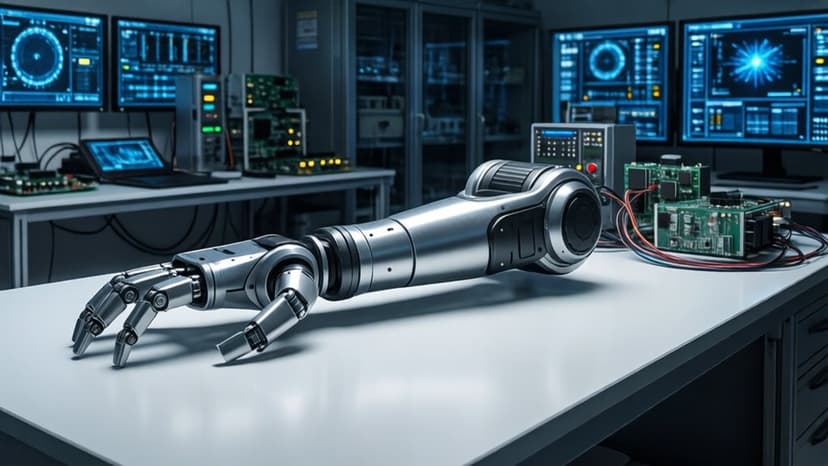
Tesla has officially transitioned its Fremont facility to support humanoid robotics, a move that follows the rapid dismantling of its luxury sedan and SUV assembly lines. This shift toward a new manufacturing focus is central to the company's strategy regarding the tesla optimus release date and its long-term transition from an automaker to an AI and robotics firm. Tesla completed the teardown of its Model S and Model X assembly lines in just 46 days this summer, according to Not a Tesla App . Elon Musk announced during a Q3 2026 earnings call that early production on a high-volume line has begun in Fremont, as reported by Not a Tesla App . The company aims for a future production capacity of 10 million units per year at Giga Texas, according to Not a Tesla App . Why did Tesla stop making the Model S and Model X? Tesla ended production for the Model S and Model X in April after Elon Musk decided to terminate both lines in January. This decision was made specifically to free up factory space and resources for the development and manufacturing of the Optimus humanoid robot. The reconfiguration of the Fremont plant was completed quickly. Not a Tesla App reported that the company spent only 46 days tearing down the existing luxury vehicle lines to make room for the new robotics assembly process. While the space was cleared to accommodate the robot, some observers have questioned the necessity of the move. Electrek noted that critics find the idea of abandoning established car lines for a robot that is not yet ready for mass use to be unconvincing. What is the current status of Optimus production? Tesla has moved into the early stages of manufacturing the Optimus Gen 3 design. The company is currently using the newly cleared space in Fremont to produce what it considers to be the first production-quality units of the humanoid robot. The production ramp-up is expected to be gradual rather than immediate. Elon Musk described the output as an S-curve with a "shallow slope" that will be "somewhat bumpy" because the product is so radically new, according to Not a Tesla App . Tesla expects it will take at least one year to reach a production rate of 20,000 units per week. This delay is largely due to ongoing changes in the electromechanical design and the need to improve the robot's overall reliability and durability. How does Tesla plan to scale robot manufacturing? The company is following a two-stage geographic expansion for its robotics division. The initial high-volume line is located in Fremont, but the long-term goal involves much larger facilities in Texas to meet massive global demand. Tesla plans to build a massive production line at Giga Texas capable of producing 10 million units per year. Currently, the Fremont line is being set up to handle 1 million units per year, according to Not a Tesla App . The hardware will also evolve during this scaling process. While the current focus is on Gen 3, Tesla intends to graduate to the Gen 4 design by the time the Giga Texas capacity becomes fully operational. When will the robots be available to customers? Industrial users will receive the robots before the general public. Tesla intends to deploy Optimus first in settings where it can perform dangerous or repetitive tasks that require continuous, around-the-clock operation. The timeline for external delivery remains several years away. According to Not a Tesla App , the first external and industrial customers are not expected to receive robots until the end of 2027. Musk believes the technology will reach a level of maturity suitable for home use later in the cycle. He stated his conviction regarding the product's potential during the earnings call. "I remain convinced that Optimus will be the biggest product on Earth," Musk also suggested that a new video showcasing the robot performing non-programmed tasks could be released within a month or two to demonstrate its true capabilities. How will the robot's intelligence be upgraded? A major milestone for the Optimus platform involves the integration of the AI5 chip. This new hardware is designed to provide the massive computational power required to manage the complex movements of a humanoid body. The AI5 chip is expected to deliver five times the compute power of a full two-chip AI4 computer. Musk noted that this level of processing is necessary because the robot must handle far more degrees of freedom than a standard vehicle, according to Not a Tesla App . The development of this chip is also moving through the supply chain. The AI5 chip entered trial production at a Samsung facility in Texas last month, with mass production scheduled for next year, and integration into Optimus is expected around April 2027. What happened to the Model S and X software? As Tesla winds down the legacy of its luxury cars, Elon Musk has promised to "open source" the Model S and Model X. He is using the previous release of the original Roadster as a blueprint for this initiative. However, there is significant disagreement regarding what "open source" actually means in this context. Electrek reports that Tesla's previous Roadster release lacked actual open-source licenses, providing only a liability disclaimer rather than the rights to copy or modify the work. The Roadster release consisted of a few small files, including CAN database files and some diagnostic software. It did not include critical components like CAD files, mechanical drawings, or the firmware source code, according to Electrek . If Tesla follows the same pattern for the Model S and X, the release may only include diagnostic tools and minor documentation rather than the core engineering files that would allow others to truly learn from the platform. What happens next? Several key milestones will determine the success of Tesla's robotics pivot over the coming months and years: A potential new demonstration video of Optimus performing non-pre-programmed tasks is expected within the next two months. Tesla aims to solve major AI and electromechanical reliability issues by the end of 2026. Mass production of the AI5 chip is slated for 2026 to support the 2027 robot integration. The first industrial deliveries of Optimus are scheduled for the end of 2027. Frequently Asked Questions When can I buy a Tesla Optimus robot? Individual consumers should not expect to buy a robot for home use in the near future. Tesla is targeting industrial customers first, with deliveries expected to begin in late 2027. Is Tesla actually open-sourcing the Model S and X? While Elon Musk has promised to open-source these models, critics argue that Tesla's previous "open source" release of the Roadster lacked the necessary legal licenses and core engineering files to qualify. Why did Tesla stop making the Model S? Tesla ended production of the Model S and Model X in April to repurpose factory space. This space is being used to build the new high-volume Optimus robot assembly lines. SEO Meta Description: Tesla has begun Optimus robot production in Fremont, replacing the Model S and X lines. Learn about the production timeline and the Tesla Optimus release date. URL Slug: tesla-optimus-production-fremont-model-s-x-discontinued

Kenji Arai·
Xi Jinping Hosts Putin and Trump in Shenzhen Summit
China & Taiwan

Xi Jinping Hosts Putin and Trump in Shenzhen Summit

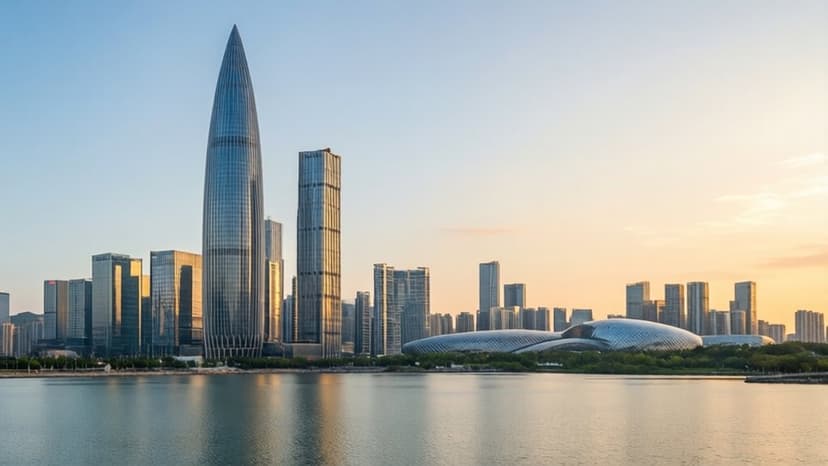
Chinese President Xi Jinping has orchestrated a historic summit in Shenzhen, bringing together Vladimir Putin and Donald Trump to discuss the reshaping of the international order. This high-stakes meeting marks a major diplomatic moment for China as it attempts to position itself as a central architect of global politics rather than a mere reactor to Western decisions. The event takes place against a backdrop of intense geopolitical competition and significant domestic economic pressure within China. BBC reported that Xi Jinping is hosting a summit in Shenzhen featuring Vladimir Putin and Donald Trump. According to Livemint , Xi Jinping has promised two giant pandas, Ping Ping and Fu Shuang , to Zoo Atlanta . The BBC Global China Unit notes that this is Xi's first state visit to the United States in more than 11 years. Why is this summit considered a major diplomatic win for China? The summit allows China to demonstrate its growing grip on the global economy and international politics. By hosting the leaders of the world's two largest nuclear powers, Beijing moves from the periphery to the center of global decision-making. The futuristic setting of Shenzhen, complete with drones and robots, serves as a visual testament to China's technological advancement. For decades, the world order was shaped primarily by Washington and its Western allies. However, as BBC reported , China is now orchestrating conversations that reshape how nations interact. This shift suggests that Beijing no longer simply reacts to policies from London or Brussels but actively drives the global agenda. What are the primary risks facing Xi Jinping during these talks? Xi Jinping faces a difficult balancing act regarding the war in Ukraine and the expansion of nuclear arsenals. He must maintain a close relationship with Vladimir Putin without damaging China's vital economic connections to the European Union. The EU remains a critical market for Chinese exports, which are currently essential to the country's economic stability. The conflict in Ukraine, now entering its fifth year, remains a sensitive topic. China maintains a stance of neutrality, calling for political settlements while avoiding direct condemnation of the Russian invasion. However, the BBC notes that the US and Europe have accused China of supporting the Russian economy by purchasing oil and gas and providing components for the war. Nuclear proliferation presents another complication. Donald Trump has expressed a desire to discuss limiting the global supply of nuclear weapons. While the US and Russia hold the largest stockpiles, China is rapidly expanding its own arsenal. This expansion has raised alarms in Washington, especially since the New START treaty expired in February of this year. How do the different leaders view the nuclear issue? The leaders hold conflicting views on how to manage the world's nuclear weapons. Donald Trump wants China to participate in new arms control agreements, whereas Beijing has historically pushed back against such limitations. China maintains that it requires the freedom to develop its own nuclear capabilities. This stance could impact China's reputation, as the US may argue that true global leadership requires being a responsible nuclear power. The tension between these positions could prevent any concrete breakthroughs during the summit. How will the summit affect China's domestic image? The summit serves as a powerful propaganda tool for Xi Jinping as he prepares for the next Communist Party Congress. He is expected to secure a historic fourth term as the leader of both the party and the country. Displaying himself alongside global heavyweights can help project an image of strength to a domestic audience. China is currently facing several internal economic challenges. According to the BBC , a country-wide property crisis has damaged consumer confidence. Additionally, local governments are struggling with heavy debt, manufacturing has slowed, and one in five young people are reportedly struggling to find employment. These issues create underlying social anxiety that the leadership must manage. Will "Panda Diplomacy" help soften the political tension? To complement the hard politics, Xi Jinping is reviving a long-standing tradition of "panda diplomacy." By promising two giant pandas to Zoo Atlanta, China is using a highly visible gesture of goodwill to reach the American public. This tactic aims to build soft power even as geopolitical competition intensifies. The tradition of sending pandas dates back to 1972, following Richard Nixon's historic visit to China. While the practice changed in 1984 from permanent gifts to long-term loans, the symbolic value remains high. As Livemint reported , the arrival of pandas can signal closer ties, whereas their return often reflects deteriorating relations. The return of pandas to Atlanta is particularly significant because Zoo Atlanta was the last US zoo to hold pandas before they were all returned to China in November 2024. While these animals will not solve disputes over Taiwan or trade, they offer a "softer face" to the intense rivalry between the two superpowers. Who are the key figures involved in this diplomatic shift? The history of Chinese leadership shows a move toward centralized power under Xi Jinping. Born in 1953 to the revolutionary leader Xi Zhongxun , Xi Jinping experienced significant hardship during the Cultural Revolution. He spent seven years living in a cave in rural Shaanxi province, a period he has reflected upon in past interviews. After rising through the ranks in Fujian and Zhejiang, he became the leader of the Communist Party. His tenure has been marked by an increase in global influence through the "Belt and Road" initiative, but also by tightened domestic control in regions like Xinjiang, Tibet, and Hong Kong. His relationship with Vladimir Putin is described by the BBC as one of close friendship, with the two having met more than 40 times. What happens next The focus will shift to the upcoming Communist Party Congress in China, where Xi Jinping is expected to secure his fourth term. On the international stage, observers will watch for any unscripted interactions between Trump and Putin that might disrupt the carefully choreographed Chinese agenda. FAQ Why are pandas being sent to Atlanta? China is using "panda diplomacy" to build goodwill and provide a symbolic gesture of friendship during a period of high political tension. What is the main cause of tension in the nuclear talks? The US wants China to join arms control limits, but China argues its arsenal is currently much smaller than those of the US and Russia. How is China's economy performing? The economy is facing challenges including a property crisis, high local government debt, and significant youth unemployment. SEO Meta Description: Xi Jinping hosts a historic summit in Shenzhen with Vladimir Putin and Donald Trump, balancing nuclear tensions and panda diplomacy to reshape global order. URL Slug: xi-jinping-shenzhen-summit-putin-trump-diplomacy

Elena Marsh·