Violence spreads across Bangladesh as Sheikh Hasina prepares for return
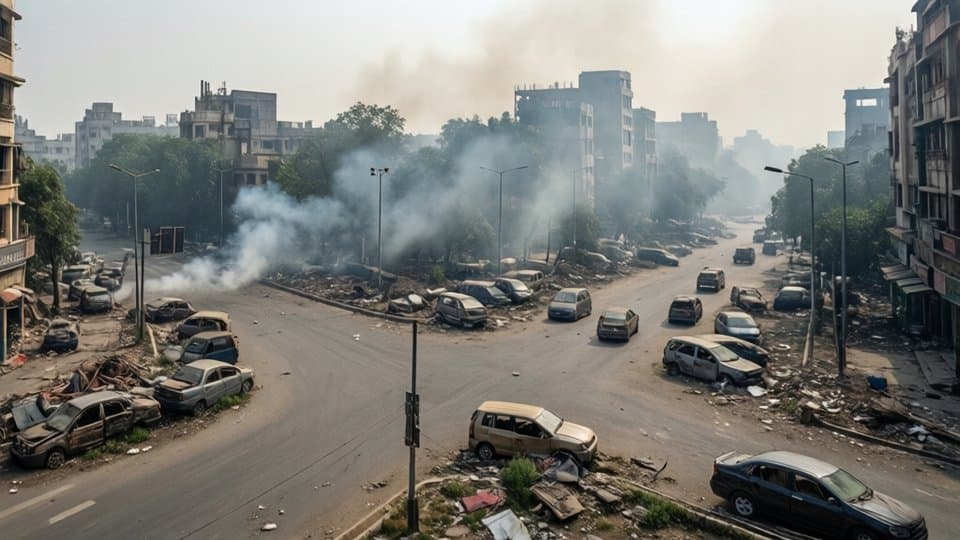
Violent clashes, arson, and bomb blasts have paralyzed parts of Bangladesh as supporters of former Prime Minister Sheikh Hasina protest her planned return in December. The unrest follows the government's rejection of her request for a new passport and identity card, which she needs to travel from her current exile in India. These violent protests and killings threaten the stability of the country as it remains on edge regarding the former leader's movement.
- The Awami League party organized a nationwide lockdown on Thursday, November 20, 2026, to mobilize support for Hasina.
- Police reported that at least 37 branches of Grameen Bank have been targeted by arson or attempted fires since November 10, according to The Hindu BusinessLine.
- Authorities deployed 97 platoons of the Bangladesh Border Guard across seven districts to prevent further violence, as reported by The Guardian.
What is causing the current violence in Bangladesh?
The violence stems from a political standoff between the current administration and supporters of the ousted Prime Minister. Sheikh Hasina, who fled to India in August 2024, intends to return to her home country next month. Her supporters are protesting the government's refusal to grant her the travel documents necessary for this return.
The unrest has spread across many regions. The Guardian reported that during the last 10 days of protests, police documented dozens of crude bomb blasts and vehicle fires in at least 28 districts. This instability has caused injuries to both police officials and members of the public.
Specific targets have emerged during these clashes. The Grameen Bank, founded by former interim leader Muhammad Yunus, has faced significant attacks. The bank stated that 14 more of its offices were attacked since midnight on Tuesday. This pattern of targeting institutions linked to the previous interim leadership suggests a deep political divide.
Who are the main figures involved in this conflict?
The conflict centers on the rivalry between the followers of Sheikh Hasina and the current political establishment. Hasina served as Prime Minister from 2009 until her ouster in 2024. She is currently living in exile in Delhi, India, after being forced to flee following a student-led uprising.
Muhammad Yunus is another central figure. He led an interim administration for 18 months following the 2024 regime change. While he is no longer in power, his influence remains a flashpoint. On Wednesday, late at night, his ancestral home in Chattogram was set on fire. Police told Reuters that flammable substances were likely thrown into an unused ground-floor room, though his family members on the upper floors remained safe.
The current government is led by Prime Minister Tarique Rahman of the Bangladesh Nationalist Party (BNP). Rahman took office following a landslide election in February 2026. This election took place under the administration of Muhammad Yunus, during which the Awami League was barred from participating.
How does each side describe the situation?
The two sides offer completely different interpretations of the current political climate and the motivations behind the violence.
Sheikh Hasina maintains that she is a victim of systemic suppression. She told The Associated Press that she is determined to return despite the risks of arrest or death.
Hasina also claimed that her party is being targeted. She alleged that at least 20,000 party members have been killed since August 2024 and that thousands more have been arrested or forced into hiding. She described the current environment as one where extremist elements have gained too much confidence.
The government, however, views the unrest as a deliberate attempt to destabilize the nation. Home Minister Salahuddin Ahmed accused Awami League leaders living abroad of inciting supporters to torch property. The government maintains that arrests are based on specific criminal charges rather than political affiliation.
What is the history behind the current political crisis?
The roots of the current tension lie in the events of August 2024. A student-led uprising forced Sheikh Hasina to flee to India on August 5, 2024. This period was marked by violent protests and a deadly crackdown by her government. The United Nations reported that nearly 1,400 people were killed during that time.
Following her departure, Muhammad Yunus took charge of an interim government. During this period, student leaders who participated in the protests, such as Nahid Islam and Asif Mahmud, became advisers in the administration. This transition period eventually led to the February 2026 elections.
The legal situation for Hasina has also intensified. In 2025, a special tribunal sentenced her to death for crimes against humanity. The court found her responsible for ordering the crackdown on protesters. Hasina has rejected this verdict and challenged the legitimacy of the trial. She remains in India while the country moves toward a new political era under the BNP.
What are the recent casualties and arrests?
The recent days have seen several specific deaths and detentions. On Tuesday, an activist from the ruling BNP was allegedly killed by unidentified people near Hasina's home district of Gopalganj, according to police reports. On Wednesday morning, a bus company helper was burnt to death in Pirojpur after two buses were set on fire.
Authorities are also making arrests of former officials. On Thursday, police detained former education minister Nurul Islam Nahid from his home in Dhaka. He faces charges related to several killings that occurred during the 2024 protests. These actions reflect the government's effort to prosecute those involved in the previous administration's actions.
Violence has also affected the military and security sectors. A former Bangladesh Air Force officer, whose death is linked to video footage of Hasina fleeing in 2024, was found dead in a river in Dhaka on Wednesday. His family has alleged murder in connection with his death.
What happens next?
The primary focus remains on the month of December 2026. This is when Sheikh Hasina has promised to return to Bangladesh. Her return could trigger further large-scale protests or direct confrontations with law enforcement if she is arrested immediately upon arrival.
Security forces will likely maintain high alert in the coming weeks. The deployment of 97 platoons of the Border Guard indicates that the government expects continued volatility in districts like Gopalganj and Faridpur. The outcome of her request for travel documents will be the immediate catalyst for the next phase of unrest.
Frequently Asked Questions
Why is Sheikh Hasina in India?
She fled to India in August 2024 after a student-led uprising and violent protests forced her to resign as Prime Minister.When does Sheikh Hasina plan to return?
She has stated in multiple interviews that she intends to return to Bangladesh in December 2026.What is the current government in Bangladesh?
The country is currently led by Prime Minister Tarique Rahman of the Bangladesh Nationalist Party (BNP), who took office after the February 2026 elections.SEO Meta Description: Violence erupts in Bangladesh as Awami League supporters protest against the government ahead of Sheikh Hasina's planned December return from exile in India.
URL Slug: bangladesh-protests-sheikh-hasina-return-violence
Sources
- 1.theguardian.comViolent protests and killings in Bangladesh ahead of exiled Sheikh Hasina’s planned return
- 2.indiatoday.inBangladesh regime change: AFP journalist contacted Yunus even before Hasina's exit
- 3.wral.comBangladesh's ousted premier Hasina tells the AP she will return from exile in December at any cost
- 4.thehindubusinessline.comBangladesh on edge as violence escalates ahead of Sheikh Hasina’s return, Yunus’ home set ablaze