Nepal Prime Minister visits India to seek flood reconstruction aid
Nepal Prime Minister Balendra Shah will conduct a two-day official visit to India on November 22 and 23 to meet with Prime Minister Narendra Modi and discuss reconstruction aid following catastrophic floods. This visit marks the first bilateral trip for the former rapper since his party took power in March following mass anti-corruption protests. The mission seeks to reset diplomatic relations and prioritize economic development between the two neighbors.
- Prime Minister Balendra Shah will lead a 34-member government delegation to New Delhi, according to News24 Online.
- August floods in Nepal killed more than 1,450 people, as reported by TBS News.
- Bilateral trade between the two nations currently exceeds $9 billion, according to TBS News.
What is the main purpose of the visit?
The primary objective of the trip is to strengthen economic cooperation and secure assistance for disaster recovery. Prime Minister Shah aims to discuss trade, transit, investment, and energy projects with Indian leadership. The visit also serves as a platform to launch several energy projects and exchange agreements regarding health, agriculture, and disaster management.
According to Khabarhub, the visit provides an opportunity to translate political goodwill into concrete outcomes for Nepal. The Prime Minister will attend the Nepal-India Business Forum to attract Indian investment. This event aims to foster business ties between the two countries.
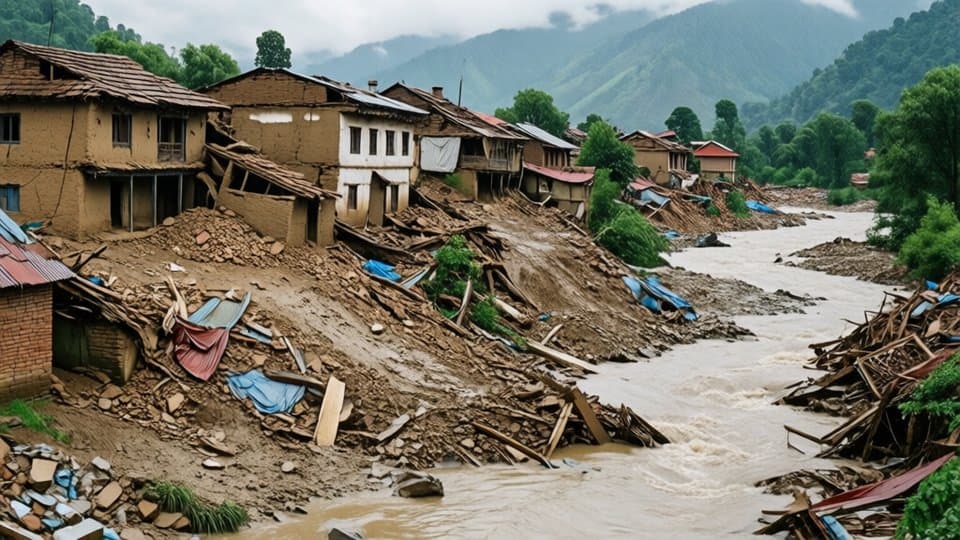
Disaster relief remains a central pillar of the talks. The August floods destroyed roads, bridges, power plants, and farms. The Independent reports that Shah is expected to discuss Indian aid for the reconstruction of areas hit by these floods, which also left more than 5,200 people missing.
Which leaders are participating in the talks?
Prime Minister Balendra Shah will hold delegation-level talks with Prime Minister Narendra Modi on Monday, November 22. The Prime Minister will also meet with Indian President Droupadi Murmu and External Affairs Minister S. Jaishankar. These meetings are intended to review the wide-ranging cooperative partnership between the two nations.
The Nepalese delegation includes high-ranking officials such as Finance Minister Swarnim Wagle and Foreign Minister Shishir Khanal. Abplive notes that a separate 52-member delegation of business representatives will also attend the trip at their own expense.
In India, Minister of State for Commerce and Industry Jitin Prasada is scheduled to welcome the Prime Minister at the airport. The two leaders are expected to address a joint press conference following their discussions. Prime Minister Modi will also host an official lunch in honor of the visiting leader.
How do the two countries view their relationship?
Nepal and India share a 1,751-kilometer open border and deep cultural and religious ties. This connection is often described as Roti-Beti ka Rishta, which reflects close family and social bonds. However, the relationship faces historical challenges regarding territorial disputes and perceptions of Indian influence.
The BBC reports that relations have been strained by allegations of political interference and resentment in Nepal over what many perceive as a Big Brother attitude from India. Additionally, territorial disagreements surfaced in 2019 when Nepal protested a map published by India.
The two sides present different perspectives on the current diplomatic climate. The Nepalese Ministry of Foreign Affairs stated the visit is an opportunity to maximize mutual benefits for the peoples of both countries. Conversely, analysts suggest the new leadership in Kathmandu wants to move beyond past political baggage to focus on pragmatic diplomacy.
Ranjit Rae, a former Indian ambassador to Nepal, told the BBC that Nepal's new leadership wanted to move beyond the political baggage of the past and focus on development, diplomacy and economic partnership.
What energy and trade issues are on the agenda?
Energy cooperation, specifically regarding hydropower, is a major focus for the bilateral talks. India has already approved projects to import up to 1,200MW of electricity from Nepal. The two leaders are expected to jointly launch new energy projects during this visit.
Trade remains a vital but sensitive topic. While bilateral trade exceeds $9 billion, the balance is heavily in favor of India. This imbalance has been a long-standing source of resentment within Nepal. India is currently the main supplier of petroleum and food items to the country.
Connectivity is another priority. Nepal is pushing India for additional air routes to allow larger aircraft to reach the airports in Bhairahawa and Pokhara. According to TBS News, these additional routes could reduce operating costs and make these tourist hubs more commercially viable.
What is the political background of the current leadership?
Balendra Shah represents a shift in Nepalese politics. He leads the Rastriya Swatantra Party (RSP), which gained power following a Gen Z uprising against corruption and nepotism. This movement toppled the previous government led by former Prime Minister KP Sharma Oli.
Since Nepal became a democratic republic in 2008, three parties have typically dominated the political landscape: the Communist Party of Nepal (Unified Marxist-Leninist), the Nepali Congress, and the Communist Party of Nepal (Maoist Centre). These established parties have traditionally maintained close ties with India.
The new leadership is viewed as more pragmatic and less ideological. This change comes as Nepal continues to balance its strategic position between India and China. Both regional powers have faced accusations of interfering in the domestic affairs of the Himalayan nation.
What happens next?
The official state visit concludes on November 23. Following the delegation-level talks on Monday, the two leaders will host a joint press conference to share the outcomes of their discussions. The Prime Minister is scheduled to return to Kathmandu on Monday evening at 6:35 pm.
The exchange of various Memorandums of Understanding (MoUs) will serve as the immediate next step for bilateral cooperation. These agreements cover sectors including education, health, sports, and human resource development. The effectiveness of these signed agreements will determine the success of this diplomatic reset.
FAQ
Why is Balendra Shah visiting India?
The Prime Minister is visiting to discuss reconstruction aid after devastating floods and to strengthen economic, energy, and trade ties. He also aims to discuss additional air corridors for Nepalese airports.
Who is accompanying the Prime Minister?
A 34-member government delegation is traveling with him, including Finance Minister Swarnim Wagle and Foreign Minister Shishir Khanal. A separate group of 52 business representatives is also attending.
What was the cause of the recent floods in Nepal?
Catastrophic flash floods occurred in August, killing over 1,450 people and leaving thousands missing. The disaster destroyed critical infrastructure such as roads, bridges, and power plants.
Sources
- 1.independent.co.ukWhat to expect as Nepal’s PM Balendra Shah makes his first official trip to India
- 2.tbsnews.netNepal PM Balendra Shah's India visit raises hopes of diplomatic reset
- 3.news24online.comNepal PM Balendra Shah set for first India visit on November 22-23; Energy projects, trade and bilateral ties in focus
- 4.english.khabarhub.comPM Balen leaving for two-day state visit to India today
- 5.abplive.comबालेंद्र शाह का भारत दौरा, PM मोदी से मीटिंग, किन-किन मुद्दों पर होगी ...