Political violence erupts in Bangladesh amid Awami League protests
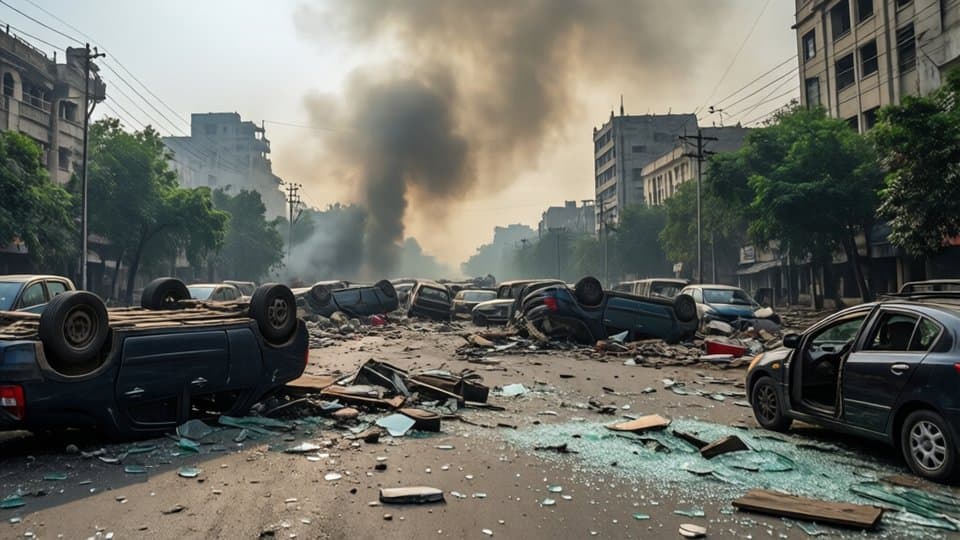
Bangladesh has experienced a surge in arson and street clashes as supporters of ousted Prime Minister Sheikh Hasina protest the government's refusal to allow her return. The violence, which intensified in mid-November 2026, centers on the Awami League party's demand for the lifting of its ban and the return of its leader from exile in India. This instability threatens the political transition following the 2024 student-led uprising.
- At least four people have been killed in political violence since November 14, according to Al Jazeera.
- An armed mob of BNP supporters allegedly burned more than 400 houses in Narail district on November 20, according to Eurasia Review.
- The Border Guard Bangladesh has deployed up to 97 platoons to various districts to manage the unrest, according to Dawn.
What is driving the current violence?
The unrest is triggered by the Awami League party's push for the return of Sheikh Hasina, who plans to face her legal consequences in December. Tensions escalated after the government rejected her request for a new passport and identity card on November 9, according to Al Jazeera.
Protesters organized a nationwide "lockdown" strike to mark the anniversary of the death sentence handed to Hasina. This sentence was issued in absentia by the International Crimes Tribunal for crimes against humanity during the 2024 protests. The 2024 uprising resulted in the deaths of at least 1,400 people, according to UCA News.
Violence has spread across 28 districts. Arsonists have targeted police stations, banks, and the ancestral home of Nobel laureate Muhammad Yunus in Chittagong. Grameen Bank, founded by Yunus, reported that 22 of its branches were attacked, according to Al Jazeera.
How does the government view the unrest?
The current administration, led by Prime Minister Tarique Rahman of the Bangladesh Nationalist Party (BNP), blames the banned Awami League and its foreign connections for the chaos. The government maintains that Hasina is a convicted criminal who must return through formal extradition processes with India.
It is not only that; they have not looked at the interests of Bangladesh and its people. At the same time, the country across the border, where they have fled to, is their master… To satisfy those masters, they have again started conspiring against Bangladesh and its people,
Rahman addressed supporters in Lalmonirhat, stating that the country will not tolerate further sabotage. According to UCA News, he accused the ousted administration of having once ruled "with a gun held to the people's temple."
How do Awami League supporters see the situation?
Supporters of the Awami League argue that the government has exceeded its mandate by banning their political activities. They claim the BNP government is using force to suppress the country's largest political party and is targeting its members with arrests and violence.
The party is attempting to rally support for Hasina, who has stated she is willing to return to face her sentence. According to UCA News, Hasina told AFP via email that she is "fully aware" she could be hanged.
The party's activists face significant pressure. Tens of thousands of leaders and members are currently in jail, and many supporters have fled to India to avoid arrests or mob attacks, according to Eurasia Review.
What is happening in Narail and Gopalganj?
Violence has been most intense in specific political strongholds. In the Narail district, clashes between the two main parties have resulted in the deaths of two BNP activists. In retaliation, BNP supporters allegedly set fire to more than a dozen homes belonging to Awami League supporters, according to Al Jazeera.
The Eurasia Review report states that an armed mob of BNP supporters attacked Hindu-majority villages in Narail on November 20, burning more than 400 houses and abducting two women.
Gopalganj, the hometown of Hasina, has also seen heavy fighting. Protesters wielding machetes and sticks attacked a police station there, according to UCA News. Police spokesperson Kamarum Munira confirmed to AFP that the station was vandalized and set on fire.
Who are the key figures involved?
The conflict involves several central leaders and institutions. Sheikh Hasina, the former Prime Minister, is the focal point of the protests. She is currently in self-imposed exile in India. Tarique Rahman, the current Prime Minister, leads the BNP and is attempting to stabilize the country while managing the fallout of the Awami League's ban.
Muhammad Yunus, the Nobel Peace Prize winner who led the interim government, has also become a target. His ancestral home in Chittagong was attacked by arsonists, though police stated there were no casualties in that specific incident, according to Al Jazeera.
Other notable figures include Nurul Islam Nahid, a former education minister from the ousted administration, who has been detained by police. He faces various charges related to the 2024 protests, according to Dawn.
What happens next?
The immediate future depends on whether Sheikh Hasina follows through with her plan to return to Bangladesh in December. Her return could either lead to a massive political confrontation or a legal proceeding in the International Crimes Tribunal.
The government continues to deploy paramilitary forces to maintain order in high-risk districts. Security remains tight in Gopalganj and Chittagong as authorities attempt to prevent further arson and attacks on state property and private homes. The political standoff between the BNP-led government and the banned Awami League shows no sign of immediate resolution.
Frequently Asked Questions
Why is Sheikh Hasina returning to Bangladesh?
She intends to face the death sentence handed to her in absentia for crimes committed during the 2024 student-led uprising.
Why is the Awami League banned?
The party was ousted following the 2024 uprising, and the ban was later formalized by the newly elected BNP government in parliament.
What is the role of India in this conflict?
The Bangladesh government accuses India of protecting Hasina, while India maintains that extradition is only necessary if a person refuses to return to face justice.