ASEAN leader calls for faster regional power grid development
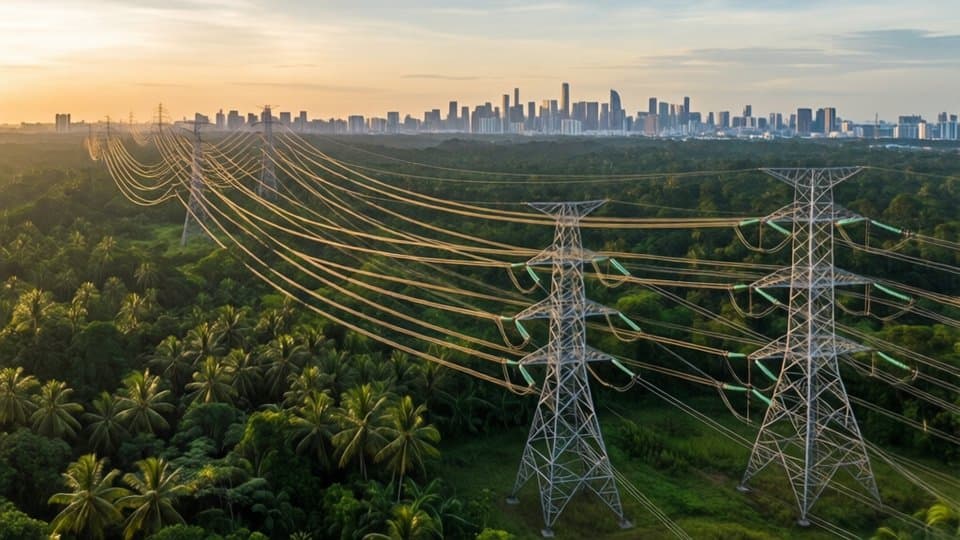
ASEAN Secretary-General Dr Kao Kim Hourn called for the acceleration of regional electricity connectivity and the mobilization of investment to meet growing energy demands during a summit in Singapore on October 27, 2026. The address focused on strengthening energy security through the development of the ASEAN Power Grid to improve regional resilience against supply disruptions.
- Dr Kao Kim Hourn stated at the Singapore International Energy Week (SIEW) Summit that the priority is to turn regional energy commitments into practical results.
- The Laos-Thailand-Malaysia-Singapore (LTMS) Power Integration Project has already demonstrated that multilateral electricity trade is functional, according to thestar.com.my.
- Singapore will hold the ASEAN chairmanship in 2027, which offers a window to advance these energy implementation goals, as reported by thestar.com.my.
How can ASEAN improve its energy security?
The region must prepare for energy supply disruptions by diversifying its sources of supply and improving energy efficiency. Dr Kao Kim Hourn emphasized that these actions are necessary to manage uncertainties within global energy markets. He argued that regional cooperation must move beyond high-level agreements to achieve real-world outcomes for member states.
Cooperation should involve sharing information and conducting joint emergency exercises. Dr Kao Kim Hourn suggested that strengthening arrangements to coordinate responses to potential disruptions is a vital step for the association. This approach aims to protect the region from sudden shifts in the availability of power.
What role does the ASEAN Power Grid play?
The ASEAN Power Grid acts as a mechanism to enable countries to share resources and transfer electricity to areas with high demand. It provides mutual support between nations during periods of supply instability. This interconnectedness helps stabilize the regional energy supply through shared infrastructure.
The ASEAN Power Grid is described by Puan Mareena Binti Mahpudz as an operating system that the region builds together rather than just a transmission project. According to aseanenergy.org, technical harmonization across the region is achievable, though commercial harmonization will take more time.
Building this grid requires several specific components to function effectively. Dr Kao Kim Hourn noted that the following are necessary for stronger interconnections:
- Coordinated regional planning.
- Transparent rules for cross-border trading.
- Reliable infrastructure.
- Arrangements for the maintenance and repair of submarine power cables.
How will the grid stay reliable with renewable energy?
As the region integrates more renewable energy, system operators must use ancillary services to maintain grid security. These services help manage the fluctuations that come with wind and solar power. The 2nd ASEAN Grid System Operators Convention (AGSOC) 2026 addressed how these services can keep interconnected grids stable.
Different countries are already using various methods to manage grid reliability. According to aseanenergy.org, the Philippines and Singapore already combine market-based reserves with contracted security services. In the Philippines, batteries in the Luzon grid provide reserves through the spot market and bilateral contracts.
Technical challenges remain for certain member states. Phonesavanh Sengmanivanh of Electricité du Laos noted that while Laos has significant hydropower flexibility, the domestic grid does not yet fully connect its northern, central, and southern regions. This lack of internal connection limits the ability to export or move power effectively.
Who will fund these massive energy projects?
Financing large-scale energy infrastructure requires cooperation between governments, private investors, and multilateral financial institutions. Dr Kao Kim Hourn stated that these groups must work together to ensure regional plans become deliverable projects. He specifically called for financial institutions to engage early in the process.
The funding landscape is complex because different projects require different financial structures. Dr Kao Kim Hourn noted that development stages require various forms of grants, support, and financing. He also stated that governments must create clear rules for electricity trade and fair risk-sharing to make these projects attractive to investors.
"The priority now is to turn this commitment into practical results," said Dr Kao Kim Hourn.
What are the main obstacles to regional integration?
The primary obstacles are technical, commercial, and regulatory. While countries can agree on technical standards, creating a unified commercial market is much more difficult. Puan Mareena Binti Mahpudz stated that commercial harmonization will take longer than technical alignment. This difficulty stems from different national laws and economic interests.
Regulatory frameworks must also evolve to handle new types of demand. Ir. Fairizat bin Abu Hasan of Tenaga Nasional Berhad noted that data centers represent a unique challenge. These facilities act as fast, correlated loads that can withdraw large amounts of electricity immediately after a grid fault occurs.
Grid operators must also account for the stability issues caused by rapid shifts in power. Dr Aymen Chaouachi argued that stability must be designed into the system from the start. He noted that flexibility alone cannot solve local challenges like voltage control and inertia.
What happens next for ASEAN energy connectivity?
The next major milestone for regional energy policy will occur in 2027. During this year, Singapore will serve as the ASEAN chairmanship. Dr Kao Kim Hourn indicated that this period will provide a specific opportunity to advance energy commitments and strengthen how they are implemented across the member states.
In the meantime, system operators will continue to work on refining ancillary services and grid codes. The focus remains on moving from targeted contracts for specific services toward more comprehensive, market-based arrangements for regional reserve sharing.
FAQ
What is the ASEAN Power Grid?
It is a regional project designed to connect the electricity networks of Southeast Asian nations to allow for resource sharing and improved energy security.
Why is submarine cable maintenance important?
Submarine cables are necessary for cross-border electricity trade, and they require specific, coordinated arrangements for regular maintenance and repair to ensure reliability.
How does the LTMS project relate to this?
The Laos-Thailand-Malaysia-Singapore Power Integration Project serves as a successful model proving that multilateral electricity trading can work within the region.
SEO Meta Description: ASEAN Secretary-General Dr Kao Kim Hourn calls for faster development of the ASEAN Power Grid and submarine cables to ensure regional energy security.
URL Slug: asean-energy-connectivity-power-grid-security-singapore-summit
Sources
- 1.thestar.com.myStrengthen energy security, accelerate power grid development - Asean sec-gen
- 2.straitstimes.comMore can be done to keep people of all abilities engaged in sports: Stakeholders
- 3.aseanenergy.org2nd ASEAN Grid System Operators Convention (AGSOC) 2026: Advancing Grid Reliability through Ancillary Services
- 4.itif.orgTracking Pax Silica’s Evolution: A Timeline | Blogs | Nov 16, 2026